
Jump to Recipe
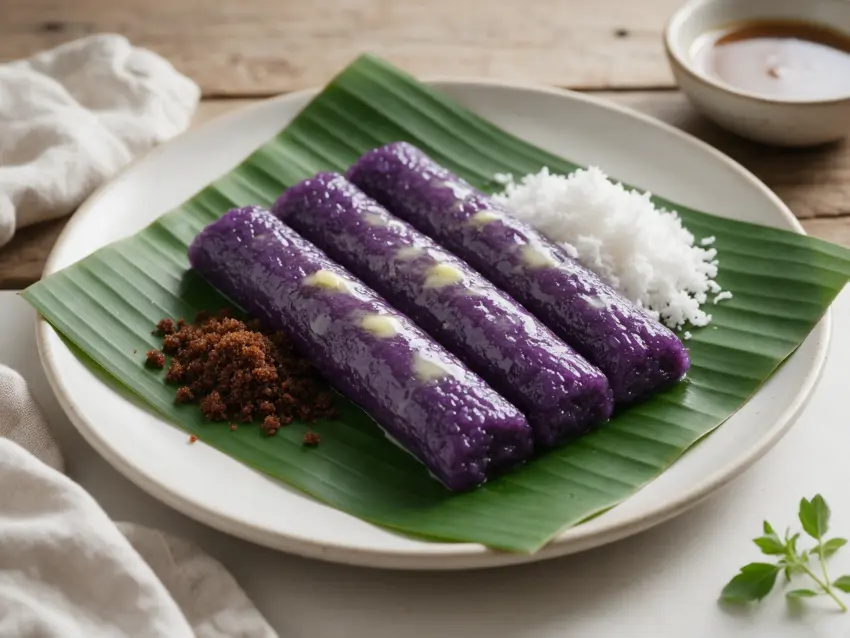
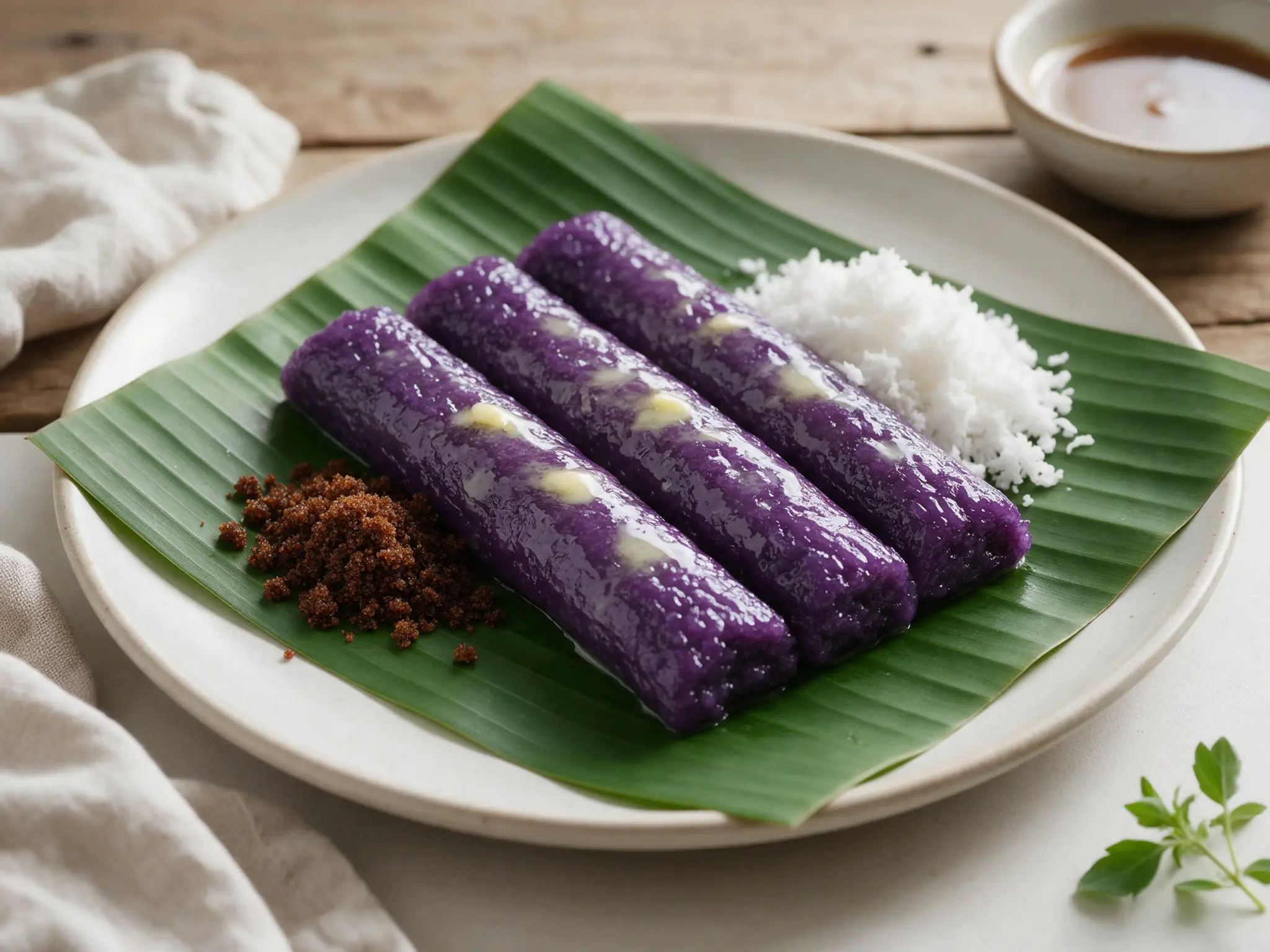
Filipino puto bumbong purple rice cakes are steamed glutinous rice logs, tinted with ube and finished with melted butter, muscovado sugar, and grated coconut. This version skips the bamboo tubes. You roll the dough into logs and steam them in 18 minutes.
There’s something about the smell of steaming rice and butter that says Christmas in the Philippines. Puto bumbong is the stall snack sold outside churches after Simbang Gabi, the dawn masses before the holiday. I first ate it from a paper plate, steam fogging my glasses.
Traditional versions use pirurutong, a dark purple glutinous rice. Ube extract gets you the same color at home.
One thing to watch. If the dough cracks as you roll it, it’s too dry. Knead in water a teaspoon at a time until it’s smooth.
Serve the logs within 15 minutes of steaming, while they’re soft and chewy.
Why You’ll Love This Recipe
- No bamboo tubes or special molds required
- Steams in 18 minutes with a basic steamer
- Naturally gluten free with a soft, chewy bite
- Freezes well, so Christmas mornings stay relaxed
Ingredient Notes
- glutinous rice flour: Look for bags labeled sweet rice flour or mochiko. Regular rice flour won’t give the chew, which is why it only plays a small supporting role here.
- ube extract: It gives color and a vanilla-like flavor. Use 100 g ube halaya instead and cut the water to about 170 ml if you have the jam.
- muscovado sugar: It’s damp and molasses-heavy, so it clings to the buttered logs. Dark brown sugar is the closest substitute.
- grated coconut: Fresh is best. Frozen grated coconut from Asian grocers works fine once thawed and patted dry. Unsweetened desiccated coconut needs a 10 minute soak in warm water first.
- unsalted butter: Soften it so it brushes on easily. Coconut oil or vegan butter works for a dairy-free plate.
Easy Steamed Puto Bumbong: Filipino Purple Rice Cakes
Ingredients
Method
- Whisk the glutinous rice flour, rice flour, sugar, and salt in a mixing bowl. Stir the ube extract into the warm water, pour it in, and mix, then knead for 3 minutes until the dough is smooth and soft like play dough. If the edges crack, knead in extra water 1 tsp at a time. Cover with a damp towel and rest for 10 minutes.
- While the dough rests, pour 5 cm / 2 inches of water into a 28 cm / 11-inch wok or pot and bring it to a boil. Line both tiers of the 26 cm / 10-inch bamboo steamer with banana leaf or perforated parchment and brush lightly with oil.
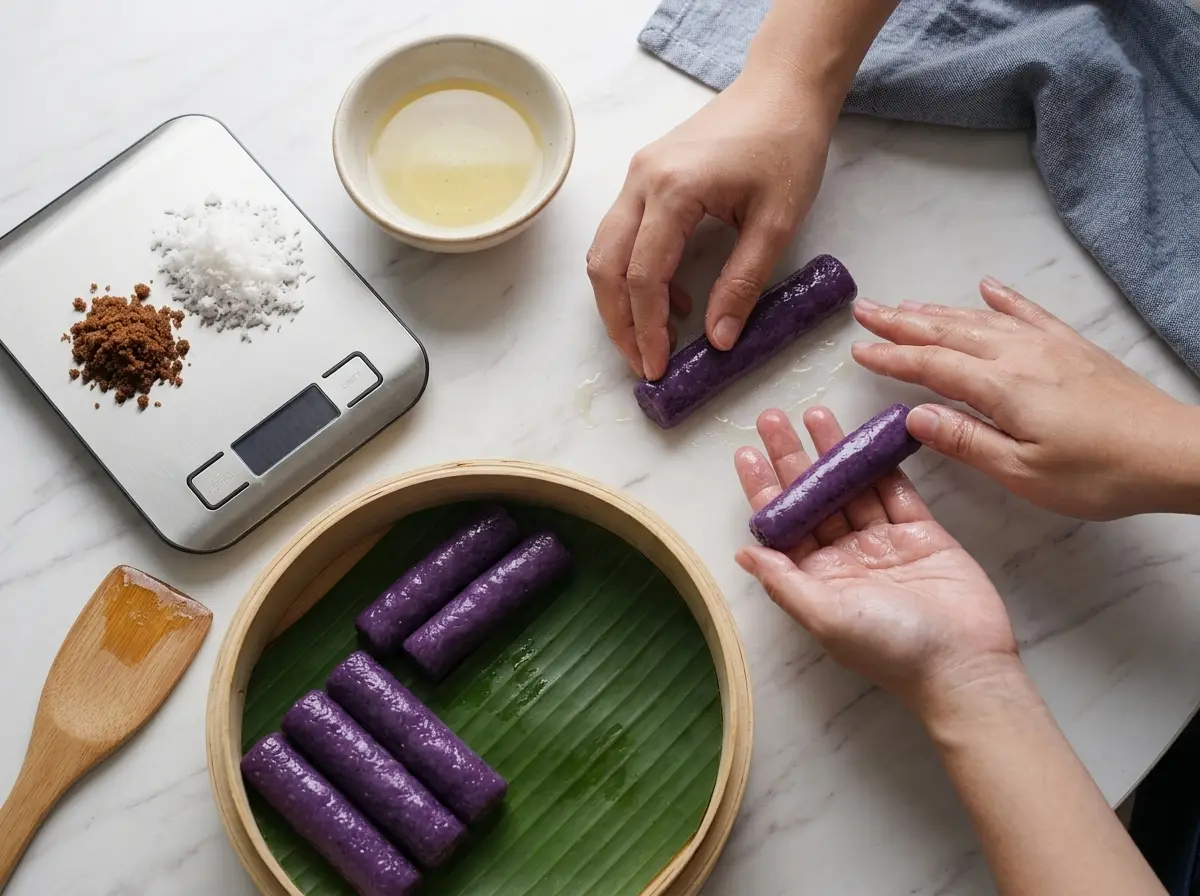
- Oil your hands and divide the dough into 12 portions of about 45 g each. Roll each into a log about 8 cm / 3 inches long and 2.5 cm / 1 inch thick. Set 6 logs on each tier in two rows of three, 2 cm / 3/4 inch apart.
- Stack the tiers over the boiling water and wrap the lid in a clean kitchen towel. Steam over medium-high heat for 18 minutes, until the logs are deep purple, glossy, and spring back when pressed.
- Move the hot logs to a platter and brush each with the softened butter so it melts into the surface. Sprinkle with muscovado sugar and top with the coconut. Serve within 15 minutes.
Notes
- Rest the dough 10 minutes so the flour hydrates fully and rolls without cracking.
- Space the logs 2 cm apart on the steamer tier so they don't fuse.
- Steam from a full boil, and keep the water topped up if the wok runs low.
- Serve within 15 minutes of steaming, while the logs are soft and chewy.
Tips for Success
- Oil your hands and the work surface before rolling, because glutinous dough grips anything dry and tears when you pull away.
- Weigh each dough portion at 45 g so all 12 logs finish steaming in the same 18 minutes.
- Wrap the steamer lid in a clean kitchen towel so condensation doesn’t drip onto the logs and leave wet, pale spots.
- Brush the butter on while the logs are still hot, then add the sugar and coconut right away so everything sticks.
- Buy muscovado rather than plain brown sugar if you can, since its wetter texture and molasses taste suit the coconut better.
Variations
- Replace the ube extract with 100 g ube halaya and cut the water to about 170 ml for a deeper purple and a softer chew.
- Make half the dough with 1 tsp pandan extract instead of ube for a green and purple plate at holiday gatherings.
- Finish with a little grated sharp cheddar on top, the salty-sweet combination some Filipino stalls use on puto.
Storage and Reheating
Puto bumbong logs keep for 3 days in an airtight container in the fridge, stored without toppings. They turn firm when cold, which is normal for steamed glutinous rice.
Reheat them in a steamer for 5 minutes until soft and springy again, then add butter, muscovado sugar, and coconut. Microwaving dries the surface, so I steam them instead.
For longer storage, freeze the untopped logs in a single layer, then bag them for up to 1 month. Steam from frozen for 8 minutes. You can also shape the raw logs, cover them, and refrigerate for up to 4 hours, then steam for 20 minutes.
Serving Suggestions
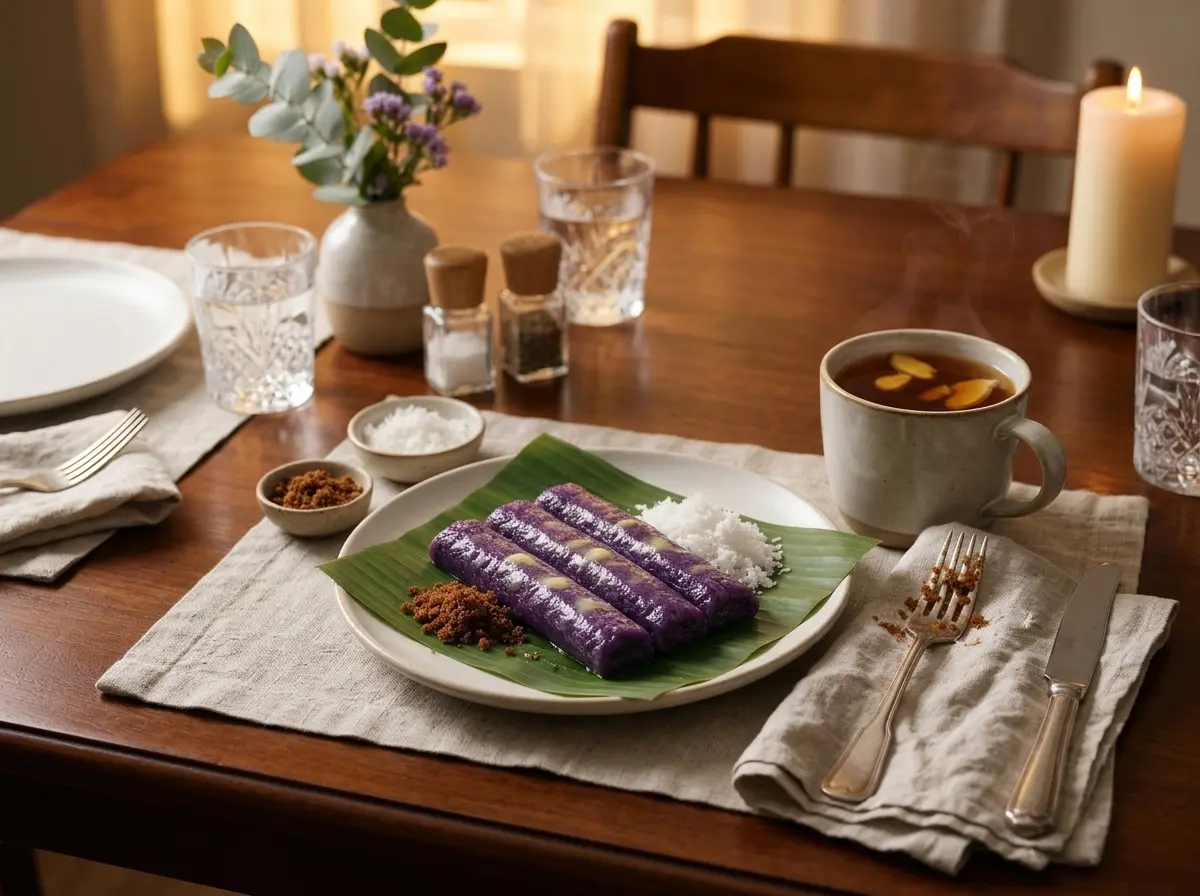
Serve puto bumbong warm on a banana leaf or plate, 3 logs per person, with the butter melting into the rice. Pile the coconut on at the last second so it stays fluffy.
A mug of hot salabat (ginger tea) or thick tsokolate is the classic partner, and a hot black coffee also works. Bibingka alongside makes it a proper Filipino Christmas breakfast.
Set the toppings out in bowls and let everyone dress their own. Some people like extra sugar, some barely any.
FAQ
How do I know when puto bumbong is done steaming?
Puto bumbong is done after 18 minutes of steady steam, when the logs turn a deep, even purple with a glossy surface. Press one with a finger. It should spring back and feel firm, not pasty. If the center still looks pale or floury, steam 3 more minutes with the lid on.
Can I use ube halaya instead of ube extract for puto bumbong?
Yes. Mash 100 g ube halaya into the warm water and cut the water to about 170 ml, since the jam already carries moisture. The dough will be stickier and the flavor deeper, so keep your hands oiled. Add water only if the dough cracks as you roll.
Can I freeze steamed puto bumbong logs?
Yes, freeze them without toppings. Cool the logs completely, freeze in a single layer until firm, then bag them for up to 1 month. Steam straight from frozen for 8 minutes until soft and springy, then add butter, muscovado sugar, and coconut. Thawing first makes them gummy.
What do you drink with puto bumbong at Christmas?
Filipino households pair puto bumbong with hot salabat (ginger tea) or thick tsokolate, which cut the sweetness. Bibingka is the usual partner on the plate. Both are traditionally eaten warm after Simbang Gabi, the dawn masses held before Christmas. A mug of hot black coffee works too.
Is puto bumbong gluten free, and can I make it dairy free?
Yes, it’s gluten free. Glutinous rice flour and rice flour contain no wheat, despite the name. Check the flour and ube extract labels for cross-contamination warnings if you’re cooking for someone with celiac disease. The butter adds dairy, so use coconut oil or vegan butter for a dairy-free version.
What is the difference between puto bumbong and bibingka?
Puto bumbong is steamed purple glutinous rice, traditionally cooked in bamboo tubes and served with butter, sugar, and coconut. Bibingka is a baked rice cake made with rice flour and eggs, cooked in a clay pot lined with banana leaf. It’s usually topped with salted egg and cheese.
You might also like
- Bánh Ít Lá Gai: Steamed Vietnamese Sticky Rice Cakes
- Pulut Tai Tai: Steamed Blue Rice with Coconut Topping
- the Kuih Talam: Steamed Pandan Coconut Rice Layer Cake
