
Jump to Recipe
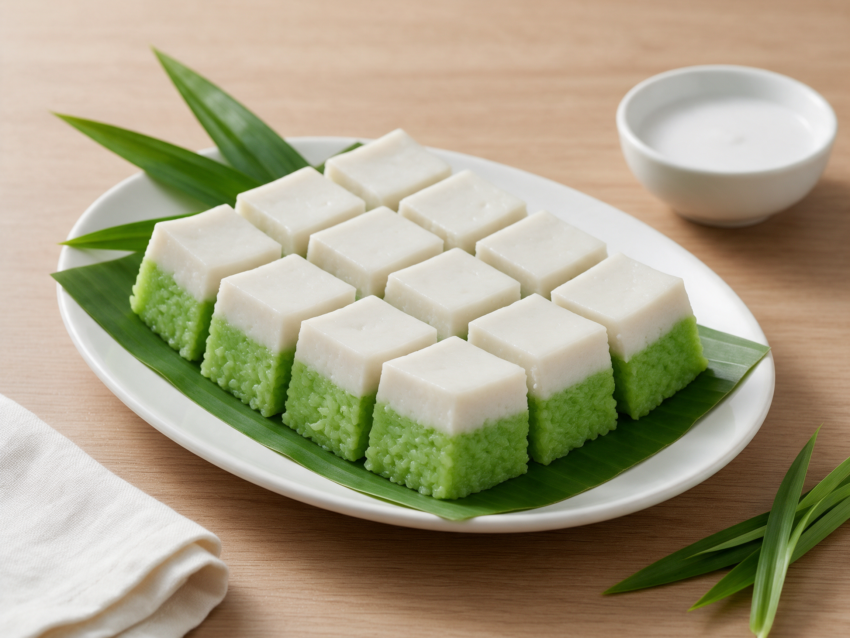
There’s something satisfying about cutting into a tray of kuih talam and watching those two clean layers pull apart under the knife.
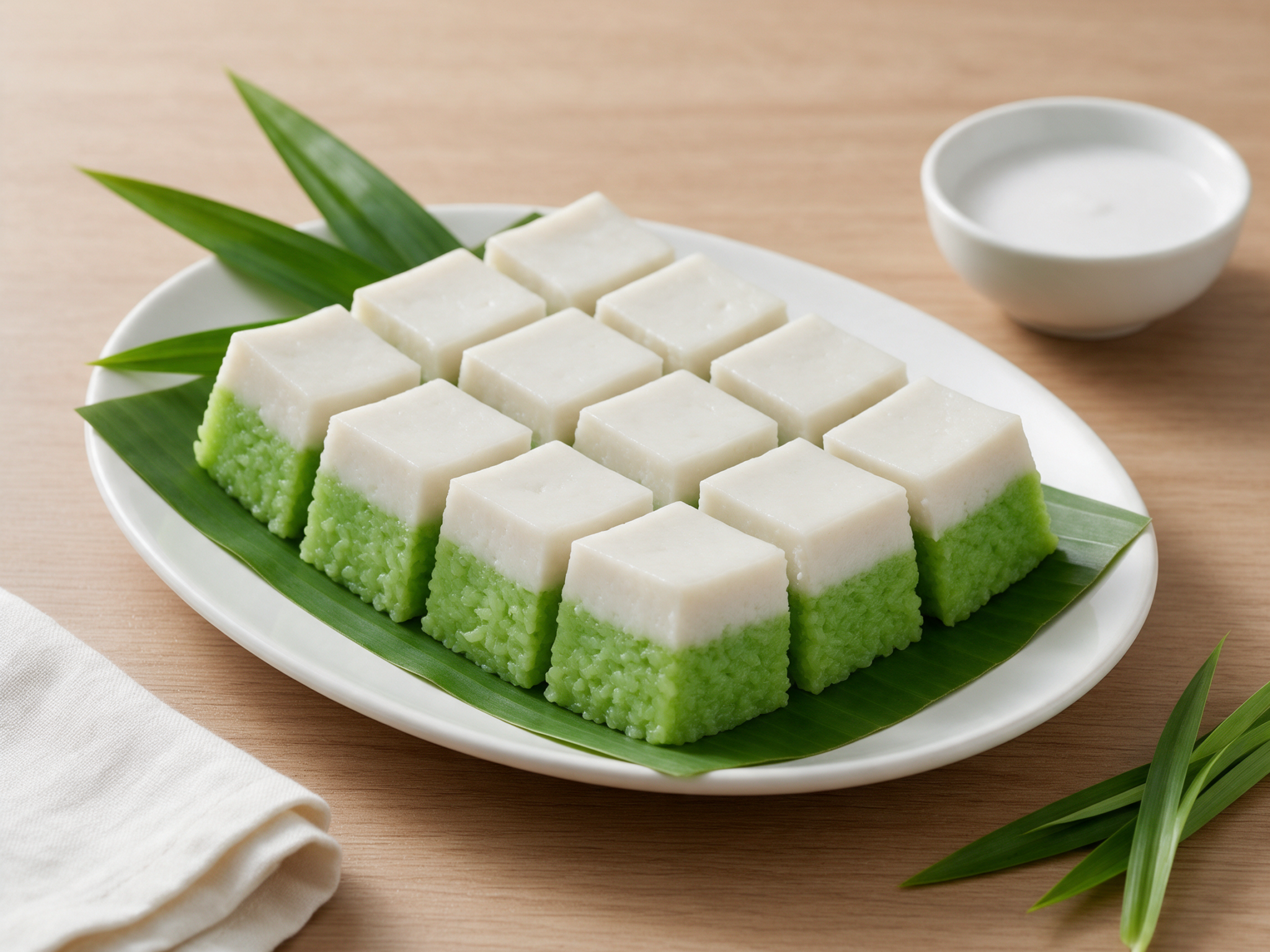
Kuih talam is a steamed Malaysian and Indonesian kuih made from two layers, a sweet pandan-flavored rice layer on the bottom and a salty coconut custard layer on top. The colors alone make it a party tray favorite, deep green under bright white.
I first tried this after a trip to Penang, where a hawker sold squares of it from a glass case right next to curry puffs. Mine took a few tries to get the layers to set without turning rubbery.
The trick is letting the bottom layer steam until fully set before pouring the top one on. Skip that step and the layers bleed into each other instead of staying distinct.
Why You’ll Love This Recipe
- Two distinct layers, one sweet, one salty, in every bite
- Made with pantry staples, rice flour and coconut milk
- Naturally gluten free with no eggs or dairy needed
- Keeps well chilled for snacking all week
Ingredient Notes
- rice flour: The base of both layers, it gives the cake its soft, sliceable texture. Don’t sub wheat flour, the cake won’t set the same way.
- tapioca flour: Adds the slight bounce kuih talam is known for. Cornstarch works in a pinch but the finished layer sets softer.
- pandan paste: Gives the bottom layer its green color and grassy aroma. Blended fresh pandan leaves strained for juice work too, use it in place of some of the water.
- coconut milk: Use full-fat canned coconut milk for the richest, thickest top layer. Light coconut milk makes a thinner, less creamy custard.
- granulated sugar: Sweetens the bottom layer only. Cut back by up to 20g if you want a less sweet cake.
- salt: Balances the coconut top layer against the sweet bottom. Don’t skip it, the top tastes flat without it.
Kuih Talam: Steamed Pandan Coconut Rice Layer Cake
Ingredients
Method
- Grease a 20 cm / 8-inch square heatproof pan and set it aside. Fill a steamer pot with water and bring it to a rolling boil. Wrap the steamer lid in a clean kitchen towel to catch condensation.
- Whisk the rice flour, tapioca flour, sugar, and salt in a mixing bowl. Whisk in the water and pandan paste until smooth, then pour through a fine-mesh sieve to catch any lumps.
- Give the batter a final whisk, since the flour settles fast, and pour it into the prepared pan. Steam covered for 15 to 18 minutes until the surface looks matte and set and doesn't wobble when you nudge the pan.
- While the bottom layer steams, whisk the coconut milk, rice flour, tapioca flour, and salt in a separate bowl until smooth. Strain through the sieve to remove lumps.
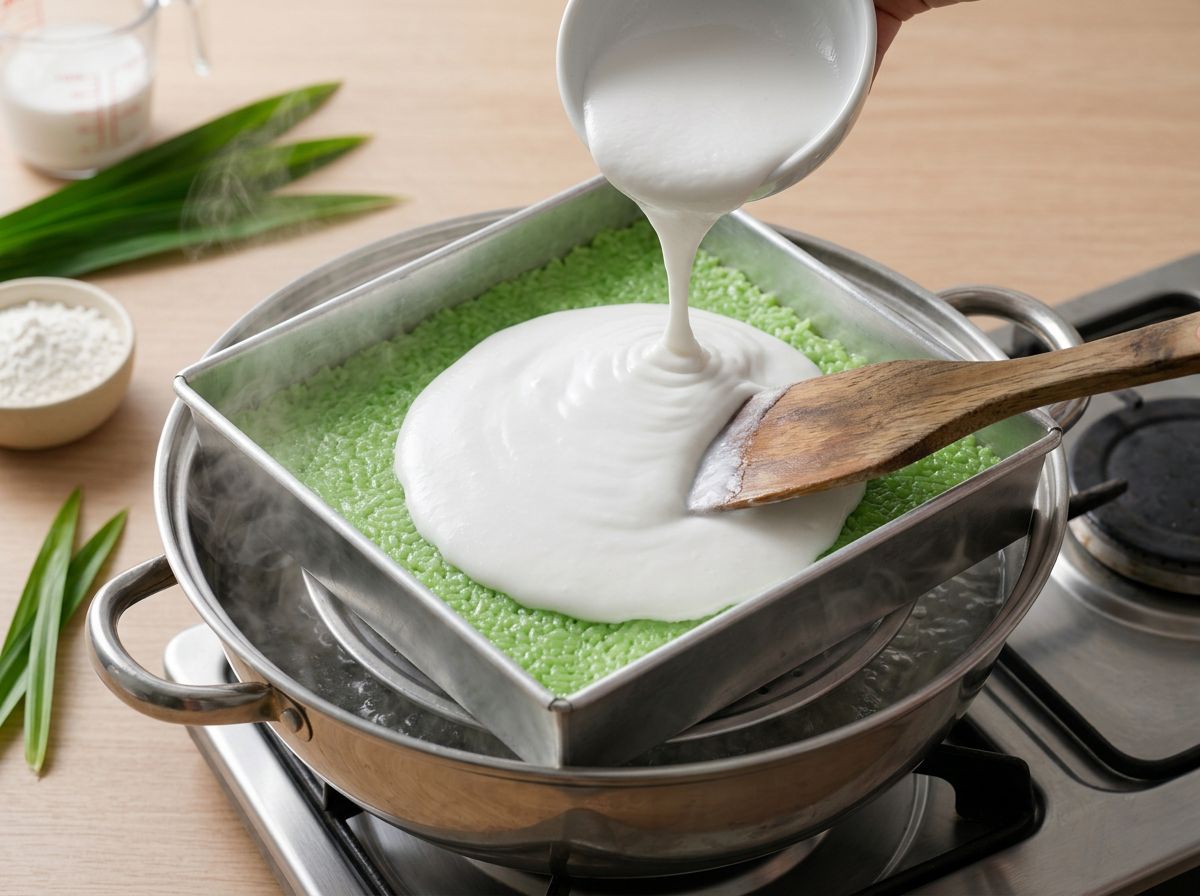
- Once the bottom layer is set, whisk the coconut batter again and pour it gently over the top, spreading it evenly with the back of a spoon.
- Steam covered for 20 to 25 minutes until the top layer is firm to the touch and no longer liquid in the center.
- Turn off the heat, uncover the pan, and let the cake cool at room temperature for 30 minutes.
- Refrigerate for 1 hour, then cut into 9 squares with an oiled knife, wiping the blade clean between cuts.
Notes
- Steam the bottom layer until fully set before adding the top layer.
- Cover the steamer lid with a towel to stop dripping condensation on the cake.
- Chill the cake for 1 hour before cutting for clean, sharp squares.
- Use full-fat canned coconut milk for a richer, thicker top layer.
Tips for Success
- Steam the bottom pandan layer until fully set before pouring the coconut layer, or the two will blend into a muddy mess.
- Strain both batters through a fine-mesh sieve to catch flour lumps before pouring into the pan.
- Cover the steamer lid with a clean kitchen towel to stop condensation from dripping and pitting the surface.
- Cool the cake at room temperature for 30 minutes, then chill for an hour before cutting for clean square edges.
- Wipe your knife clean and dip it in hot water between cuts to keep each square neat.
Variations
- Swap the pandan paste for a few drops of pandan extract plus a pinch of matcha for a deeper green color.
- Use brown sugar in the bottom layer for a caramel-toned version with a deeper, almost gula melaka flavor.
- Add a thin layer of mashed sweet corn between the two layers for a Nyonya-style corn kuih talam.
Storage and Reheating
Kuih talam keeps well covered in the fridge for 3 to 4 days. It’s actually best served cold or at cool room temperature, straight from the fridge.
There’s no reheating step here, it’s a cold-set steamed cake, not something you warm up. If the squares have been chilled, let them sit out for 15 to 20 minutes before eating so the coconut layer softens slightly.
Freezing isn’t recommended. The starch layers turn grainy and separate once thawed, so make it fresh within a few days instead.
Serving Suggestions
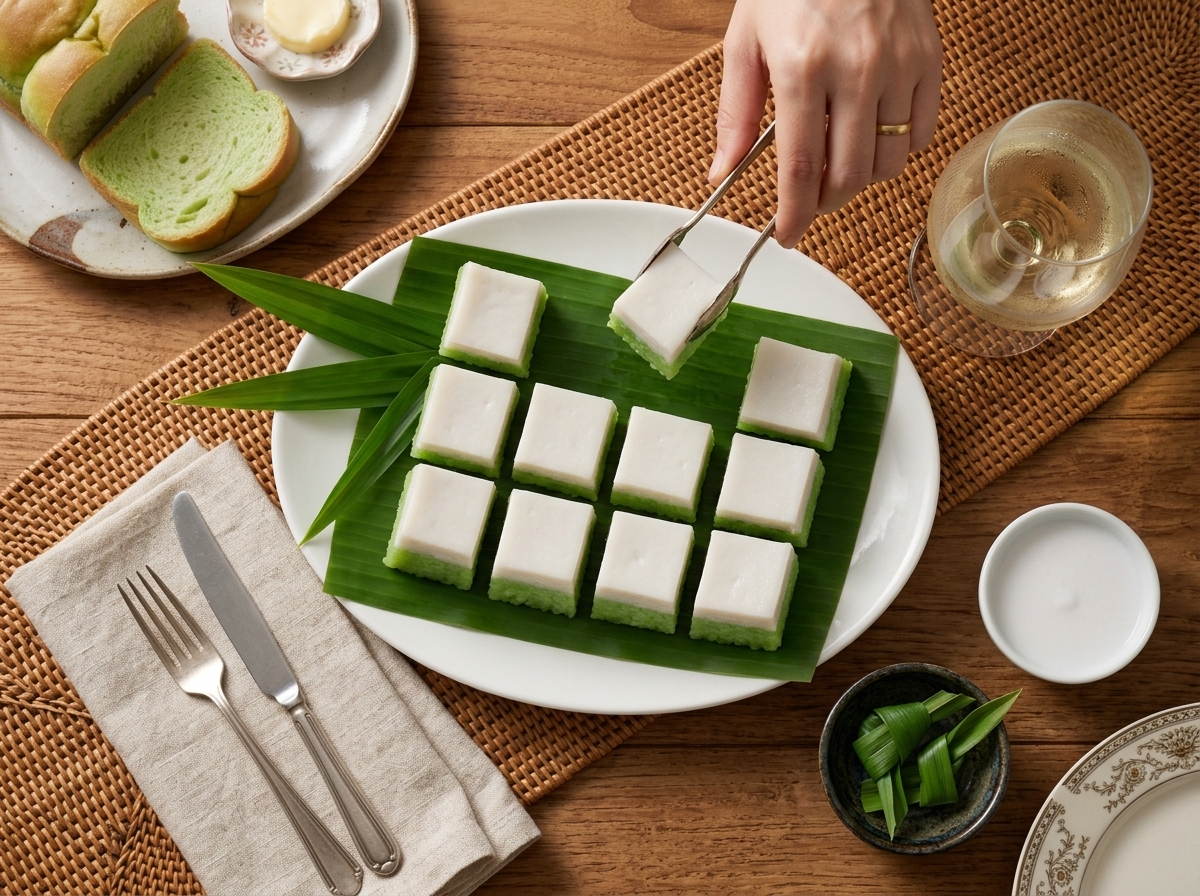
Kuih talam is a tea-time snack, cut into small squares and served on a plate with a fork or just fingers.
Pair it with strong coffee like kopi O or a cup of teh tarik, the bitterness cuts through the sweet pandan layer nicely. It also fits right onto a mixed kuih platter alongside onde-onde or kuih lapis.
For a party tray, cut the squares smaller, about 2.5 cm / 1 inch, so guests can grab a few different kuih without overloading their plate.
FAQ
Why is my kuih talam layer not setting properly?
It’s usually under-steamed or the batter was poured too thin. Give the bottom pandan layer a full 15 to 18 minutes of steaming until it looks matte and doesn’t wobble when you nudge the pan, then check the center with a skewer. If it’s still wet, steam another 5 minutes.
Can I use cornstarch instead of tapioca flour in kuih talam?
You can, but the texture changes. Tapioca flour gives kuih talam its signature bounce and slight chew, while cornstarch sets softer and more delicate. Swap it in at the same amount, just expect a cake that cuts a bit less cleanly.
Can I make kuih talam a day ahead and how should I store it?
Yes, kuih talam holds up well overnight in the fridge, covered, for up to 3 to 4 days. The layers actually firm up, which makes cutting neat squares easier the next day. Let chilled pieces sit at room temperature for 15 to 20 minutes before serving.
What goes well with kuih talam besides tea?
Kuih talam pairs naturally with strong coffee like kopi O or teh tarik, since the bitterness cuts through the sweet pandan layer. It also fits well on a mixed kuih platter next to onde-onde or kuih lapis, no extra sauce or topping needed.
Is kuih talam gluten free?
Yes, kuih talam is naturally gluten free when made the traditional way with rice flour and tapioca flour. There’s no wheat flour in either layer. Just double check your pandan paste or food coloring for hidden additives if you’re cooking for celiac guests.
What’s the difference between kuih talam and kuih salat?
Kuih talam uses a rice flour and tapioca batter for both layers, while kuih salat swaps the bottom for steamed glutinous rice pressed flat before the coconut custard goes on top. Kuih talam is softer and custard-like throughout, kuih salat has a chewier, stickier base.
If you enjoyed this, try
- Steamed Yakbap: Korean Sweet Rice Cake with Chestnuts recipe
- our Bienmesabe Venezolano: Coconut Rum Custard Dessert
- Songpyeon: Korean Steamed Rice Cakes with Sesame recipe
