
Jump to Recipe
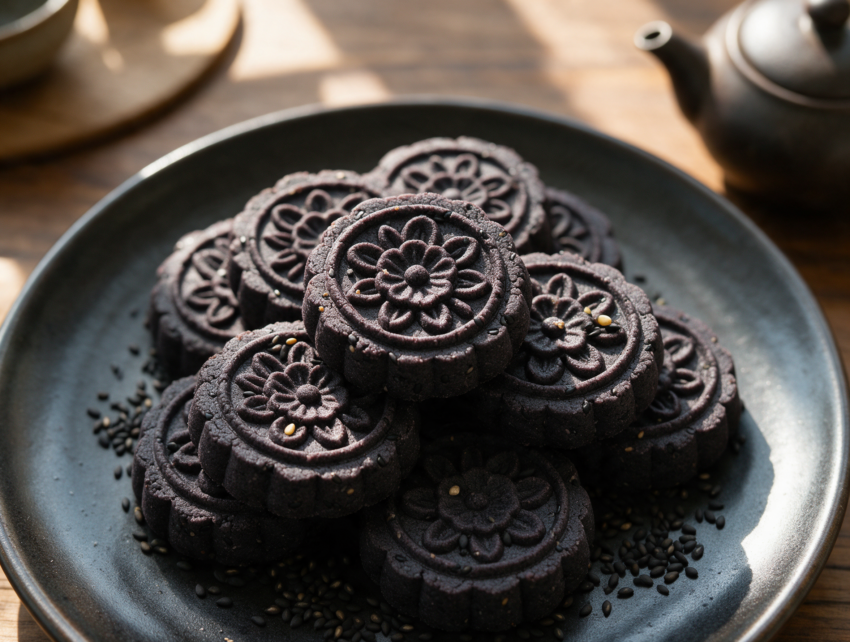
There’s something quietly satisfying about pressing dasik, Korean tea cookies, into a carved wooden mold and watching a tiny flower appear in the dough.
Dasik are made from ground sesame seeds, rice flour, or pine pollen bound with honey, then pressed into decorative molds called dasikpan. No oven required, no baking at all, much like other no-bake treats such as hand-shaped Nerikiri Wagashi.
I first tried these at a tea house in Seoul, where a plate of black sesame dasik arrived beside a pot of green tea. Dense, faintly sweet, toasty. Nothing like a Western cookie.
This version uses just black sesame seeds, honey, and a pinch of salt. Toast the seeds until fragrant, grind them fine, then knead in warm honey until the dough holds together like soft clay.
Press it into a mold if you have one, or shape by hand and mark the top with a fork. Either way you get small, dense cookies that keep for days.
Why You’ll Love This Recipe
- No oven or mixer, just a skillet and your hands
- Only 4 ingredients, most already in your pantry
- Keeps well for days, gets better as honey settles in
- Naturally gluten-free with a deep toasted sesame flavor
Ingredient Notes
- black sesame seeds: Buy raw, untoasted seeds so you control the roast. White sesame seeds work too and give a milder, paler cookie.
- honey: Use a mild, runny honey like acacia so the sesame flavor stays front and center. Warm it slightly before mixing so it binds the dough evenly.
- fine sea salt: Just a pinch to balance the honey’s sweetness. Skip it if you’re watching sodium, the cookies still work.
- toasted sesame oil: Used only to grease the mold so the dough releases cleanly. A neutral oil works in a pinch but sesame oil adds a little extra flavor.
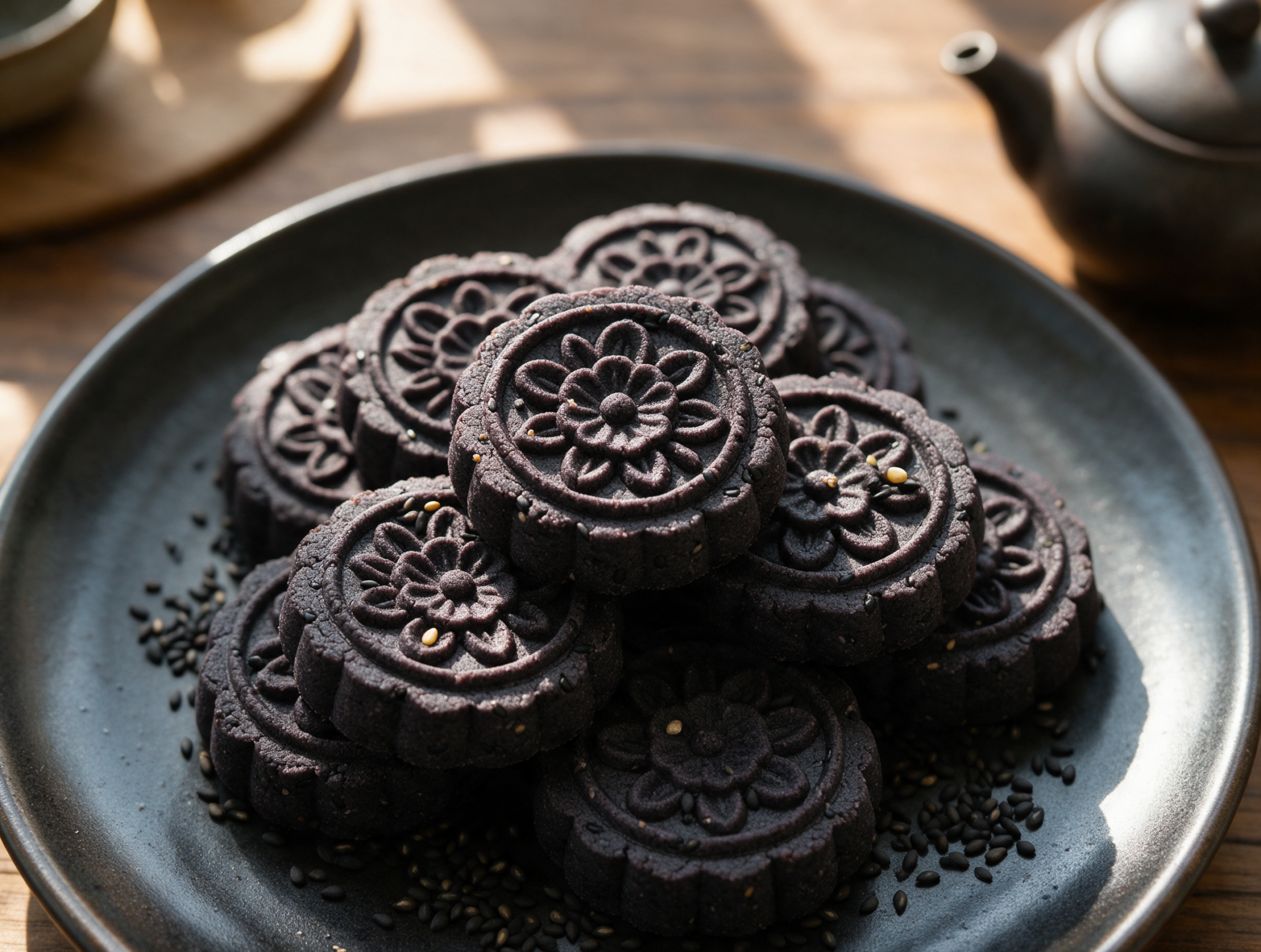
Black Sesame Dasik: Traditional Korean Tea Cookies
Ingredients
Method
- Heat a 25 cm / 10-inch dry skillet over medium heat. Add the black sesame seeds and toast, stirring constantly, for 4 to 5 minutes until fragrant and the seeds start to pop. Watch closely, they scorch fast once they get going and burnt seeds taste bitter.
- Pour the toasted seeds onto a plate and let them cool for 10 minutes.
- Transfer the cooled seeds to a spice grinder or mortar and pestle. Grind in short pulses until you have a fine, dry powder, about 20 to 30 seconds. Stop as soon as it looks powdery, over-grinding turns it into sesame paste.
- Warm the honey for 10 seconds in the microwave, or set the jar in warm water, until it loosens and pours easily.
- Add the sesame powder and salt to a mixing bowl. Pour in the warm honey and mix with a spoon, then knead with your hands for 1 to 2 minutes until the dough holds together like soft clay. Add another 1/2 tsp honey if it feels dry and crumbly.
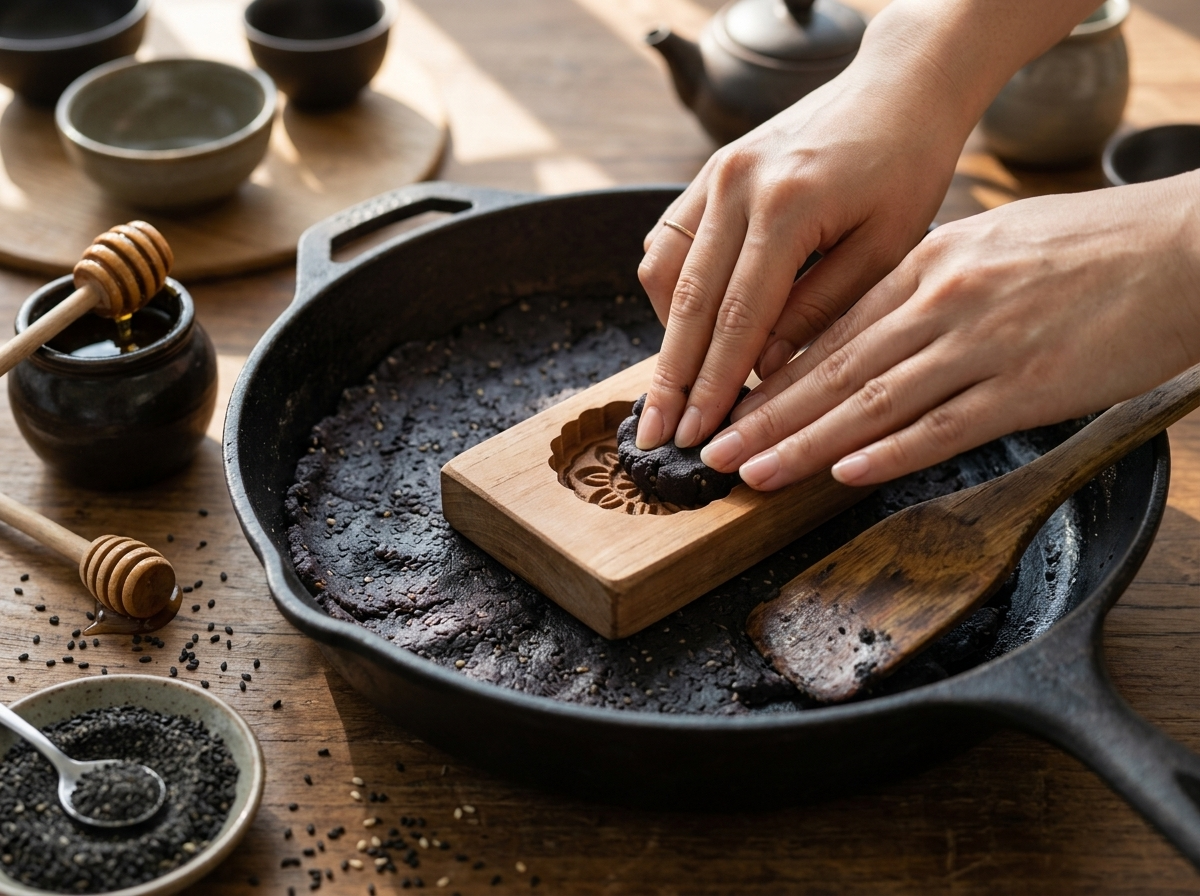
- Brush the cavities of a dasik mold lightly with the toasted sesame oil so the cookies release cleanly.
- Pinch off pieces of dough about 10 g each and roll into small balls. Press each ball firmly into a mold cavity, then pop it out right away onto a plate.
- If you don't have a mold, roll the dough into small balls and press a fork pattern into the top of each one instead.
- Let the pressed cookies sit uncovered for 10 minutes so the pattern sets and the surface firms up slightly. Serve with tea.
Notes
- Warm the honey slightly for easier mixing, cold honey seizes the dough.
- Work the dough while it's still warm, it stiffens fast once cool.
- Grind sesame in short pulses to avoid turning it into paste.
- Store pressed cookies in a single layer to keep the pattern crisp.
Tips for Success
- Toast the seeds over medium heat and stir constantly, they burn fast once they start popping.
- Grind in short pulses and stop as soon as you have a fine powder, over-grinding turns it into sesame paste.
- Warm the honey for 10 seconds before mixing so it blends into the sesame powder instead of sitting in clumps.
- Work the dough while it’s still warm, it stiffens quickly and gets harder to press once it cools.
- Press firmly into the mold and tap it out right away, hesitating causes the pattern to smear.
Variations
- Swap in toasted white sesame seeds for a lighter colored dasik with a milder, slightly sweeter flavor.
- Add a pinch of ground cinnamon or omija powder for a fruity, tangy note used in some regional versions.
- Press a single pine nut into the center of each cookie before serving for the classic ceremonial presentation.
Storage and Reheating
Dasik keep 4 to 5 days at room temperature in an airtight container, since the honey naturally resists spoilage. Store them in a single layer or between sheets of parchment so the pressed pattern doesn’t get crushed.
These cookies are meant to be eaten at room temperature, so there’s no reheating step. If you want to prep ahead, make the sesame-honey dough up to 2 days early, wrap it tightly in plastic, and bring it back to room temperature before pressing it into molds.
Don’t refrigerate long term, the dough can dry out and crack when pressed. Room temperature storage in a sealed container is really all they need.
Serving Suggestions
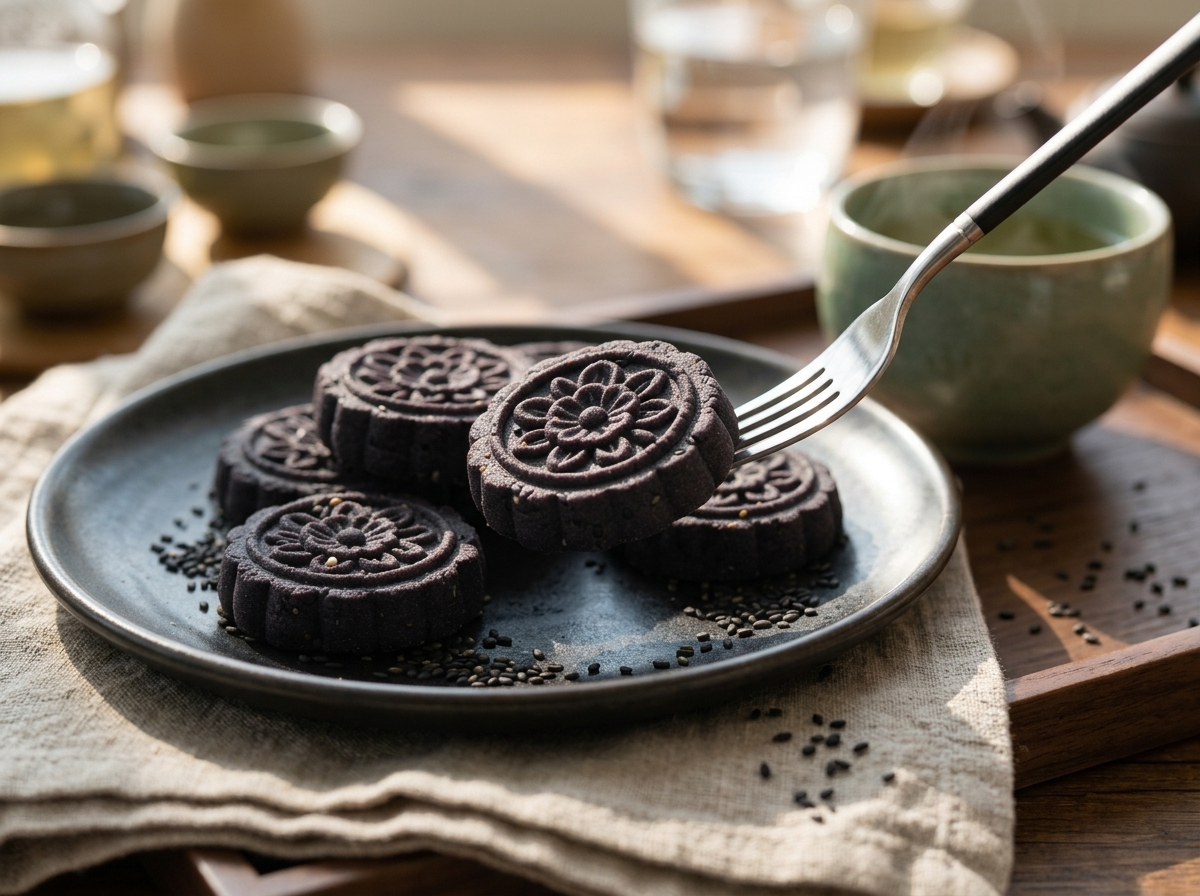
Dasik are meant to sit alongside tea, not stand alone. A plain green tea like nokcha is the classic pairing, its slight bitterness cuts through the honey sweetness.
For a full Korean tea table, set them out with yakgwa (honey cookies) and a pot of barley or citron tea. They also work as a small after-dinner bite with just a cup of black tea.
Arrange them on a dark plate so the pressed pattern shows up clearly, that’s half the appeal of dasik.
FAQ
Why is my dasik dough too crumbly to hold together?
Your sesame powder is probably too dry or the honey wasn’t warm enough to bind it. Warm the honey for 10 seconds before mixing, then knead in an extra teaspoon at a time until the dough packs together like soft clay in your palm. Overtoasted, dry seeds also grind less oily and need more honey to compensate.
Can I use white sesame seeds instead of black sesame for dasik?
Yes, white sesame seeds work the same way and toast just as fast, though the cookies come out pale tan instead of deep black. The flavor is milder and slightly sweeter than black sesame, which has a stronger, roasted edge. Use the same 200 g seeds to 65 g honey ratio either way.
How long do black sesame dasik cookies keep, and can I press the dough ahead?
Dasik keep 4 to 5 days at room temperature in an airtight container, since honey naturally resists spoilage. You can make the sesame-honey dough up to 2 days ahead and store it wrapped tightly, then bring it to room temperature and press it into molds right before serving. Pressed cookies lose their crisp pattern if stacked while soft.
What tea goes well with black sesame dasik?
Plain green tea, or nokcha, is the traditional pairing since its slight bitterness balances the honey sweetness in the cookies. Barley tea or citron tea also work well if you want something milder. Dasik were originally made specifically as an accompaniment to Korean tea ceremonies, so any lightly brewed tea suits them.
Is dasik gluten-free?
Yes, this black sesame dasik recipe is naturally gluten-free since it’s made from ground sesame seeds and honey with no flour at all. Just double check your sesame seeds were processed in a dedicated facility if you’re cooking for someone with celiac disease, since cross-contamination can happen in shared plants.
What’s the difference between black sesame dasik and songpyeon?
Dasik and songpyeon are both traditional Korean sweets, alongside treats like Korean Hotteok, but they’re made completely differently. Dasik are pressed, no-cook cookies made from ground seeds, nuts, or rice flour bound with honey, while songpyeon are steamed rice cakes filled with sweet fillings like sesame or bean paste. Dasik are firmer and drier, meant to last several days, songpyeon are soft and best eaten fresh.
Loved this? Try these next
