
Jump to Recipe
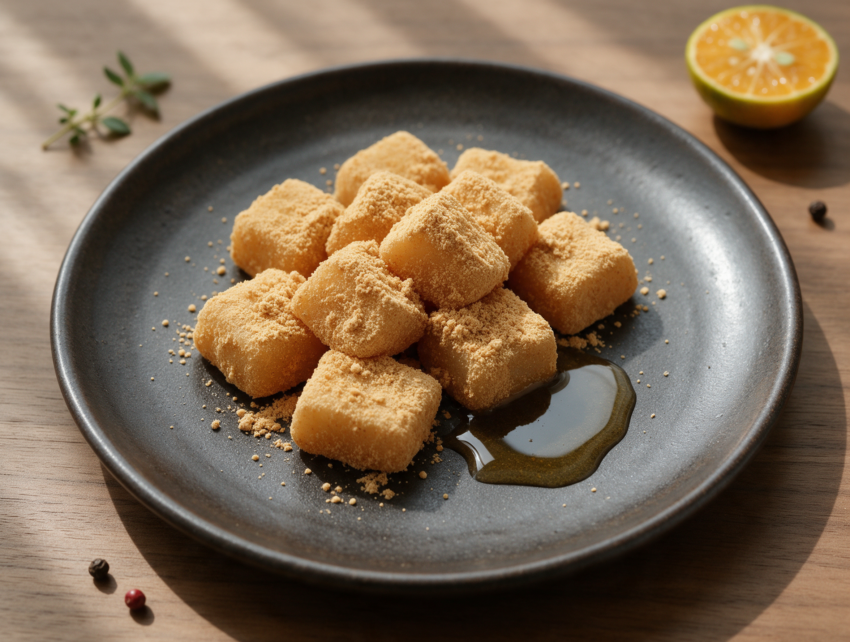
This injeolmi rice cake recipe turns steamed glutinous rice into a soft, chewy treat coated in toasted soybean powder, the way Korean home cooks have made it for generations.
There’s something satisfying about pounding rice into something stretchy with your own hands, even if a stand mixer does most of the heavy lifting here.
I first made this after craving the version I’d had at a Seoul market stall, sticky and coated in a nutty powder that stuck to my fingers for the rest of the afternoon. Turns out you don’t need a mortar and pestle, just glutinous rice flour, a steamer, and some patience while the dough comes together.
The result is soft, chewy rice cake with a nutty, faintly sweet coating, ready in under an hour.
Why You’ll Love This Recipe
- Uses just five pantry ingredients from start to finish
- Naturally gluten-free thanks to glutinous rice flour
- No oven or frying, just steaming and pounding
- Ready to eat in under an hour, start to finish
Ingredient Notes
- glutinous rice flour: Also sold as sweet rice flour or mochiko. Don’t swap in regular rice flour, it won’t turn stretchy the same way.
- roasted soybean powder (konggaru): Find it at Korean grocery stores or online, already roasted and ready to use. It should smell nutty, not raw or bitter.
- granulated sugar: Adjust up to 45 g if you want the dough sweeter, since the coating itself isn’t sweetened.
- honey: Optional, but a light drizzle adds sweetness that plain soybean powder doesn’t provide.
- neutral oil: A thin coat on your hands and knife keeps the sticky dough from clinging while you shape it.
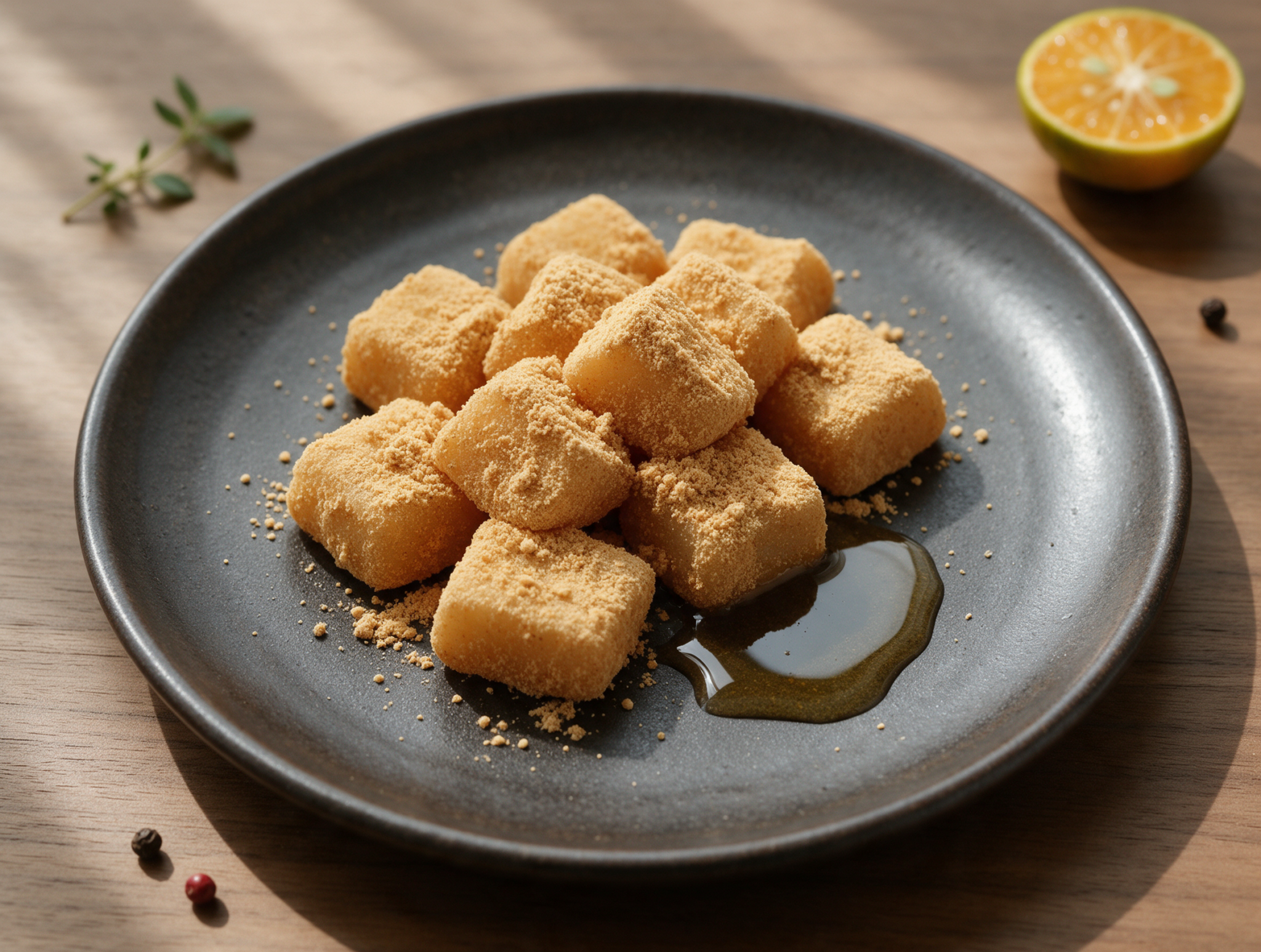
Soft and Nutty Injeolmi Rice Cakes with Soybean Powder
Ingredients
Method
- Bring water to a boil in a 7.6 L / 8-quart pot fitted with a steamer basket lined with damp cheesecloth.
- Whisk the glutinous rice flour, sugar, and salt together in a bowl. Add the water gradually, mixing until the texture looks like damp, clumpy sand.
- Spread the mixture over the cheesecloth, cover, and steam for 20 minutes, until the dough turns translucent and glossy with no dry white spots left.
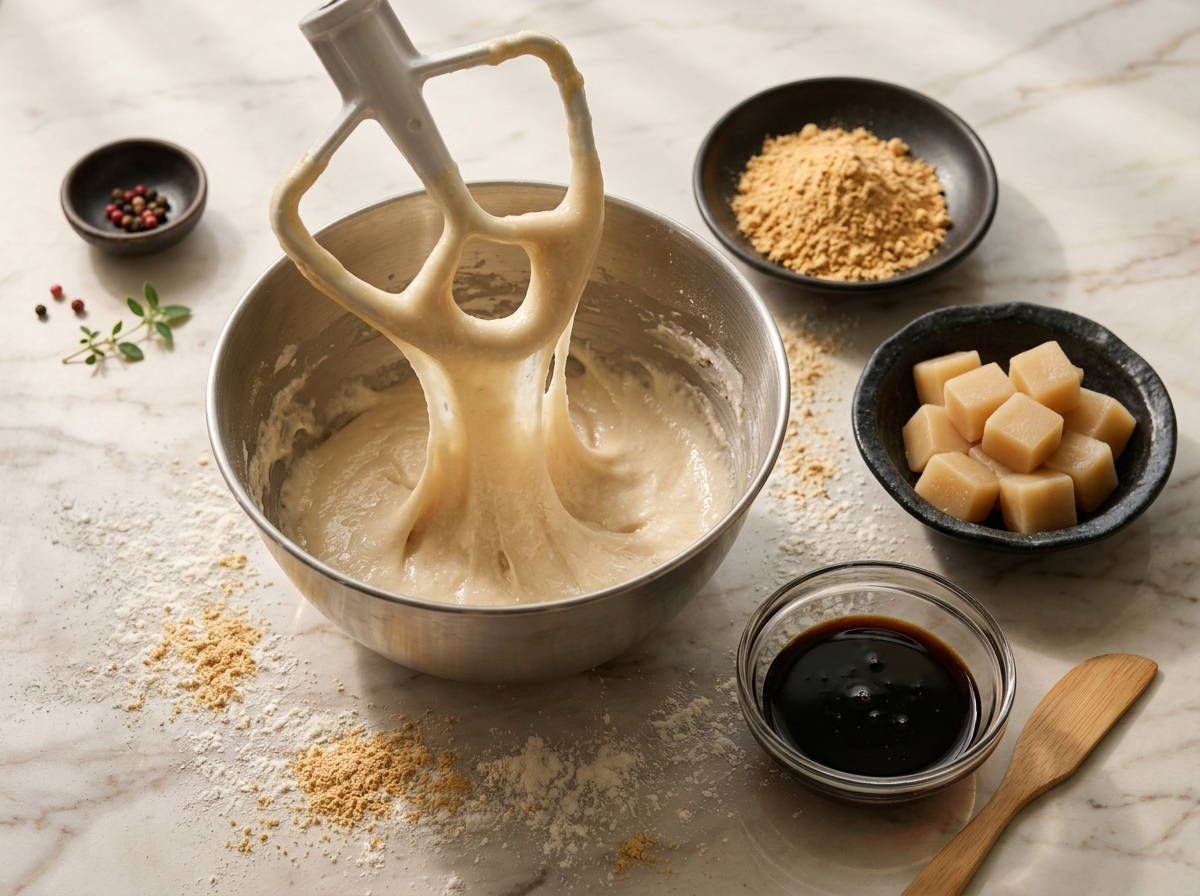
- Scrape the hot dough into a stand mixer bowl fitted with the paddle attachment. Beat on medium for 8 to 10 minutes, until the dough is smooth and stretches like taffy without tearing.
- Dust a 33 x 23 cm / 13 x 9-inch sheet pan with half of the roasted soybean powder.
- Turn the warm dough out onto the pan. Dust the top with more soybean powder and pat it into an even 2 cm / 3/4-inch thick rectangle.
- Let the dough cool for 10 minutes, until it's firm enough to hold a cut edge but still warm.
- Oil a sharp knife and cut the rectangle into 16 to 18 bite-sized cubes, about 3 cm / 1.25 inches each.
- Roll each piece in the remaining soybean powder, pressing gently so it sticks on all sides.
- Arrange the pieces on a plate, drizzle with honey if using, and serve the same day at room temperature.
Notes
- Pound the dough until it turns glossy and pulls away cleanly from the bowl
- Keep hands and knife oiled to stop the sticky dough from clumping
- Coat pieces in soybean powder while still warm so it adheres evenly
- Serve same day for the softest chew, injeolmi firms up fast once cool
Tips for Success
- Use glutinous rice flour, not regular rice flour, or the dough will crumble instead of turning chewy.
- Toast the soybean powder in a dry pan if it smells raw or bitter, it should smell nutty like popcorn.
- Pound the dough until it stops sticking to your hand and stretches like taffy without tearing.
- Coat cut pieces in soybean powder right away while still warm, the same way kinako clings to chilled kuzumochi, so the powder sticks evenly.
- Serve injeolmi the same day for the best chew, since the rice starch stiffens fast once cool.
Variations
- Roll pieces in toasted black sesame seeds instead of soybean powder for a deeper, savory nutty crust.
- Mix a spoonful of cinnamon into the soybean coating for a fragrant twist on the traditional powder.
- Fill small rounds of dough with sweetened red bean paste before coating for injeolmi with a soft center.
Storage and Reheating
Injeolmi is best eaten the day it’s made, since the rice starch firms up as it sits.
Store leftover pieces in an airtight container at room temperature for up to 1 day, or in the fridge for 3 to 4 days. Refrigeration makes the texture harden faster.
To soften, microwave a piece for 10 to 15 seconds wrapped in a damp paper towel, or steam for 2 to 3 minutes. Dust with a little extra soybean powder if the coating looks dull after reheating. For longer storage, freeze pieces in a single layer, then transfer to a bag for up to 1 month.
Serving Suggestions
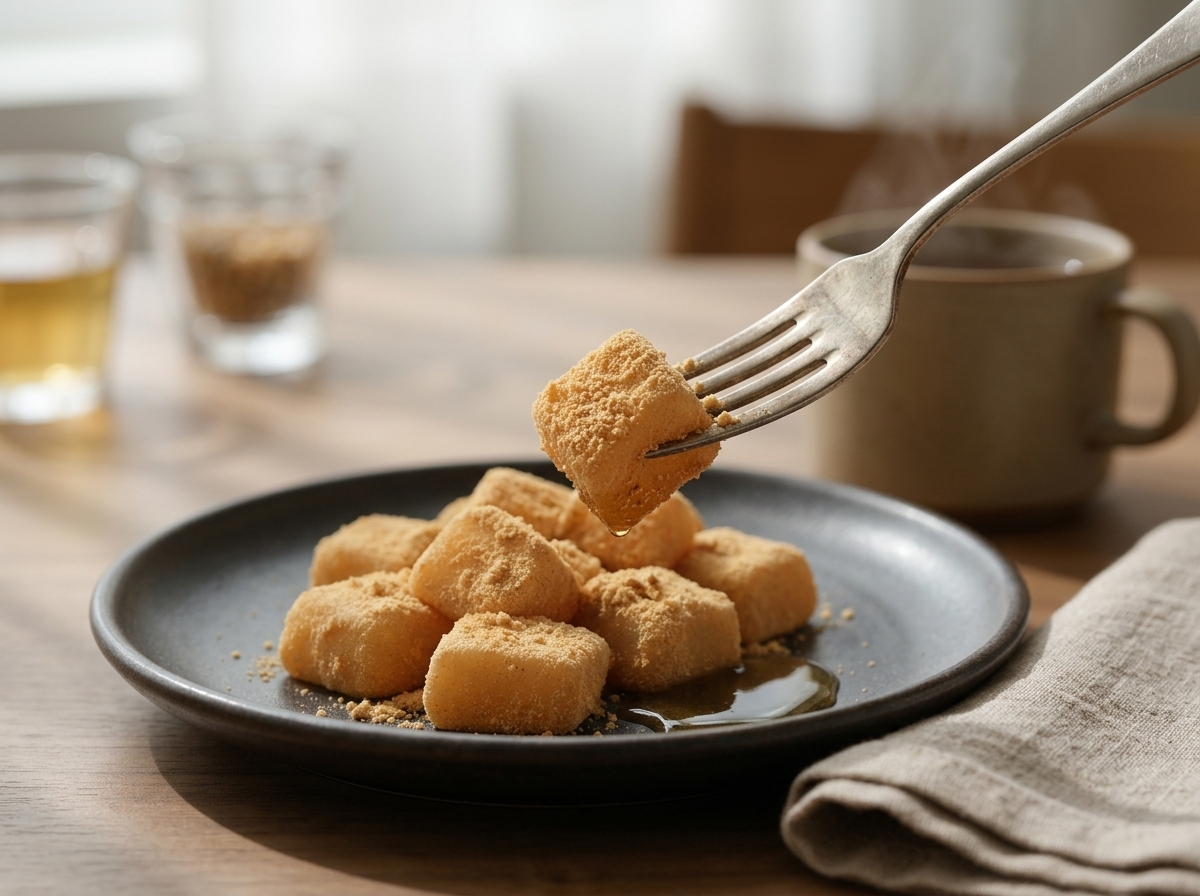
Serve injeolmi at room temperature, piled on a plate with extra soybean powder dusted over the top.
A cup of hot barley tea or roasted corn tea makes a good match, since the toasty flavors echo the kongaru coating.
For a holiday spread, set it alongside other tteok varieties like Korean hotteok or fresh fruit, and add a small drizzle of honey for anyone who wants it sweeter.
FAQ
Why is my injeolmi rice cake gummy instead of chewy?
Gummy injeolmi usually means the dough wasn’t pounded long enough or had too much water. Keep beating the steamed dough for the full 8 to 10 minutes in the mixer until it turns glossy and stretches without sticking to your finger. If it still feels wet, dust in an extra tablespoon of rice flour before shaping.
Can I use mochiko instead of Korean glutinous rice flour for injeolmi?
Yes, Japanese mochiko works fine since it’s made from the same glutinous rice starch used in three-color hanami dango. The texture and stretch stay nearly identical, so no other measurements need to change. Just make sure the bag says glutinous or sweet rice flour, not regular rice flour, which won’t turn chewy the same way.
Can I make injeolmi rice cakes ahead of time and keep them soft?
Injeolmi is best made and eaten the same day, since the rice starch firms up fast as it cools. Store leftovers airtight at room temperature for one day or in the fridge for 3 to 4 days, then soften by microwaving for 10 to 15 seconds under a damp paper towel before serving.
What goes well with injeolmi rice cake?
Injeolmi pairs well with hot barley tea or cinnamon punch, since the warm drinks cut through the sticky, sweet coating. It also shows up alongside other tteok varieties on a Korean dessert platter. A light drizzle of honey over the top makes a simple standalone finish too.
Is injeolmi rice cake gluten-free?
Yes, injeolmi is naturally gluten-free because it’s made entirely from glutinous rice flour, which contains no gluten despite the name. The soybean powder coating is also gluten-free. Just check that your rice flour bag isn’t processed in a facility with wheat if you need it strictly certified.
What is the difference between injeolmi and garae-tteok?
Injeolmi is a soft, pounded rice cake rolled in nutty soybean powder and eaten as a sweet snack. Garae-tteok is a smoother, unsweetened cylindrical rice cake used in savory dishes like tteokbokki and rice cake soup. Both start from rice, but the texture and use differ.
Related recipes
