
Jump to Recipe
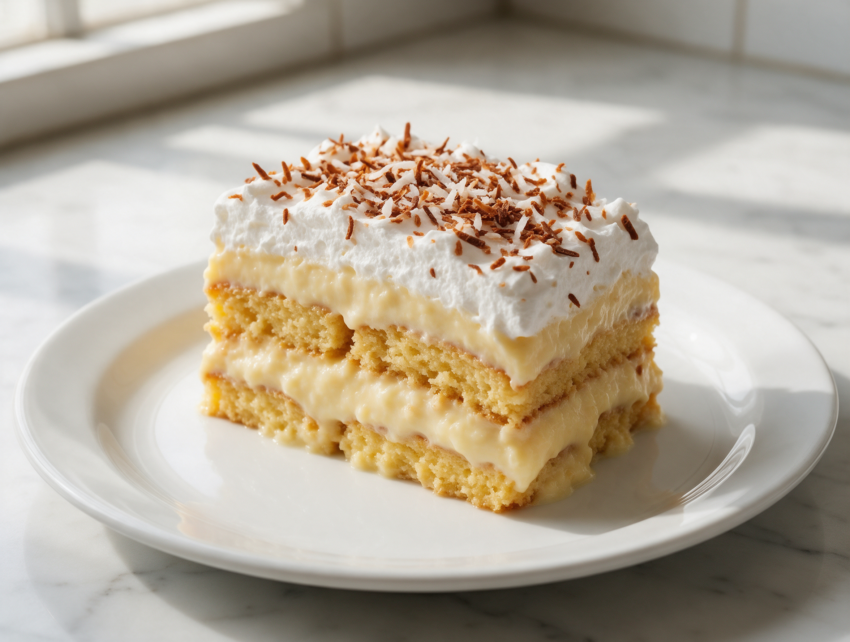
There’s something about a bienmesabe venezolano recipe that turns any weekend into a small occasion. Layers of soft sponge cake soak up a rum-spiked coconut syrup, then get buried under a silky coconut custard. It’s a dessert my Venezuelan neighbor taught me, and I’ve made it a dozen times since.
This isn’t the savory Canary Islands fish dish some people search for under the same name. Venezuelan bienmesabe is pure dessert: cake, coconut, cream, chilled until it’s cool and sliceable.
The custard takes patience more than skill. Cook it low, stir constantly, and pull it off the heat the second it thickens against the spoon.
Make it a day ahead if you can. The flavors settle overnight, and the cake gets softer and easier to cut.
Why You’ll Love This Recipe
- Rum-soaked sponge stays soft for days in the fridge
- Coconut custard is silky, not gluey or grainy
- Make-ahead dessert that tastes better the next day
- No fancy equipment, just a saucepan and a mixer
Ingredient Notes
- canned coconut milk: Use full-fat canned coconut milk, not the carton kind. Light coconut milk makes a thinner custard that won’t set as firm.
- egg yolks: Save the whites for another recipe, this custard only uses yolks for that thick, rich texture.
- dark rum: Sub the same amount of orange juice or coconut water for an alcohol-free version, the flavor shifts but it still works.
- cornstarch: This thickens the custard alongside the egg yolks. Don’t skip it or the custard will stay loose even after cooking.
- heavy cream: Whip it cold and just to soft peaks, overwhipped cream turns grainy once spread over the chilled cake.
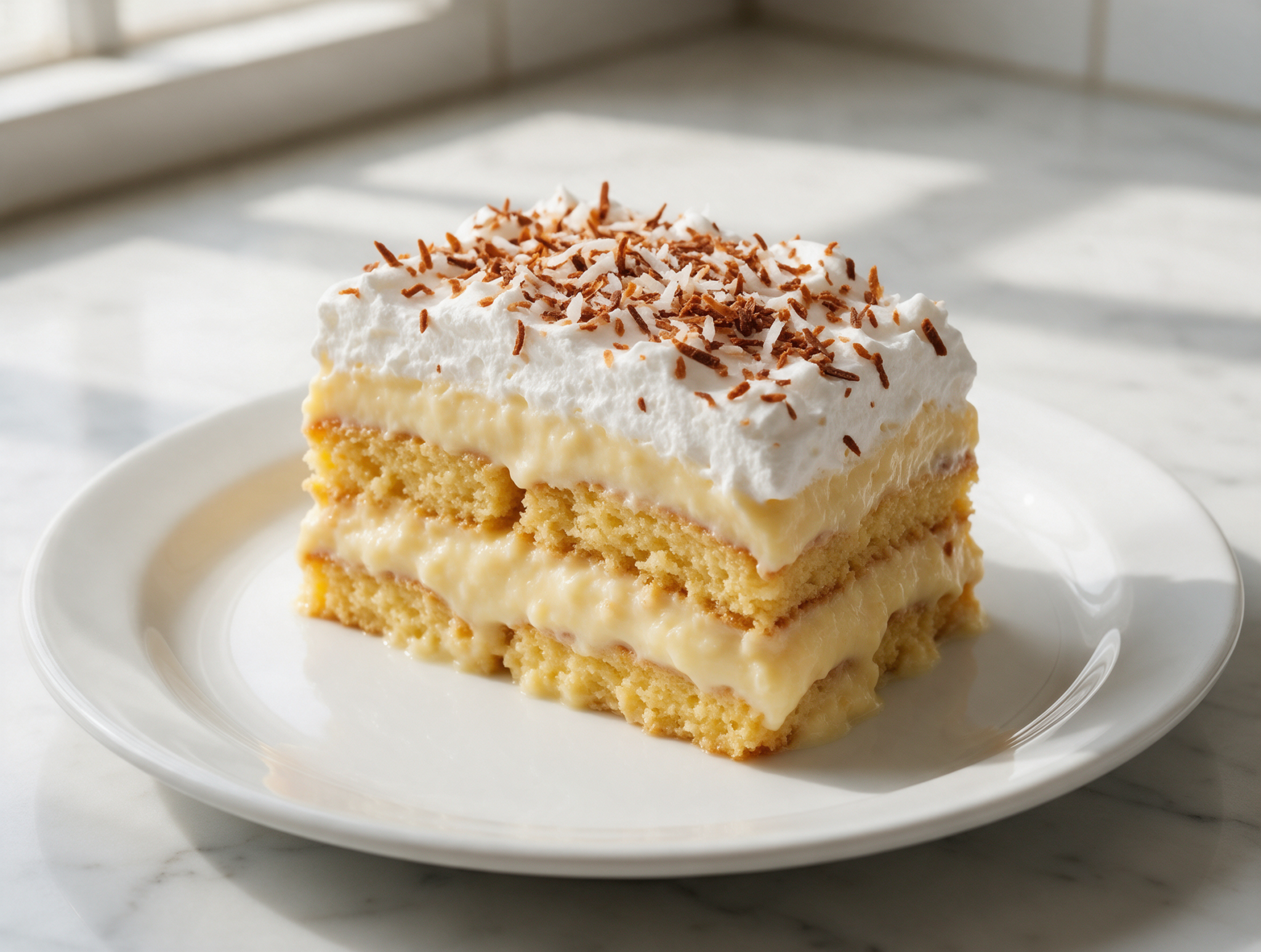
Bienmesabe Venezolano: Coconut Rum Custard Dessert
Ingredients
Method
- Heat the oven to 180C/350F. Grease and line a 23x33 cm / 9x13-inch baking pan with parchment.
- In a large bowl, beat the eggs and 200 g sugar with a hand mixer on high for 5 to 6 minutes until pale, thick, and roughly tripled in volume.
- Sift the flour, baking powder, and salt over the egg mixture in two additions, folding gently with a spatula each time. Fold in the vanilla and stop as soon as no dry streaks remain, overmixing deflates the batter.
- Pour the batter into the pan and bake for 20 to 22 minutes, until the top springs back when pressed and a skewer comes out clean. Cool completely in the pan, about 45 minutes.
- Combine 400 ml coconut milk, 100 g sugar, and the cinnamon stick in a 2-quart / 1.9 L saucepan. Bring to a gentle simmer over medium heat, stirring until the sugar dissolves, about 5 minutes.
- Remove from heat, discard the cinnamon stick, and stir in the rum. Let the syrup cool to room temperature.
- Whisk the egg yolks, 100 g sugar, and cornstarch together in a bowl until smooth and pale.
- Warm the remaining coconut milk and whole milk in the saucepan over medium heat until steaming but not boiling. Slowly pour about a third into the egg yolk mixture, whisking constantly to temper it.
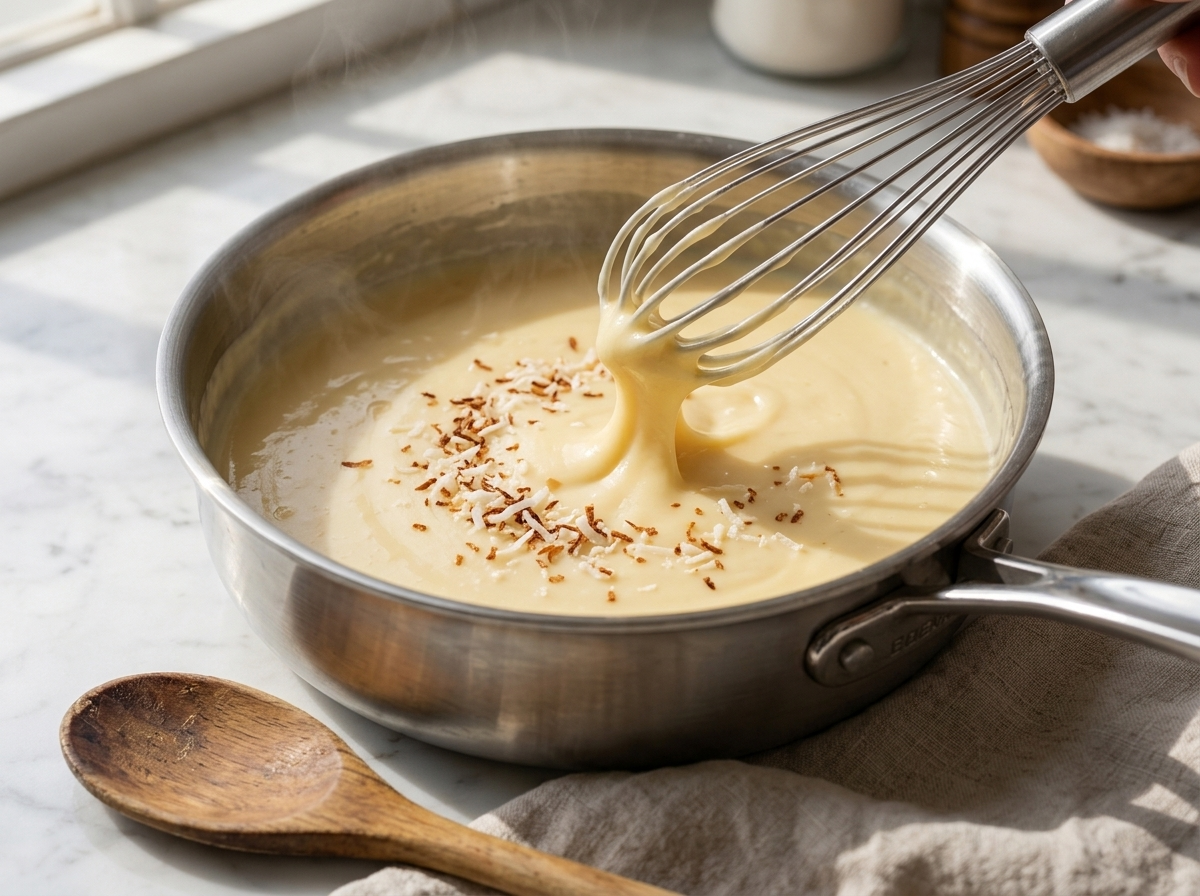
- Pour everything back into the saucepan. Cook over medium-low heat, stirring constantly, for 6 to 8 minutes until the custard coats the back of a spoon and reaches 71C/160F. Pull it off the heat the moment it thickens, it can scramble fast if you walk away. Stir in the vanilla, then strain through a fine-mesh sieve into a clean bowl and cool to room temperature.
- Once the cake is fully cool, slice it horizontally into two even layers using a serrated knife.
- Place the bottom layer back in the pan or on a serving platter. Brush or spoon half the coconut syrup evenly over it, then spread half the custard on top.
- Add the second cake layer, soak with the remaining syrup, and spread the rest of the custard over the top. Cover and chill for at least 4 hours, or overnight, until fully set.
- Whip the heavy cream with 2 tbsp sugar to soft peaks. Spread or pipe over the chilled cake, sprinkle with toasted coconut, and dust with ground cinnamon before slicing.
Notes
- Custard sets firmer after a full overnight chill, not just 4 hours.
- Use full-fat canned coconut milk, the light version makes a thinner custard.
- A serrated knife slices the soaked cake cleaner than a straight blade.
- Strain the custard through a sieve to catch any scrambled bits.
Tips for Success
- Cook the custard over medium-low heat and stir constantly, it thickens fast in the last minute of cooking.
- Cool the sponge cake fully before slicing it, a warm cake tears instead of cutting clean.
- Skip the rum in the syrup if serving kids, swap in the same amount of orange juice instead.
- Chill the assembled bienmesabe for at least 4 hours so the custard has time to set firm enough to slice.
- Toast the shredded coconut in a dry skillet over low heat, stirring often so it browns evenly without burning.
Variations
- Swap dark rum for coconut rum or brandy in the syrup for a different aromatic edge.
- Layer in thin banana slices between the cake and custard for a fruitier, Caribbean-leaning version.
- Top with a torched meringue instead of whipped cream for a browned, old-fashioned finish.
Storage and Reheating
Bienmesabe venezolano keeps in the fridge for 4 to 5 days, covered tightly with plastic wrap or a lid. It’s meant to be served cold, so there’s no reheating step here, just pull it out and slice.
Freezing isn’t a good idea for this one. The coconut custard separates and turns watery once thawed, and the whipped cream topping loses its texture completely.
If you want to prep ahead, make the cake and custard a day early and assemble the morning you plan to serve it, then chill for the full 4 hours before adding the whipped cream topping.
Serving Suggestions
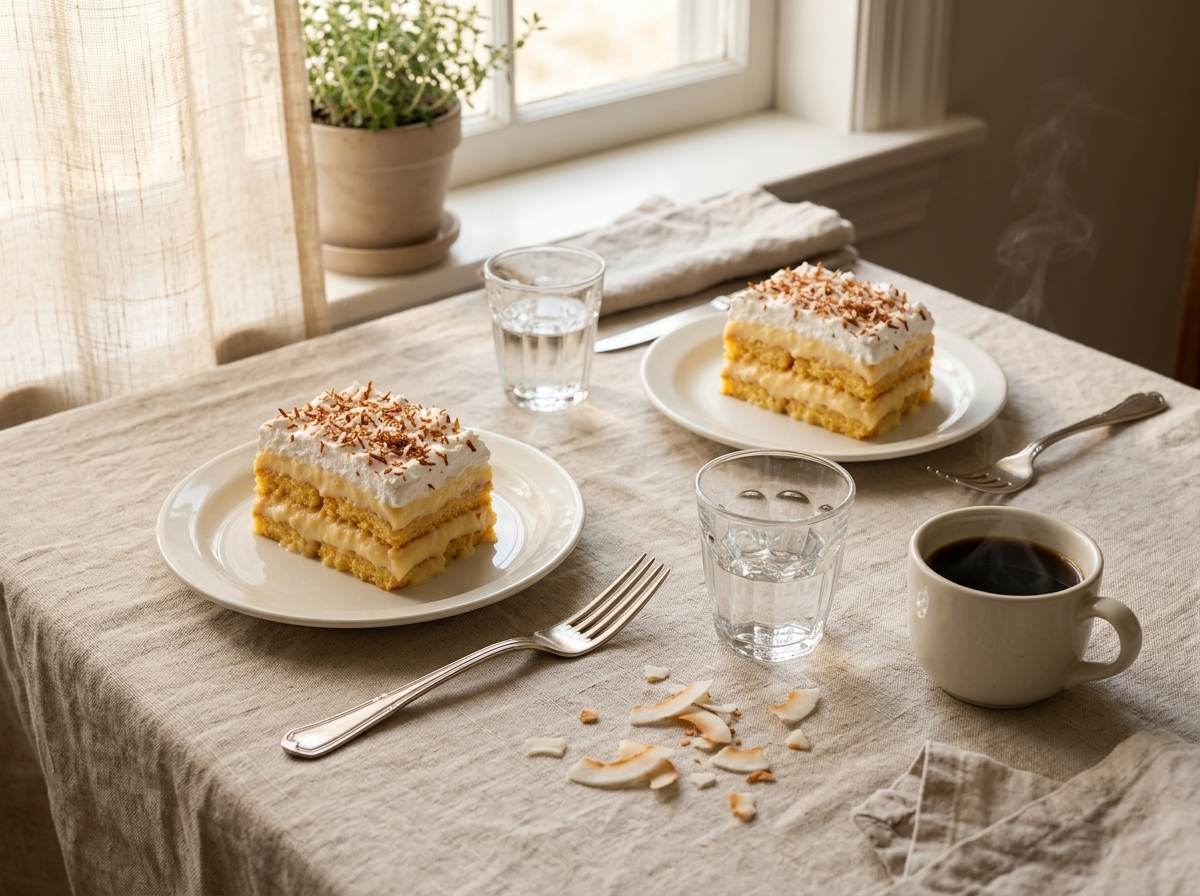
Bienmesabe venezolano is rich enough to serve on its own, straight from the fridge in small slices. A dusting of ground cinnamon or a few toasted coconut flakes on top is all it needs.
Serve it after a heavy meal, like pabellón criollo or grilled meats, when everyone wants something cold rather than another hot dish. Small cups of strong coffee alongside cut through the sweetness well.
For a party, cut it into small squares instead of large slices so guests can take a taste without committing to a full serving.
FAQ
Why is my bienmesabe custard grainy or scrambled instead of smooth?
Grainy custard means the egg yolks cooked too fast and started to scramble. Keep the heat at medium-low, stir constantly, and pull the pan off the moment the custard coats the back of a spoon around 71C/160F. Straining it through a fine-mesh sieve after cooking catches any small curdled bits and saves the texture.
Can I use coconut cream instead of canned coconut milk in bienmesabe venezolano?
You can, but thin it with a splash of water or milk first since coconut cream is much thicker than canned coconut milk. Using it straight makes both the syrup and custard heavier and can throw off how the custard sets. Full-fat canned coconut milk gives the closest result to a traditional bienmesabe.
How far ahead can I make Venezuelan bienmesabe before serving it?
You can assemble it up to a day ahead and keep it covered in the fridge, it actually slices cleaner after resting overnight. Add the whipped cream and toasted coconut topping right before serving so it stays fresh looking. Fully assembled, it keeps well for 4 to 5 days in the fridge.
What goes well with bienmesabe venezolano besides whipped cream?
Toasted coconut flakes and a light dusting of ground cinnamon are the classic finish, and both add texture against the soft custard. Strong black coffee or a small glass of rum on the side works well after a heavy meal. Fresh mango or pineapple on the plate adds a tart contrast.
Is bienmesabe venezolano gluten free?
Not as written, since the sponge cake uses regular all-purpose flour. Swap in a 1:1 gluten-free baking flour blend for the cake layer, and the rest of the recipe, the coconut syrup and custard, is naturally gluten free already.
What’s the difference between Venezuelan bienmesabe and Spanish bienmesabe?
They share a name but almost nothing else. Venezuelan bienmesabe is a coconut custard cake soaked in rum syrup, while Spanish bienmesabe, especially from the Canary Islands, is usually a savory almond and garlic sauce served over fish. If a recipe calls for shredded fish, you’re looking at the Spanish version, not this one.
You might also like
- the Tottenham Cake with Pink Coconut Icing
- Classic Gateau Nantais Cake with Dark Rum Glaze
- Far Breton: Brittany’s Classic Prune Custard Cake
- the Sticky Date Queen Elizabeth Cake with Broiled Coconut
