
Jump to Recipe
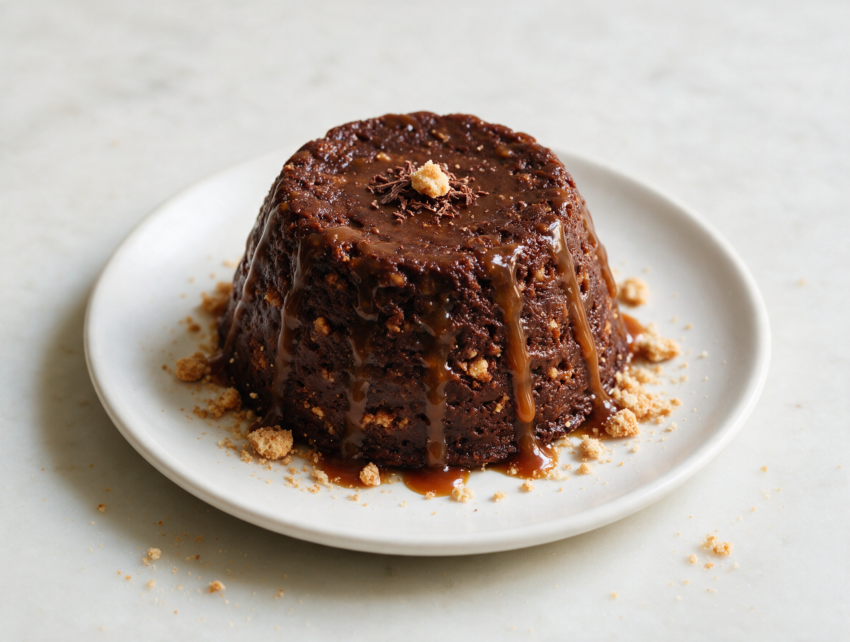
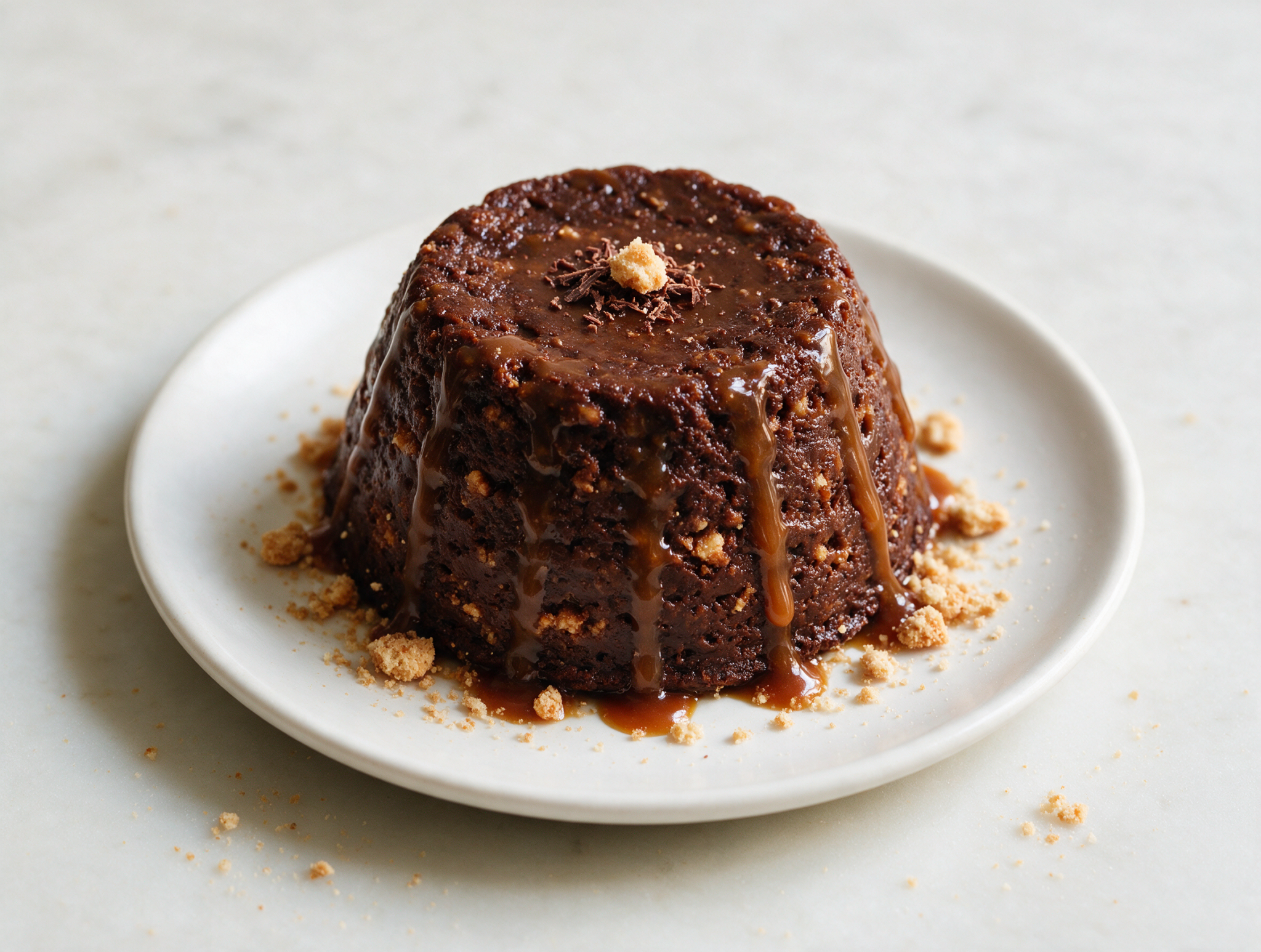
There’s something quietly dramatic about flipping a chilled pudding out of its mold and watching caramel pool around the base. That’s bonet piemontese, a baked chocolate custard from the hills of Piedmont, built on crushed amaretti cookies and a splash of rum.
I first had it at the end of a long lunch in Turin, served in thin, dense slices, not fluffy at all. It’s closer to a flan than a mousse, and the amaretti give it a faint almond crunch you don’t expect from a custard.
This version bakes in a water bath at 160C/320F for about 55 minutes, until the edges are set and the center still has a slight wobble. Internal temp lands around 176F/80C when it’s ready to pull.
It needs a long chill before unmolding, so plan for that. Otherwise it’s a short ingredient list doing a lot of work.
Why You’ll Love This Recipe
- Only six ingredients, no flour needed
- Make-ahead dessert that improves overnight in the fridge
- Amaretti cookies add crunch inside a smooth custard
- Caramel bottom turns into its own sauce
Ingredient Notes
- amaretti cookies: These crunchy Italian almond cookies give bonet its texture. Check the label if you need gluten-free, since some brands add wheat flour.
- cocoa powder: Use natural unsweetened cocoa powder for a sharper chocolate flavor. Dutch-process works too but softens the edge a bit.
- dark rum: Amaretto liqueur is a natural swap since it echoes the almond flavor already in the cookies. For no alcohol, use strong brewed coffee or espresso.
- whole milk: Whole milk gives a richer set. Low-fat milk works but makes the custard noticeably looser.
- eggs: Bring eggs to room temperature so they blend smoothly into the warm milk without scrambling.
Bonet Piemontese: Baked Chocolate Amaretti Pudding
Ingredients
Method
- Heat the oven to 160 C / 320 F. Put a kettle of water on to boil for the water bath.
- Combine the 100 g sugar and 3 tbsp water in a small saucepan over medium heat. Cook without stirring, swirling the pan occasionally, until it turns a deep amber, 6 to 8 minutes.
- Pour the caramel immediately into the base of a 20 cm / 8-inch round cake pan or savarin mold. Tilt to coat the bottom, then set aside to harden.
- Crush the amaretti cookies to fine crumbs using a food processor or a rolling pin over a sealed bag.
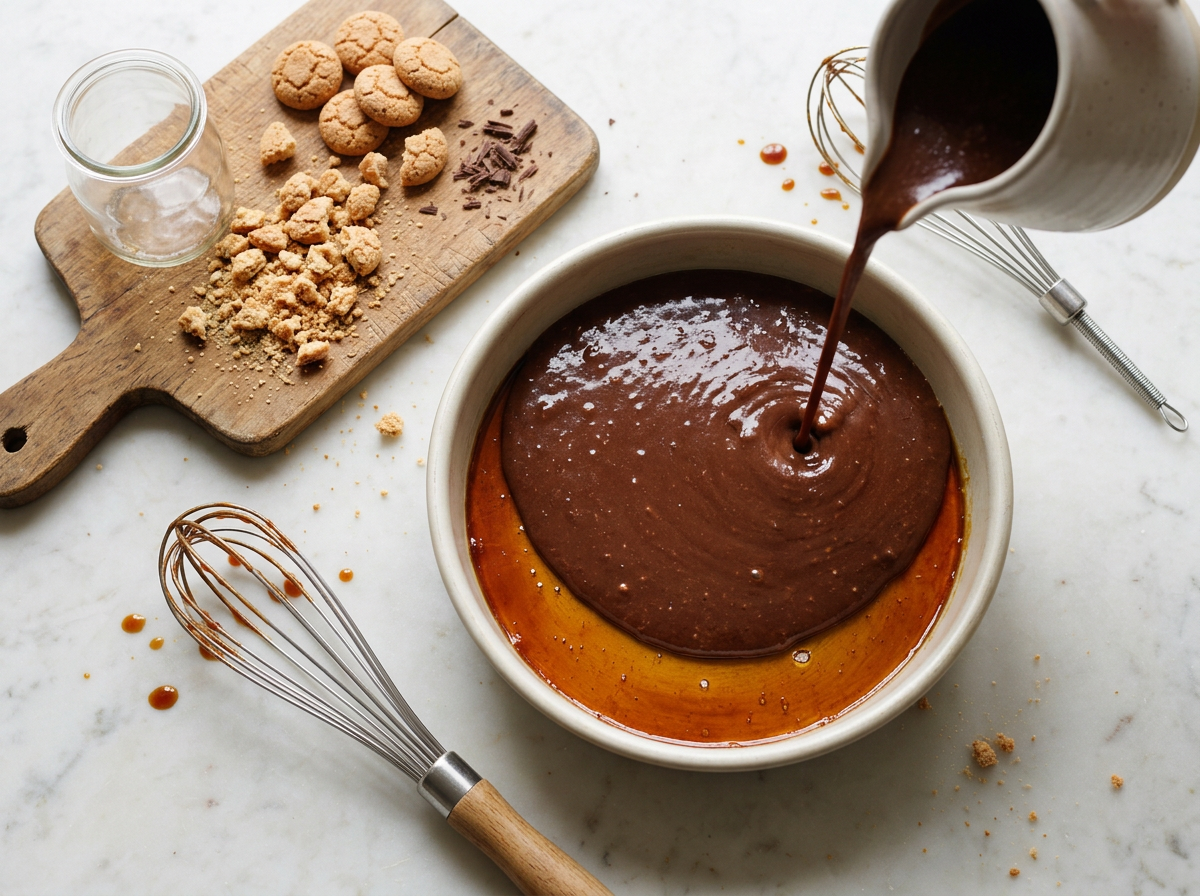
- Whisk the eggs, 100 g sugar, cocoa powder and salt together in a mixing bowl until smooth and no cocoa lumps remain.
- Warm the milk in a saucepan until steaming but not boiling. Whisk it into the egg mixture gradually to temper the eggs.
- Stir in the crushed amaretti, rum and vanilla. Pour the custard through a fine-mesh sieve into another bowl for a smoother texture.
- Pour the custard over the hardened caramel in the mold. Set the mold inside a roasting pan.
- Place in the oven, then carefully pour boiling water into the roasting pan until it comes halfway up the sides of the mold.
- Bake for 55 to 60 minutes, until the edges are set and the center still gives a slight jiggle. An instant-read thermometer in the middle should read about 176 F / 80 C.
- Lift the mold out of the water bath and cool to room temperature. Cover and chill for at least 4 hours, ideally overnight.
- Run a thin knife around the edge, place a serving plate on top, and invert. The caramel will run down the sides as a sauce. Slice and serve cold.
Notes
- Use a light-colored pan for caramel so you can watch the color change.
- Don't stir the caramel while it cooks, just swirl the pan gently.
- Overbaked custard turns rubbery and weeps liquid, pull it at first jiggle.
- A savarin or bundt mold gives a classic ring shape with more caramel coverage.
Tips for Success
- Cook the caramel to a deep amber color, not pale gold, or the bonet tastes flat and overly sweet.
- Temper the eggs slowly with warm milk to avoid scrambling them before the custard even reaches the oven.
- Strain the custard through a fine-mesh sieve to catch any egg strands for a silkier texture.
- Keep the water bath at a bare simmer, never boiling hard, so the custard cooks gently and evenly.
- Chill the bonet for at least 4 hours, ideally overnight, so it firms up enough to unmold cleanly.
Variations
- Swap rum for strong espresso to make a coffee-forward bonet with no added alcohol.
- Add a tablespoon of instant coffee granules to the custard for a mocha-leaning version of the classic.
- Bake in six 180 ml ramekins instead of one large mold for individual portions and faster chilling.
Storage and Reheating
Bonet piemontese keeps well because it’s meant to be served cold. Store it covered in the mold or under plastic wrap in the fridge for 3 to 4 days.
There’s no reheating step here, it’s a cold custard from start to finish. Pull it straight from the fridge and slice cold, or let it sit at room temperature for 10 minutes to soften slightly before serving.
Freezing isn’t recommended. The custard’s texture turns grainy and the caramel weeps once thawed.
Serving Suggestions
Bonet piemontese stands on its own, but a small pour of unsweetened whipped cream on the side softens the bittersweet caramel edge.
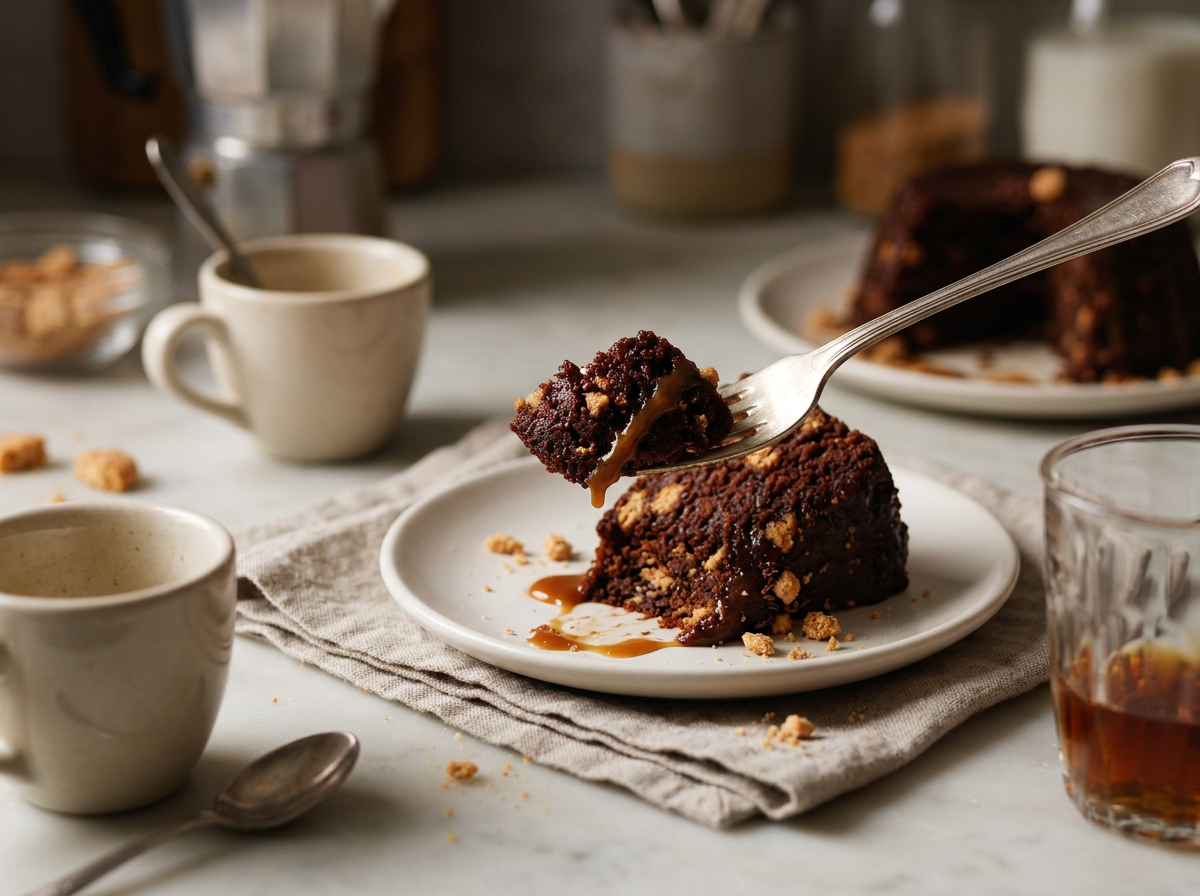
I like it after a simple pasta dinner, since it’s rich but not heavy in the way a layered cake can be. Espresso on the side is close to mandatory in Piedmont.
For a dinner party, slice it thin, about six to eight slices from one mold, and let the caramel pool on the plate before adding fruit like poached pears.
FAQ
How do I know when bonet piemontese is done baking?
The edges should look set while the center still gives a slight jiggle, similar to a baked cheesecake. An instant-read thermometer inserted in the middle should read about 176F/80C. Pull it from the water bath at that point, since it firms up more as it cools and chills.
Can I use amaretto liqueur instead of rum in bonet piemontese?
Yes, amaretto works well and echoes the almond flavor already coming from the crushed amaretti cookies. Use the same 2 tablespoons called for with the rum. For a version without alcohol, swap in strong brewed coffee or espresso instead.
Can I make bonet piemontese a day ahead?
Yes, and it’s actually better made a day ahead since it needs at least 4 hours in the fridge to firm up enough to unmold. Cover the pan tightly once it’s cooled to room temperature. It keeps well in the fridge for up to 4 days before serving.
What goes well with bonet piemontese after dinner?
Espresso is the classic pairing, since its bitterness balances the sweet caramel and rich custard. A small spoon of unsweetened whipped cream on the side works if you want something lighter. Poached pears or fresh berries add a bit of acidity too.
Is bonet piemontese gluten free?
It depends on the amaretti cookies you use, since some brands add wheat flour along with the almond base. Check the package label, many Italian amaretti are naturally gluten free but not all are. Swap in a certified gluten-free amaretti brand if you need to be sure.
What’s the difference between bonet and crème caramel?
Bonet is chocolate-based and includes crushed amaretti cookies for texture, while crème caramel is a plain vanilla custard with a smooth, uniform bite. Bonet also tends to be denser since it uses less milk relative to eggs. Both share the caramel base poured into the mold before baking.
You might also like
- Classic Nanaimo Bars with Chocolate Custard Layers
- Malvern Pudding: Spiced Baked Apples with Crumb Topping recipe
- this Baked Raspberry White Chocolate Bars with Buttery Crust
- Baked Mexican Capirotada with Piloncillo and Cheese
