
Jump to Recipe
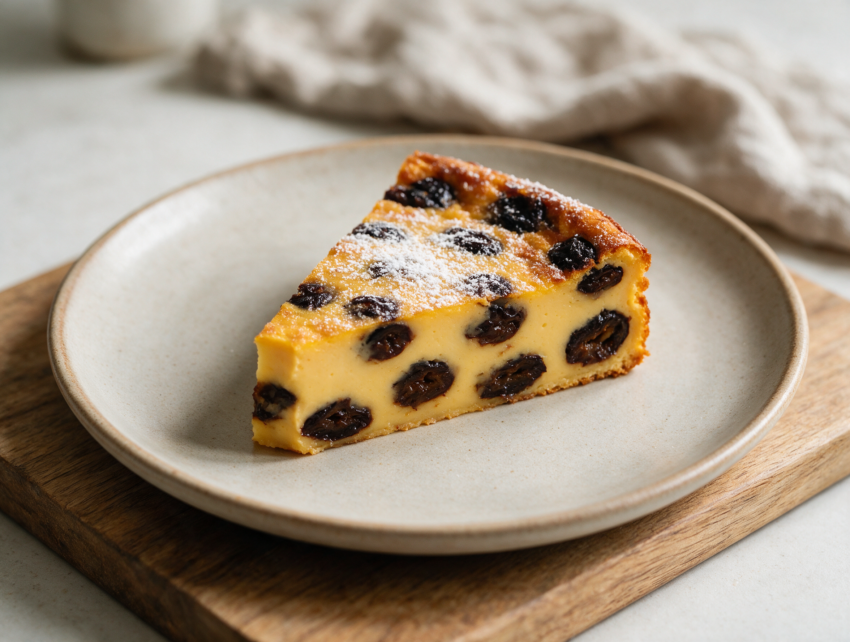
There’s something about a far breton that feels like a village bakery window in Brittany, even if you’ve never been.
I first ate a wedge of this at a farmhouse table in western France, the middle still warm and the prunes soft from a swim in rum. It wasn’t fussy. Just eggs, milk, flour and fruit baked into something between a custard and a cake.
This version keeps that simplicity. You soak pitted prunes in rum, whisk together a thin batter, pour it over the fruit and bake until the top domes and turns deep gold.
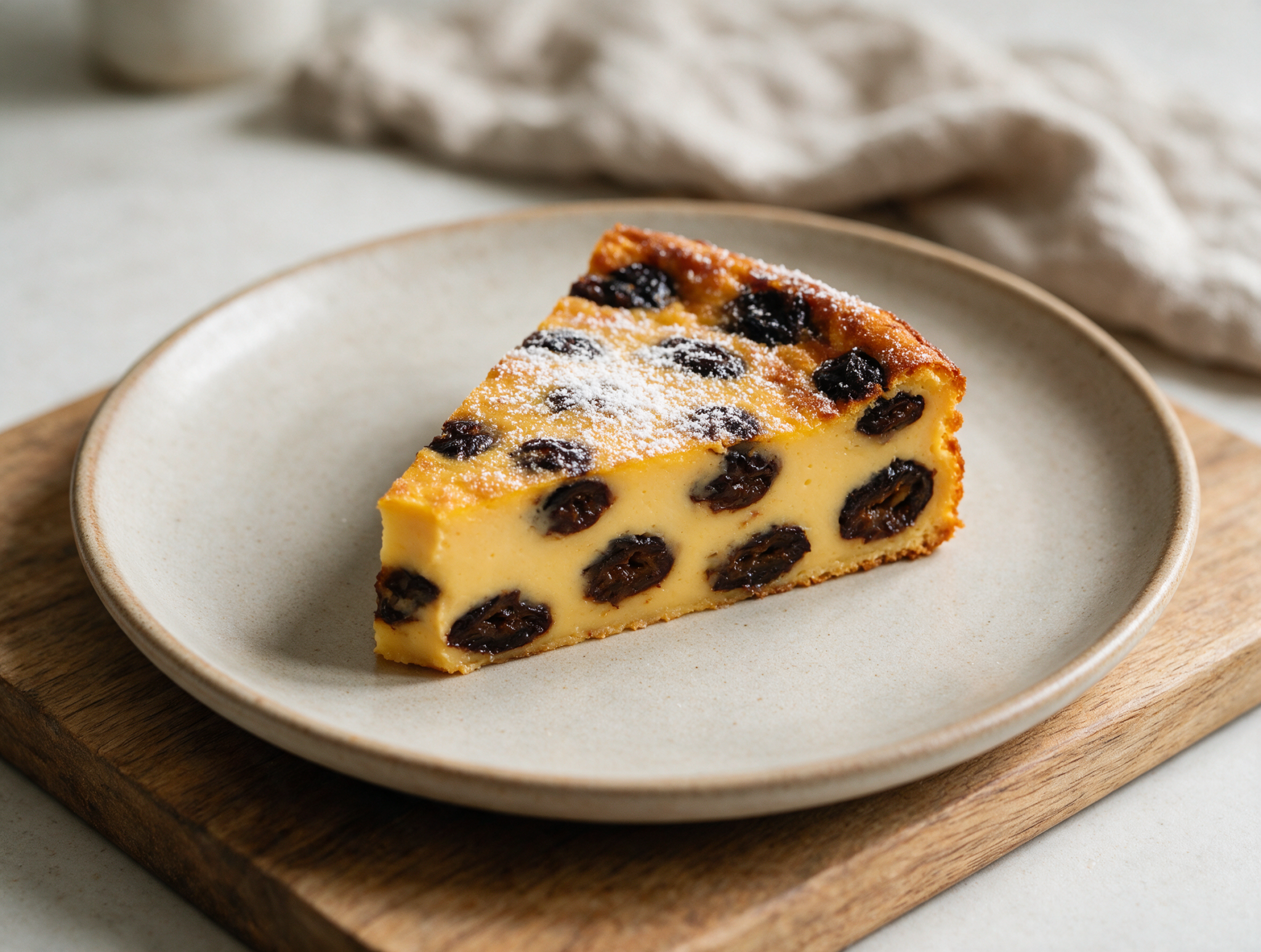
The center should jiggle slightly like a set flan when it comes out of the oven, not wobble like liquid batter. That’s how you know it’s done.
Why You’ll Love This Recipe
- Just one bowl and one baking dish to clean
- Rum-soaked prunes give it real depth, not just sweetness
- Bakes in under an hour with pantry ingredients
- Tastes better the next day, so it’s genuinely make-ahead
Ingredient Notes
- Pitted prunes: Use soft, moist prunes if you can find them. Dry, hard ones won’t plump up as well even with a long soak.
- Dark rum: Traditional and worth using. Swap in strong black tea or orange juice if you want it alcohol-free.
- Whole milk: Gives the custard richness. Skim milk works but the texture ends up thinner and less silky.
- Eggs: Use large eggs at room temperature so they blend smoothly into the batter without streaks.
- Flour: Standard all-purpose flour holds this batter together. A gluten-free 1:1 blend works but the crumb turns denser.
- Vanilla extract: A small amount rounds out the rum without competing with it.
Far Breton: Brittany’s Classic Prune Custard Cake
Ingredients
Method
- Combine the pitted prunes and dark rum in a small bowl. Let them soak for at least 1 hour, or overnight in the fridge for deeper flavor.
- Heat the oven to 180 C / 355 F. Grease a 23 cm / 9-inch round ceramic baking dish, 5 cm deep, with the softened butter.
- Whisk the eggs and sugar together in a large bowl until pale and slightly thickened, about 1 minute.
- Whisk in the flour and salt until smooth, scraping the bottom of the bowl so no dry pockets remain.
- Gradually whisk in the milk and vanilla extract until the batter is thin and lump-free, similar to pancake batter.
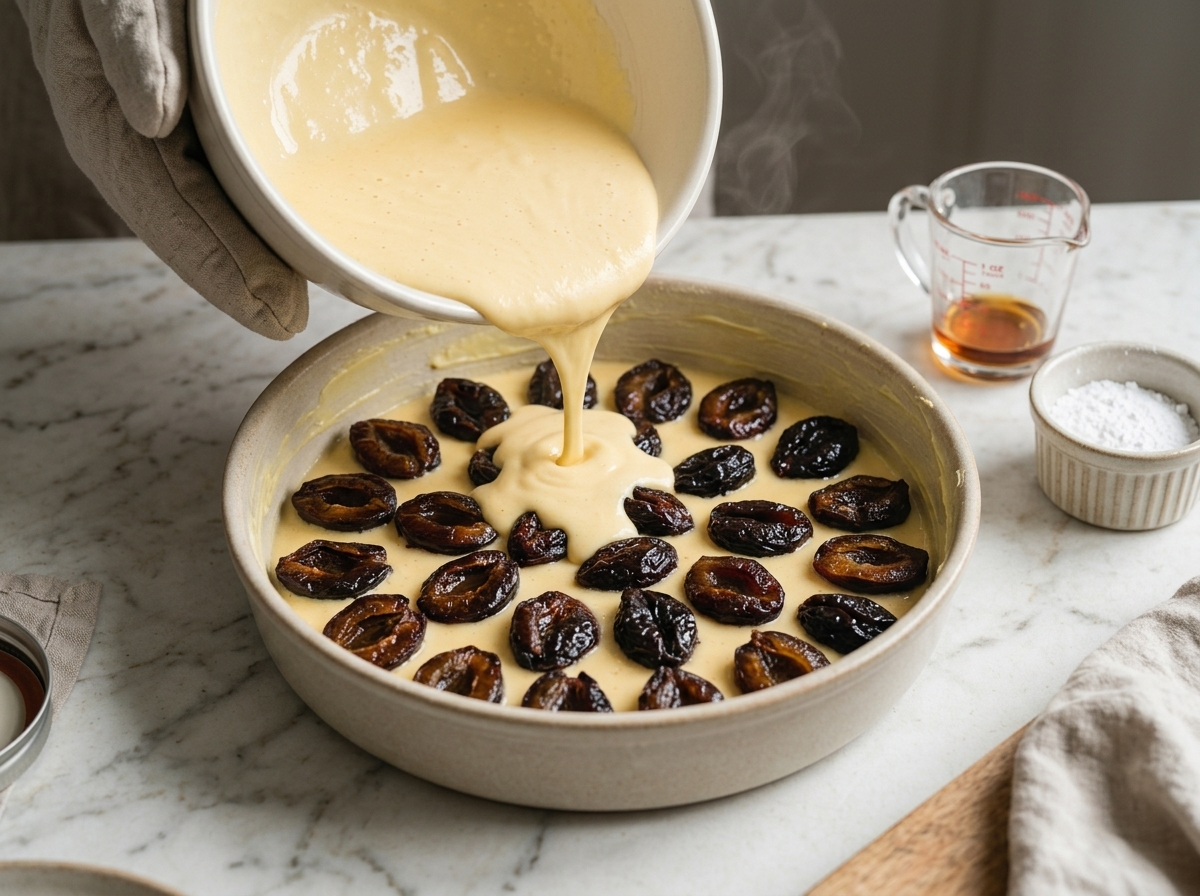
- Drain the prunes and scatter them evenly across the bottom of the prepared baking dish.
- Pour the batter slowly over the prunes so they stay spread out instead of clumping in the center.
- Bake for 45 to 50 minutes until the top is deep golden and domed, and the center jiggles slightly like a set flan rather than sloshing like liquid.
- Cool in the dish for at least 30 minutes before slicing. Serve at room temperature or chilled.
Notes
- Soak prunes at least 1 hour, overnight for deeper flavor.
- Don't overbake, center should jiggle slightly like flan.
- Cool at least 30 minutes before slicing for clean cuts.
- Chilling overnight improves texture and makes slicing easier.
Tips for Success
- Soak the prunes for at least an hour so they plump instead of staying chewy in the finished cake.
- Whisk the batter until it’s completely smooth with no flour lumps before pouring it over the prunes.
- Butter the baking dish well so the custard releases cleanly once it’s cooled and sliced.
- Check the center at 45 minutes and pull it out once it jiggles gently instead of sloshing like liquid.
- Let the cake cool for at least 30 minutes before slicing, otherwise the custard hasn’t fully set.
Variations
- Swap half the prunes for dried apricots for a tangier, less sweet version of the cake.
- Add a teaspoon of orange zest to the batter for a brighter, citrusy background note.
- Use brandy or Armagnac instead of rum for a slightly drier, nuttier soak.
Storage and Reheating
Far breton keeps well in the fridge for 3 to 4 days, covered tightly with plastic wrap or in an airtight container. The custard actually firms up and slices more cleanly after a night of chilling.
Serve it cold or at room temperature straight from the fridge. This isn’t a cake that benefits from reheating, since warming it in the oven or microwave can turn the custard rubbery and weep liquid.
If you want it slightly warm, let a slice sit out on the counter for 20 minutes before serving instead of heating it.
Serving Suggestions
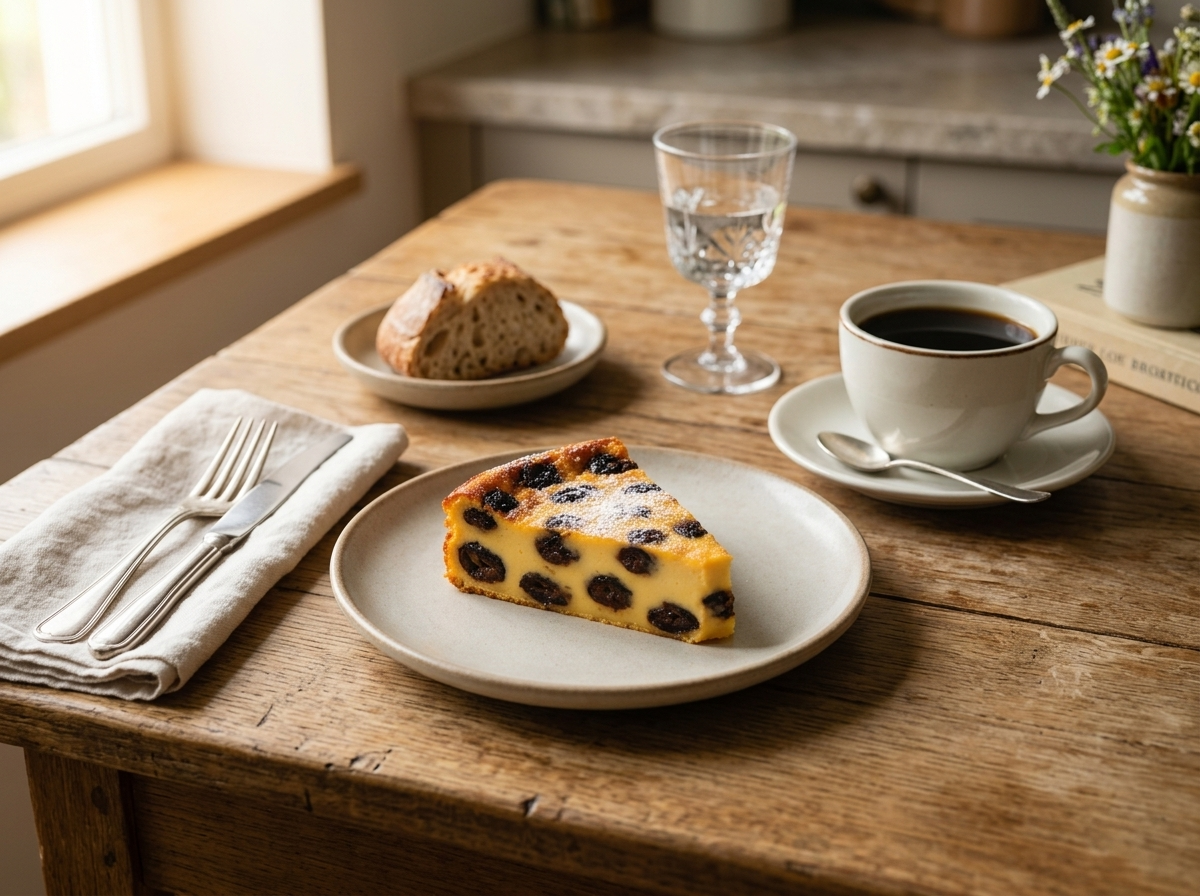
Far breton is traditionally eaten cold or at room temperature, cut into thin wedges, often with strong coffee alongside. A spoonful of creme fraiche or lightly sweetened whipped cream on the side plays well against the rum-soaked prunes.
For breakfast or brunch, pair a slice with a bowl of fresh berries to balance the richness. It also holds its own as an afternoon snack with tea, no plate required.
FAQ
Why did my far breton turn out rubbery instead of custardy?
Rubbery texture usually means it baked too long or the oven ran hot. Pull the cake once the center jiggles gently like a set flan rather than baking until it’s completely firm, since it keeps cooking a bit as it cools.
Can I use dried apricots instead of prunes in far breton?
Yes, dried apricots work as a substitute and give a tangier, brighter flavor than the classic prune version. Soak them in rum the same way, though they hold their shape a bit more than prunes do.
Can I make far breton ahead of time and how do I store leftovers?
Far breton is a genuine make-ahead dessert since the custard actually improves after a night in the fridge. Store it covered for 3 to 4 days and serve cold or at room temperature straight from the container.
What goes well with far breton besides coffee?
Creme fraiche or lightly sweetened whipped cream pairs well against the rum-soaked prunes. Fresh berries on the side also cut through the richness if you’re serving it for brunch instead of dessert.
Is far breton gluten free?
No, this recipe uses wheat flour for structure, so it isn’t gluten free as written. A 1:1 gluten-free flour blend can work as a swap, though the crumb turns noticeably denser and less silky.
What’s the difference between far breton and clafoutis?
Far breton comes from Brittany and uses prunes with a higher flour ratio, giving it a firmer, more cake-like custard. Clafoutis comes from Limousin and traditionally uses cherries with less flour, so it stays looser and more flan-like.
If you enjoyed this, try
