
Jump to Recipe
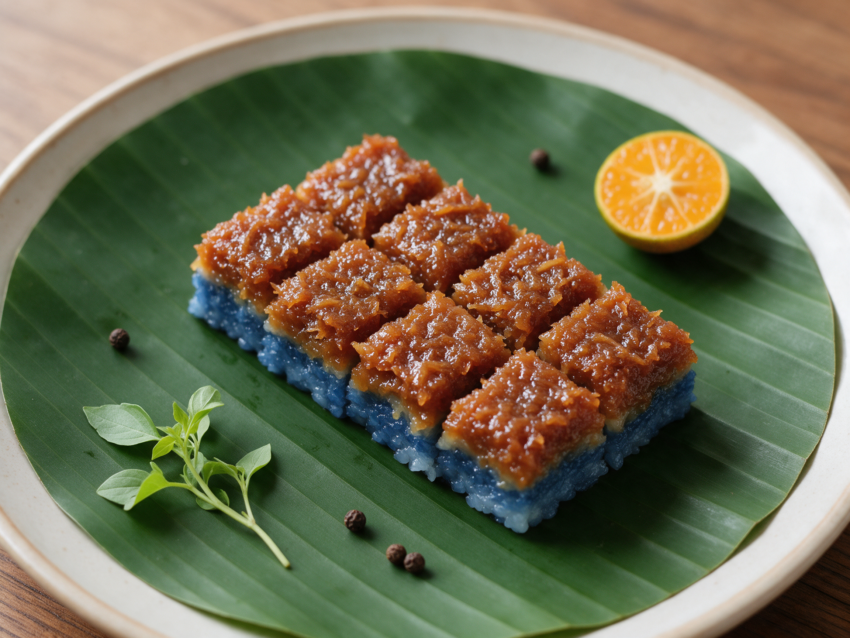
There’s something about the color of pulut tai tai that stops people at the kuih counter. That deep, almost unreal blue comes from dried butterfly pea flowers steeped into the rice, no food coloring involved.
I first had this at a Peranakan wedding tea, cut into small diamonds and stacked on a banana leaf. The rice underneath was soft and slightly chewy, and the coconut topping on top had that deep caramel pull from gula melaka.
This version steams the rice in two stages, the same technique used for a steamed Korean rice cake, so it cooks evenly without turning mushy, then presses a caramelized coconut topping on top while everything is still warm. It takes patience, mostly waiting, not skill.
If your rice comes out patchy blue instead of solid, that’s usually old butterfly pea flowers losing their punch. Fresh ones steeped in warm water fix that fast.
Why You’ll Love This Recipe
- Naturally blue color from butterfly pea flowers, no dye needed
- Make-ahead kuih that holds up for tea trays and parties
- Naturally gluten-free despite the name glutinous rice
- Two simple layers, no oven or fancy equipment required
Ingredient Notes
- Glutinous rice: Also called sticky rice or pulut, find it labeled ‘glutinous’ at Asian grocers. Despite the name, it’s naturally gluten-free.
- Dried butterfly pea flowers: These give the rice its blue color with no artificial dye. Find them at Asian markets or online, or swap in 1/2 tsp blue food coloring in a pinch.
- Thick coconut milk: Fresh-pressed coconut milk gives the best richness. Canned works too, just use the thick cream skimmed from the top.
- Fresh grated coconut: White grated coconut gives the topping its texture. Frozen grated coconut works fine if thawed and squeezed of excess water first.
- Gula melaka: This Malaysian palm sugar has a deep, smoky sweetness regular sugar can’t match. Grate or chop it finely so it melts evenly.
- Pandan leaves: Knotted pandan adds a grassy sweetness while steaming. Skip them if you can’t find any, the kuih still works, just less fragrant.
Pulut Tai Tai: Steamed Blue Rice with Coconut Topping
Ingredients
Method
- Rinse the glutinous rice under cold water until it runs clear. Soak in plenty of water for at least 4 hours or overnight, then drain well.
- Soak the dried butterfly pea flowers in 100 ml warm water for 15 minutes, squeezing them until the water turns a deep blue. Strain out the flowers and discard.
- Toss the drained rice with the blue liquid until every grain is evenly coated.
- Line a steamer tray with banana leaf or parchment and spread the blue rice in an even layer about 2 cm thick. Steam over boiling water at 100 C / 212 F for 20 minutes.
- Warm the coconut milk with the salt and knotted pandan leaves. Pour it evenly over the half-steamed rice, fluff gently with a fork, and steam for another 15 minutes until the grains are tender, glossy, and no longer chalky in the center.
- Transfer the hot rice into a 20 cm / 8-inch square tin lined with banana leaf or plastic wrap. Press down firmly and evenly with the back of an oiled spoon. Let it cool to room temperature.
- While the rice steams, combine the grated coconut, gula melaka, pandan leaf, water, and salt in a 10-inch saucepan over medium heat.
- Cook, stirring often, for 10 to 12 minutes until the sugar melts and the mixture turns glossy, sticky, and starts pulling away from the sides of the pan.
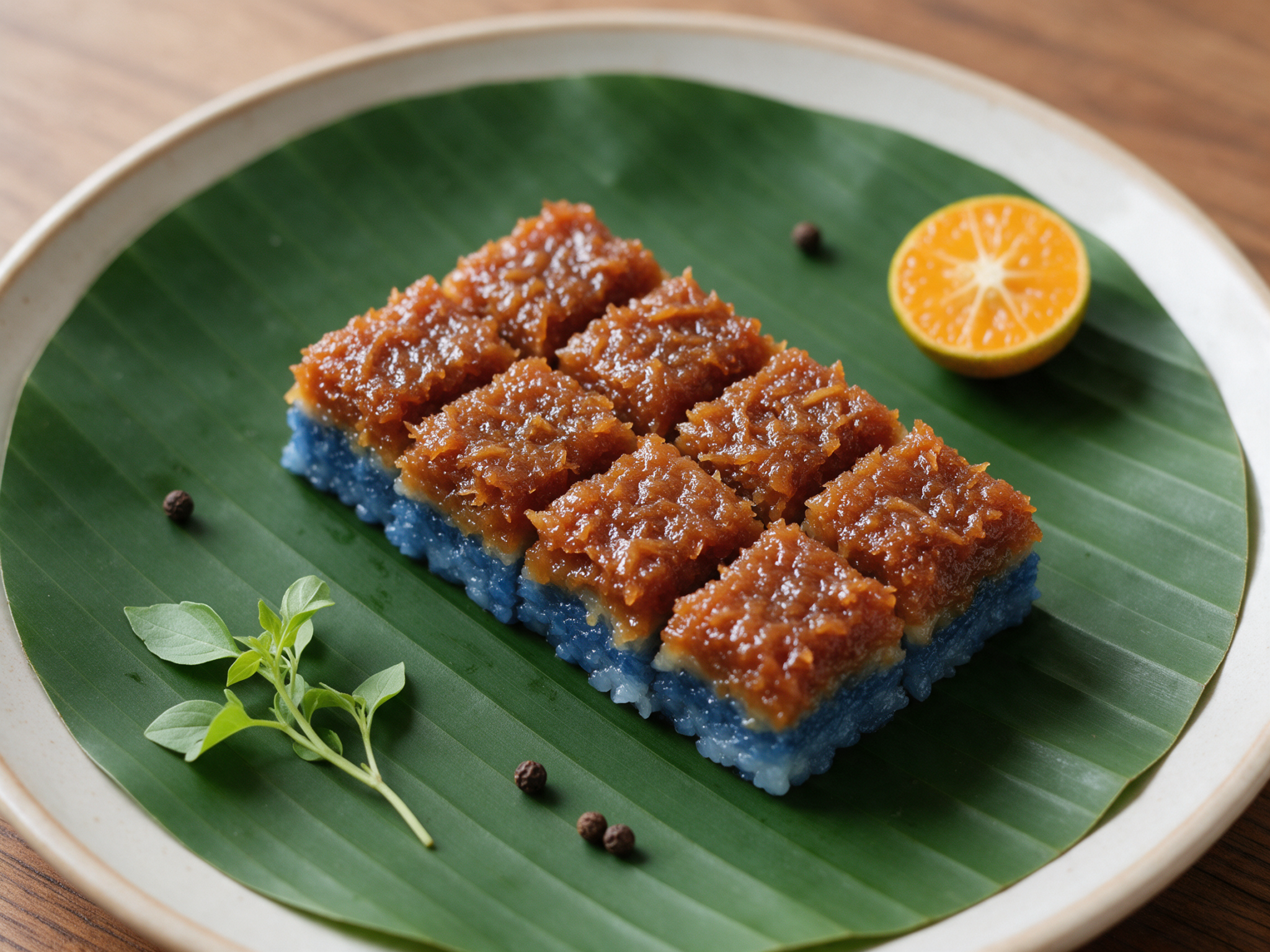
- Discard the pandan leaf and spread the warm coconut topping over the cooled, pressed rice in an even layer. Press gently so it sticks to the rice.
- Chill uncovered for 1 hour, or until fully set and firm enough to cut cleanly.
- Cut into 24 diamond or square pieces with a sharp knife dipped in oil between cuts. Serve at room temperature.
Notes
- Use fresh dried butterfly pea flowers for the strongest color, old stock fades fast.
- Don't skip pressing the hot rice firmly, or pieces will crumble when cut.
- Gula melaka brands vary in moisture, adjust water in the topping as needed.
- Chill the assembled kuih fully before cutting for clean diamond edges.
Tips for Success
- Rinse the glutinous rice until the water runs clear so surface starch doesn’t make the grains gummy instead of distinct.
- Soak dried butterfly pea flowers in warm water, not cold, to pull the deepest blue color out in 15 minutes.
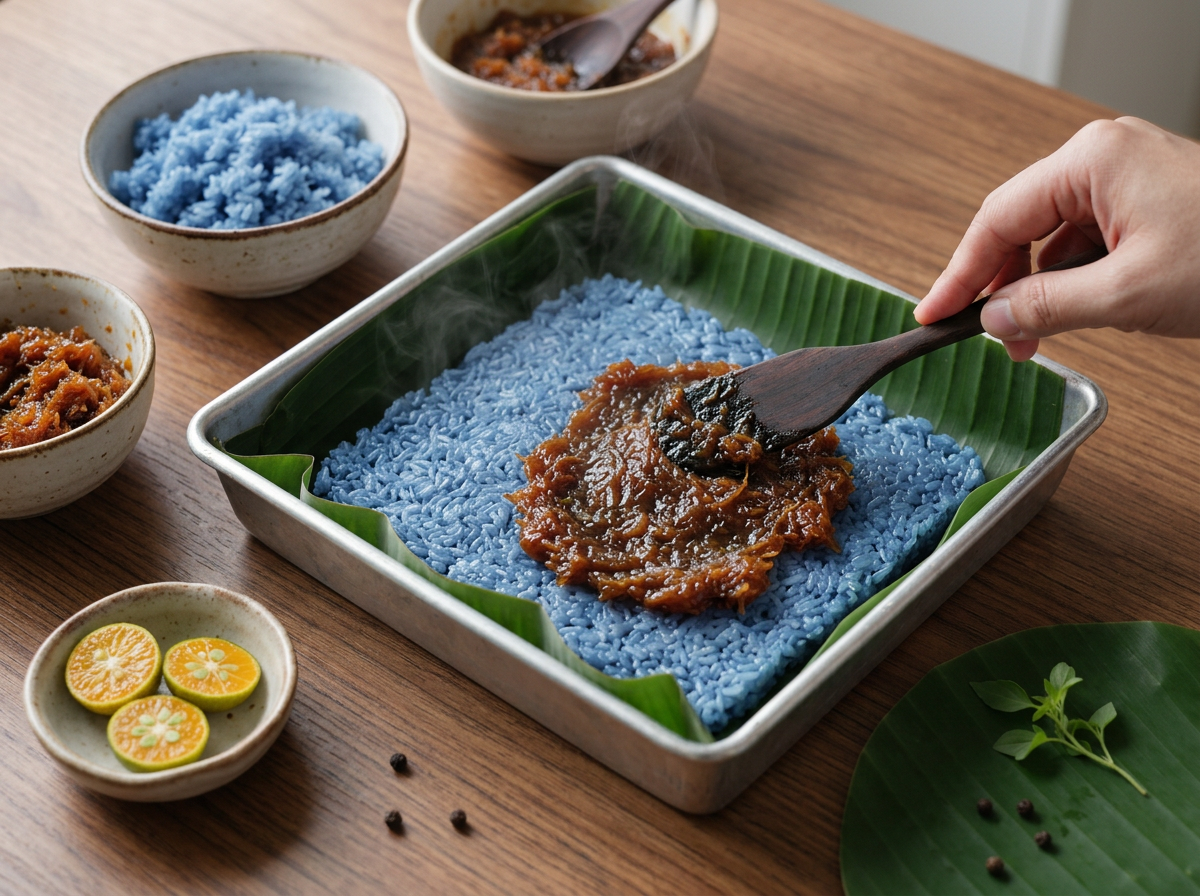
- Press the steamed rice while it’s still hot, it compacts better and won’t crumble when you cut it later.
- Stir the coconut topping constantly near the end of cooking, gula melaka scorches fast once the water cooks off.
- Dip your knife in oil or hot water between cuts to get clean diamond edges through the sticky topping.
Variations
- Swap butterfly pea flower for pandan juice to make green rice, or leave both out for a plain white version.
- Spread a thin layer of kaya between the rice and coconut topping for an extra Nyonya-style sweetness.
- Use black glutinous rice instead of white for a naturally purple, nuttier tasting pulut tai tai.
Storage and Reheating
Pulut tai tai keeps at room temperature in an airtight container for up to 2 days, which is how it’s traditionally served at Peranakan gatherings. In the fridge it lasts 4 to 5 days but the rice firms up noticeably.
To soften refrigerated pieces, steam them for 3 to 4 minutes until the rice turns glossy and pliable again. Skip the microwave, it dries out the coconut topping and leaves the rice patchy instead of evenly soft.
This kuih doesn’t freeze well. The glutinous rice turns grainy and hard once thawed, so make it a day or two ahead instead of freezing a batch.
Serving Suggestions
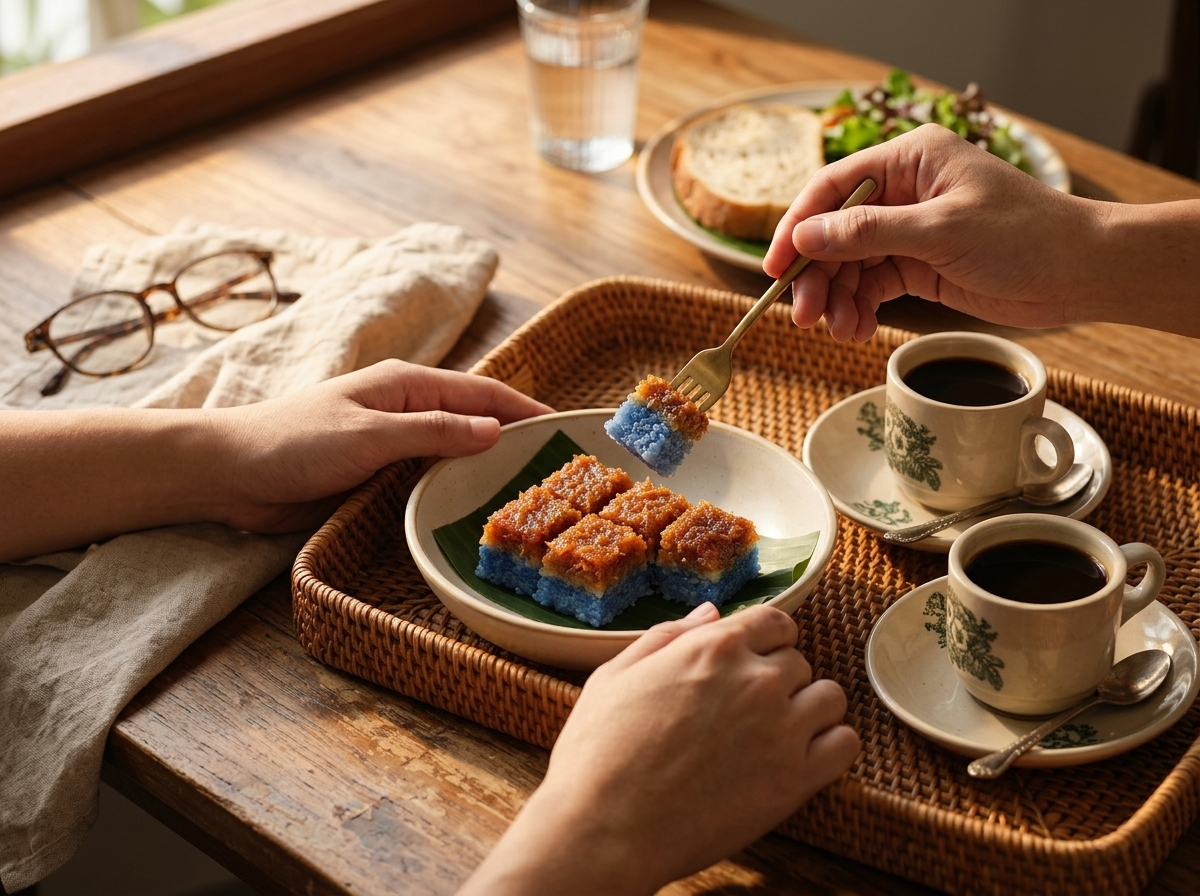
Pulut tai tai is traditionally cut small and served on a plate lined with banana leaf, often alongside other kuih at Chinese New Year or a Peranakan tea table, much like steamed rice cakes for Chuseok in Korea. A cup of kopi o or plain black tea cuts through the sweetness of the gula melaka topping.
At home, I stack a few pieces on a small plate for afternoon tea instead of cake. It also travels well for potlucks since it doesn’t need refrigeration for a day.
For a party platter, cut the pieces smaller than usual, about 2 cm squares, so guests can try a bite alongside other kuih without committing to a full piece.
FAQ
Why did my pulut tai tai turn out grey instead of blue?
Grey or patchy color usually means the butterfly pea flowers were old and had lost their pigment. Steep fresh dried flowers in warm water for a full 15 minutes and squeeze them well before straining. If the color still looks weak, add a few drops of blue food coloring as backup.
Can I use frozen grated coconut instead of fresh for the topping?
Yes, thaw it fully and squeeze out the excess water before cooking it down with the gula melaka. Fresh coconut has a slightly sweeter, more fragrant bite, but frozen works fine once drained. Just expect the topping to take a minute or two longer to thicken.
How long does pulut tai tai stay fresh, and should I refrigerate it?
It keeps at room temperature in an airtight container for up to 2 days, which is how it’s traditionally served. In the fridge it lasts 4 to 5 days but the rice firms up, so steam pieces for 3 to 4 minutes to soften before eating.
What does pulut tai tai taste like and how do people usually serve it?
The rice underneath is mild and slightly savory from coconut milk, while the topping is deeply sweet and caramel-like from gula melaka. It’s cut into small diamonds and served with black coffee or tea, usually alongside other kuih at festive gatherings.
Is pulut tai tai gluten free?
Yes, despite the name, glutinous rice cakes contain no gluten at all, it just refers to how sticky the grains get when cooked. Double check your gula melaka and butterfly pea flowers are processed in a dedicated gluten-free facility if you have celiac disease.
What’s the difference between pulut tai tai and pulut inti?
They’re closely related Peranakan kuih made from the same blue glutinous rice and coconut filling. Pulut tai tai is pressed flat and cut into diamonds with the coconut topping spread on top, while pulut inti is often rolled into cones with the coconut filling tucked inside.
Loved this? Try these next
