
Jump to Recipe
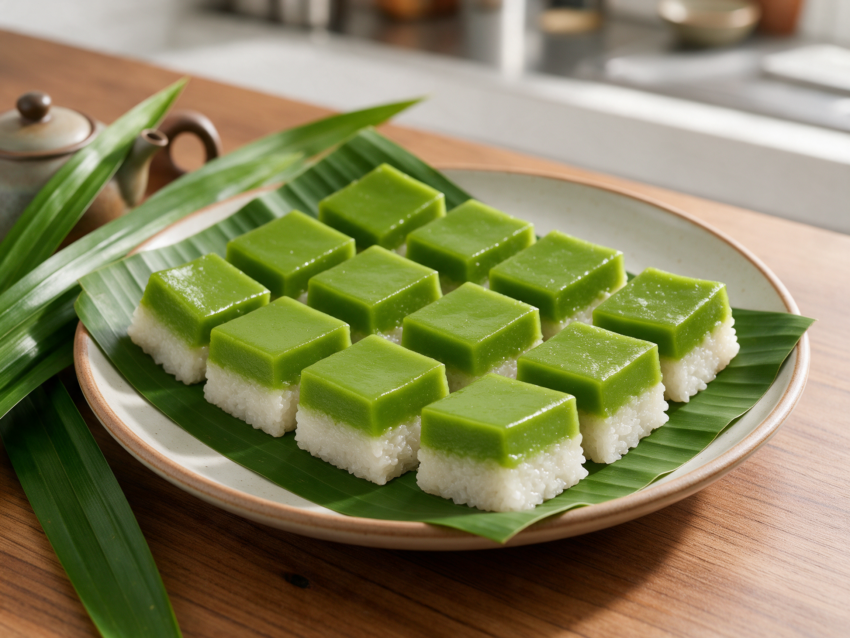
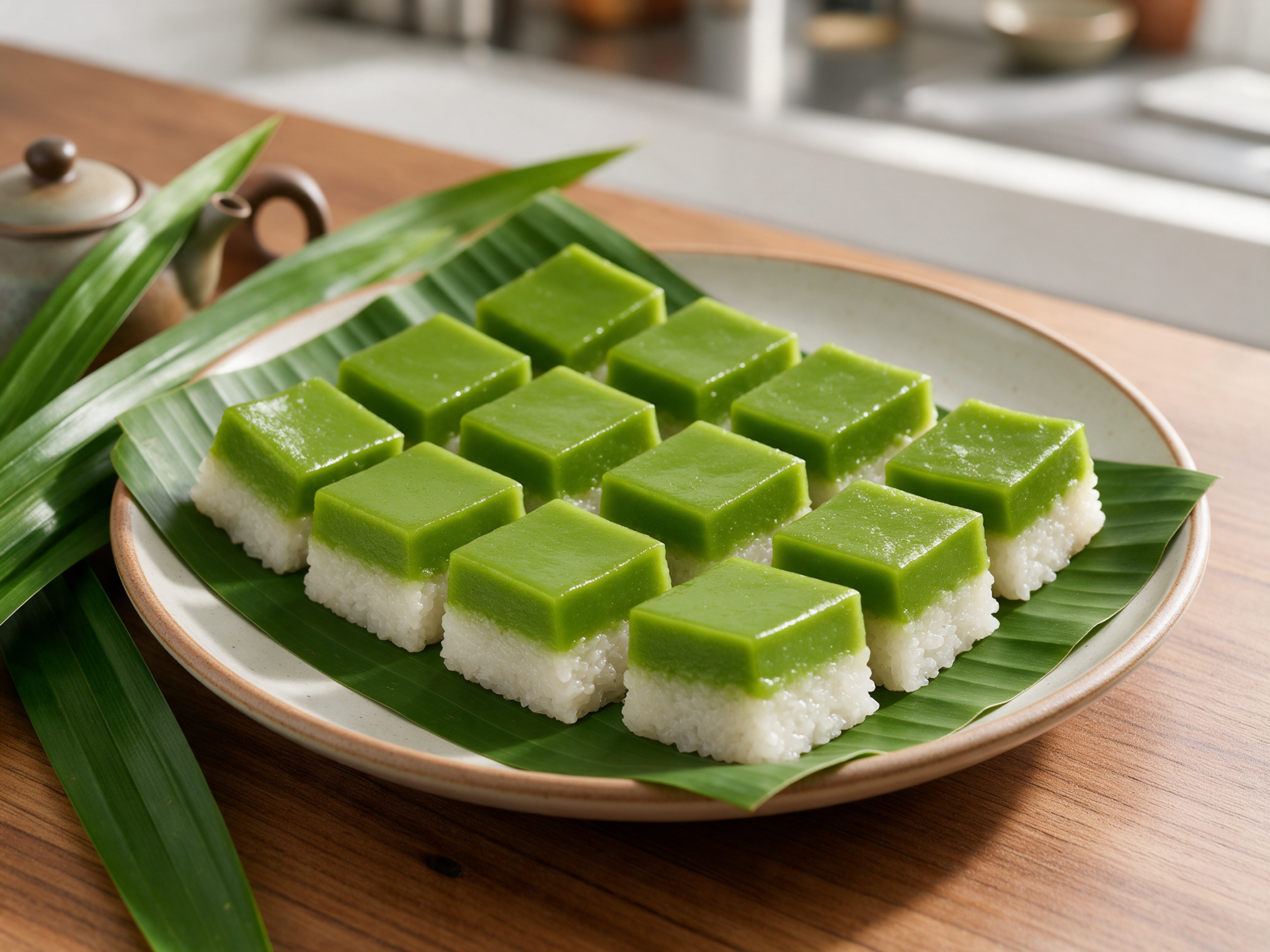
There’s something about kuih seri muka that stops conversation at a Malaysian tea table. The green custard top is glossy and just set, and underneath sits a layer of salted, coconut-soaked glutinous rice. Cut into a clean square, you get both textures in one bite.
I first ate this from a hawker tray in Ipoh, wrapped in banana leaf, still warm from the steamer. The custard was soft enough to dent with a finger but held its shape when sliced. That balance is the whole point of this kuih.
Two layers sound like a project, but they’re really just a steamed rice cake, then a stovetop-cooked pandan custard poured on top and steamed again. Nothing here needs an oven.
This kuih seri muka recipe uses fresh pandan leaves for both the rice and the custard, so the color and smell come from the plant, not a bottle. Steam until the custard springs back and a skewer comes out clean, then let it cool before you cut it.
Why You’ll Love This Recipe
- Two textures, rice and custard, in one square
- Real pandan leaves give the color and scent
- No oven, just a steamer and one pan
- Make-ahead treat that holds well in the fridge
Ingredient Notes
- glutinous rice: Also called sticky rice. Soak it at least 4 hours so the grains steam through evenly instead of staying chalky in the center.
- pandan leaves: Fresh or frozen leaves give the best color and smell. If you can’t find any, use 1 to 2 tablespoons of pandan paste in place of the blended juice.
- coconut milk: Use full-fat canned coconut milk for both layers. Light coconut milk makes the custard thinner and less rich.
- eggs: Room temperature eggs blend into the custard more smoothly and lower the chance of a grainy set.
- sugar: Granulated white sugar keeps the custard a pale green rather than muddy. Palm sugar works but darkens the top layer.
- plain flour, rice flour, tapioca starch: This trio gives the custard its sliceable, slightly springy set. Skipping the tapioca starch makes the top layer softer and harder to cut cleanly.
- salt: A little salt in the rice layer keeps the whole kuih from tasting flat against the sweet custard.
Steamed Kuih Seri Muka with Malaysian Pandan Custard
Ingredients
Method
- Drain the soaked glutinous rice and spread it in a heatproof dish. Steam over boiling water for 20 minutes until the grains look mostly translucent but still a bit firm in the center.
- Warm the 200 ml coconut milk in a 2-quart / 2 L saucepan with the 1/2 tsp salt and the 2 knotted pandan leaves over low heat until it just starts to steam, about 3 minutes. Discard the leaves.
- Pour the warm coconut milk over the steamed rice and stir well so every grain is coated. Steam again for 10 minutes until the rice is fully cooked and sticky.
- Transfer the hot rice into a 20 cm / 8-inch square baking pan lined with parchment. Press it down firmly and evenly with the back of a spoon, then set aside.
- Blend the 10 pandan leaves with the 250 ml water until smooth, then strain through a fine-mesh sieve to get pandan juice. Discard the pulp.
- Whisk the eggs and sugar together in a bowl until the sugar dissolves. Add the pandan juice, the remaining 200 ml coconut milk, plain flour, rice flour, tapioca starch, and 1/8 tsp salt, whisking until smooth.
- Strain the custard mixture once more into the 2-quart / 2 L saucepan to catch any lumps or egg strands.
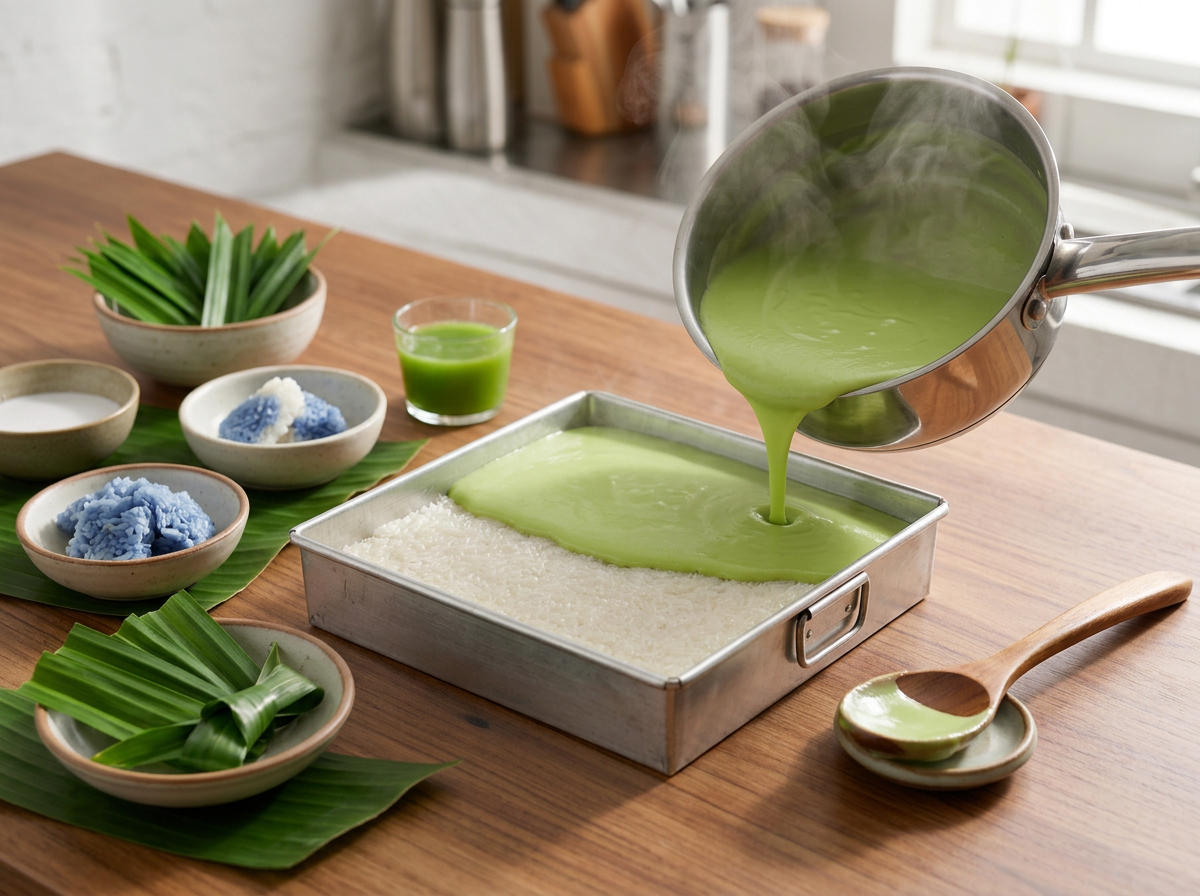
- Cook the custard over low heat, stirring constantly, for 8 to 10 minutes until it thickens slightly to the texture of a loose pancake batter. Don't let it scramble or fully set on the stove, it finishes setting in the steamer.
- Pour the custard over the compacted rice layer in the pan, smoothing the top with a spatula.
- Cover the pan loosely with foil or a cloth-wrapped lid to stop condensation from dripping onto the custard. Steam over medium heat for 25 to 30 minutes, until the custard is set, springs back when touched, and a skewer comes out clean.
- Cool the kuih completely at room temperature for about 1 hour, then chill for 30 minutes for the cleanest cuts.
- Cut into 16 squares with an oiled knife, wiping the blade clean between cuts.
Notes
- Soak glutinous rice at least 4 hours before steaming.
- Cook the custard on the stove until just thickened, not fully set.
- Cover the steamer lid with a cloth to stop condensation drips.
- Cool completely, then chill before cutting for clean squares.
- Use full-fat coconut milk for the best texture in both layers.
Tips for Success
- Soak the rice for this glutinous rice cake for at least 4 hours so it cooks through without a hard center.
- Strain the custard mixture twice to catch any egg strands before it hits the steamer.
- Cook the custard on the stovetop until just thickened before pouring, so it doesn’t sink into the rice layer.
- Cover the pan with a cloth-wrapped lid while steaming so condensation doesn’t drip onto the custard.
- Cool the kuih completely, then chill it before cutting for edges that hold their shape.
Variations
- Swap half the pandan juice for butterfly pea flower water to give the rice layer a soft blue tint.
- Stir a tablespoon of grated palm sugar into the custard for a deeper caramel note under the pandan.
- Steam the kuih in small ramekins instead of one pan for individual portions with less cutting.
Storage and Reheating
Kuih seri muka keeps in an airtight container in the fridge for 3 to 4 days. The custard firms up when cold, which actually makes it easier to cut into clean squares.
Skip reheating this one. Warming it in the microwave turns the custard rubbery and can make it weep liquid, so serve it cold or let pieces sit at room temperature for 20 to 30 minutes before eating.
For a make-ahead plan, steam the whole batch a day before you need it, chill overnight, then cut and plate right before serving.
Serving Suggestions
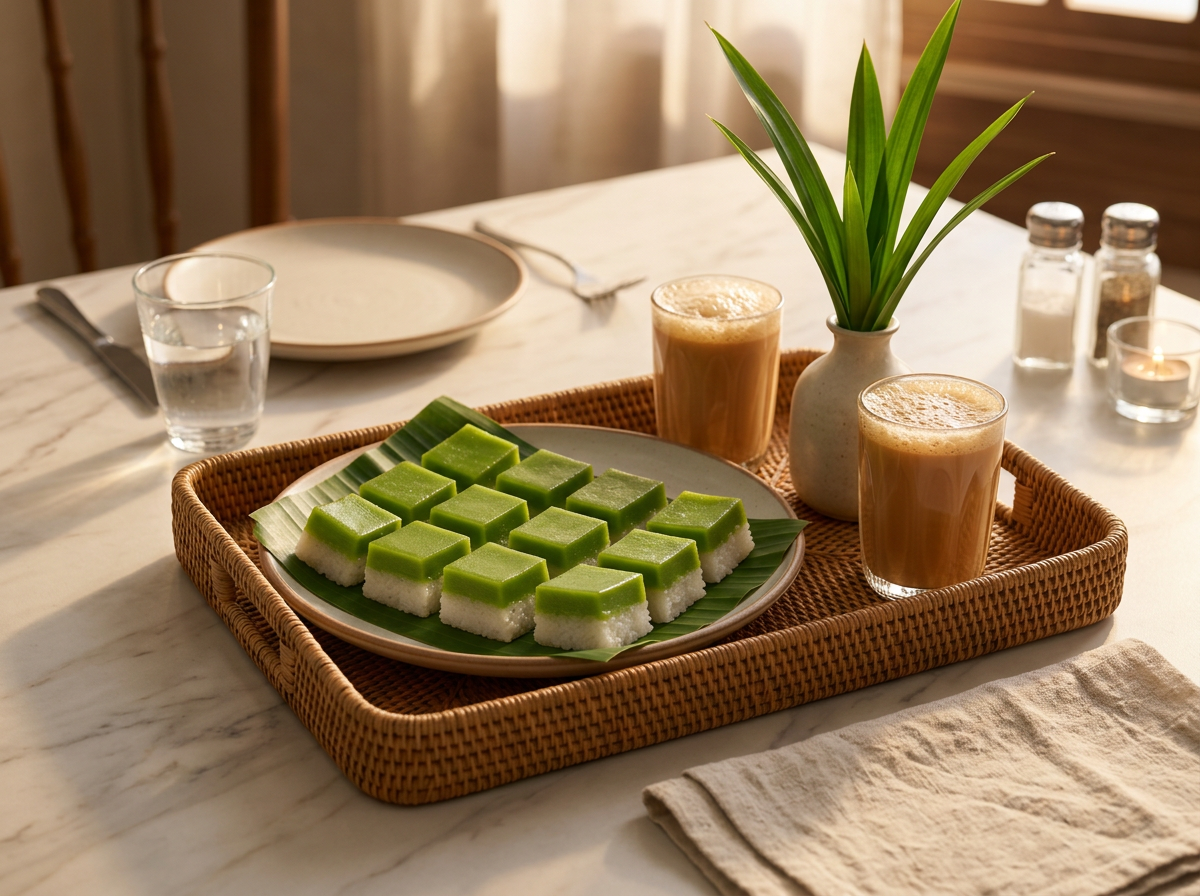
Kuih seri muka is a tea-time staple in Malaysia, usually set out alongside other kuih on a shared platter. Serve it with kopi or teh tarik to cut the sweetness.
It also works as a simple coconut custard dessert after a spicy meal, since the coconut and pandan calm down chili heat. Cut smaller squares if you’re adding it to a mixed dessert tray.
Leftover custard trimmings, if your knife isn’t perfectly straight, are still good spooned over plain steamed rice as a quick sweet snack.
FAQ
How do I know when the pandan custard layer on kuih seri muka is done?
The custard is done when it springs back lightly when you touch the center and a skewer inserted comes out clean. It should look set and slightly glossy, not liquid or jiggly in the middle. This usually takes 25 to 30 minutes of steaming over medium heat.
Can I use pandan paste instead of fresh pandan leaves in this kuih seri muka recipe?
Yes, 1 to 2 tablespoons of pandan paste can replace the blended pandan juice. The color turns out similar, though the smell is milder and less green-tasting than fresh leaves. Add a few extra drops if the color looks pale after mixing.
Can I make kuih seri muka a day ahead of a party?
Yes, this kuih actually cuts cleaner after a night in the fridge. Steam it the day before, let it cool completely, chill overnight, then slice and arrange it a few hours before serving so it comes closer to room temperature.
What goes well with kuih seri muka besides tea?
Kopi or teh tarik are the classic pairing, but it also sits well on a mixed kuih platter with other steamed sweets. A cup of unsweetened green tea works too, since it balances the sugar in the custard without fighting the pandan flavor.
Is kuih seri muka gluten free?
No, this version isn’t gluten free because the custard layer uses plain wheat flour along with rice flour and tapioca starch. You could try replacing the plain flour with more rice flour, though the custard may set softer and be harder to slice cleanly.
What’s the difference between kuih seri muka and kuih salat?
They’re close cousins. Kuih seri muka usually has a plain white or lightly salted rice base, while kuih salat traditionally uses blue-tinted rice from butterfly pea flowers underneath the same pandan custard top. The custard layer itself is nearly identical in both.
You might also like
- the Steamed Yakbap: Korean Sweet Rice Cake with Chestnuts
- our Bienmesabe Venezolano: Coconut Rum Custard Dessert
- Songpyeon: Korean Steamed Rice Cakes with Sesame
- our Karukan: A Soft Steamed Japanese Mountain Yam Cake
