
Jump to Recipe
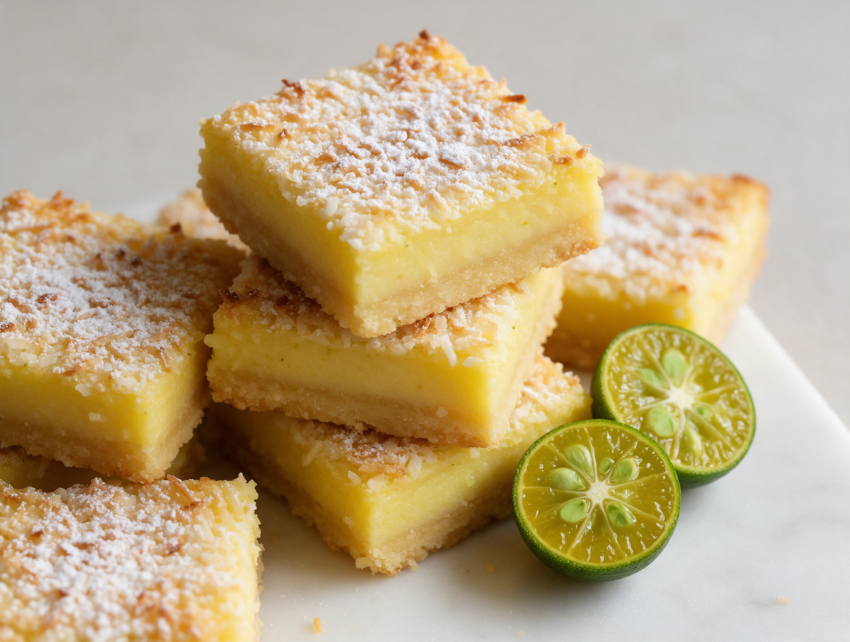
Calamansi coconut bars are shortbread squares topped with a set calamansi custard and a scatter of toasted coconut. This calamansi coconut bars recipe bakes in one 20 cm / 8-inch pan and makes 16 bars.
There’s something about calamansi that lemon can’t copy. It’s floral and a little mandarin-sweet, with a sharp edge. Coconut milk in the custard softens that edge without hiding it.
The crust gets desiccated coconut too, so the base tastes toasty. Press it in with your fingers. No mixer, no rolling pin.
Pull the pan at 23 minutes, while the center still jiggles slightly. Overbake and the custard turns rubbery with browned edges. Then give the bars at least 2 hours in the fridge before you cut.
Why You’ll Love This Recipe
- Tart calamansi custard with a soft coconut finish
- Two bowls, one pan, and no mixer
- Bake a day ahead and slice them cold
- Clean squares that hold up on a dessert platter
Ingredient Notes
- calamansi juice: Fresh is best, and 80 ml takes roughly 15 to 20 fruits depending on size. Frozen or bottled calamansi juice works at the same amount. No calamansi? Use 55 ml lime juice plus 25 ml orange juice.
- full-fat coconut milk: Shake the can well before measuring so the cream and liquid are mixed. Light coconut milk makes a looser custard that may need a few extra minutes in the oven.
- unsweetened desiccated coconut: Finely shredded coconut blends into the crust. Sweetened coconut works but makes the bars noticeably sweeter, so cut the powdered sugar in the crust to 25 g.
- unsalted butter: Keep it cold and cubed so the crust crumbles into clumps instead of turning greasy. If you only have salted butter, skip the salt in the crust.
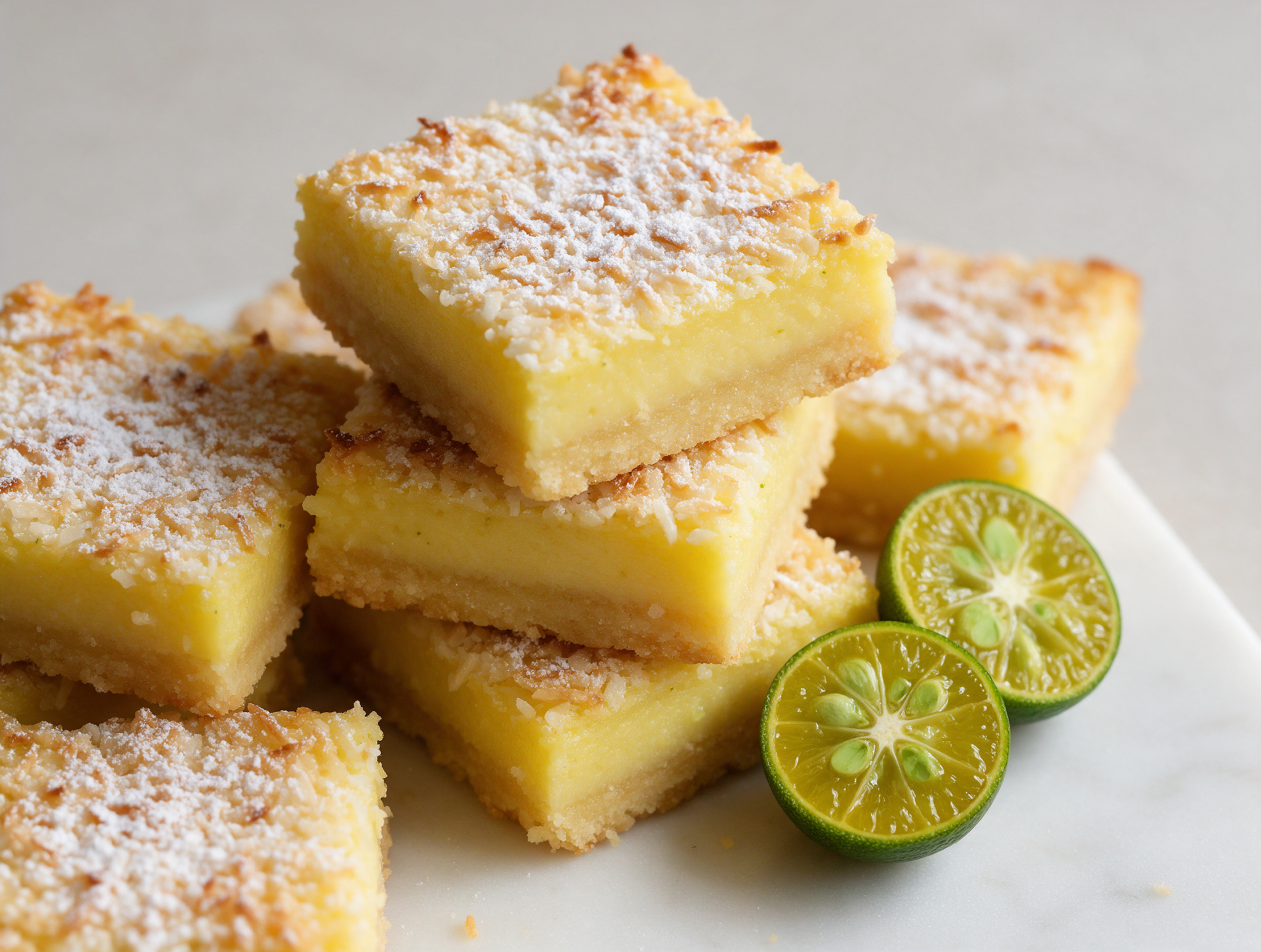
Baked Calamansi Coconut Bars with Shortbread Crust
Ingredients
Method
- Heat the oven to 175 C / 350 F. Line a 20 cm / 8-inch square metal baking pan with parchment, leaving an overhang on two sides to lift the bars out later.
- Stir 150 g flour, 40 g powdered sugar, 25 g desiccated coconut, and the salt together in a mixing bowl. Rub in the cold butter with your fingertips until the mixture forms clumps that hold when squeezed. Press it into an even layer about 6 mm thick across the pan, using the bottom of a measuring cup, then prick with a fork. Bake for 18 minutes until the edges are light golden.
- While the crust bakes, juice the calamansi and strain it through a fine-mesh sieve until you have 80 ml. Whisk the granulated sugar, 30 g flour, and zest together, then whisk in the eggs one at a time. Add the calamansi juice and coconut milk and whisk until smooth with no flour lumps.
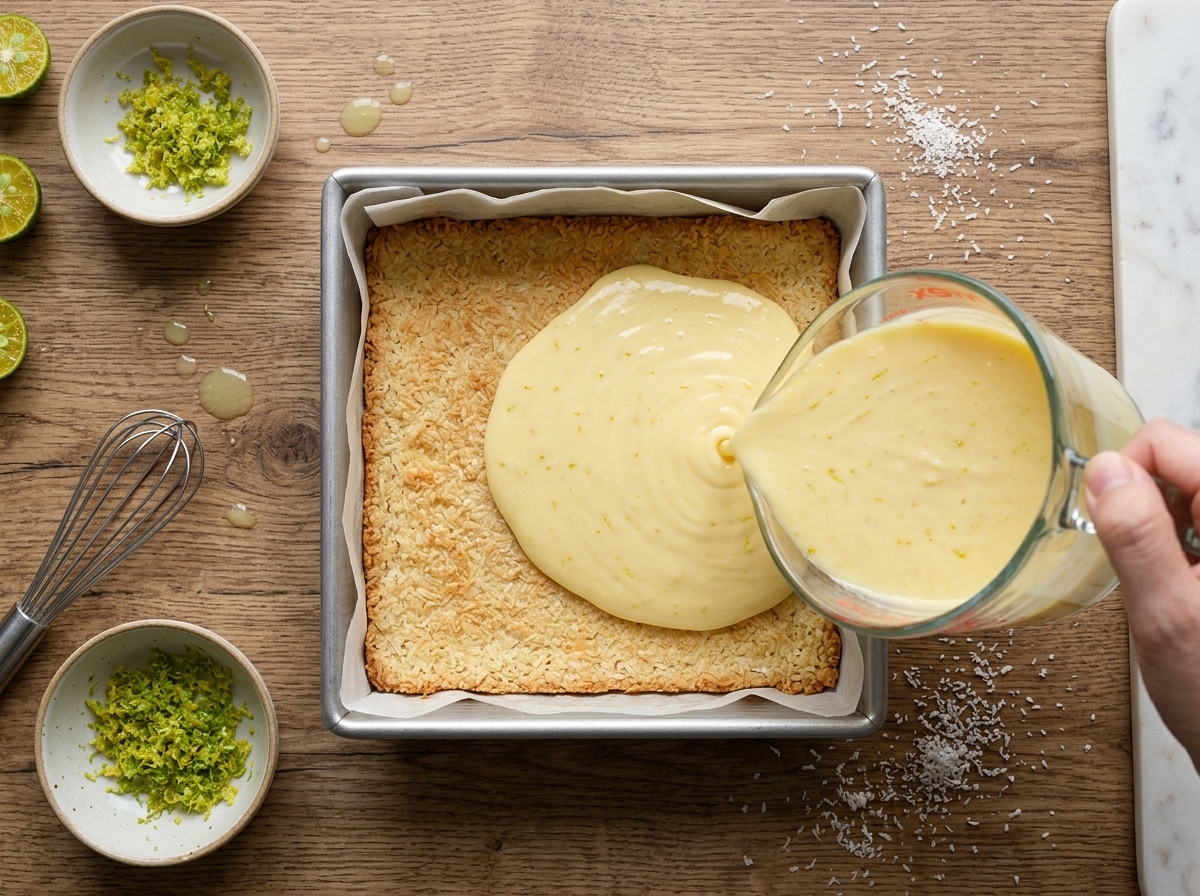
- Pour the filling over the hot crust and skim off any foam. Bake at the same 175 C / 350 F for 23 minutes, until the edges are set and the center jiggles only slightly when you nudge the pan. Meanwhile, toast the coconut flakes in a dry 20 cm / 8-inch skillet over medium-low heat for 3 to 4 minutes, stirring, until pale gold.
- Cool the pan on a rack for 30 minutes, then chill in the fridge, loosely covered, for at least 2 hours until the custard is fully set.
- Lift the slab out using the parchment and cut into 16 squares with a sharp knife, wiping the blade clean between cuts. Top with the toasted coconut and dust with 1 tbsp powdered sugar just before serving.
Notes
- Use a metal pan. Glass runs hotter and can overbake the edges before the center sets.
- Use room-temperature eggs so they whisk in smoothly and leave no streaks in the custard.
- Skim any foam from the filling before baking for a flat, clean top.
- Chill fully before cutting. Warm bars slump and the edges smear.
- Dust powdered sugar only right before serving, since it dissolves into the surface in the fridge.
Tips for Success
- Press the crust firmly with the flat bottom of a measuring cup so it holds together when sliced instead of crumbling at the edges.
- Strain the calamansi juice through a fine-mesh sieve to catch seeds and pulp, which keeps the custard smooth and evenly colored.
- Pour the filling onto the crust while it’s still hot from the oven so the base seals and stays crisp under the custard.
- Pull the pan at 23 minutes when the edges are set and the center jiggles slightly, because longer baking makes the custard rubbery.
- Wipe the knife clean with a damp cloth between cuts so the custard edges stay sharp and the squares look tidy.
Variations
- Replace 30 ml of the calamansi juice with passion fruit juice for a more tropical bar with a deeper floral note.
- Whisk 60 g powdered sugar with 1 tbsp calamansi juice and drizzle it over the cooled bars for a glossy, sweeter top.
- Fold 30 g finely chopped macadamia nuts into the crust mixture for a crunchier, richer base under the custard.
Storage and Reheating
Calamansi coconut bars keep in an airtight container in the fridge for 3 to 4 days. Layer them between sheets of parchment so the toasted coconut doesn’t stick to the bar above.
These bars are best served cold, so skip reheating. Warming softens the custard and makes the buttery crust greasy. Take them out of the fridge 10 minutes before serving if you want a slightly softer bite, and don’t leave them out for more than 2 hours since the filling is an egg custard.
For make-ahead, bake the slab a day early and keep it whole in the pan, covered. Cut and add the toasted coconut and powdered sugar just before serving. To freeze, wrap the cut bars plain in parchment and store them in a freezer container for up to 2 months, then thaw in the fridge overnight.
Serving Suggestions
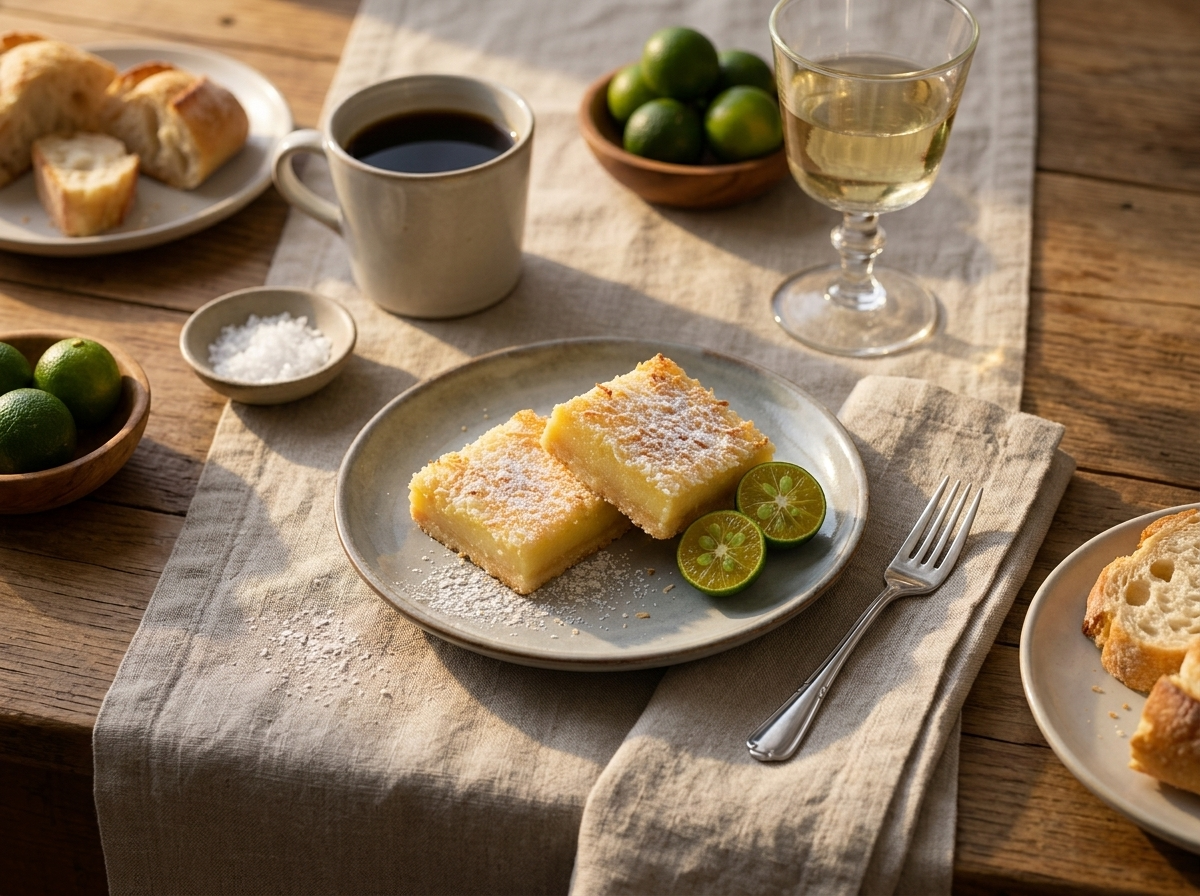
Calamansi coconut bars suit an afternoon coffee or tea. Strong black coffee or hot jasmine tea cuts through the sweetness and brings out the citrus.
For a Filipino merienda spread, set the bars on a platter with fresh mango slices and a basket of warm pandesal. The soft bread and ripe fruit make a gentle contrast to the tart custard.
For a party, cut the slab into 16 squares and dust with powdered sugar right before guests arrive. A small bowl of lightly whipped cream on the side lets people soften the tang if they want to.
FAQ
Why is my calamansi coconut bar filling runny?
Runny filling usually means the bars came out of the oven too early or got cut before chilling. At 175 C / 350 F, pull them at about 23 minutes, when the edges are set and the center jiggles only slightly. Then chill at least 2 hours, because the custard firms up as it gets cold.
Can I use lime or lemon juice instead of calamansi juice?
Yes. Mix 55 ml lime juice with 25 ml orange juice to make 80 ml, which lands close to calamansi’s tart, slightly sweet profile. Lemon juice works too but tastes sharper and less floral. Frozen or bottled calamansi juice swaps in at the same 80 ml.
Can I freeze calamansi coconut bars?
Yes, calamansi coconut bars freeze well for up to 2 months. Freeze the cut bars plain on a tray for 1 hour, then wrap each in parchment and store them in a freezer container. Thaw in the fridge overnight and add the toasted coconut and powdered sugar just before serving.
What goes well with calamansi coconut bars?
Black coffee, hot jasmine tea, or iced tea all balance the tart custard and sweet coconut. For a Filipino merienda spread, set the bars next to fresh mango slices or a plate of pandesal. Add a spoonful of lightly whipped cream if you want a softer contrast.
How do I make calamansi coconut bars dairy free?
Swap the butter for 95 g refined coconut oil, solid but not rock hard, and add 1 tbsp cold water so the crust binds. The filling is already dairy free because it uses coconut milk and no cream. The crust bakes for the same 18 minutes but comes out more crumbly, so press it firmly.
What’s the difference between calamansi bars and lemon bars?
Calamansi bars taste more floral and a little sweeter than lemon bars, because calamansi is a small Philippine citrus that tastes somewhere between lime and mandarin. These ones also add coconut milk to the custard and desiccated coconut to the crust. The texture matches a classic lemon bar, a set custard over shortbread.
Related recipes
- Bienmesabe Venezolano: Coconut Rum Custard Dessert
- Jericalla: Guadalajara’s Baked Cinnamon Custard Cups
- the Creamy Bubur Cha Cha: Sweet Potato Coconut Dessert
