
Jump to Recipe
There’s something about a suksessterte that makes a Norwegian kitchen table feel like a celebration, even on a Tuesday.
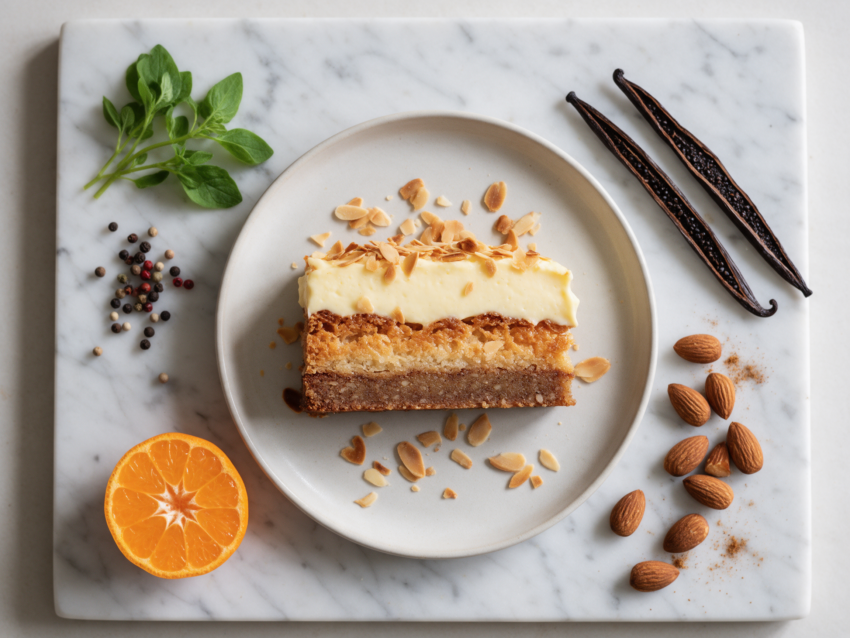
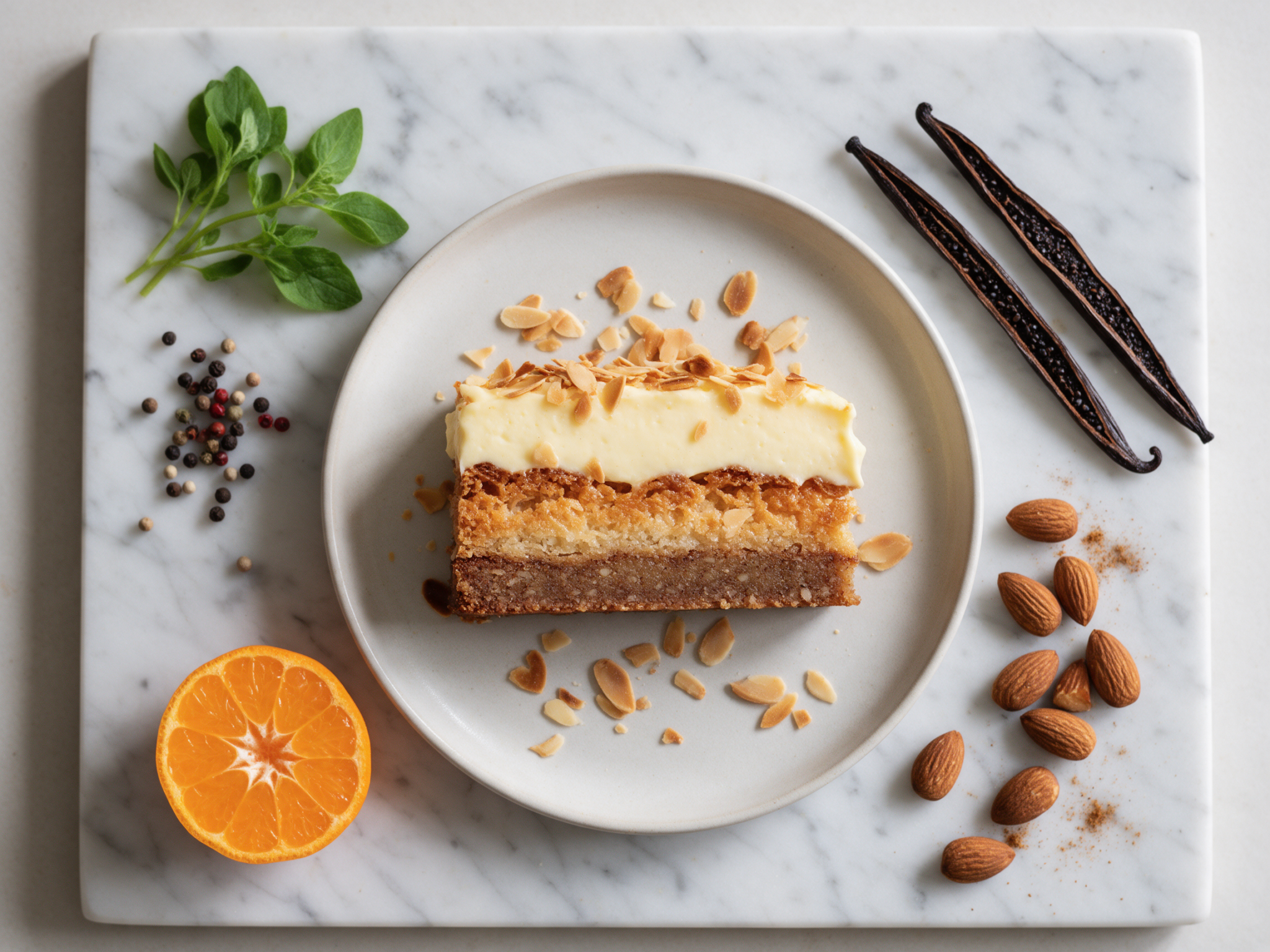
Suksessterte, which translates to “success cake,” is a layered dessert built on a buttery almond base, a crisp baked almond meringue, and a thick vanilla custard cream folded with butter. It’s rich, but not heavy the way a straight buttercream cake can be.
I first had a slice at a bakery in Oslo, tucked between a bread shelf and a coffee machine that never stopped running. The cream layer was cold and dense, much like the custard in Venezuela’s coconut rum custard dessert, the meringue underneath crackled, and the almond base held it all together without turning soggy.
This version bakes the base and almond meringue together in one 23 cm / 9-inch springform pan, then tops it with a stovetop vanilla custard buttercream once everything’s cooled. No fancy equipment, just patience while things cool.
Why You’ll Love This Recipe
- Crisp almond meringue bakes right on the base
- Vanilla custard cream is silky, not sickly sweet
- One springform pan, no stacking separate cake layers
- Make-ahead friendly, tastes better the next day
Ingredient Notes
- ground almonds: Use finely ground almonds rather than super-fine almond flour, which packs too tightly and makes the meringue dense.
- egg whites: Room temperature whites whip higher and hold peaks better than cold ones straight from the fridge.
- unsalted butter: Used in both the base and the custard cream, unsalted lets you control the salt yourself.
- whole milk: Whole milk gives the custard body. Low-fat milk works but the custard turns thinner and less rich.
- cornstarch: Cornstarch thickens the custard without an eggy or grainy texture.
- flaked almonds: Sprinkle these over the raw meringue before baking so they toast in the oven’s heat.
Suksessterte: Norway’s Layered Almond Success Cake
Ingredients
Method
- Heat the oven to 175 C / 347 F. Grease a 23 cm / 9-inch springform pan and line the bottom with parchment.
- Cream the butter and sugar until pale, then beat in the egg yolk. Add the flour, baking powder, and salt and mix to a soft dough. Press it evenly into the bottom of the pan.
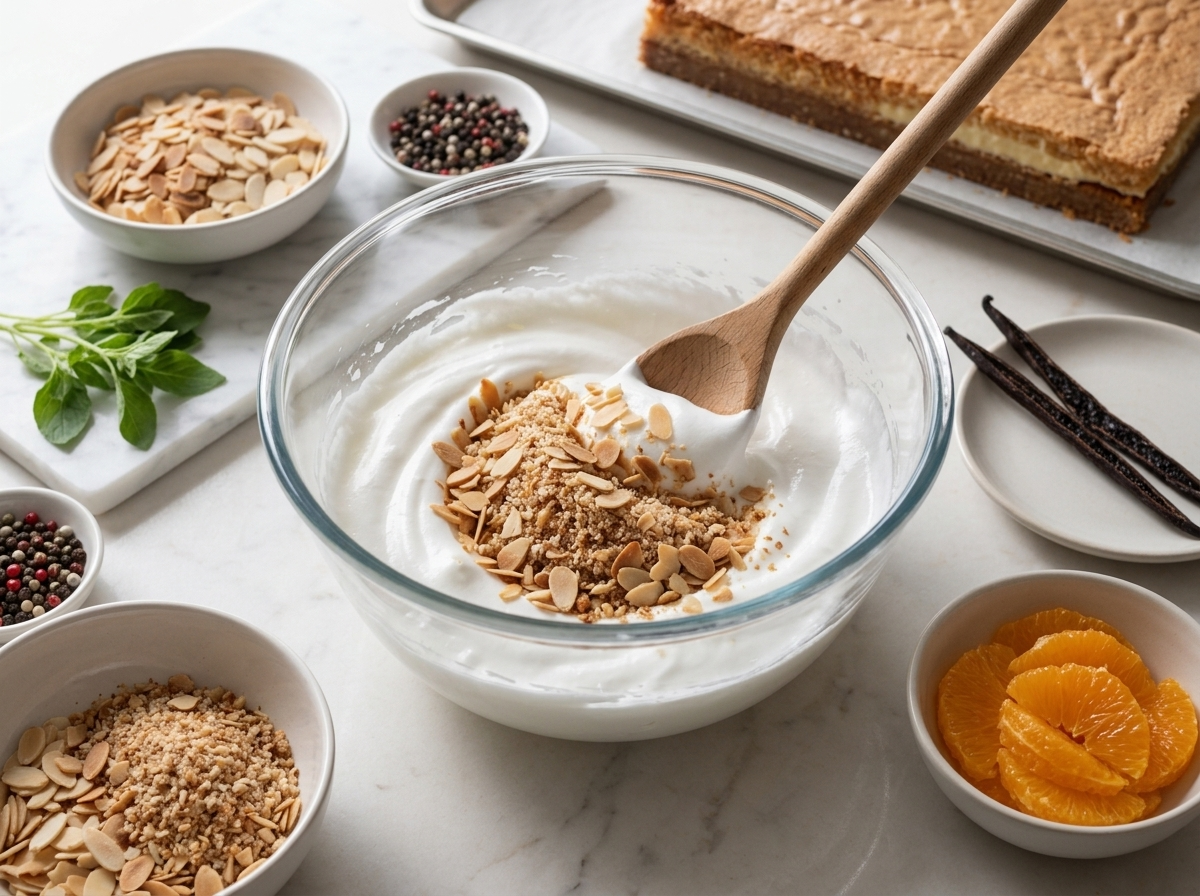
- Whisk the egg whites to soft peaks, then gradually add the sugar and whip to stiff, glossy peaks. Fold in the ground almonds gently with a spatula.
- Spread the meringue evenly over the dough base and scatter the flaked almonds on top.
- Bake for 35 to 40 minutes, until the meringue is golden brown and feels set, not wet, when pressed lightly.
- Cool the cake completely in the pan on a wire rack, about 90 minutes, before releasing the springform sides.
- Heat the milk in a 2-quart / 2 L saucepan over medium heat until steaming, not boiling.
- Whisk the egg yolks with the sugar and cornstarch in a bowl until pale. Slowly pour in the hot milk, whisking constantly.
- Return the mixture to the saucepan and cook over medium-low heat, stirring constantly, for 3 to 4 minutes until it thickens enough to coat the back of a spoon. Do not let it boil hard or the yolks will scramble.
- Strain the custard through a fine-mesh sieve into a bowl, stir in the vanilla, and cover with plastic wrap touching the surface. Cool to room temperature, about 30 minutes.
- Beat the softened butter in a mixer until fluffy. Add the cooled custard a spoonful at a time, beating until smooth and creamy.
- Spread the custard cream over the cooled cake. Chill for at least 2 hours before slicing with a knife wiped clean between cuts.
Notes
- Bake meringue until golden and just set; a wet center under the almonds means it needs more time.
- Use room-temperature egg whites for maximum volume when whipping.
- Custard cream must cool to room temperature before mixing with butter, or it separates.
- Chill the assembled cake at least 2 hours before serving for clean slices.
Tips for Success
- Cool the base and meringue completely before adding custard cream, or the cream will melt and slide off.
- Whip egg whites to stiff, glossy peaks, the same base used for Ecuadorian guava meringue cookies, before folding in almonds, or the meringue collapses in the oven.
- Cook the custard over medium-low heat, stirring constantly, so the egg yolks don’t scramble into lumps.
- Chill the assembled cake at least 2 hours before slicing, this sets the custard cream for clean cuts.
- Wipe your knife clean between slices for neat layers, the custard cream is soft and sticks easily.
Variations
- Swap ground almonds for hazelnuts in the meringue for a deeper, toasted flavor throughout the cake.
- Add a thin layer of raspberry jam between the base and meringue before baking for a fruity contrast.
- Fold whipped cream into the custard cream for a lighter, mousse-like texture instead of dense buttercream.
Storage and Reheating
Suksessterte keeps well chilled, covered, in the fridge for up to 3 days, since the custard cream needs cold temperatures to hold its shape. The meringue softens slightly by day 2 but stays good to eat.
This cake isn’t meant to be reheated. Heat melts the custard cream and turns the crisp meringue soggy, so serve it cold or let it sit at room temperature for 15 minutes before slicing.
To make ahead, bake the base and meringue up to 2 days early and store wrapped at room temperature, then whip the custard cream and assemble it the day you plan to serve.
Serving Suggestions
Slice suksessterte with a warm, clean knife for neat layers, since the custard cream stays soft even when chilled.
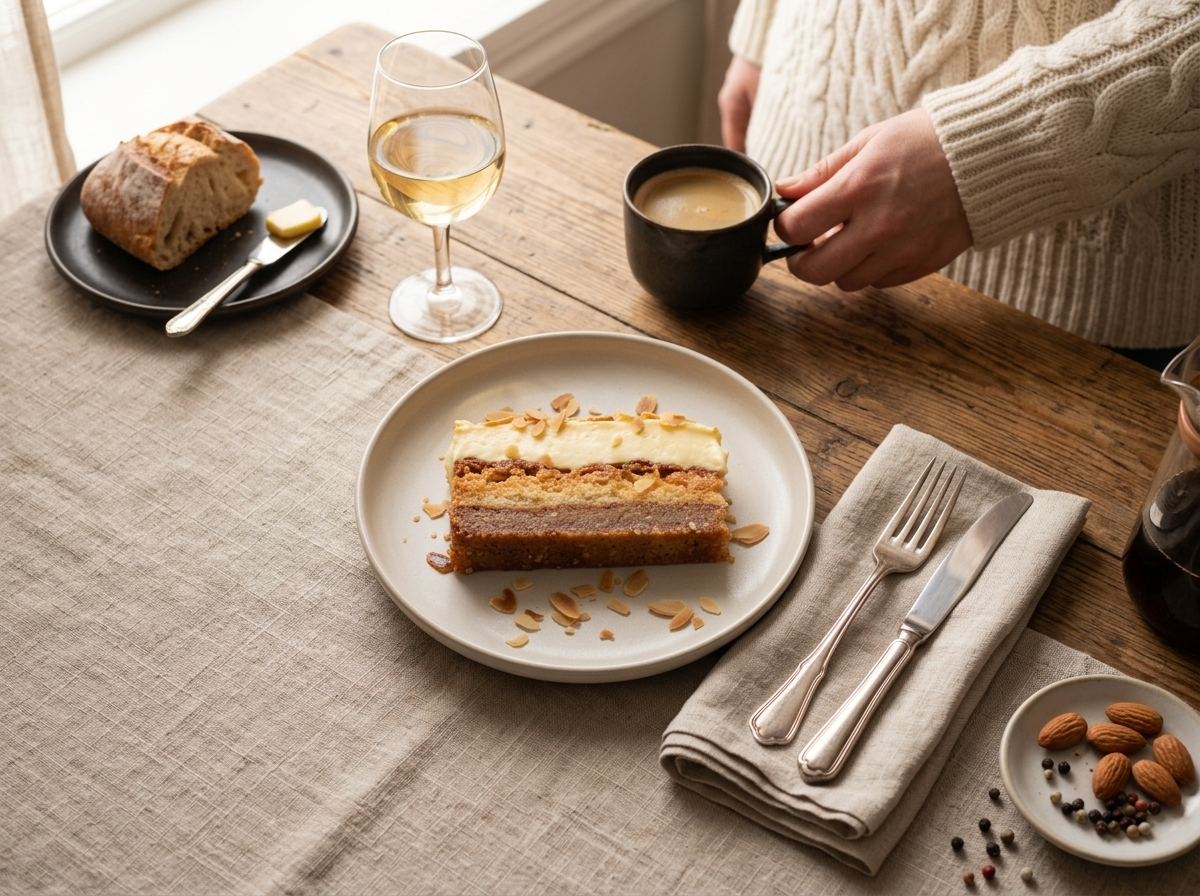
Serve it with black coffee or tea, the classic pairing for anything this rich. A handful of fresh raspberries or a small spoon of lightly sweetened whipped cream, similar to the topping on Uruguay’s peach meringue trifle, on the side works too.
This cake fits birthdays, coffee gatherings, or a Sunday afternoon with nothing else planned.
FAQ
Why did my suksessterte meringue crack or turn chewy instead of crisp?
A cracked or chewy meringue usually means the oven ran too hot or the whites weren’t whipped to stiff peaks before folding in the almonds. Bake at 175 C / 347 F and check for a golden top that feels set, not wet, when pressed lightly. Underwhipped whites collapse and turn gummy under the almonds.
Can I use almond flour instead of ground almonds in the meringue?
Yes, but the meringue turns denser since almond flour is finer and packs more tightly than ground almonds. Pulse whole almonds in a food processor until sandy rather than powdery for the closest texture. Pre-ground almond meal from the store works fine too, just avoid super-fine almond flour meant for macarons.
Can I make suksessterte a day ahead of serving?
Yes, suksessterte actually tastes better the day after baking, once the custard cream has firmed up against the meringue. Bake the base and meringue up to 2 days ahead, wrap tightly, then make the custard cream and assemble within a day of serving. Store the finished cake covered in the fridge for up to 3 days.
What goes well with suksessterte besides coffee?
Suksessterte pairs naturally with black coffee or tea, since the vanilla custard cream is rich and slightly sweet on its own. Fresh raspberries or a small spoon of lightly sweetened whipped cream on the side cuts through the richness. Skip anything else too sweet, the cake carries plenty of sugar already.
Is suksessterte gluten free?
Suksessterte is not gluten free as written, since the base uses regular all-purpose flour. Swap in a 1:1 gluten-free flour blend for the base only, since the meringue and custard cream are naturally gluten free. Double check your baking powder and vanilla extract are labeled gluten free too.
What’s the difference between suksessterte and drømmekake?
Suksessterte and drømmekake are both Norwegian, but drømmekake is a simple sponge topped with a caramelized coconut layer, no custard involved. Suksessterte is richer and more work, with a baked almond meringue and a buttery vanilla custard cream layer instead of coconut. Suksessterte is closer to a torte, drømmekake to a snack cake.
You might also like
