
Jump to Recipe
There’s something about postre chajá that feels like a secret Uruguay has been keeping from the rest of South America.
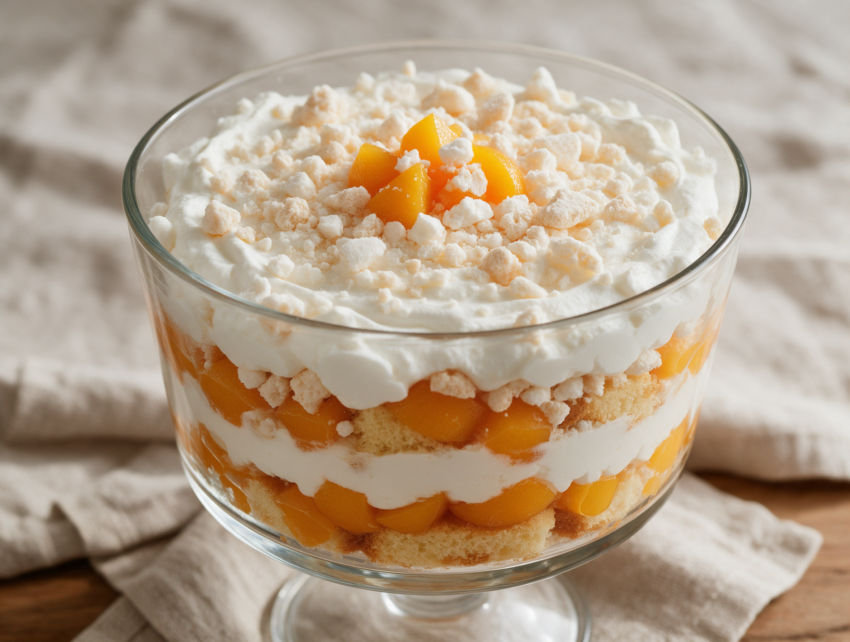
I first had it at a bakery in Montevideo, spooned straight from a glass cup, and couldn’t figure out why it wasn’t more famous outside the country. Soft sponge cake, billows of whipped cream, ripe peach, and shards of crisp meringue, all stacked and chilled until the layers soften into each other.
The dessert was invented in 1927 at a bakery called Las Familias in Paysandú, named after a local bird known for showing up loudly and unannounced. This version keeps that same structure: baked sponge, homemade meringue, whipped cream, and canned peaches for the syrup that soaks everything together.
Give it at least 4 hours in the fridge before you dig in. Overnight is better. The meringue softens just enough to turn chewy in spots and stays crisp in others, which is the whole point.
Why You’ll Love This Recipe
- Made entirely ahead, so it’s ready before guests arrive
- Crisp meringue against soft cream is the main texture payoff
- Uses canned peaches, so it works any time of year
- Feeds a crowd from one trifle dish or several small glasses
Ingredient Notes
- canned peaches: Use peaches canned in syrup, not juice, since the syrup is what soaks the sponge cake and adds sweetness.
- heavy cream: Whole heavy cream around 35% fat whips to stable peaks; anything lighter won’t hold up under the fruit and meringue.
- egg whites: Use room temperature egg whites, they whip to a taller, more stable meringue than cold ones straight from the fridge.
- all-purpose flour: Sift the flour to keep the sponge light. A 1:1 gluten-free blend works if you need this dessert gluten free.
- orange liqueur: Optional but common in Uruguayan bakeries. Skip it and use extra peach syrup for a non-alcoholic version.
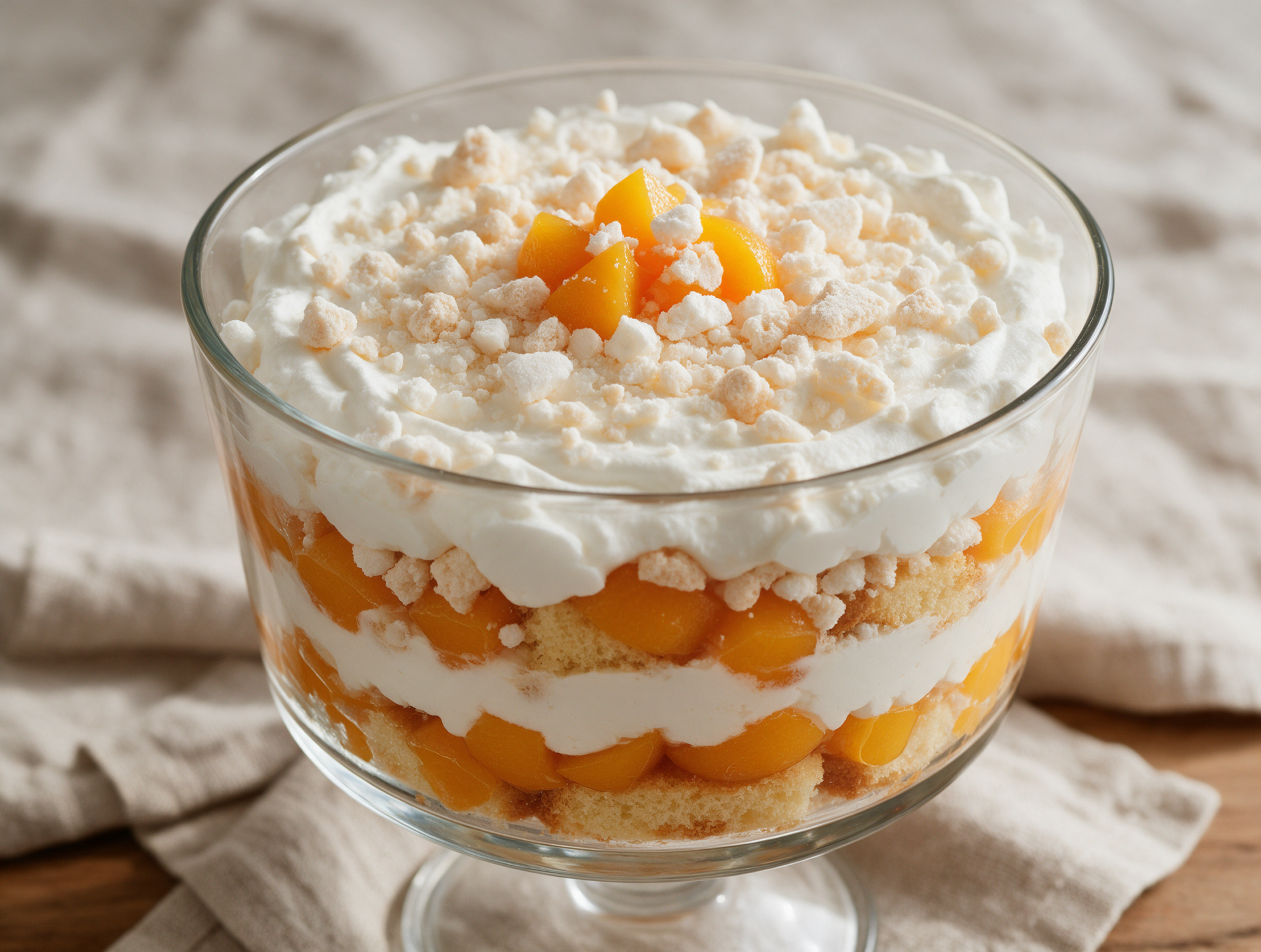
Layered Postre Chajá: Uruguay’s Peach Meringue Trifle
Ingredients
Method
- Heat the oven to 180 C / 350 F. Grease and line a 20 cm / 8-inch round cake pan with parchment.
- Whisk the eggs and sugar in a large bowl with an electric mixer on high for 5 to 6 minutes, until pale, thick, and tripled in volume.
- Sift the flour, baking powder, and salt over the egg mixture. Fold gently until no streaks remain, then fold in the vanilla.
- Pour the batter into the pan and bake for 22 to 25 minutes, until golden and a toothpick inserted in the center comes out clean. Cool completely in the pan, then turn out onto a board.
- Lower the oven to 100 C / 210 F and line a sheet pan with parchment.
- Whisk the egg whites and cream of tartar on medium speed until soft peaks form, about 2 minutes. Add the sugar a tablespoon at a time, whipping on high after each addition, until stiff and glossy, about 6 minutes.
- Drop tablespoon-sized mounds of meringue onto the sheet pan. Bake for 75 to 90 minutes, until they lift cleanly off the parchment and sound hollow when tapped.
- Turn off the oven and let the meringues cool inside with the door cracked, then break into rough chunks.
- Drain the canned peaches, reserving the syrup in a small bowl. Dice the peaches into small pieces.
- Whip the heavy cream, powdered sugar, and vanilla with a mixer on medium-high for 3 to 4 minutes, until soft peaks hold their shape. Don't overwhip, it turns grainy fast once it passes soft peaks.
- Slice the cooled sponge cake horizontally into 2 layers, then cut each layer into cubes about 2.5 cm / 1 inch.
- Stir 2 tbsp of the reserved peach syrup or the orange liqueur into the rest of the syrup. Spread a third of the cake cubes in the bottom of a 2.5 L / 3-quart glass trifle dish and brush generously with the syrup.
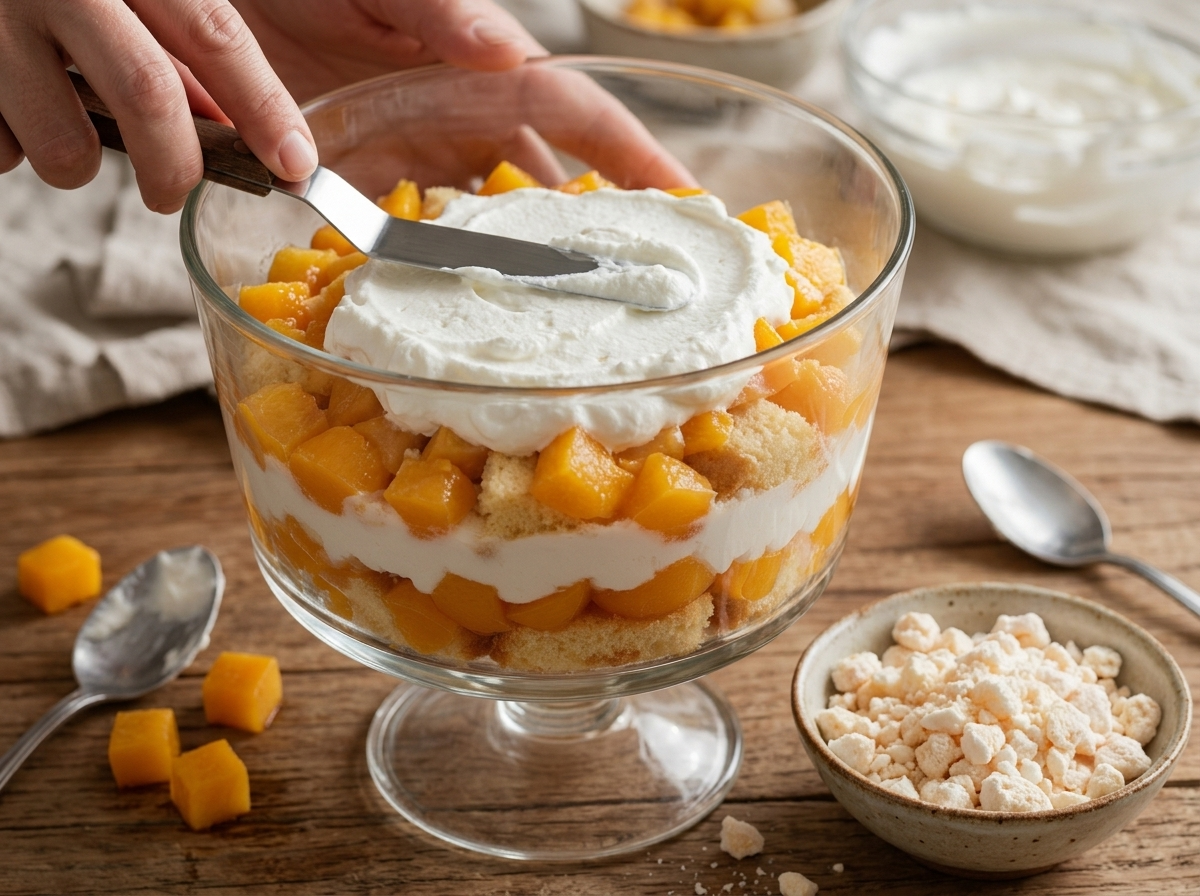
- Spread a third of the whipped cream over the cake, scatter a third of the diced peaches on top, then sprinkle with a third of the crushed meringue. Repeat the layers twice more, finishing with cream, peaches, and meringue on top.
- Cover and refrigerate for at least 4 hours, ideally overnight, so the layers set and the cake soaks up the cream and syrup.
Notes
- Use canned peaches in syrup, not juice, for a sweeter soak.
- Bake the meringue a day ahead so it has time to fully dry out.
- Don't assemble until the cake and meringue are completely cool.
- Chajá tastes better on day 2, once the layers have settled.
Tips for Success
- Bake the meringue low and slow, then let it dry in the turned-off oven so it stays crisp, much like the crisp meringue shells in French merveilleux, instead of chewy.
- Reserve every drop of peach syrup, it’s what keeps the sponge cake moist without turning mushy.
- Whip the cream to soft peaks only, past that point it turns grainy and won’t spread smoothly.
- Chill the assembled dessert for at least 4 hours so the cake layers absorb the cream and syrup.
- Crush the meringue by hand instead of in a food processor, so it keeps texture instead of turning to dust.
Variations
- Swap canned peaches for fresh poached peaches in a light sugar syrup when peaches are in season.
- Add a thin layer of dulce de leche between the cream and peaches for a sweeter, caramel version.
- Build individual servings in small glasses instead of one trifle dish for a plated dinner party dessert.
Storage and Reheating
Postre chajá is meant to be served cold, so there’s no reheating step here. Keep it covered in the fridge for 3 to 4 days, and the flavor actually improves after the first 24 hours as the layers settle.
The meringue softens over time and loses some crunch by day 3, but it still tastes good, just chewier. Don’t freeze it, the whipped cream separates and the meringue turns rubbery once thawed.
If you’re making it for a party, assemble it the day before and add any garnish, like extra crushed meringue on top, right before serving.
Serving Suggestions
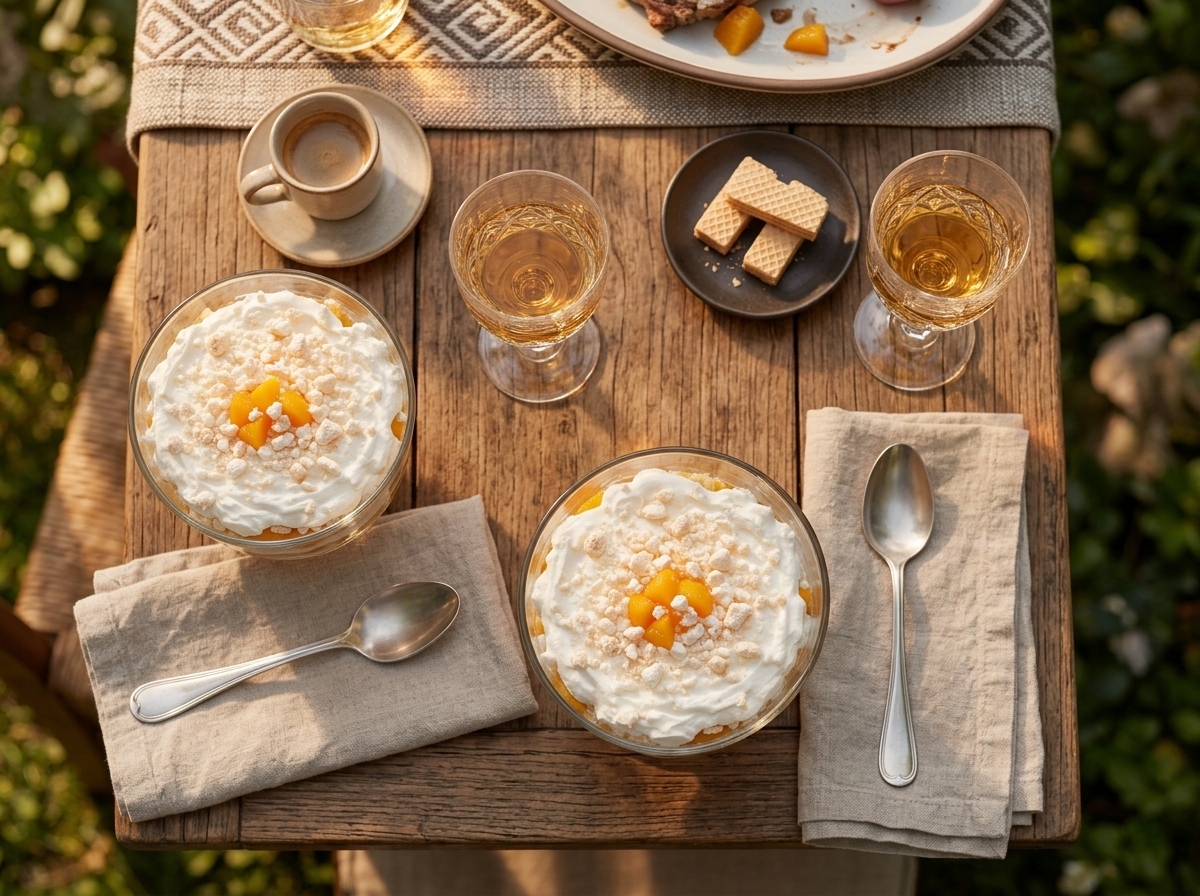
Serve postre chajá cold, straight from the fridge, in small glasses or bowls with a spoon that can reach the bottom layer. A short espresso or cortado on the side cuts through the sweetness.
In Uruguay it often shows up after an asado, when a lighter, colder dessert makes more sense than something baked and warm. A few fresh berries or a mint leaf on top add color without changing the flavor.
For a party, spoon it into small glasses ahead of time so guests can grab one without cutting into a full trifle dish.
FAQ
Why did my postre chajá turn out soggy instead of holding its layers?
Soggy chajá usually means the cake soaked in too much peach syrup or didn’t chill long enough before slicing. Brush the syrup on lightly instead of pouring it, and give the trifle a full 4 hours in the fridge so the layers firm up before you cut into it.
Can I use fresh peaches instead of canned peaches in postre chajá?
Yes, poach sliced fresh peaches in a light sugar syrup for 5 to 8 minutes until just tender, then use that syrup the same way you’d use the canned peach syrup. Fresh peaches need to be ripe and soft, or the layers will taste bland compared to the sweeter canned version.
How far ahead can I assemble postre chajá?
You can assemble it up to 24 hours ahead, and it actually tastes better after a full day in the fridge. The cake absorbs the peach syrup and cream, and the meringue softens just enough at the edges while staying crunchy in the center. Cover tightly with plastic wrap.
What goes well with postre chajá for a dinner party?
A small espresso or cortado balances the sweetness, since chajá is rich with cream and sugar. Fresh berries or a few mint leaves on top add a bit of acidity, and it works well served in small glasses after a grilled dinner or asado, when a big dessert would feel like too much.
Is postre chajá gluten free?
No, the classic version isn’t gluten free because the sponge cake is made with wheat flour. You can swap in a 1:1 gluten-free flour blend for the cake layer, since the meringue and whipped cream are naturally gluten free already.
What’s the difference between postre chajá and a British trifle?
Chajá uses a plain sponge cake, whipped cream, peaches, and crumbled meringue, while a British trifle usually adds jelly, custard, and sometimes sherry-soaked ladyfingers similar to Italy’s classic zuppa inglese. Chajá is drier and lighter since it skips the custard layer, and the meringue stays a defining texture instead of a garnish.
You might also like
