
Jump to Recipe
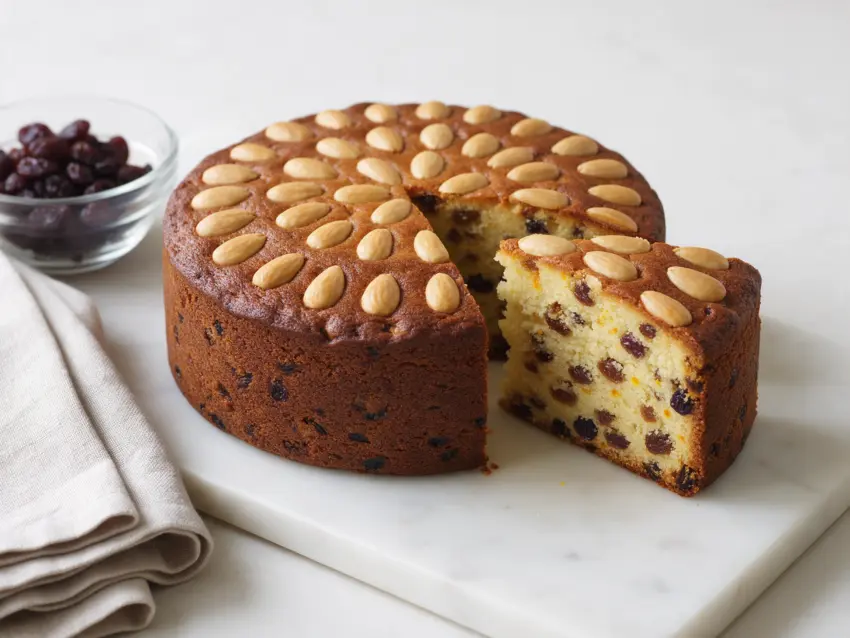
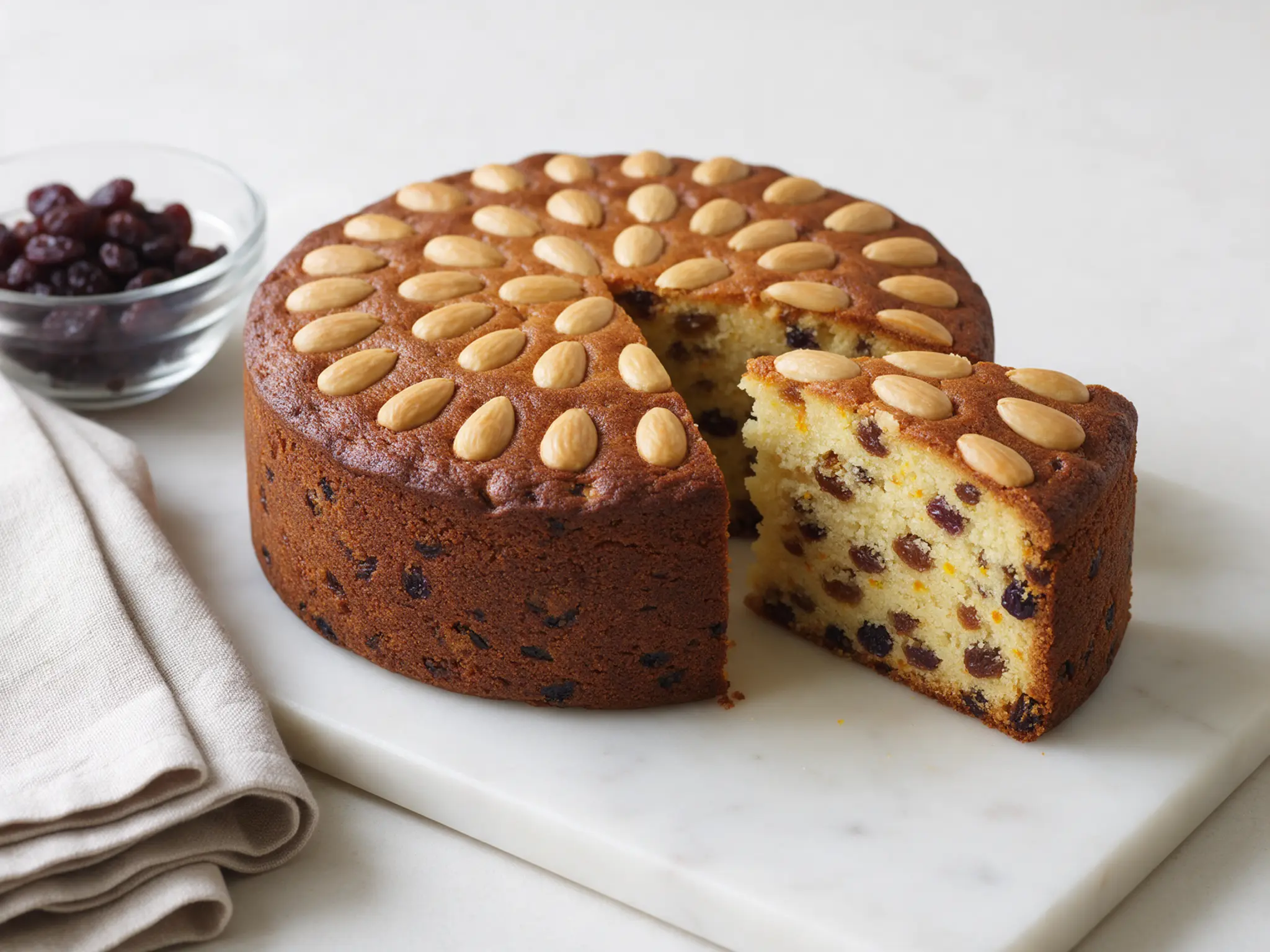
Scottish Dundee cake is a buttery fruit cake from the city of Dundee, loaded with sultanas, currants and orange peel and topped with rings of whole blanched almonds. This version slow-bakes at 150 C / 300 F for 2 hours 20 minutes and slices clean once it’s cool.
There’s something about a cake that bakes this long. The kitchen smells of orange zest and toasted almonds well before the timer goes off.
Dundee cake is lighter than a Christmas cake. No glacé cherries, no icing, no heavy treacle. Just fruit, a little whisky and a tender crumb.
Watch the top. Almonds scorch fast over a two-hour bake, so tent the tin with foil at the 1-hour mark. That’s the tip that actually matters.
Why You’ll Love This Recipe
- Whisky and orange juice keep every sultana plump and juicy
- A ring of toasted almonds on top, no icing needed
- Bakes low and slow, so the crumb stays even
- Tastes better on day two and keeps 10 to 14 days
Ingredient Notes
- sultanas and currants: Buy soft, plump fruit. If yours feel dry and hard, soak them an extra 30 minutes in the same whisky and orange juice.
- mixed candied peel: Whole peel chopped by hand tastes brighter than the pre-diced tubs. Skip the sticky, syrupy kind.
- Scotch whisky: Any blended Scotch works. For an alcohol-free cake, use an extra 3 tbsp (45 ml) of orange juice or cold black tea.
- mixed spice: This is the UK blend. In the US, use 1/2 tsp cinnamon, 1/4 tsp nutmeg and 1/4 tsp allspice instead.
- plain flour: This is US all-purpose flour. Measure by weight, since packed cups run heavy and make the cake dry.
- whole blanched almonds: Use skinless almonds so the rings stay pale gold. Raw is right, because they toast in the oven.
Slow-Baked Scottish Dundee Cake with Whisky-Soaked Fruit
Ingredients
Method
- Combine the sultanas, currants, candied peel, orange zest and lemon zest in a 1.5-quart / 1.5 L bowl. Pour over the whisky and orange juice, stir, cover and leave at room temperature for 60 minutes, until the fruit looks plump and most of the liquid is absorbed.
- Heat the oven to 150 C / 300 F with a rack in the center. Grease a 20 cm / 8-inch round cake tin, 7.5 cm / 3 inches deep, and line the base and sides with a double layer of parchment that stands 5 cm / 2 inches above the rim.
- Beat the butter and brown sugar in a 4-quart / 4 L bowl with an electric mixer for 4 to 5 minutes, until pale and fluffy. Beat in the eggs one at a time, adding 1 tbsp of the flour with each egg so the mixture doesn't curdle.
- Whisk the remaining flour with the ground almonds, baking powder, mixed spice and salt. Fold into the butter mixture in two additions, then fold in the soaked fruit and any liquid left in the bowl. The batter should be thick and drop slowly off the spoon. If it feels stiff, stir in 1 to 2 tbsp milk.
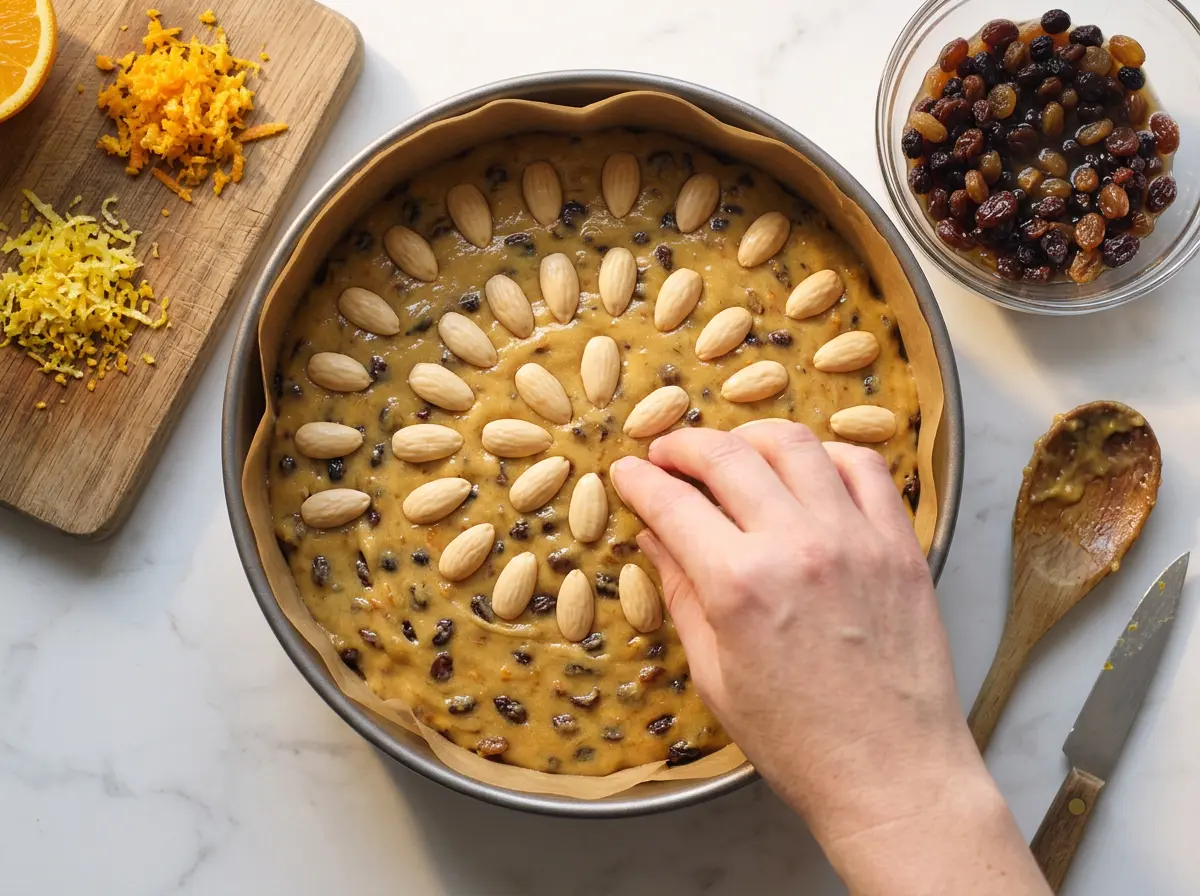
- Spoon the batter into the tin, level the top and press a shallow dip into the center. Arrange the whole almonds in tight concentric circles, pressing each one lightly into the batter.
- Bake for 2 hours 20 minutes. At the 1-hour mark, lay a sheet of foil loosely over the top so the almonds don't scorch. Start testing at 2 hours 10 minutes. A skewer in the center should come out clean with no wet batter, and the center should read 205 F / 96 C.
- Cool the cake in the tin for 30 minutes, then lift it out by the parchment and set it on a wire rack for 60 minutes, until completely cool. Peel off the parchment and slice with a serrated knife.
Notes
- Use room temperature eggs and butter so the batter emulsifies and stays smooth.
- Line the tin with a parchment collar so the sides don't dry out over the long bake.
- Tent with foil at the 1-hour mark to keep the almonds from scorching.
- Store the finished cake in an airtight tin, not in the fridge.
- Cool completely before slicing for clean edges and intact almonds.
Tips for Success
- Soak the fruit for a full 60 minutes so it stays plump and doesn’t pull moisture from the batter during the long bake.
- Line the tin with a double layer of parchment that stands 5 cm / 2 inches above the rim to protect the sides.
- Add each egg with a spoonful of the measured flour to stop the butter mixture from curdling.
- Press the almonds gently into tight rings so they sit slightly in the batter and don’t slide off.
- Wrap the cooled cake in parchment and wait a full day before slicing, since the flavors settle and the crumb firms up.
Variations
- Stir 2 tbsp of coarse-cut orange marmalade into the batter for a bitter orange note, and cut the orange juice to 3 tbsp / 45 ml.
- Swap the currants for chopped dried apricots to get a tangier, softer fruit layer through the crumb.
- Brush the cooled top lightly with warmed apricot jam for a glossy finish that makes the almonds shine.
Storage and Reheating
Dundee cake keeps for 10 to 14 days when wrapped in parchment and stored in an airtight tin at room temperature. Skip the refrigerator, which firms the butter and dries the crumb.
Dundee cake freezes well for up to 3 months. Wrap the whole cake or individual slices in parchment and foil, then thaw overnight on the counter while still wrapped.
Dundee cake needs no reheating. Serve it at room temperature, since warming makes the crumb fall apart under the knife.
Serving Suggestions
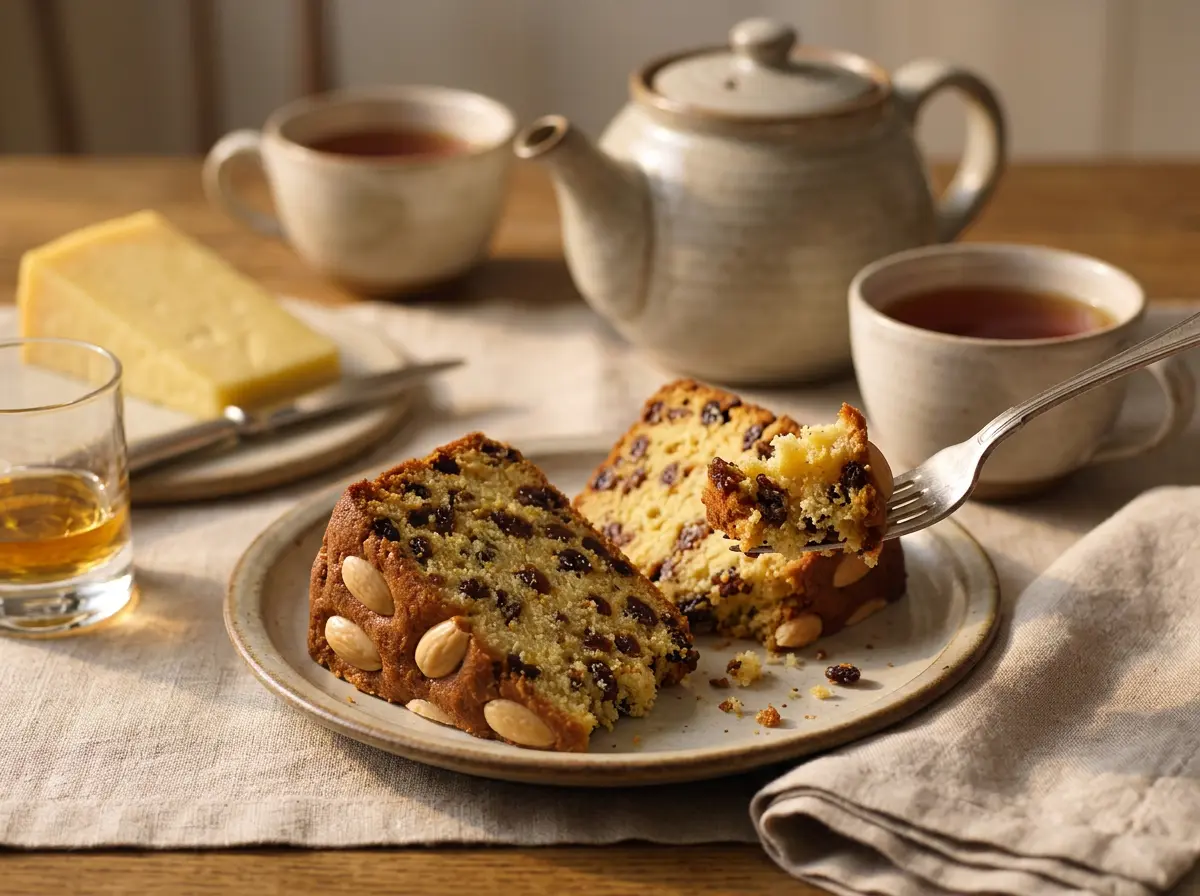
Dundee cake is best in thin slices at room temperature, cut into 12 wedges. Use a serrated knife and saw gently so the almonds stay in place.
A pot of strong black tea is the classic pairing. A slice of mature cheddar or a small dram of Scotch also works.
For a gift, wrap the whole cake in parchment and tie it with string. It travels well and stays moist.
FAQ
How do I know when Dundee cake is done?
Dundee cake is done when a skewer pushed into the center comes out clean with no wet batter, and the center reads 205 F / 96 C on an instant-read thermometer. The top should be deep golden and the sides should pull slightly from the tin. Start checking at 2 hours 10 minutes, since ovens vary.
Why are the almonds on my Dundee cake burnt?
The almonds sit at the hottest part of the oven for over two hours, so they scorch unless you shield them. Tent the tin loosely with foil at the 1-hour mark. Also check your oven holds 150 C / 300 F with an oven thermometer, since many run hot.
Can I use orange juice instead of whisky in Dundee cake?
Yes. Replace the 3 tbsp (45 ml) of whisky with an extra 3 tbsp of orange juice, or cold strong black tea, for a total of 105 ml soaking liquid. The cake tastes a little fruitier and less warm, but the texture and bake time stay the same.
Can I freeze Dundee cake with the almonds on top?
Yes, Dundee cake freezes well for up to 3 months, almonds included. Wrap the cooled cake in parchment, then foil, and slip it into a freezer bag. Thaw it overnight on the counter, still wrapped, so condensation collects on the wrapping instead of the almonds.
What do you serve with Dundee cake?
A mug of strong black tea is the classic match. A wedge of mature cheddar alongside is also common, since the salty cheese balances the sweet fruit. A small dram of Scotch works for the evening. Skip the butter, the cake is rich enough on its own.
What is the difference between Dundee cake and Christmas cake?
Dundee cake is lighter in color, uses no glacé cherries, gets its orange flavor from peel and zest, and is topped with whole almonds instead of icing. Christmas cake is darker, usually spiced harder with treacle, fed with brandy for weeks, and covered in marzipan and royal icing.
You might also like
- the Baked Azerbaijani Badambura: Flaky Almond Pastries
- this Moist Feijoa Almond Cake with a Crunchy Almond Top
- our Toscakaka: Swedish Almond Cake with Toffee Topping
- Suksessterte: Norway’s Layered Almond Success Cake recipe
