
Jump to Recipe
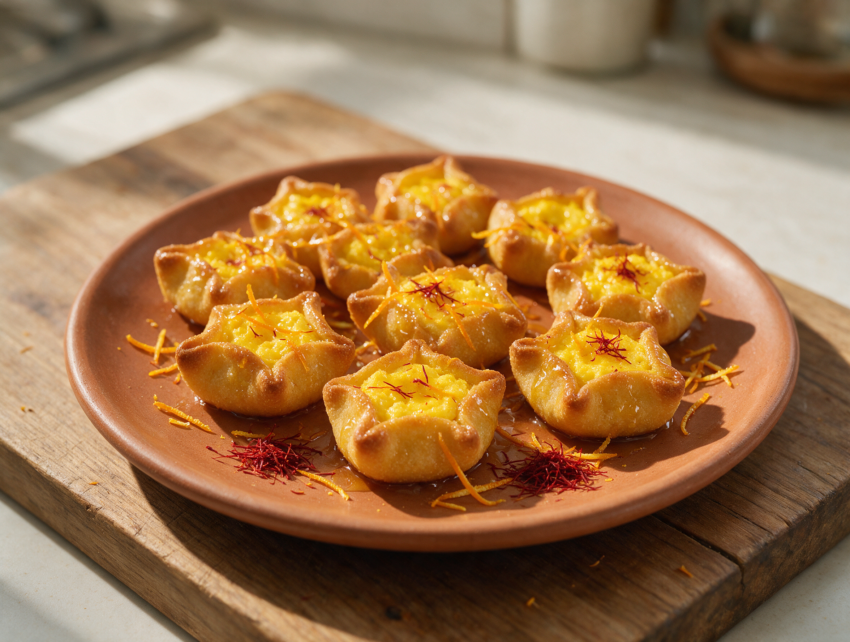
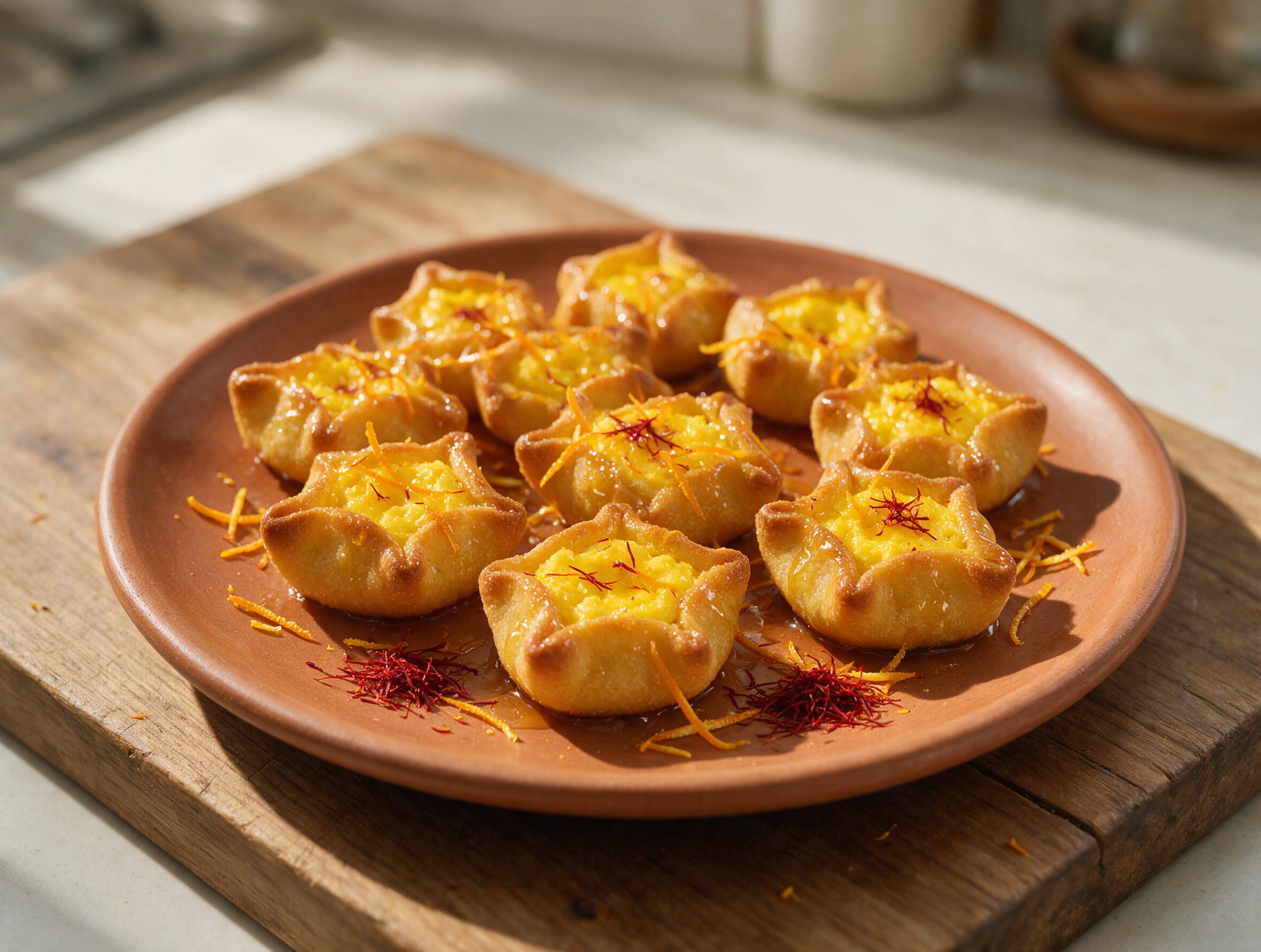
There’s something about saffron and ricotta together that smells like Sardinia the moment it hits the oven. Pardulas are small Sardinian ricotta cakes, open pastries akin to a Yorkshire curd tart, with a semolina shell pinched into a crown shape and a soft, saffron-scented ricotta filling.
I first had them at a bakery in Cagliari during Easter week, when every window was stacked with trays of them. The dough was sturdy but not tough. The filling was barely sweet, just eggy and warm with citrus.
This version bakes at 190°C/375°F for 20 to 22 minutes, until the edges turn gold and the filling sets with a few freckled spots. A brush of warm honey right after baking is what makes them taste like the ones I remember.
They’re not hard to make. The pinching takes a little practice, but even a rough crown holds the filling fine.
Why You’ll Love This Recipe
- Saffron and citrus give the filling real depth, not just sweetness
- The semolina crust stays sturdy for days at room temperature
- Freezes well shaped and unbaked for easy Easter prep
- No special equipment beyond a round cutter and a rolling pin
Ingredient Notes
- semolina flour: Use fine semolina (semola rimacinata), not coarse pasta semolina, or the dough turns gritty and hard to pinch.
- ricotta: Drain it well in a sieve first. Traditional Sardinian bakers use fresh sheep cheese called fresqua, which works too if you can find it.
- saffron: Bloom the threads in warm milk for the full 10 minutes so the color and aroma actually transfer into the filling.
- lard: Gives the crust a short, crumbly texture closer to the original. Unsalted butter is a fine substitute if you’d rather not use lard.
- honey: Warm it slightly before brushing so it spreads thin instead of pooling in clumps on top.
Traditional Sardinian Pardulas with Saffron Ricotta
Ingredients
Method
- Soak the saffron threads in the warm milk for 10 minutes, until the milk turns deep yellow.
- In a bowl, whisk the ricotta, 150 g sugar, eggs, saffron milk, lemon zest, orange zest, 2 tbsp semolina flour and vanilla until smooth. Set aside.
- In a large bowl, whisk the semolina flour, all-purpose flour, 80 g sugar, baking powder and salt.
- Rub the softened lard or butter into the flour with your fingertips until the mixture looks sandy.
- Add the egg, wine and orange zest. Mix, then knead 3 to 4 minutes until the dough is smooth and slightly firm.
- Cover the dough and let it rest at room temperature for 30 minutes.
- Heat the oven to 190°C/375°F and line two sheet pans (33 x 46 cm / 13 x 18 inch) with parchment.
- Roll the dough on a floured surface to 3 mm thickness. Cut rounds with the 9 cm cutter, re-rolling scraps once.
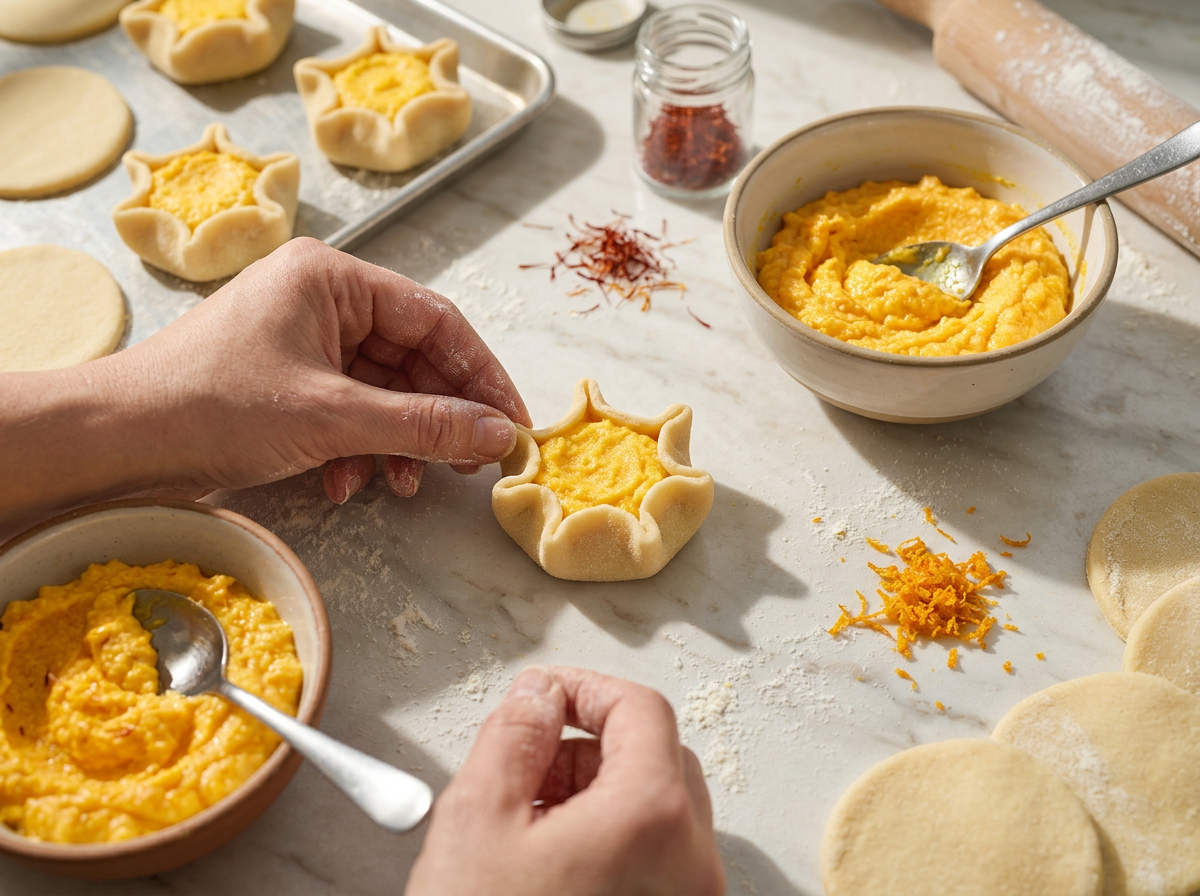
- Spoon about 1 tbsp of filling into the center of each round. Pinch the edges up around the filling in 5 to 6 folds, forming an open crown and leaving the center exposed.
- Arrange the pardulas on the sheet pans, spaced 2 cm apart. Bake for 20 to 22 minutes, until the crust edges are golden and the filling looks set with light golden spots.
- Cool on the pan for 10 minutes, then brush the warm tops with the warmed honey.
- Transfer to a wire rack and cool completely, about 20 minutes, before serving.
Notes
- Use whole milk ricotta, not part-skim, for a filling that holds together.
- Bake one pan at a time if your oven runs hot on one side.
- Filling should taste barely sweet before baking, it concentrates as it bakes.
- Pinch the crown while the dough is still cool and pliable.
Tips for Success
- Drain the ricotta in a sieve for at least 30 minutes before mixing, or the filling turns watery in the oven.
- Pinch the dough edges firmly in 5 to 6 spots so the crown holds its shape and doesn’t unfold while baking.
- Warm the honey glaze slightly before brushing so it spreads thin and glossy instead of clumping.
- Rest the dough a full 30 minutes covered, or it shrinks back the moment you try to roll it.
- Re-roll scraps only once, since the dough toughens with extra handling and gets harder to pinch.
Variations
- Swap the saffron for a teaspoon of orange blossom water if you don’t have saffron threads on hand.
- Use lemon zest only, skip the orange, for a sharper citrus filling closer to older family recipes.
- Add a spoonful of Vin Santo to the filling for the boozy version served at village festivals.
Storage and Reheating
Pardulas keep at room temperature in an airtight container for 3 to 4 days, or in the fridge for up to a week since the filling contains egg and dairy.
To refresh them, warm in a 150°C/300°F oven for 5 to 6 minutes. Skip the microwave, since it turns the crisp edges soft.
For longer storage, freeze baked pardulas up to 2 months wrapped tightly. Thaw at room temperature, then warm in the oven if you want the edges crisp again.
Serving Suggestions
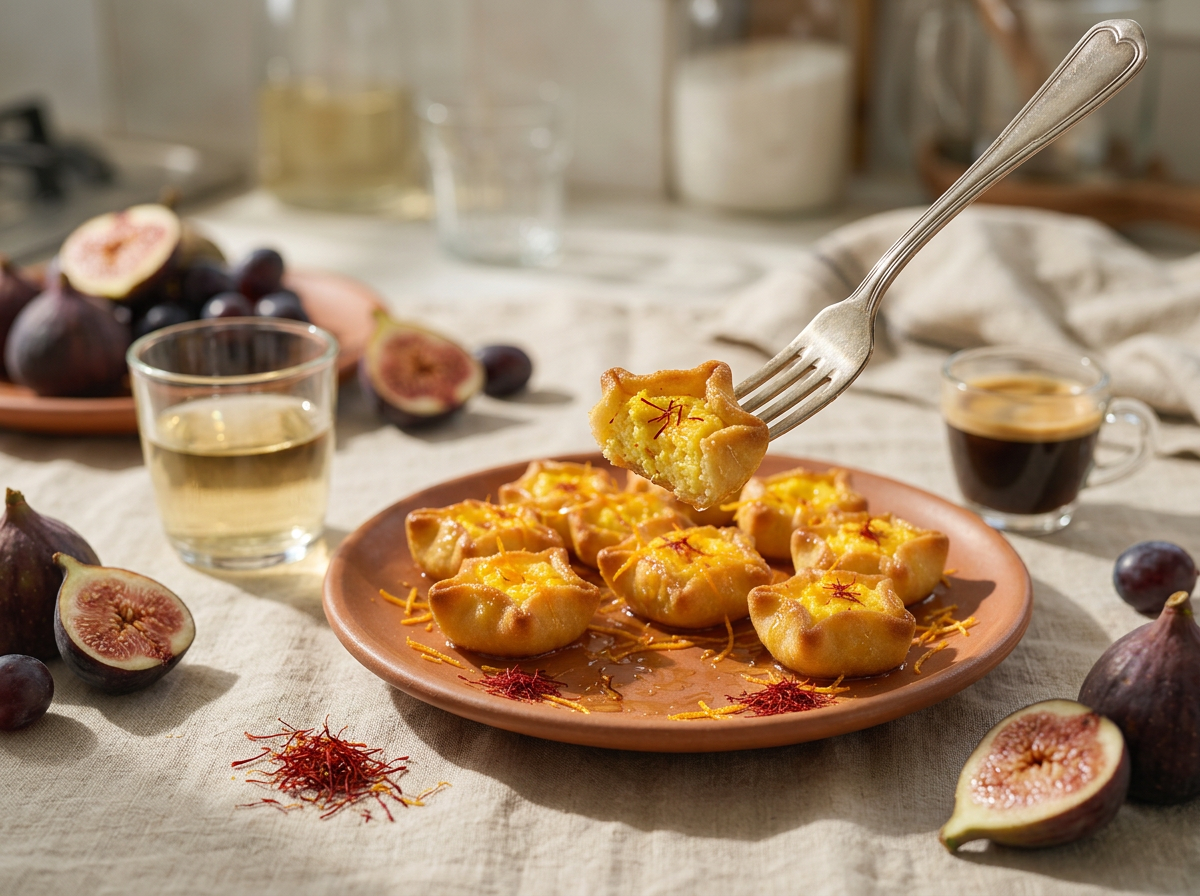
Pardulas taste best slightly warm, with the honey glaze still a little sticky. Set them on a board with fresh grapes or figs for an Easter brunch spread.
A small glass of Vernaccia di Oristano or a strong espresso rounds out the plate, Sardinian style. Black tea works fine too for a simpler afternoon snack.
They also travel well in a lined tin for picnics or gifting, much like homemade Canadian butter tarts, since the semolina crust holds up without going soggy.
FAQ
How do I know when pardulas are done baking?
Pardulas are done when the semolina crust turns golden at the edges and the ricotta filling puffs slightly with a few golden freckles on top, usually 20 to 22 minutes at 190°C/375°F. The center should look set, not wet or jiggly. Pull them a minute early if your oven runs hot, since the filling keeps cooking on the hot pan.
Can I use pecorino or fresh sheep cheese instead of ricotta?
Yes, traditional Sardinian bakers often use fresqua, a soft fresh sheep cheese, in place of ricotta. Swap it in at the same 500 g weight, though the filling turns slightly tangier and less sweet. Drain either cheese well first so the filling doesn’t turn watery in the oven.
Can I freeze pardulas dough or the baked pastries?
Yes, both freeze well. Freeze shaped, unbaked pardulas on a sheet pan until solid, then bag them and bake straight from frozen, adding 3 to 4 minutes. Baked pardulas keep in the freezer up to 2 months wrapped tightly, and thaw at room temperature in about an hour.
What pairs well with saffron ricotta pardulas?
Pardulas taste best with a small glass of Vernaccia di Oristano or a strong espresso, classic Sardinian pairings that cut through the sweetness. Black tea works too if you want something simpler. Serve them slightly warm, not hot, so the honey glaze stays glossy instead of runny.
Are pardulas gluten free?
No, traditional pardulas are not gluten free because the dough relies on semolina and all-purpose flour for structure. A gluten-free flour blend can replace both in equal weight, though the crust turns more crumbly and harder to pinch. Look for a blend with xanthan gum for better hold.
Are pardulas the same as casadinas?
Yes, pardulas and casadinas are the same Sardinian ricotta cake, just named differently by region and dialect. Some villages also call them formagelle. The saffron-scented semolina crust and ricotta filling stay the same no matter what the local name is.
If you enjoyed this, try
- Traditional Yorkshire Curd Tart with Nutmeg and Currants recipe
- this Traditional Baked Gypsy Tart with Muscovado Sugar Filling
