
Jump to Recipe
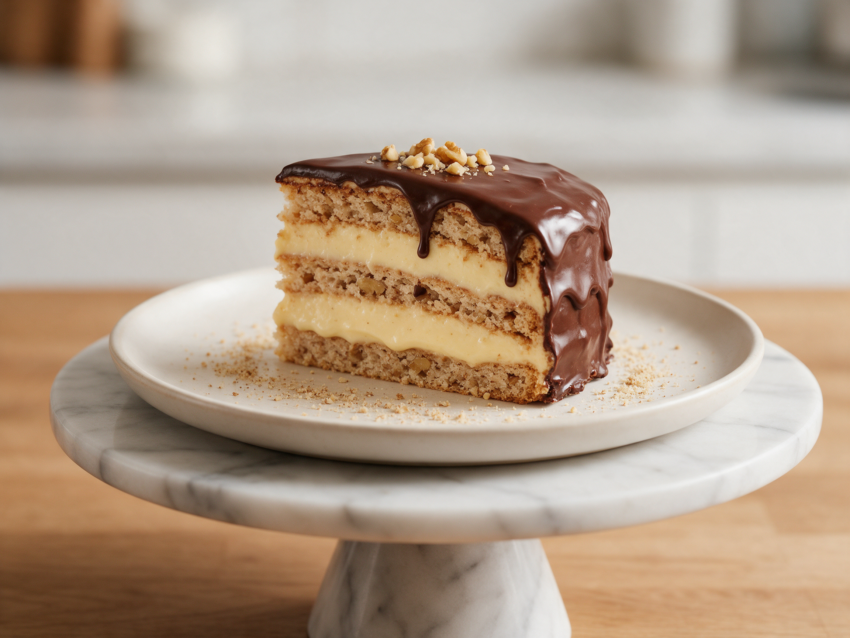
There’s something about a cake with no flour in it that still holds together in clean, sliceable layers. Reform torta is that cake, a Serbian classic built from three baked walnut meringue layers and a rich rum custard buttercream.
I first had a slice of this at a small pastry shop in Belgrade, tucked between the espresso bar and the counter. It wasn’t sweet in the way American cakes are sweet. It was nutty, slightly boozy, and dense in the best sense.
The layers aren’t hard to make, but they do reward patience. Whip the whites properly, fold gently, and let the discs cool all the way before you touch them.
This version sticks close to the original: ground walnuts, egg whites, egg yolks cooked into a real custard, butter, and just enough rum to notice. No shortcuts on the buttercream, it’s what makes the cake.
Why You’ll Love This Recipe
- Naturally gluten free, no flour in the layers
- Make-ahead dessert that tastes better the next day
- Rich rum custard buttercream, not a shortcut frosting
- Classic Balkan pastry shop flavor from your own oven
Ingredient Notes
- Ground walnuts: Buy pre-ground or pulse whole walnuts in short bursts, over-processing turns them into an oily paste that won’t fold into the meringue properly.
- Egg whites: Room temperature whites whip to a taller, more stable meringue than cold ones straight from the fridge.
- Dark rum: Use a dark or spiced rum for the deepest flavor, or swap it for rum extract mixed with a splash of water if you’re baking for kids.
- Egg yolks: Six yolks make a real custard base, not a shortcut buttercream. Don’t skip the constant stirring while it cooks.
- Dark chocolate: Use a bar with 60-70% cocoa, chopped fine so it melts smoothly for both the buttercream and the glaze.
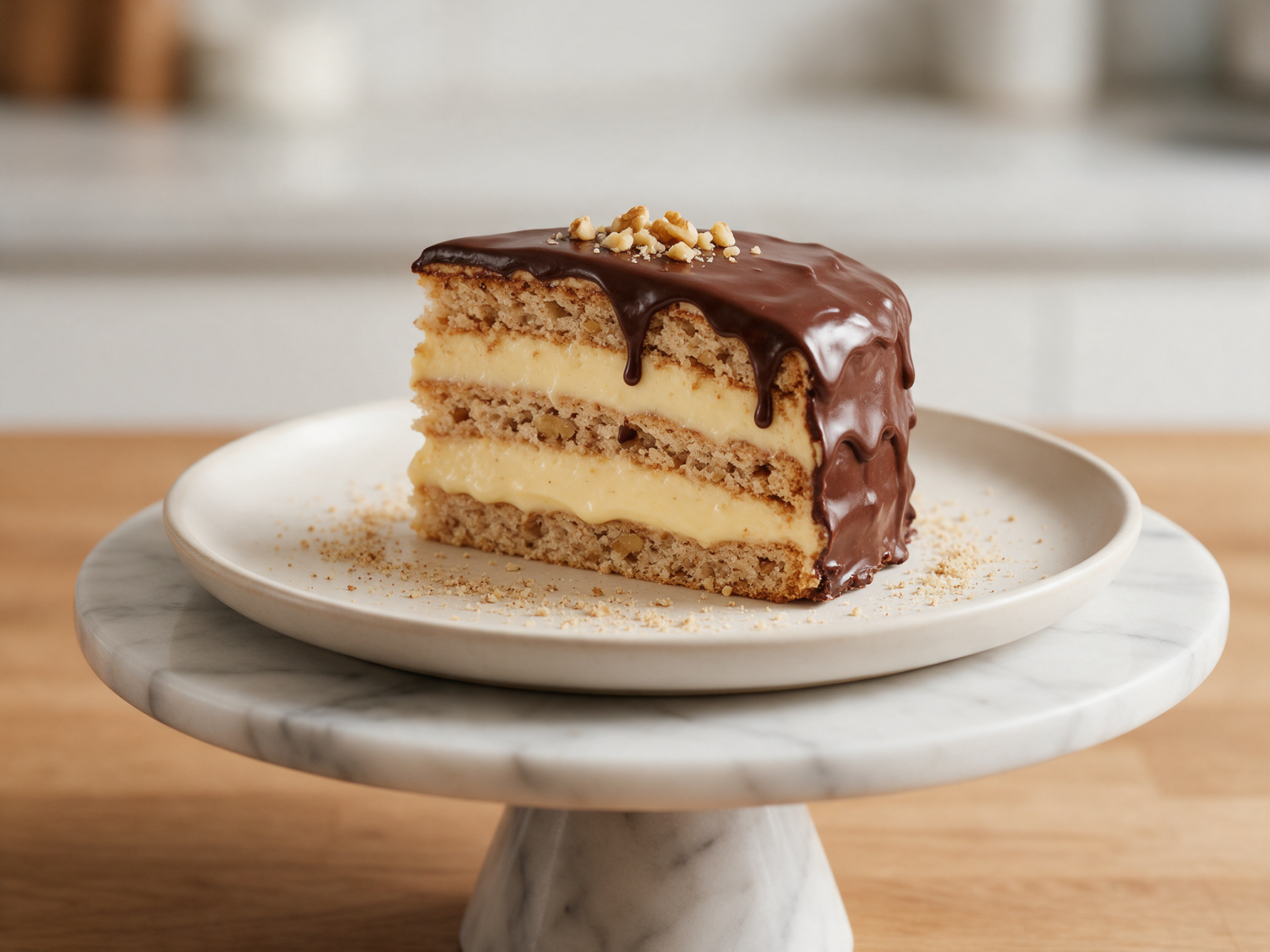
Reform Torta: Serbia’s Classic No-Flour Walnut Cake
Ingredients
Method
- Preheat the oven to 150C / 300F. Using an 8-inch cake pan as a guide, trace three 20 cm circles onto parchment paper, then flip the paper ink-side down onto two 13 x 18-inch sheet pans.
- In a large bowl, whip the egg whites and salt with a mixer on medium speed until soft peaks form, about 2 minutes.
- Add the sugar one tablespoon at a time, whipping after each addition, until the meringue is stiff and glossy, about 5 minutes more.
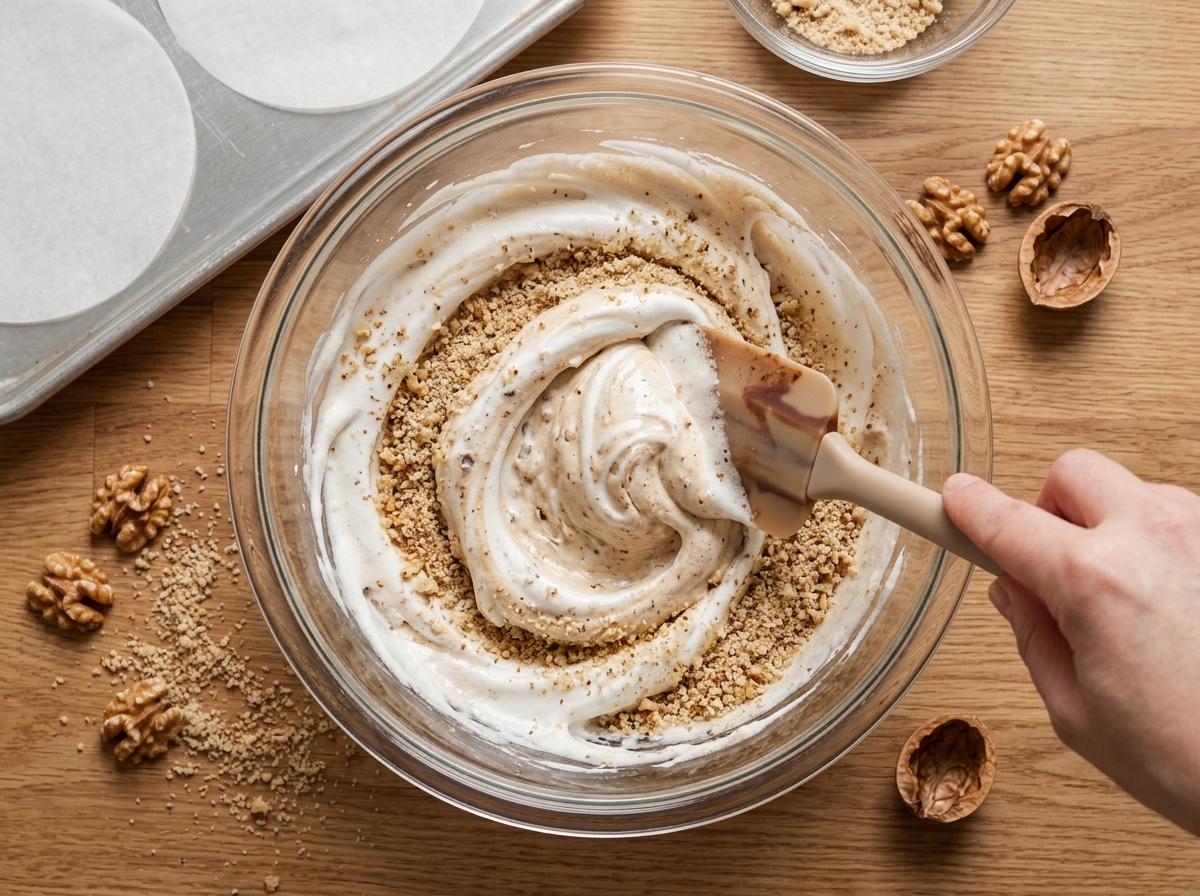
- Fold in the ground walnuts and vanilla with a spatula in three additions, working gently so you don't deflate the meringue.
- Divide the batter evenly among the three traced circles and spread to the edges with an offset spatula, keeping the layers about 1 cm thick.
- Bake for 22 to 25 minutes, rotating the pans halfway, until the layers are light golden and dry to the touch. Cool completely on the pans, at least 20 minutes, the layers crisp as they cool and will tear if peeled while warm.
- Whisk the egg yolks and sugar together in a 2-quart / 1.9L saucepan until pale, then whisk in the milk.
- Cook over low heat, stirring constantly, for 6 to 8 minutes until the custard coats the back of a spoon and reaches 82C / 180F. Pull it off the heat right away, if it scrambles at the edges you've gone too far.
- Pour the custard into a bowl and press plastic wrap directly onto the surface. Cool to room temperature, about 30 minutes.
- Beat the softened butter in a large bowl until pale and fluffy, 2 to 3 minutes. Add the cooled custard a spoonful at a time, beating well after each addition.
- Beat in the melted dark chocolate, rum, and vanilla until the buttercream is smooth and holds its shape.
- Set one walnut layer on a cake plate. Spread a third of the buttercream evenly over the top. Repeat with the second and third layers, using the last of the buttercream to coat the top and reserving enough to thinly coat the sides.
- Press the reserved 50 g ground walnuts into the sides of the torta with your palm.
- Melt the chopped chocolate and cream together in short bursts in the microwave, stirring until smooth, then stir in the butter for shine. Pour over the top of the torta and let it drip slightly over the edge.
- Chill the torta for at least 4 hours, or overnight, until the buttercream is firm enough to slice cleanly. Warm your knife under hot water and wipe between cuts.
Notes
- Cool walnut layers fully on the pan before peeling off parchment.
- Cook the yolk custard to 82C / 180F, no higher, or it scrambles.
- Chill at least 4 hours before slicing for clean layers.
- Weigh the ground walnuts and sugar, don't eyeball by cup.
Tips for Success
- Weigh the ground walnuts and sugar instead of using cups, packed volume throws off the meringue’s structure.
- Cook the yolk custard low and slow, pull it off heat right when it coats the back of a spoon at 82C / 180F.
- Let each walnut layer cool completely on the pan before peeling off the parchment, warm layers tear apart.
- Chill the assembled torta at least 4 hours before slicing so the buttercream firms up between layers.
- Warm your knife under hot water and wipe it between cuts for clean slices through the chilled buttercream.
Variations
- Swap the rum for strong brewed espresso if you want a coffee version everyone at the table can eat.
- Use hazelnuts instead of walnuts for a slightly sweeter, more toasted flavor in the baked layers.
- Skip the glaze and dust the chilled top with cocoa powder and whole walnut halves for a rustic finish.
Storage and Reheating
Reform torta keeps in the fridge for 4 to 5 days, covered tightly so the glaze doesn’t pick up other smells. The buttercream firms up when cold, which is exactly what you want for clean slices.
You can freeze the assembled cake before glazing for up to 2 months, wrapped tightly in plastic then foil. Thaw overnight in the fridge and make the glaze fresh the next day.
This cake is served cold or at cool room temperature, not reheated. Pull it from the fridge 20 to 30 minutes before serving so the buttercream softens slightly and the walnut layers aren’t rock hard.
Serving Suggestions
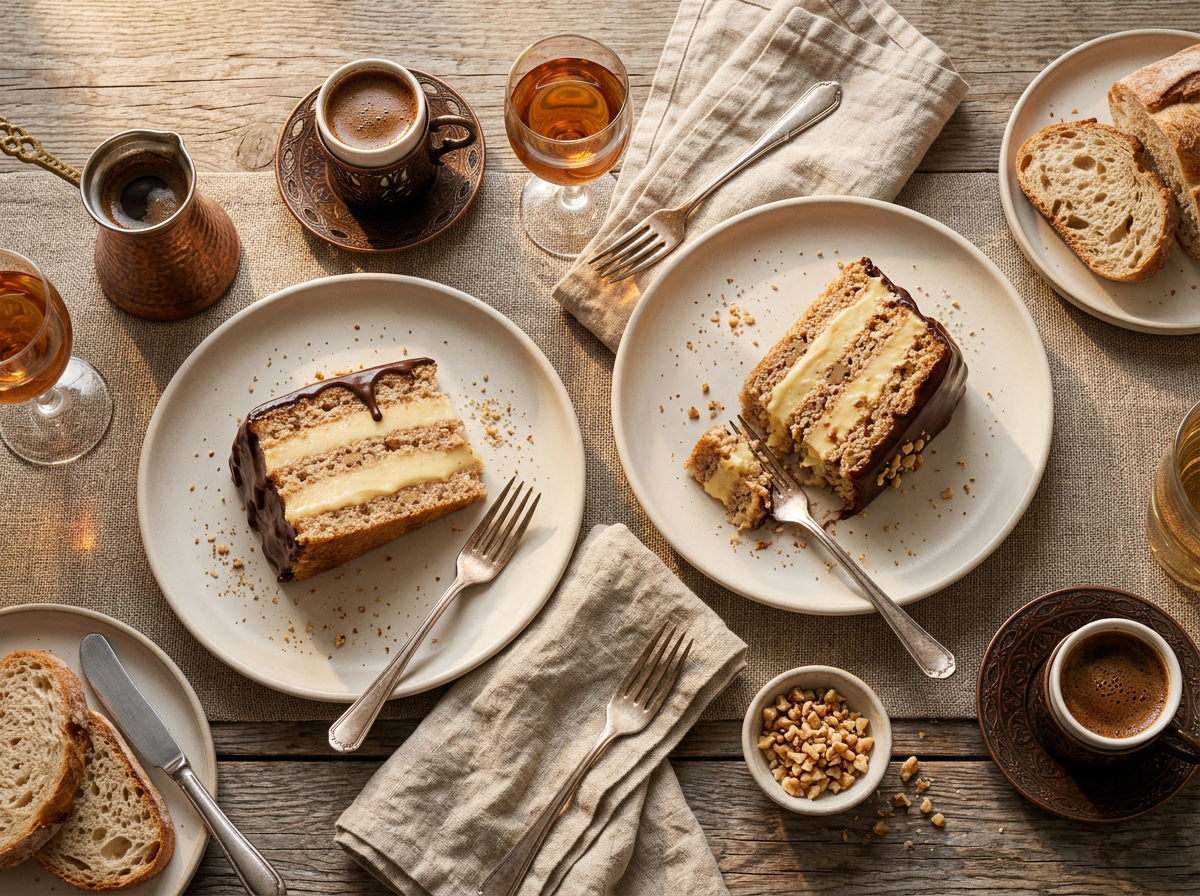
Reform torta is rich, so I cut it into thin slices, about 12 from one 20 cm cake. A short black coffee or Turkish coffee cuts through the buttercream well.
For a Balkan-style dessert table, set it out with a small glass of rakija or dark rum alongside fresh berries. The tartness balances the sweetness of the glaze.
Leftover slices pack fine for a few hours unrefrigerated once glazed and chilled first, good for carrying to a potluck or a birthday table.
FAQ
Why did my reform torta walnut layers crack when I peeled off the parchment?
Layers crack when peeled while still warm or when over-baked and dried out. Let them cool fully on the pan, about 20 minutes, before lifting the parchment. Slight cracks in the middle layers won’t show once they’re stacked with buttercream anyway.
Can I use almond flour instead of ground walnuts in reform torta?
You can, though the flavor and texture shift, almond flour bakes lighter and less rich than walnuts. If you swap, use the same 300 g weight for the layers and expect a slightly paler, less oily crumb. Traditional reform torta always uses walnuts or hazelnuts, never a true flour.
Can I freeze reform torta before adding the chocolate glaze?
Yes, freeze the assembled but unglazed cake wrapped tightly for up to 2 months. Thaw overnight in the fridge, then make the glaze fresh and pour it over before serving. Freezing after glazing works too, but the shine on the ganache dulls slightly once thawed.
What goes well with Serbian reform torta besides coffee?
A small glass of rakija or a dark rum on the side matches the buttercream’s rum note well. Fresh berries or a spoon of unsweetened whipped cream cut the richness if you want a lighter plate. Turkish coffee is the classic Balkan pairing though.
Is reform torta gluten free?
Yes, reform torta is naturally gluten free because the layers use ground walnuts and whipped egg whites instead of flour. Just double check your chocolate and rum are gluten free too, most are, but always read the label if you’re baking for celiac guests.
What’s the difference between reform torta and a French dacquoise?
Reform torta and dacquoise both use whipped egg whites and ground nuts for the layers of this layered torta cake, but reform torta is filled with a rum-spiked egg yolk custard buttercream instead of whipped cream or ganache. It’s a Balkan pastry shop staple, especially in Serbia and Croatia, usually finished with a chocolate glaze rather than left bare.
Loved this? Try these next
- Bienmesabe Venezolano: Coconut Rum Custard Dessert recipe
- our Crumbly Torta Sbrisolona, a Rustic Italian Dessert
