
Jump to Recipe
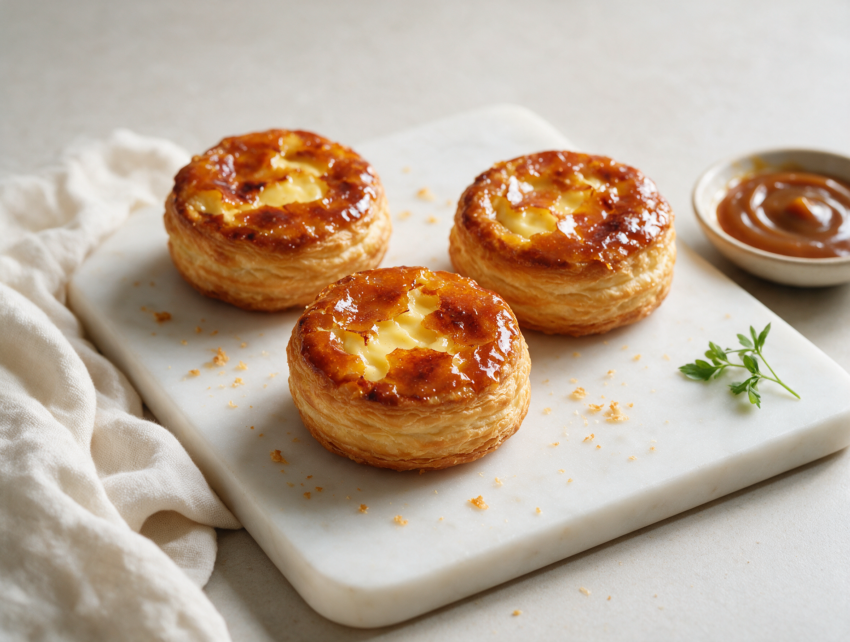
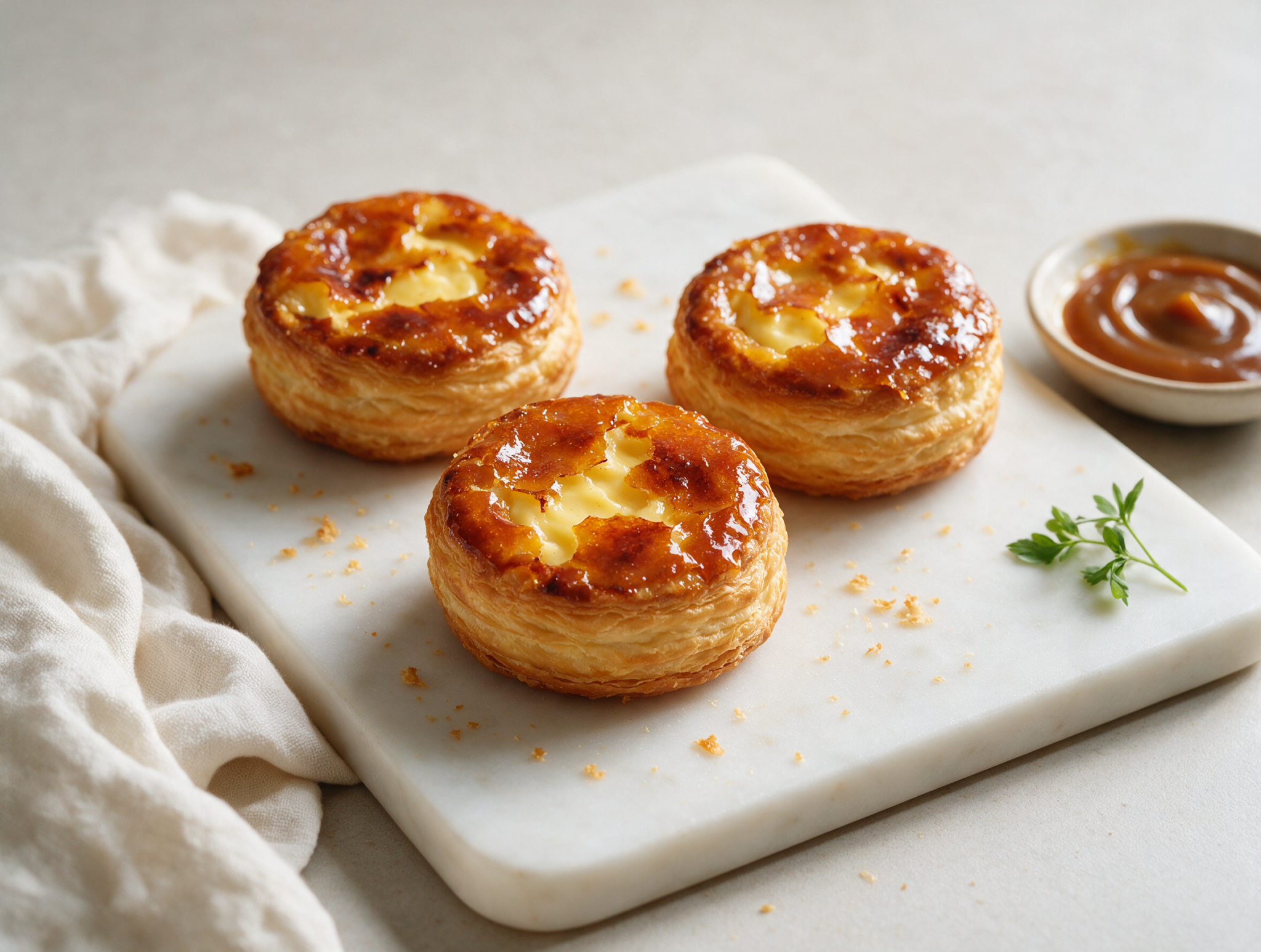
Puits d’amour pastry is a French dessert of stacked puff pastry rings baked into little golden cups, then filled with vanilla pastry cream and topped with a torched, caramelized sugar crust that cracks like creme brulee.
The name means “wells of love,” and once you see the shape, it makes sense. Two rounds of puff pastry, one with the center cut out, bake into a deep little cup that’s begging to be filled.
I first made these after staring through a Parisian pastry window for way too long. Turns out they’re less fussy than they look.
The pastry puffs on its own in the oven. The custard is a basic pastry cream. The only real skill is not walking away while the sugar caramelizes, because it goes from amber to burnt in about 20 seconds.
Why You’ll Love This Recipe
- Crisp puff pastry cups with almost no shaping skill
- Vanilla pastry cream you can make while pastry bakes
- Torched sugar top cracks like creme brulee
- Looks like a bakery treat, costs a few dollars
Ingredient Notes
- puff pastry: Use an all-butter puff pastry for the best rise and flavor. Thaw frozen pastry overnight in the fridge, not on the counter, so it stays cold while you cut it.
- egg: Beaten and used as egg wash so the pastry rings bake to a deep golden color.
- whole milk: Gives the pastry cream body. Low-fat milk works but the custard will be thinner.
- vanilla extract: A split vanilla bean gives more flavor and flecks if you have one on hand.
- egg yolks: Thicken the pastry cream. Save the whites for meringue or an omelet.
- cornstarch: Stabilizes the custard so it holds its shape once piped into the pastry cups.
- unsalted butter: Whisked in off heat for a glossy finish. Salted butter works, just skip the extra pinch of salt.
- granulated sugar (topping): Caster sugar caramelizes a touch more evenly, but regular granulated sugar works fine with a torch.
Classic Puits d’Amour Pastry with Caramelized Sugar
Ingredients
Method
- Preheat the oven to 200 C / 400 F and line a sheet pan (33 x 46 cm / 13 x 18 inch) with parchment paper.
- Roll the puff pastry to about 3 mm thick if it's not pre-rolled. Using an 8 cm round cutter, cut 12 rounds total.
- Use a 5 cm round cutter to cut the center out of 6 of the rounds, turning them into rings. Set the small centers aside.
- Brush the 6 solid rounds lightly with beaten egg, avoiding the edges. Set a pastry ring on top of each round and press gently so the edges line up, then brush the tops with egg wash.
- Transfer the stacked pastry to the fridge and chill for 15 minutes so the butter firms back up before it hits the oven.
- Bake for 18 to 20 minutes, rotating the pan once, until the pastry is puffed and deep golden brown all the way through. Cool completely on a wire rack.
- While the pastry bakes, heat the milk and vanilla in a 2-quart / 1.9 L saucepan over medium heat until steaming, not boiling.
- Whisk the egg yolks, sugar, cornstarch, and salt together in a bowl until smooth and pale.
- Slowly pour about a third of the hot milk into the yolk mixture, whisking constantly, then pour everything back into the saucepan.
- Cook over medium-low heat, whisking constantly, for 3 to 4 minutes until the custard thickens enough to coat the back of a spoon. Remove from heat and whisk in the butter.
- Strain the pastry cream through a fine-mesh sieve into a bowl. Press plastic wrap directly onto the surface and chill for at least 45 minutes, until fully cold.
- Once the shells and pastry cream are both cold, spoon or pipe the pastry cream into the center of each shell, filling it just above the rim.
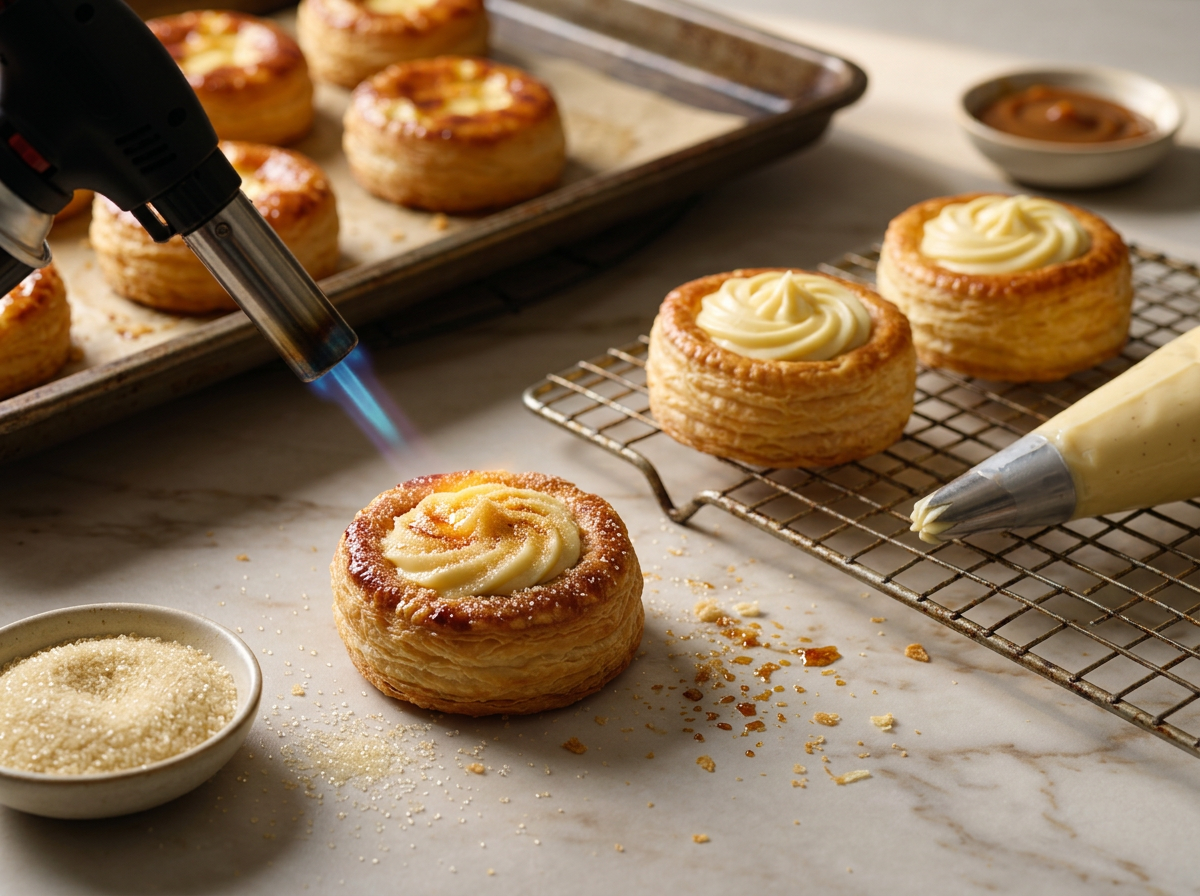
- Sprinkle about 1/2 tablespoon of granulated sugar evenly over the top of each filled pastry.
- Caramelize the sugar with a kitchen torch, moving in small circles until it turns deep amber, or run under a hot broiler for 1 to 2 minutes, watching closely since it can burn in seconds.
- Let the caramel set for 1 to 2 minutes before serving.
Notes
- Chill stacked pastry rings 15 minutes before baking to prevent sliding.
- Cook pastry cream until it coats the back of a spoon, about 3 to 4 minutes.
- Move the torch in small circles for even caramelization, not one spot.
- Fill shells within 2 hours of serving to keep the pastry crisp.
Tips for Success
- Chill the assembled pastry stacks for 15 minutes before baking so the butter firms up and the rings don’t slide off center.
- Press the cutter straight down without twisting so the puff pastry layers rise evenly instead of leaning to one side.
- Strain the pastry cream through a fine-mesh sieve to catch any cooked egg bits before it goes into the pastry cups.
- Fill the cooled shells no more than 2 hours before serving, much like you’d fill Homemade Canadian Butter Tarts, so the pastry stays crisp instead of turning soggy.
- Watch the sugar constantly while caramelizing, the same way you would for a Tarte au Sucre du Quebec filling, since it can go from golden to burnt in under 20 seconds.
Variations
- Swap the vanilla pastry cream for a chocolate version by whisking 50 g melted dark chocolate into the finished custard.
- Add a teaspoon of raspberry jam to the bottom of each pastry cup before piping in the pastry cream.
- Use small store-bought vol-au-vent cases instead of homemade rings if you want to skip the pastry cutting step.
Storage and Reheating
Puits d’amour is best eaten the day it’s assembled, much like Pets de Soeur pastry rolls, since the pastry cream will soften the crisp puff pastry within a few hours and the caramel top loses its crack overnight.
For a make-ahead plan, bake the empty pastry shells up to 1 day in advance and store them at room temperature in an airtight container. Make the pastry cream up to 2 days ahead and keep it covered in the fridge with plastic pressed onto the surface.
Assemble and caramelize the sugar top no more than 2 hours before serving. Do not try to reheat a finished pastry, the custard will split and the pastry will turn soft.
Serving Suggestions
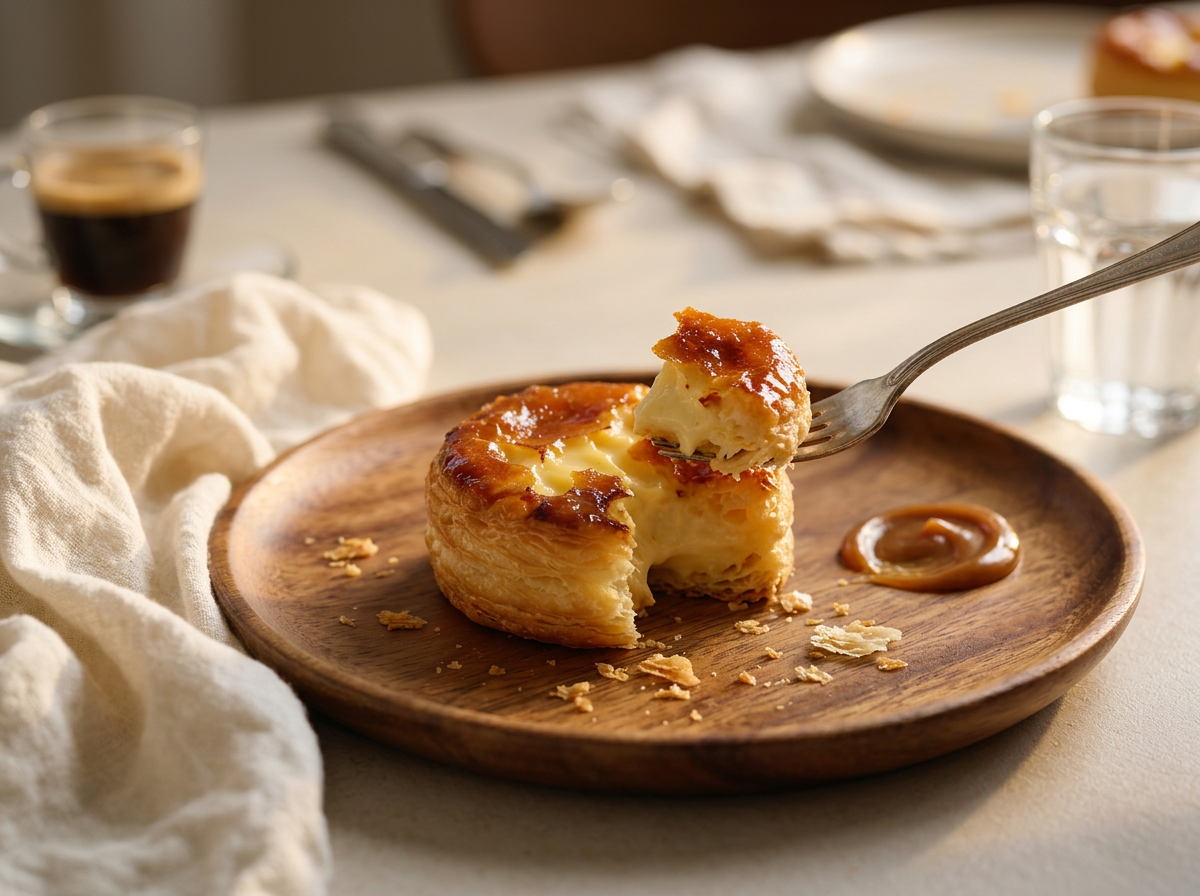
Puits d’amour pairs well with a small espresso or black coffee, which cuts through the sweetness of the caramel top.
A handful of fresh raspberries or a spoon of raspberry coulis on the side adds tartness against the custard. For a dinner party, plate one per guest with a thin dessert wine like Sauternes.
These are a plated dessert, not a grab-and-go treat, since the caramel top needs a fork or spoon to crack through.
FAQ
Why did my puits d’amour pastry collapse in the middle after baking?
It’s usually undercooked layers or skipping the chill step. Puff pastry rings need to bake until puffed and deep golden brown, about 18 to 20 minutes at 200 C / 400 F, or the inner layers stay soft and cave in as they cool. Chilling the stacked rings for 15 minutes before baking also helps them hold their shape.
Can I use store-bought puff pastry instead of making my own for puits d’amour?
Yes, and most home cooks do exactly that. Look for an all-butter puff pastry, thaw it in the fridge overnight, and keep it cold while cutting rounds so the layers stay separated and puff evenly in the oven.
Can I bake the pastry shells for puits d’amour a day ahead?
Yes, bake and cool the shells completely, then store them in an airtight container at room temperature for up to 1 day. Fill them with pastry cream and caramelize the sugar top no more than 2 hours before serving so the pastry stays crisp.
What goes well with puits d’amour pastry for dessert?
A small espresso or black coffee cuts through the sweetness nicely, and a few fresh raspberries on the plate add tartness against the caramel. For a dinner party, serve one per person alongside a glass of dessert wine like Sauternes.
Is puits d’amour pastry gluten-free?
No, traditional puits d’amour is not gluten-free because the puff pastry is made with wheat flour. You could try a gluten-free puff pastry substitute, but the lamination and rise will be less reliable than with wheat-based dough.
What’s the difference between puits d’amour and mille-feuille?
Puits d’amour is a small stacked pastry cup filled with pastry cream and topped with caramelized sugar, while mille-feuille is a flat, layered pastry with sheets of puff pastry and cream stacked horizontally. Both use puff pastry and pastry cream, but the shape and caramel finish set puits d’amour apart.
More from the kitchen
- this Soft Vanilla Sprinkle Sugar Bars with Buttercream
- our Tarte au Sucre du Quebec: A Classic Brown Sugar Pie
