
Jump to Recipe
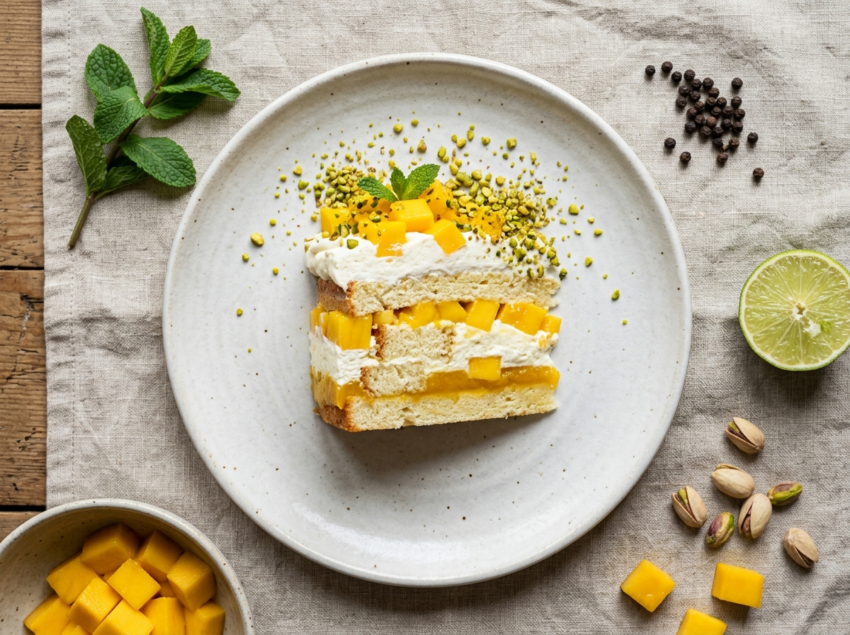
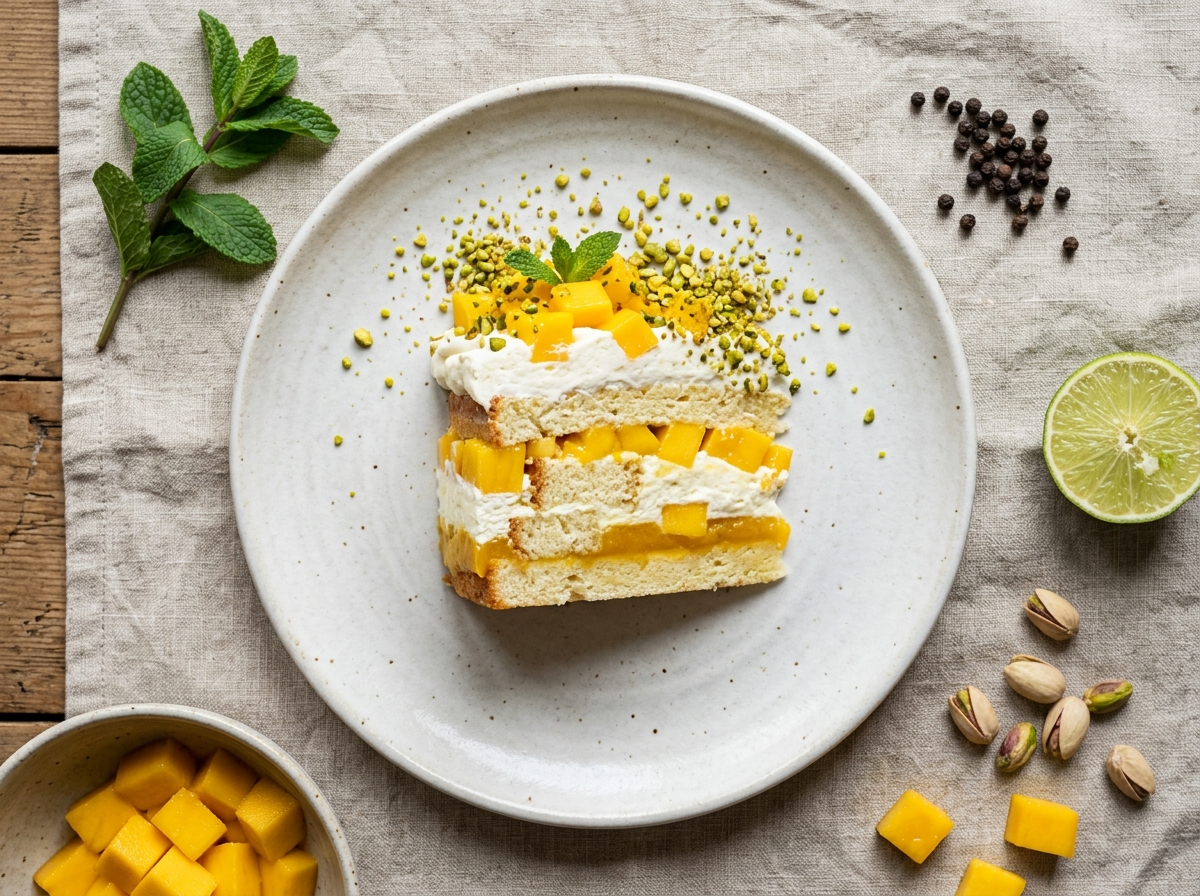
Mango cream sponge dessert is a layered no-bake treat built from soft sponge cake, whipped mango cream, and fresh mango cubes, chilled until the layers set into something you can scoop with a spoon.
I first made this during a hot week in June when the mangoes at the market were so ripe they’d bruise if you looked at them wrong. Turning them into cream instead of eating them plain felt like the smart move.
The sponge soaks up just enough mango nectar to go soft without falling apart. Underneath the cream, it holds its shape in cubes rather than dissolving into mush, which is the one thing that goes wrong if you pour too much juice on at once.
Like this no oven required dessert, you don’t need an oven for this one. A store-bought jam sponge cake or ladyfingers work fine, and the mango cream comes together in one bowl.
Why You’ll Love This Recipe
- No oven needed, just a bowl and the fridge
- Ready-made sponge cake keeps prep under 30 minutes
- Fresh mango puree gives real fruit flavor, not artificial
- Make it a full day ahead for parties
Ingredient Notes
- Mangoes: Use ripe mangoes with deep orange flesh like Alphonso or Ataulfo for the best flavor. Canned mango pulp works too, just drain excess liquid and taste before adding sugar since it’s often sweetened already.
- Heavy cream: Use cream with at least 35% fat so it whips to stiff peaks and holds up under the mango puree. Lower-fat cream will fold in but won’t set as firm.
- Sponge cake: A plain vanilla sponge or ladyfingers both work. Swap in a gluten-free sponge if you need this dessert gluten free.
- Mango nectar: Used to lightly moisten the sponge cubes. Orange juice is a fine substitute if you don’t have mango nectar on hand.
- Powdered sugar: Dissolves into the cream faster than granulated sugar, so the whip stays smooth without a grainy texture.
Chilled Mango Sponge Dessert with Whipped Cream
Ingredients
Method
- Puree mango flesh in a blender until smooth, about 30 seconds. Measure out 300 ml for the cream and set the rest aside for layering.
- In a large bowl, whip cold heavy cream with powdered sugar and vanilla using an electric mixer until stiff peaks form, 3 to 4 minutes.
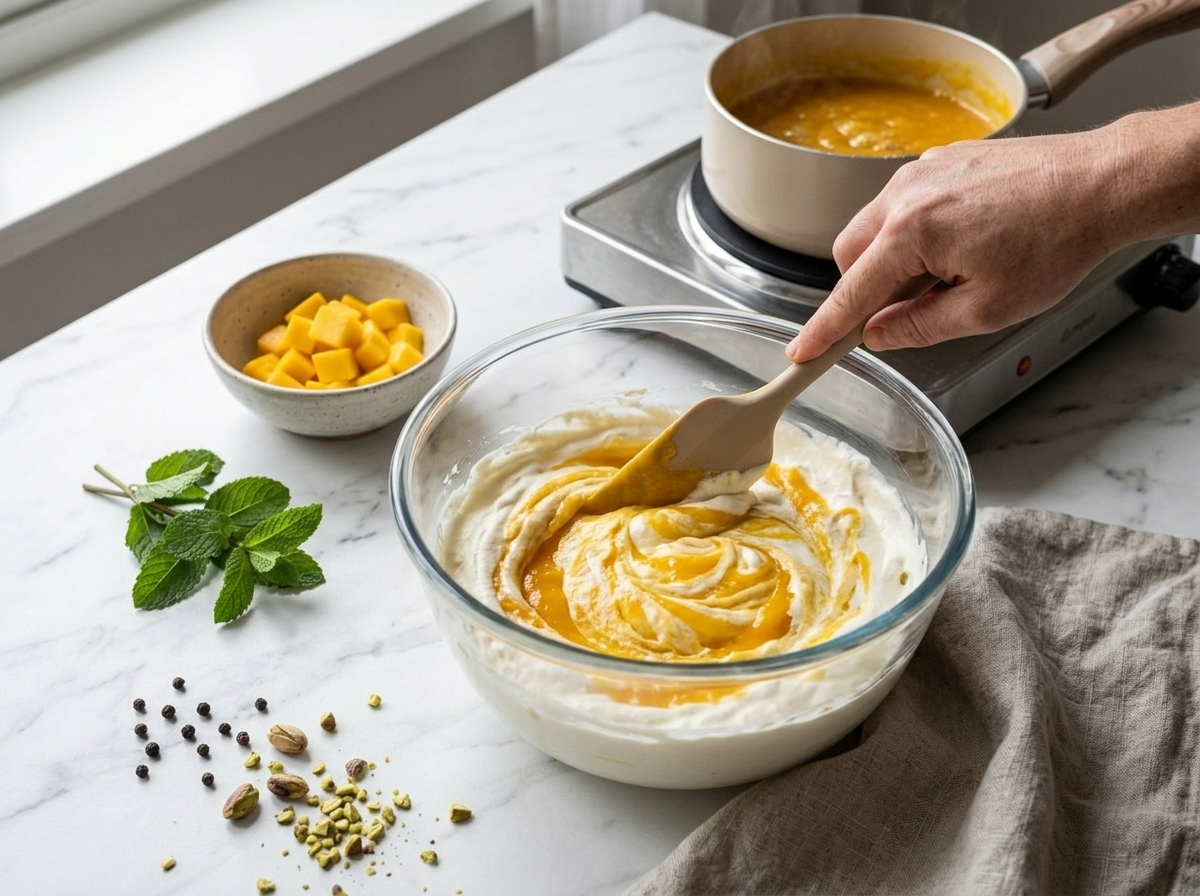
- Fold half the whipped cream into the 300 ml mango puree gently with a spatula until streak-free. Keep the other half of the whipped cream plain for topping.
- Cut sponge cake into 1-inch cubes and arrange a single layer in the bottom of a trifle dish or 8-inch glass dish.
- Brush sponge cubes with mango nectar until just moistened. Don't soak them too heavily or the bottom layer turns mushy.
- Spread a layer of mango cream over the sponge, then scatter over some diced fresh mango.
- Repeat the layers (sponge, mango cream, fresh mango) until the dish is full, ending with a layer of mango cream on top.
- Cover and refrigerate at 4 C / 40 F for at least 4 hours, or overnight, until the layers set and firm up.
- Before serving, top with the reserved whipped cream, diced mango, and crushed pistachios.
Notes
- Reserve about 200 ml of mango puree separately for layering, don't fold it all into the cream.
- Soak sponge cubes lightly, a heavy hand with the nectar leads to a mushy bottom layer.
- Chill at least 4 hours before serving, the layers need that time to set and hold their shape.
- Add crushed pistachios only right before serving so they stay crunchy instead of going soft.
Tips for Success
- Use very ripe mangoes with deep orange flesh, pale or fibrous mangoes taste thin and won’t sweeten the cream enough.
- Chill the mixing bowl and beaters for 10 minutes before whipping cream so it holds stiff peaks faster and stays stable longer.
- Brush sponge cubes with nectar instead of pouring it, this stops the bottom layer from turning soggy overnight.
- Fold mango puree into whipped cream by hand, an electric mixer will deflate the air you just whipped in.
- Build the dessert in clear glasses for individual portions if you’re serving a crowd, the layers show better that way.
Variations
- Swap in crushed digestive biscuits or graham crackers for the sponge if you want a firmer, cheesecake-style base.
- Use passion fruit pulp alongside the mango puree for a tangier layer that cuts through the sweetness.
- Make it dairy free by whipping chilled coconut cream instead of heavy cream, the mango flavor still comes through clearly.
Storage and Reheating
Mango cream sponge dessert keeps well in the fridge for up to 3 days, covered tightly with plastic wrap or a lid so the cream doesn’t pick up other smells.
Don’t freeze it. The whipped cream separates and the sponge turns watery once thawed, so this one stays a fridge-only dessert.
There’s no reheating step here since it’s meant to be eaten cold, straight from the fridge, within a few hours of taking it out.
Serving Suggestions
Mango cream sponge dessert works best straight from the fridge, spooned into bowls so you get sponge, cream, and fresh mango in every scoop.
Serve it after a spicy meal, curry or grilled meats especially, where the cool mango cream cuts through the heat.
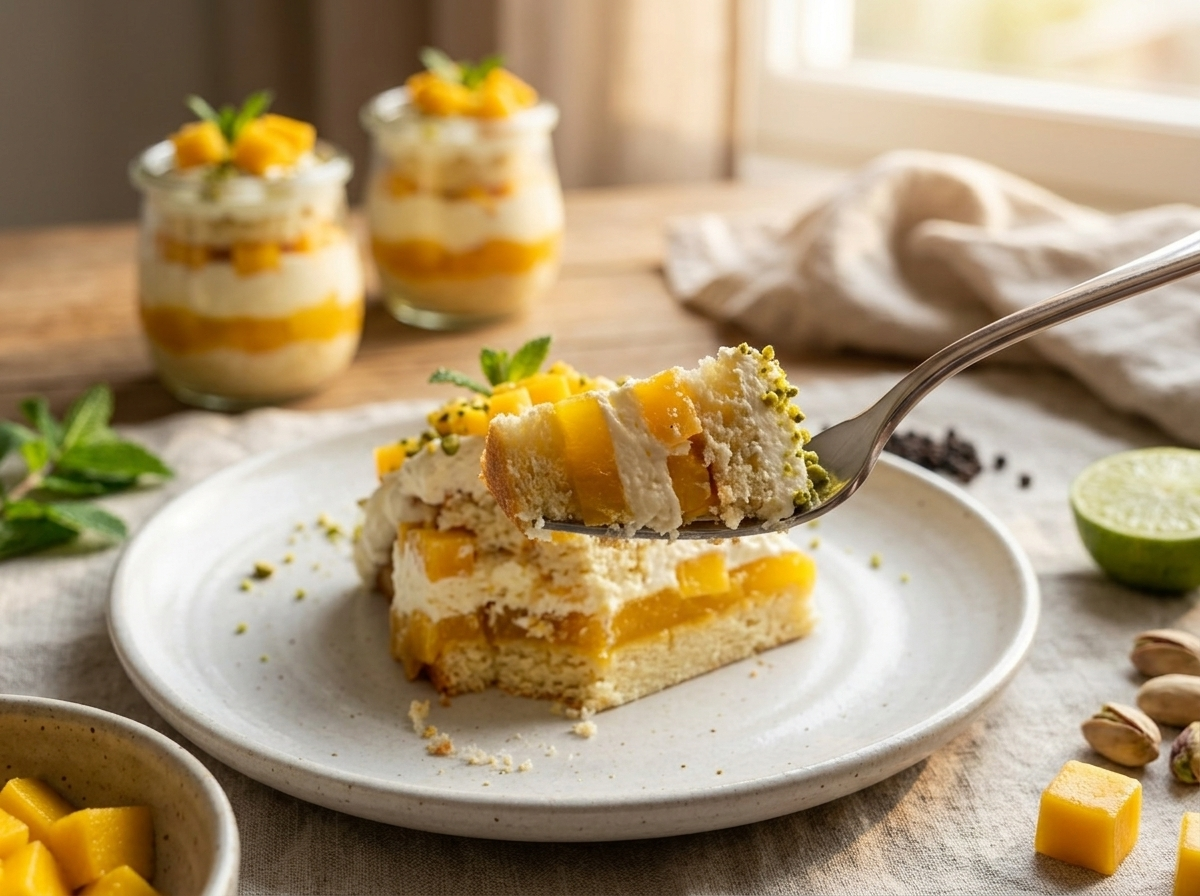
For a party, spoon it into small glasses or jars ahead of time, top with a mango cube and mint leaf right before guests arrive.
FAQ
Why is my mango cream sponge dessert runny instead of set?
This usually happens when the mango puree is too watery or the whipped cream wasn’t beaten to stiff peaks before folding. Use ripe, thick-fleshed mangoes and whip the cream until it holds firm peaks on the beaters. Chilling the assembled dessert for at least 4 hours also helps everything firm up.
Can I use canned mango pulp instead of fresh mango?
Yes, canned mango pulp works fine and gives more consistent sweetness than fresh mango out of season. Use about 300 ml of pulp in place of fresh puree and taste before adding sugar, since canned pulp is often already sweetened. Drain off excess liquid first so the cream doesn’t turn thin.
How far ahead can I make mango cream sponge dessert without it turning soggy?
You can make it up to 24 hours ahead, and it actually tastes better once the layers have had time to meld. Past 2 days the sponge starts breaking down, especially in the bottom layer. Add the final whipped cream and mango garnish just before serving for the best texture.
What can I serve alongside mango cream sponge dessert for a party?
Small glasses of chilled coconut water or a light Prosecco pair well since they don’t compete with the mango. Fresh berries on the side add a tart contrast. For a bigger crowd, portion the dessert into mini jars so guests can grab one without cutting into a shared dish.
Is mango cream sponge dessert gluten free?
It depends on the sponge cake you use, since regular sponge or ladyfingers contain wheat flour. Swap in a gluten-free sponge cake or ladyfingers and the rest of the recipe, mango, cream, and sugar, stays naturally gluten free. Double check labels on store-bought sponge if you’re baking for someone with celiac disease.
What’s the difference between mango cream sponge dessert and a classic mango trifle?
The main difference is structure. This dessert uses firmer layers of sponge cubes and whipped mango cream built in a dish, rather than the looser custard-and-jelly layers found in a British trifle. It’s also lighter than a soft-sponge custard bake like grandma’s lemon pudding cake, skipping the jelly and custard for just cream and fruit, and it sets firmer for cleaner slices.
You might also like
- the Japanese Soufflé Pancake Dessert with Whipped Cream and Fresh Berries
- this Old Fashioned Jam Sponge Cake
