
Jump to Recipe
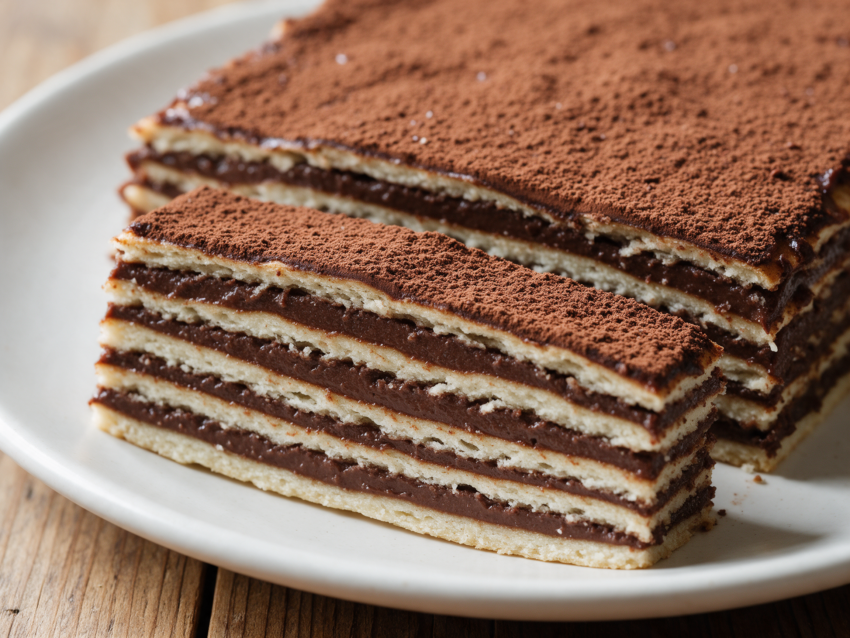
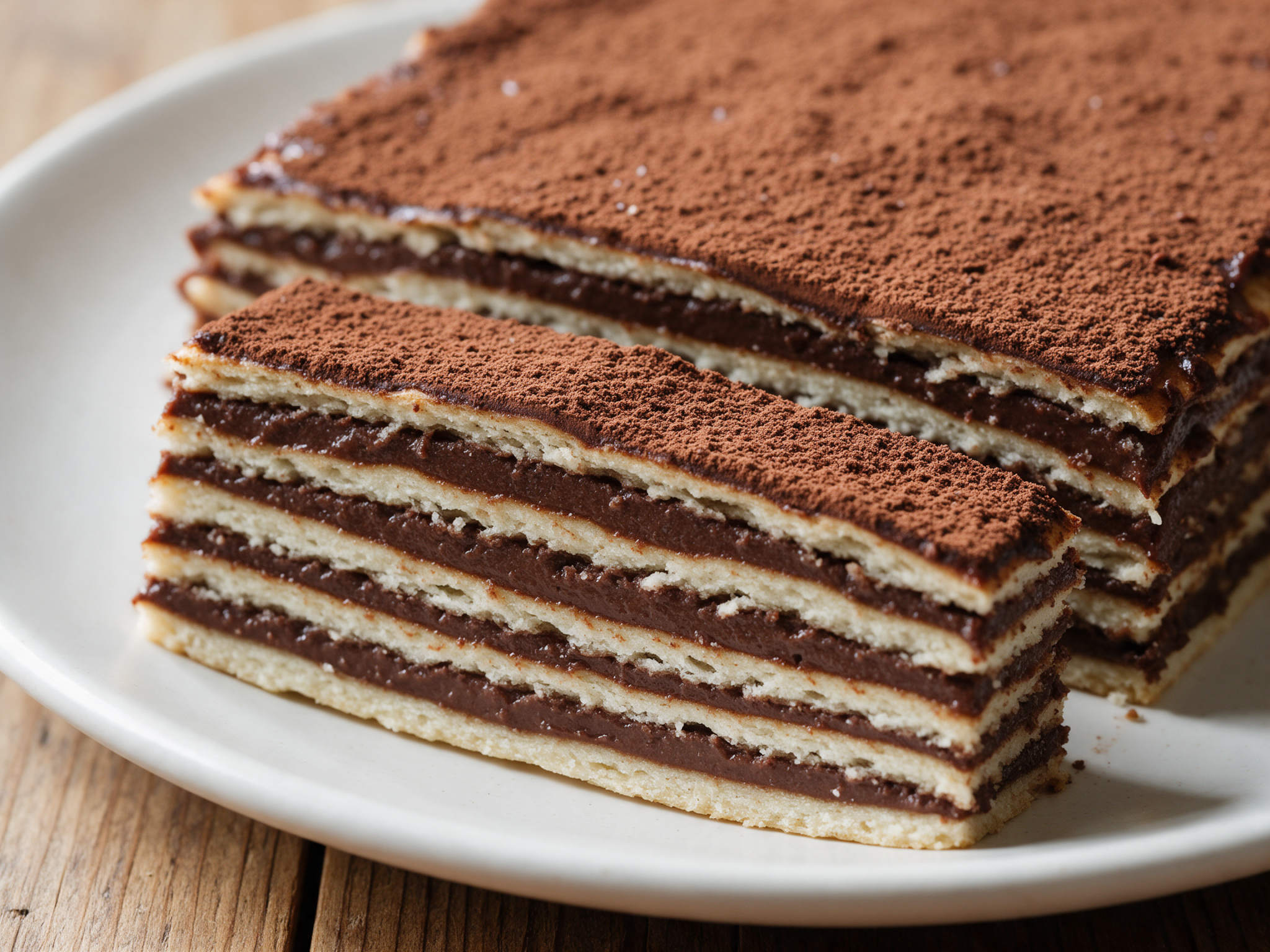
Madarica is a Croatian layer cake from Split, built from thin baked pastry sheets stacked with a cooked chocolate custard between each one.
I first had a slice at a bakery near the Riva, cut into a wedge and dusted with cocoa. It wasn’t fussy. Five thin layers, a filling that tasted like good hot chocolate cooled into cream, and a crumb that had gone soft overnight.
That softening is the whole trick. You bake the layers crisp, then let the custard soak into them in the fridge until the cake cuts clean instead of shattering, much like the soaked layers in Venezuela’s bienmesabe custard cake.
This version uses five rolled dough layers, echoing the stacked rounds in Costa Rica’s layered torta chilena, and a stovetop cocoa filling thickened with cornstarch. No fondant, no fancy tools, just a saucepan and a rolling pin.
Why You’ll Love This Recipe
- Soft cocoa layers from a dough that needs no special skill
- Tastes better the next day, so it’s an easy make-ahead dessert
- Built from pantry staples, no frosting or fondant required
- Cuts into clean, neat slices once fully chilled
Ingredient Notes
- eggs: Use room temperature eggs so they whisk smoothly into the sugar without deflating.
- vegetable oil: A neutral oil like sunflower or canola keeps the layers tender. Olive oil is too strong here.
- cornstarch: Thickens the custard so it sets firm enough to slice. Plain flour works as a substitute, see the FAQ.
- cocoa powder: Use natural unsweetened cocoa, not a drinking chocolate mix, for a deeper, less sweet flavor.
- whole milk: Whole milk gives the custard body. Low-fat milk works but the filling sets thinner.
Madarica: A Croatian Layer Cake with Cocoa
Ingredients
Method
- In a large mixing bowl, whisk 3 eggs and 200 g sugar until pale and slightly thickened, about 2 minutes.
- Whisk in 200 ml vegetable oil and 1 tsp vanilla extract until smooth.
- Sift in 500 g flour, 1 tbsp baking powder, and 1/4 tsp salt. Mix with a wooden spoon, then knead briefly by hand into a soft dough. Divide into 5 equal pieces, about 180 g each, and rest for 15 minutes.
- Heat the oven to 180 C / 350 F and line two sheet pans, 33 x 46 cm / 13 x 18-inch, with parchment.
- Roll one piece of dough directly on parchment into a thin round about 24 cm / 9.5-inch across, using the base of the springform pan as a guide to trim the edge. Prick all over with a fork.
- Bake one layer at a time for 7 to 9 minutes, until the edges turn light golden. Watch closely after 7 minutes, the thin dough can go from golden to burnt fast. Cool each layer completely on a rack before stacking.
- In a 3-quart / 2.8 L saucepan, whisk the milk, 150 g sugar, 60 g cocoa powder, 60 g cornstarch, 2 egg yolks, and a pinch of salt until smooth with no lumps.
- Set over medium heat and cook, whisking constantly, for 6 to 8 minutes, until the mixture thickens enough to coat the back of a spoon.
- Remove from heat and stir in 50 g butter and 1 tsp vanilla extract until glossy. Press plastic wrap directly onto the surface and cool to room temperature, about 30 minutes.
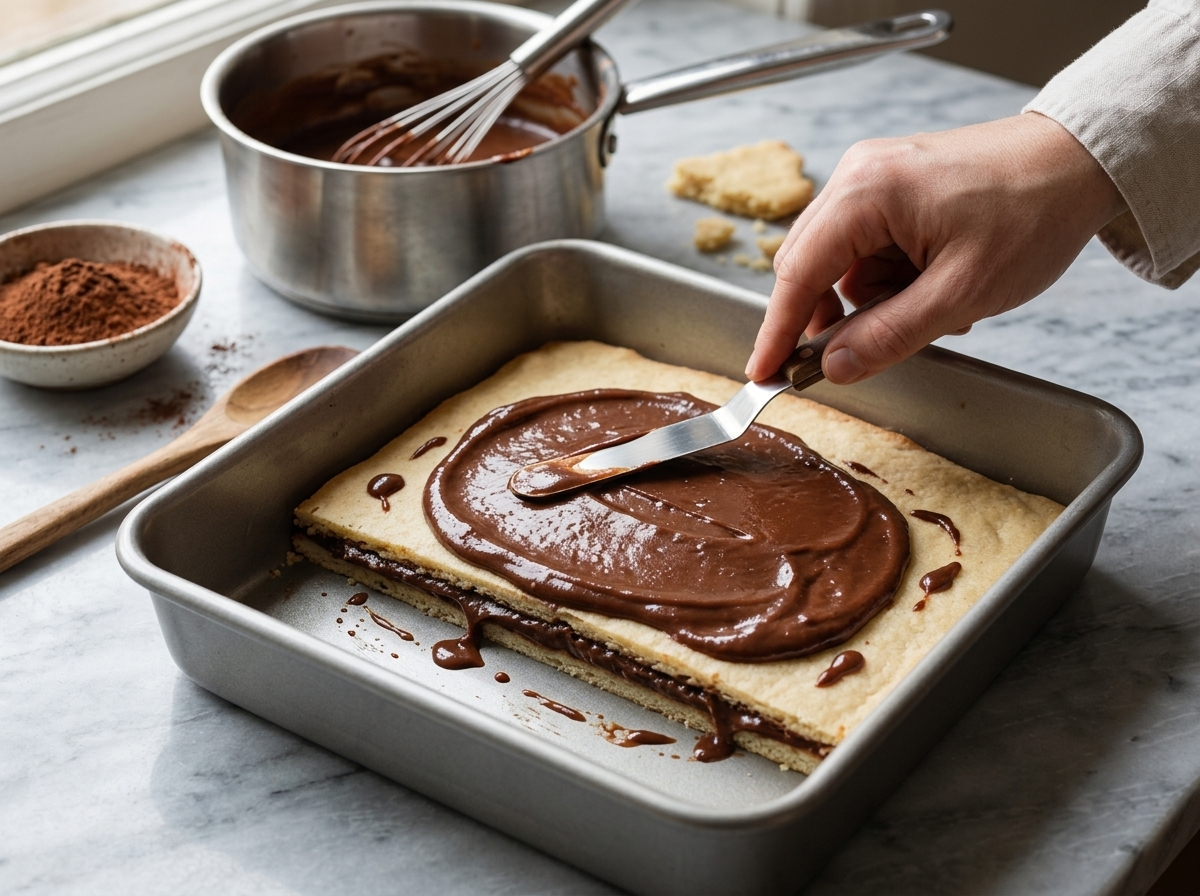
- Place one dough layer on a serving plate. Spread about 120 g of the cooled filling evenly to the edges. Repeat with the remaining layers, finishing with a plain layer on top.
- Spread any remaining filling thinly over the top layer, then dust with 2 tbsp cocoa powder through a fine sieve.
- Cover loosely and chill for at least 4 hours, ideally overnight, until the layers soften enough to slice cleanly. Cut with a knife dipped in hot water and wiped dry between slices.
Notes
- Watch the layers closely after 7 minutes in the oven, they go from golden to burnt fast.
- Cool baked layers fully before spreading custard or the filling will slide.
- Chill the assembled cake at least 4 hours, overnight gives the best texture.
- Cook the custard until it coats the back of a spoon, about 6 to 8 minutes.
Tips for Success
- Roll each dough layer to the same thickness so all five bake in the same 7 to 9 minutes.
- Cool the baked layers completely before spreading filling, or the custard will melt and slide off.
- Whisk the custard constantly over medium heat so the cornstarch doesn’t clump at the bottom of the pan.
- Chill the assembled cake for at least 4 hours, overnight if you can, so the layers soften enough to slice, the same patient chill that turns Argentina’s no-bake chocotorta sliceable.
- Dip your knife in hot water and wipe it dry between cuts for clean slices through the custard.
Variations
- Fold 50 g finely ground walnuts into the cooled custard for a nuttier, more traditional Dalmatian filling.
- Swap the filling in one layer for apricot or fig jam for a fruitier contrast against the cocoa.
- Finish with a thin poured dark chocolate glaze instead of cocoa dust for a shinier, firmer top.
Storage and Reheating
Madarica keeps in the fridge for 4 to 5 days, covered tightly with plastic wrap or in an airtight container. It’s a cold cake, so there’s nothing to reheat, just let a slice sit out for 15 minutes before serving if you want the layers less firm.
I don’t freeze this one. The cornstarch custard turns watery once thawed, and the thin dough layers go soggy instead of tender.
If you want it ready ahead, bake the layers and make the filling up to 2 days out, then assemble and chill the whole cake the day before you plan to serve it.
Serving Suggestions
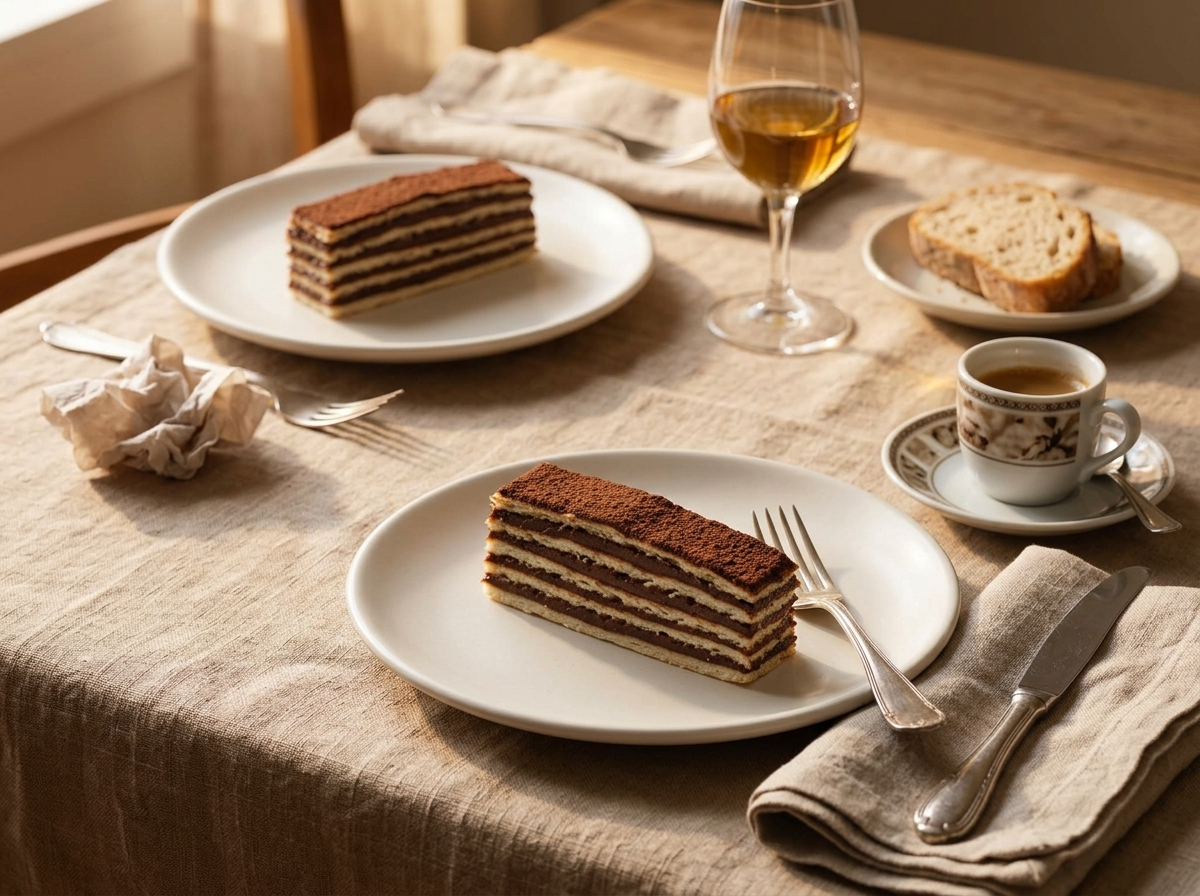
Serve madarica cold, straight from the fridge, cut into narrow wedges since the layers are rich and dense.
A short espresso or a glass of cold milk cuts through the cocoa custard well. For a Dalmatian touch, add a small glass of prosek, the sweet dessert wine from the Croatian coast, alongside a slice.
Dust each plate with extra cocoa powder right before serving for a bit of contrast against the soft filling.
FAQ
Why did my madarica layers come out hard instead of soft?
Hard layers usually mean the cake didn’t chill long enough, or one layer baked a minute or two past golden. Madarica needs at least 4 hours in the fridge, ideally overnight, for the custard to soak into the dough and soften it. If a layer looks deep brown instead of light golden at 7 to 9 minutes, pull the next one out sooner.
Can I use flour instead of cornstarch in the madarica filling?
Yes, plain flour works instead of cornstarch, use the same 60 g amount. The custard sets slightly denser and a touch less glossy than the cornstarch version, but it still slices clean once chilled. Whisk it into the cold milk first so it doesn’t clump when heated.
How far ahead can I make madarica and how long does it keep?
Madarica actually tastes better made a day ahead since the layers need time to soften. Bake the layers and cook the filling up to 2 days early, then assemble and refrigerate the finished cake for at least 4 hours before slicing. Once assembled, it keeps well covered in the fridge for 4 to 5 days.
What goes well with a slice of madarica?
A short espresso or a glass of cold milk works well against the rich cocoa custard. In Split, it’s sometimes served alongside prosek, a sweet Croatian dessert wine, for a more traditional pairing. Keep the slice narrow since the layers are dense and filling.
Is madarica dairy-free or gluten-free?
No, madarica isn’t dairy-free or gluten-free as written, since the dough uses wheat flour and the filling relies on whole milk and butter. A 1:1 gluten-free flour blend can work for the layers, but the dough will be more delicate and harder to roll thin.
What’s the difference between madarica and Hungarian dobos torte?
Madarica is simpler and rustic, five thin oil-based dough layers with a cooked cocoa custard, no caramel top or buttercream. Dobos torte, from Hungary, uses sponge layers, chocolate buttercream, and a hard caramel glaze. Madarica is the everyday Dalmatian version, meant to sit in the fridge overnight rather than show off pastry technique.
Related recipes
- Bienmesabe Venezolano: Coconut Rum Custard Dessert
- the Classic Zuppa Inglese with Vanilla-Chocolate Custard
