
Jump to Recipe
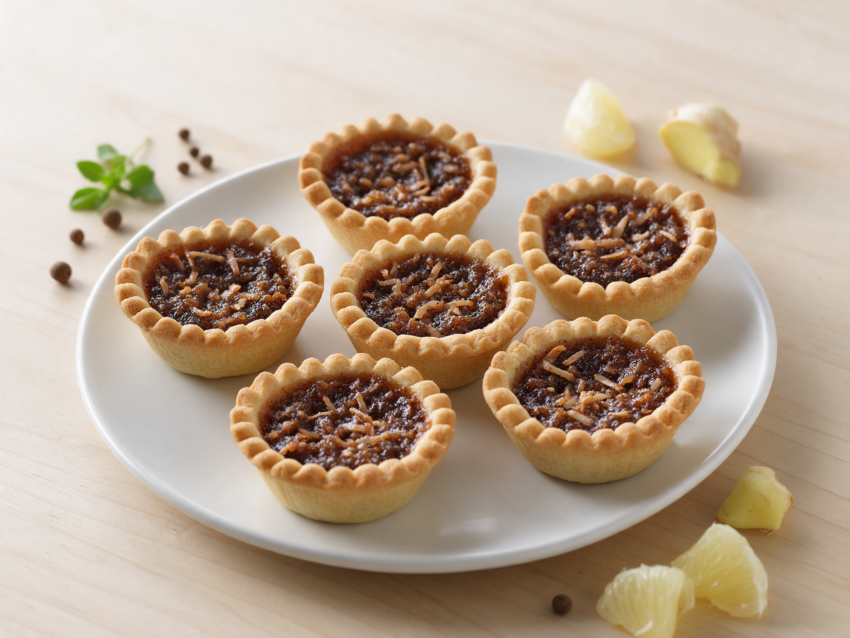
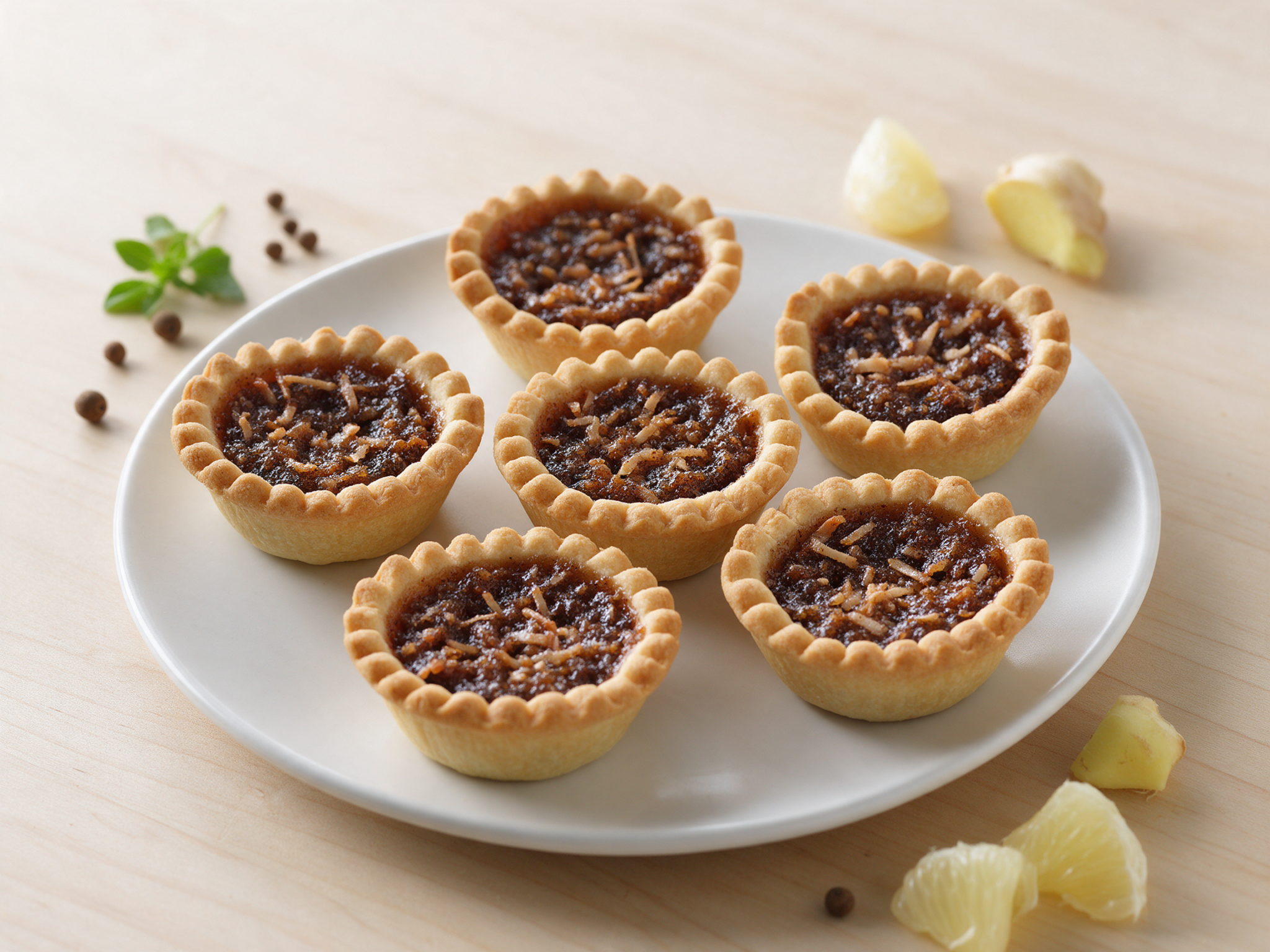
Jamaican gizzada is a small coconut tart with a pinched crust, filled with grated coconut cooked down with brown sugar, fresh ginger, and nutmeg. This version makes 12 tarts and bakes in 22 to 25 minutes, with a short crust that stays tender and a filling that sets chewy.
There’s something about the smell when that filling hits the pan. Coconut, warm sugar, ginger. It fills the kitchen fast.
Gizzadas are also called pinch-me-rounds, and you’ll see why once you start shaping. You pinch the edges up with your fingers, so no two tarts look alike. That’s fine. That’s the point.
One thing can go wrong here: a wet filling. It soaks the crust and leaks out the sides in the oven. Cook it until a spoon dragged across the pan leaves a clear trail, and you’re set.
Why You’ll Love This Recipe
- Short, buttery crust with crisp pinched edges
- Filling cooks on the stovetop while the dough chills
- Makes 12 tarts that keep 5 days in the fridge
- Basic pantry ingredients, with fresh ginger and nutmeg doing the work
Ingredient Notes
- grated coconut: Fresh or frozen unsweetened grated coconut works best. Thaw frozen coconut and squeeze it in a clean towel before cooking. Unsweetened dried coconut works if soaked first (see the FAQ).
- dark brown sugar: Dark brown gives the filling a deep molasses color and flavor. Light brown sugar works but tastes milder and looks paler.
- fresh ginger: Grate it finely so there are no stringy bits in the filling. Ground ginger (1/2 tsp) is a backup, though the flavor is flatter.
- unsalted butter: Keep it cold so the crust bakes short and flaky. Replacing half the butter with vegetable shortening gives a slightly more tender, traditional crumb.
- nutmeg: Grate it fresh from a whole nut if you can. Pre-ground nutmeg loses its warmth quickly, so use 1/2 tsp and taste before adding more.
Jamaican Gizzada Coconut Tarts with Ginger and Nutmeg
Ingredients
Method
- Whisk the flour, sugar, and salt in a mixing bowl. Rub in the cold butter with your fingertips until the mix looks like pea-size crumbs with a few flat flakes. Sprinkle over 80 ml ice water and toss with a fork. Add up to 10 ml more only if the crumbs won't hold when squeezed. Press into a disk, wrap, and chill for 30 minutes.
- While the dough chills, combine the coconut, brown sugar, water, and ginger in a 20 cm / 8-inch heavy-bottomed saucepan (2-quart / 1.9 L). Cook over medium-low heat, stirring every minute or two, for 12 to 14 minutes. It's ready when the liquid is gone, the mixture looks glossy, and a spoon dragged across the pan leaves a clear trail. Stir in the nutmeg, vanilla, and salt and cook for 1 minute more.
- Scrape the filling into a bowl and let it cool to room temperature, about 15 minutes. Warm filling softens the dough, so don't rush this.
- Heat the oven to 190 C / 375 F and line a 33 x 46 cm / 13 x 18-inch sheet pan with parchment. Roll the chilled dough on a floured surface to 3 mm thick. Cut 9 cm / 3.5-inch rounds, rerolling the scraps once, to get 12 rounds.
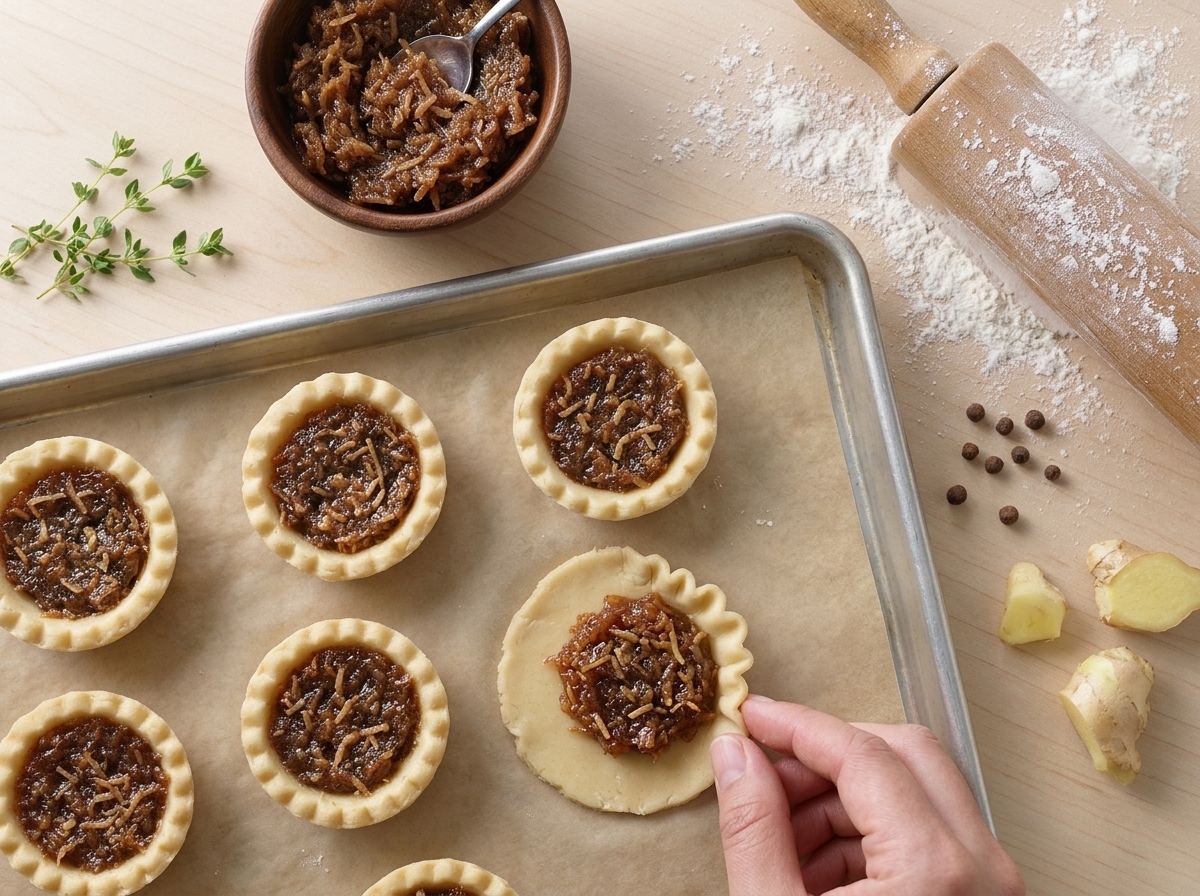
- Set the rounds on the sheet pan with space between them. Spoon 1 heaped tablespoon (about 27 g) of filling into the center of each, leaving a bare border of about 2 cm. Pinch the border at 6 evenly spaced points, pulling the dough up and slightly inward into a standing wall. Press each seam between pinches firmly so the walls don't slump.
- Bake for 22 to 25 minutes, rotating the pan halfway through, until the pinched edges are golden and the filling looks dark and glossy.
- Transfer the tarts to a wire rack and cool for at least 10 minutes before eating. The filling is very hot straight from the oven. Serve warm or at room temperature.
Notes
- Use unsweetened coconut so you control how sweet the filling gets.
- Rotate the sheet pan halfway through baking, since most ovens brown unevenly.
- Weigh about 27 g of filling per tart so all 12 come out even.
- Cooked filling keeps 3 days in the fridge, so you can shape and bake later.
Tips for Success
- Squeeze thawed frozen coconut in a clean towel before cooking, so the filling doesn’t start out waterlogged and take longer to reduce.
- Stir the filling over medium-low heat and scrape the bottom of the pan often, because brown sugar scorches fast and turns bitter.
- Cool the filling to room temperature before spooning it onto the dough, since warm filling softens the butter and makes shaping messy.
- Press the seams between pinches firmly with a fingertip, otherwise the walls slump outward in the oven and the filling spreads.
- Keep dough you aren’t using in the fridge and reroll scraps only once, because overworked dough bakes tough instead of short.
Variations
- Add 1/4 tsp ground allspice and 1/4 tsp cinnamon to the filling with the nutmeg for a warmer, more Christmas-cake style spice.
- Fold 40 g of raisins, soaked in 1 tbsp of warm water or rum, into the cooled filling for a chewier bite.
- Cut 6 cm rounds and use about 13 g of filling each for 24 mini gizzadas, baking 15 to 18 minutes until golden.
Storage and Reheating
Store cooled gizzadas in an airtight container at room temperature for up to 2 days, or in the fridge for up to 5 days. Layer them with parchment so the pinched edges don’t snap.
To reheat, set the tarts on a sheet pan and warm them at 150 C / 300 F for 8 minutes. The crust crisps back up and the filling loosens slightly.
Baked tarts freeze for up to 2 months. Thaw at room temperature for about 1 hour, then reheat the same way. For make-ahead, keep the dough wrapped in the fridge for 2 days and the cooked filling covered in the fridge for 3 days, then shape and bake when you’re ready.
Serving Suggestions
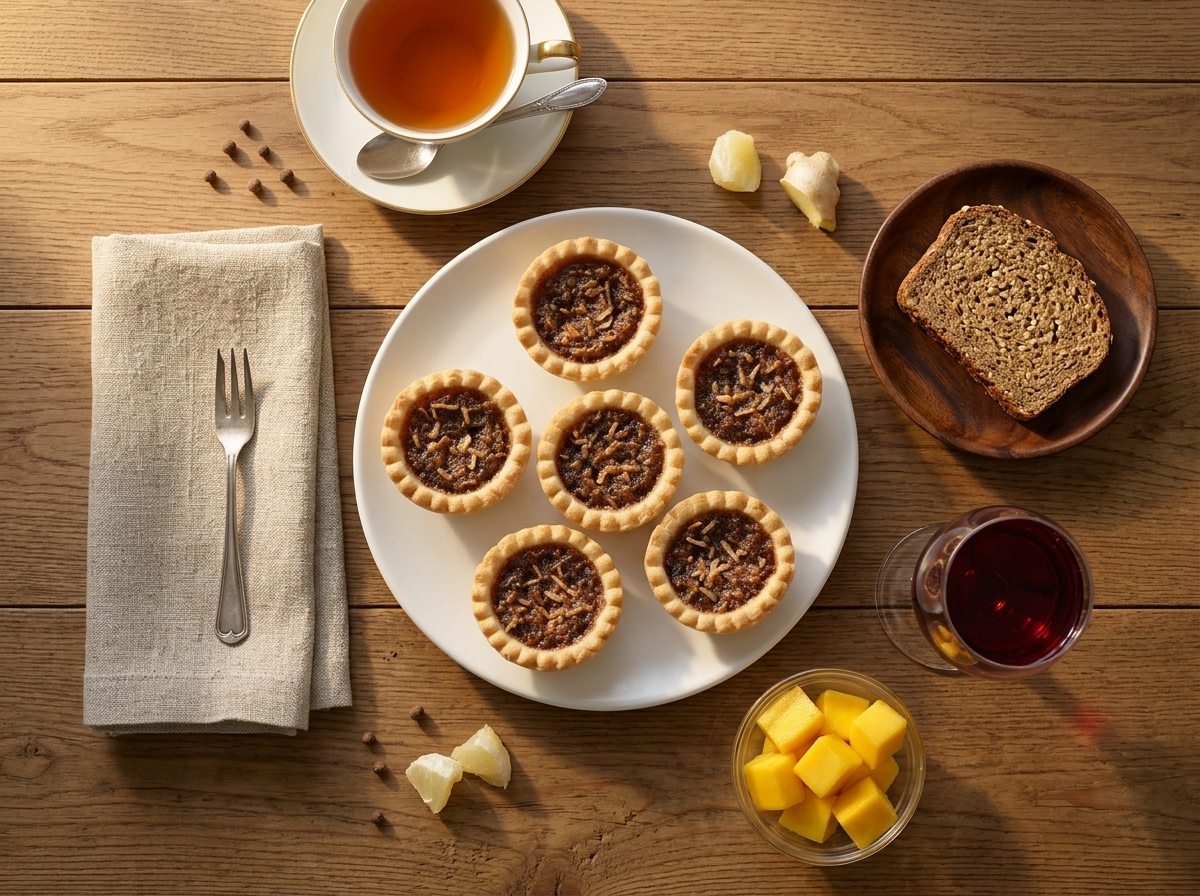
Gizzada tastes best warm or at room temperature on the day it’s baked. Pair it with a cup of strong black tea or coffee.
For a cold drink, pour chilled sorrel or ginger beer. Both have enough spice and tartness to cut through the brown sugar.
For a dessert plate, set two tarts next to sliced mango or pineapple. The fruit’s acidity balances the sweet, chewy filling.
FAQ
Why is my gizzada filling leaking out of the tart?
Gizzada filling leaks when it goes into the tart too wet or too warm. Cook it 12 to 15 minutes until a spoon dragged across the pan leaves a clear trail, then cool it to room temperature before spooning. Also press the seams between pinches firmly so the walls hold.
How do I know when Jamaican gizzada tarts are baked?
Gizzada tarts are done after 22 to 25 minutes at 190 C / 375 F, when the pinched edges are golden and the filling looks dark and glossy. Lift one with a spatula and check the base, which should be pale gold, not doughy. Pull the pan if the filling starts to scorch at the edges.
Can I use dried coconut instead of fresh grated coconut for gizzada?
Yes, unsweetened dried coconut works if you soak it first. Soak 150 g in 120 ml hot water for 15 minutes, then cook it with the liquid and skip the extra 60 ml of water. Expect a finer, chewier filling and a few extra minutes at the stove. Avoid sweetened flakes, which turn cloying.
Can you freeze gizzada coconut tarts?
Yes, baked gizzadas freeze well for up to 2 months. Cool them fully, layer them in an airtight container with parchment between layers, and freeze. Thaw at room temperature for about 1 hour, then warm them at 150 C / 300 F for 8 minutes to bring the crust back.
What do you drink with Jamaican gizzada?
Hot black tea, strong coffee, or chilled sorrel suit gizzada best. The spiced coconut handles something bitter or tart, and ginger beer works if you want a cold fizzy drink. Skip anything heavily sweetened, since the filling already carries plenty of brown sugar.
How do I make gizzada dairy free?
Swap the butter for the same weight (140 g) of chilled solid refined coconut oil or a firm vegan baking block. The crust comes out slightly more crumbly, so give the dough the full 30-minute chill. The coconut filling is already dairy free, so nothing else changes.
Related recipes
