
Jump to Recipe
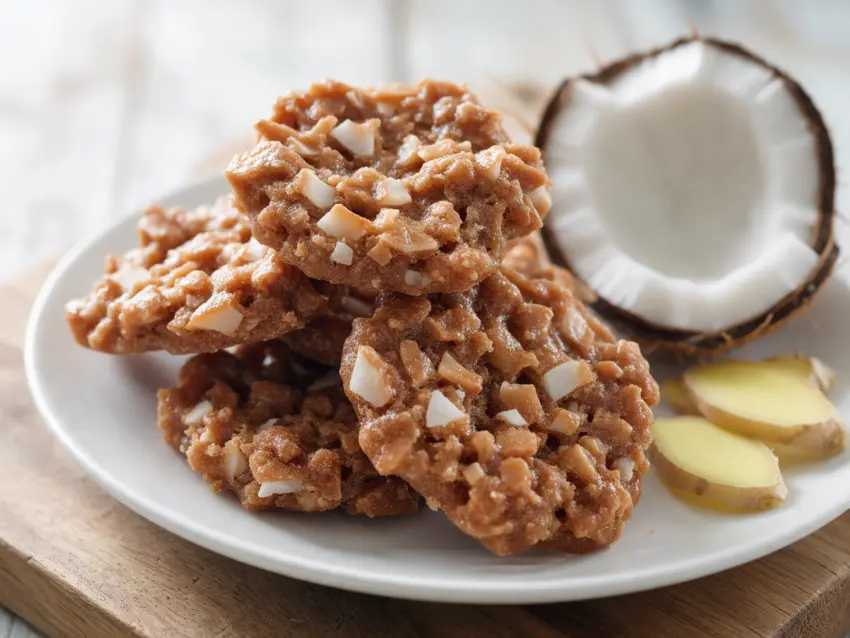
Jamaican coconut drops are chewy candies made by simmering fresh coconut pieces in dark brown sugar, water, and grated ginger until the syrup turns sticky, then spooning mounds onto a greased tray to set. The whole batch takes about 80 minutes, and 30 of those are just waiting.
There’s something about ginger and caramelizing sugar that takes me straight back to a roadside stand in Jamaica. A woman sold these from a tray lined with wax paper. Craggy and brown, a little sandy on the outside.
That’s the texture you’re after. A crisp sugary shell, then chewy coconut, then a warm kick of ginger.
The one judgment call is when to stop stirring. Pull the pan when the syrup is cloudy and clings to the coconut. Wait until it’s dry and sandy and the drops crumble instead of holding together.
Why You’ll Love This Recipe
- Six ingredients, one pan, and no candy thermometer needed
- Chewy center with a crisp, sugary crackle on the outside
- Keeps for a full week at room temperature, so it’s make-ahead friendly
- Fresh ginger gives a warm bite that cuts through the sugar
Ingredient Notes
- Fresh coconut: Pick a mature brown coconut that feels heavy and sloshes when shaken. Thawed frozen grated coconut from a Caribbean or Asian grocer works at the same weight.
- Dark brown sugar: Dark brown sugar gives the deep molasses flavor and the amber color. Light brown sugar works but tastes milder.
- Fresh ginger: Grate it fine so it melts into the syrup. Ground ginger is a weak swap, so use 1 tsp at most.
- Coconut water: Use the water from inside the coconut first, then top up with tap water to reach 180 ml.
- Neutral oil: Any neutral oil or melted coconut oil greases the parchment. Skip butter, which can burn against the hot mixture.
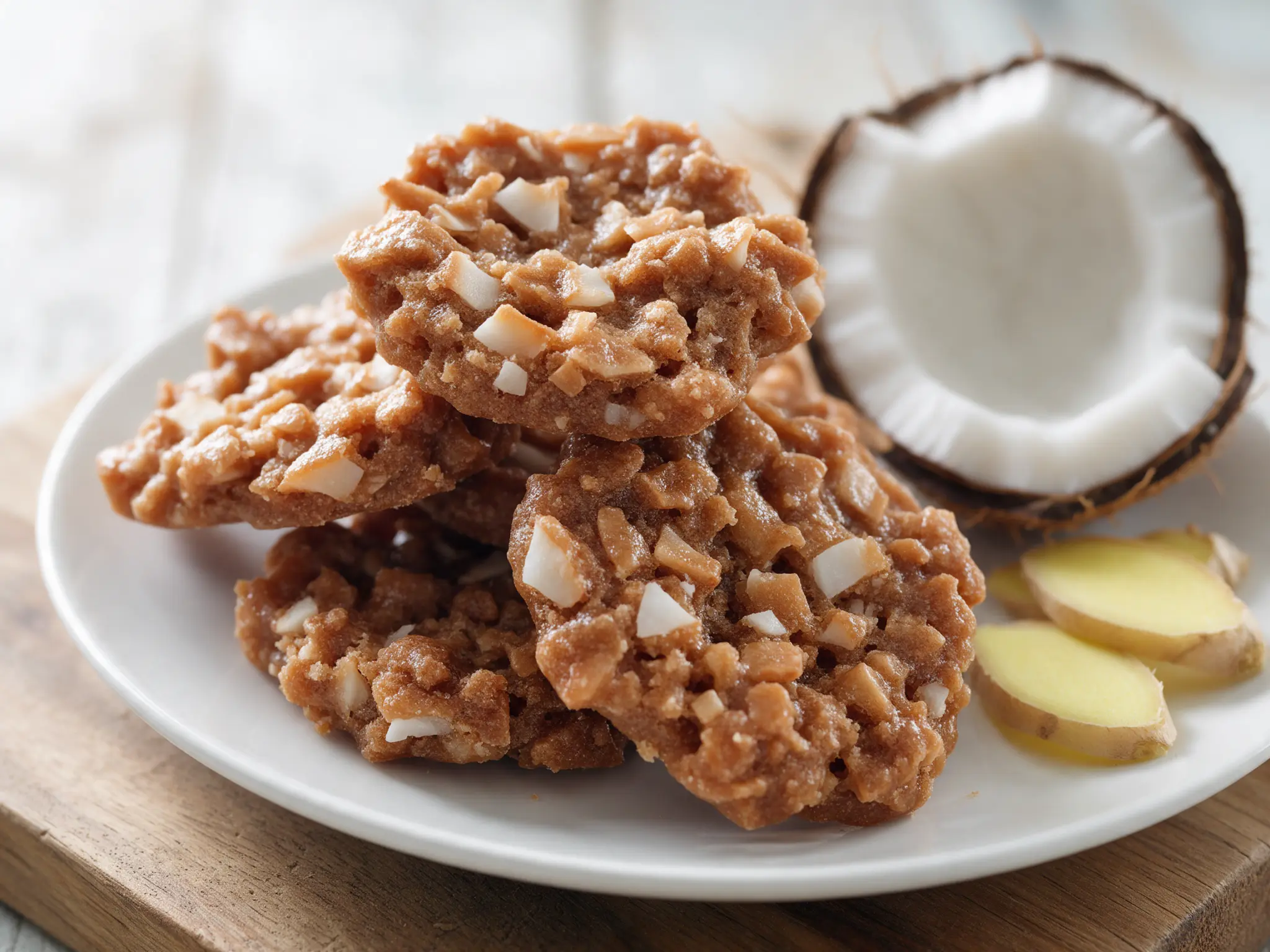
Jamaican Coconut Drops with Fresh Ginger and Brown Sugar
Ingredients
Method
- Pierce two of the coconut's three eyes with a screwdriver and drain the water into a measuring cup. Tap around the middle of the shell with a hammer until it cracks, then pry out the flesh. Shave off the brown skin with a vegetable peeler and cut the flesh into thin pieces about 1 cm / 1/2 inch wide, to total about 400 g. Top the coconut water up with tap water to 180 ml, and finely grate the ginger.
- Line a 33 x 46 cm / 13 x 18-inch sheet pan with parchment and brush it with the oil. Set it beside the stove.
- Add the coconut, sugar, 180 ml liquid, ginger, and salt to a 28 cm / 11-inch deep, heavy-bottomed skillet. Stir over medium heat for about 5 minutes, until the sugar dissolves and the mixture comes to a boil.
- Lower the heat to medium-low so it bubbles steadily. Simmer for about 20 minutes, stirring every couple of minutes, until the syrup is thick and glossy and the bubbles turn large and slow.
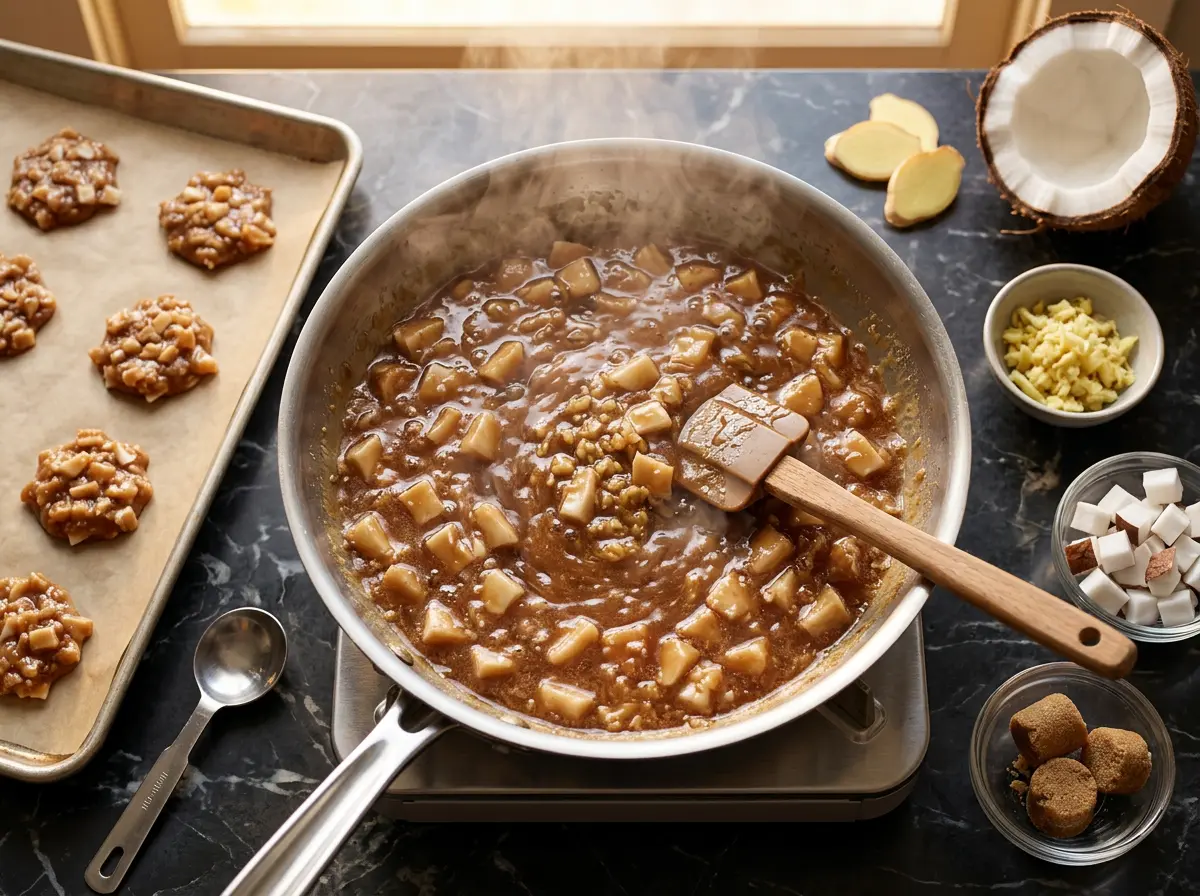
- Stir in the vanilla and keep stirring constantly for 3 to 5 minutes. The syrup will turn cloudy and grainy and cling to the coconut. Drag the spoon across the pan bottom, and when the trail stays open for a second before filling in, take the pan off the heat.
- Working quickly while the mixture is hot, spoon heaped tablespoons onto the tray about 5 cm / 2 inches apart to make about 16 drops. Use two spoons and nudge each mound into a rough, packed dome.
- Leave the drops undisturbed at room temperature for 30 minutes, until they're firm and the sugar shell turns crisp. Lift them off with a thin spatula.
Notes
- Shake the coconut before buying. You should hear plenty of water sloshing inside.
- Stir constantly once the syrup turns cloudy, since it can scorch within a minute.
- Grease the tray before you start cooking, because the mixture sets quickly.
- Cool the drops completely before storing or they'll sweat and stick together.
Tips for Success
- Cut the coconut into thin pieces about 1 cm / 1/2 inch wide so they turn chewy in the syrup instead of hard.
- Use a wide, heavy skillet rather than a tall pot so the water evaporates evenly and the sugar doesn’t scorch at the edges.
- Stir constantly in the last few minutes and watch for the syrup to go cloudy and grainy, which is your cue to pull the pan.
- Grease the tray before you start cooking and portion quickly, because the mixture stiffens within a couple of minutes off the heat.
- Keep finished drops in an airtight container with parchment between layers so humidity doesn’t make the sugar shell tacky.
Variations
- Add 1/4 tsp freshly grated nutmeg along with the vanilla for a warmer, spiced version of the drops.
- Swap half the dark brown sugar for light brown sugar if you want a milder, less molasses-heavy flavor.
- Skip the ginger and stir in 1/2 tsp ground allspice plus a pinch of cinnamon for a pimento-style spice.
Storage and Reheating
Jamaican coconut drops keep for 5 to 7 days in an airtight container at room temperature. Layer them with parchment so they don’t fuse together.
Skip the fridge. Humidity makes the sugar shell sticky, and they’re meant to be eaten at room temperature, so there’s nothing to reheat.
They’re a good make-ahead sweet. Cook a batch up to a week before you need them, and let them cool completely before packing. I don’t freeze them, since condensation from thawing softens the crisp outside.
Serving Suggestions
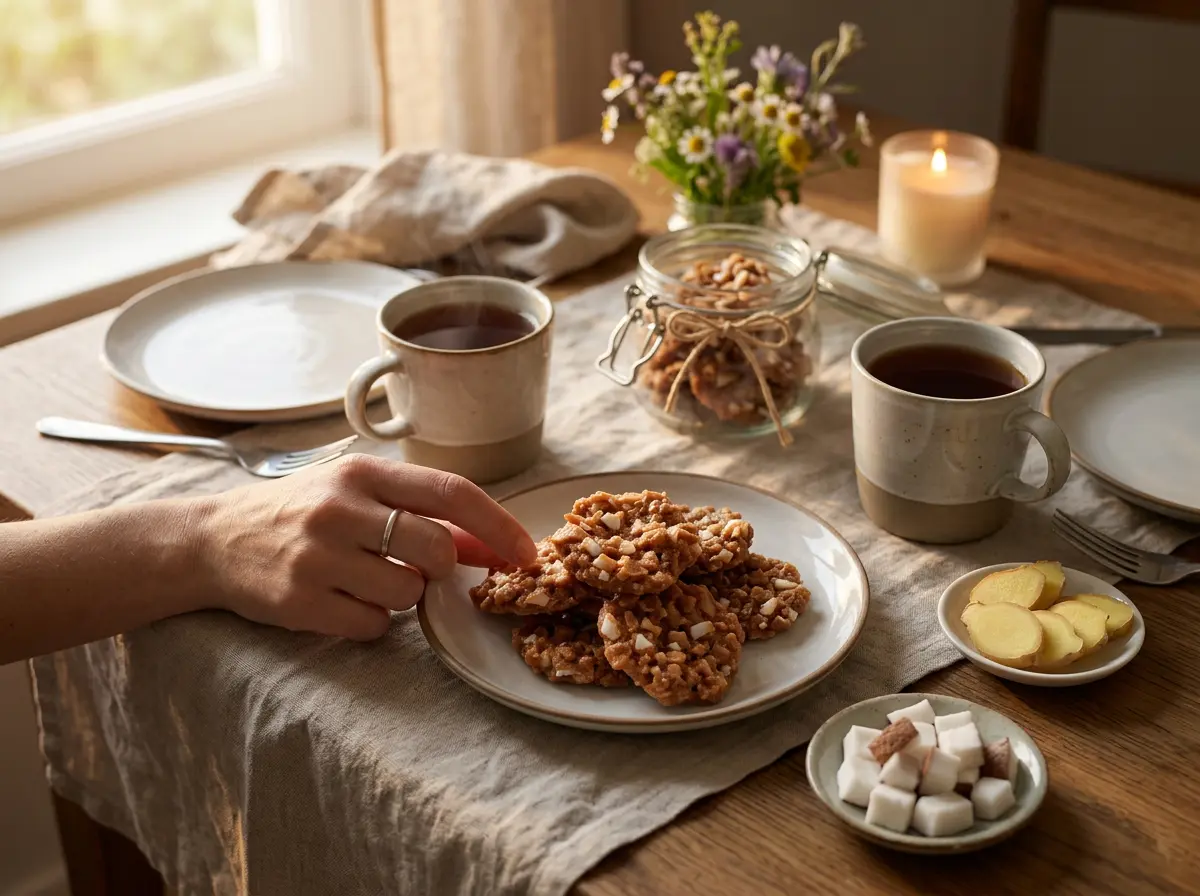
Serve coconut drops at room temperature with strong black tea or coffee. The bitterness balances the sugar.
Chilled ginger beer or cold sorrel also works. Or break one over a bowl of plain yogurt or vanilla ice cream for a chewy, crunchy topping.
For gifting, stack six in a small jar or wax-paper bag with a square of parchment between layers.
FAQ
How do I know when Jamaican coconut drops are ready to spoon out?
Coconut drops are ready when the syrup turns cloudy and grainy and clings to the coconut in a thick, sticky coat. Drag your spoon across the pan bottom. If the trail stays open for a second before filling in, pull the pan off. If the syrup still pours like honey, keep stirring over medium-low heat for another 2 to 3 minutes.
Can I use desiccated coconut instead of fresh coconut for coconut drops?
Not with good results. Dry shredded coconut turns tough and soaks up the syrup unevenly, so the drops crumble. Thawed frozen grated coconut works at the same weight as fresh. If dried is all you have, use unsweetened coconut chips, soak them in warm water for 15 minutes, drain well, and measure about the same volume as chopped fresh.
How long do homemade coconut drops keep, and can I freeze them?
Homemade coconut drops keep 5 to 7 days in an airtight container at room temperature, with parchment between layers. Skip the fridge because humidity makes the sugar shell sticky. I don’t freeze them either, since the condensation that forms during thawing softens the crisp outside and leaves them tacky.
What do you drink with Jamaican coconut drops?
Strong black tea or coffee balances the sugar best, especially unsweetened. Ginger beer and chilled sorrel also work because their tartness cuts through the sweetness. I keep a jar next to the kettle and eat one with an afternoon cup, usually while the tea is still too hot to drink.
What’s the difference between coconut drops and gizzada?
Gizzada is a Jamaican tart with a crisp pastry shell filled with spiced, sweetened grated coconut. Coconut drops have no pastry, just coconut pieces cooked in brown sugar syrup until they set into chewy clusters. Both lean on coconut and warm spice, but drops come together in one pan with no dough to roll.
Are Jamaican coconut drops vegan and gluten free?
Yes, as written. They contain no flour, dairy, or eggs, only coconut, brown sugar, ginger, vanilla, salt, and a little oil for the tray. If you’re cooking for someone with celiac disease, check that your vanilla extract is labeled gluten free, since some brands use grain-based alcohol.
Loved this? Try these next
- the Jamaican Grater Cake with Fresh Coconut and Ginger
- our Jamaican Toto Coconut Cake with Nutmeg and Brown Sugar
- the Jamaican Gizzada Coconut Tarts with Ginger and Nutmeg
- this Danish Dream Cake with Coconut Brown Sugar Topping
