
Jump to Recipe
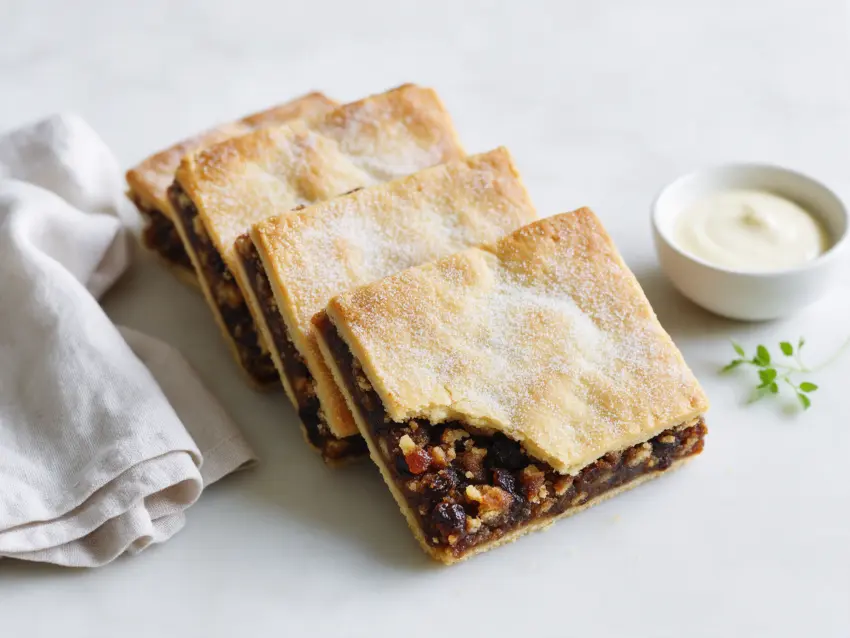
Irish gur cake is a Dublin bakery slab: shortcrust pastry wrapped around a dense filling of stale cake crumbs, dried fruit and mixed spice. It bakes at 180 C / 350 F for 40 minutes and cuts into 12 squares.
There’s something quietly clever about it. Bakers once used up yesterday’s cake and bread instead of binning it. Nothing wasted.
The filling is dark and sticky, a bit like Scottish Dundee fruit cake without the fuss. The pastry stays crisp at the edges and turns soft where it meets the crumbs.
I make it with whatever sponge or plain bread is going stale in the kitchen. It’s forgiving. Just keep the filling damp, not wet, or the base turns gummy.
Why You’ll Love This Recipe
- Uses up stale sponge or bread instead of binning it
- Pastry stays crisp at the edges and soft inside
- Slices into 12 clean squares that travel well
- Dough and filling both prep ahead, bake when ready
Ingredient Notes
- stale cake crumbs: Plain sponge, Madeira or leftover fruit cake all work. Dry, day-old cake soaks up syrup without going pasty. Plain white bread is the backup, dried first (see the FAQ).
- mixed spice: This is the British blend of cinnamon, nutmeg and allspice. If you can’t find it, use pumpkin pie spice in the same amount.
- golden syrup: It gives the filling a light caramel note and holds the crumbs together. Light corn syrup or honey works, though honey tastes stronger.
- mixed dried fruit: I use equal parts sultanas, raisins and currants. If the fruit feels hard, soak it in hot tea for 10 minutes and drain well before mixing.
- unsalted butter: Cold for the pastry, melted for the filling. If you only have salted butter, leave the 1/4 tsp salt out of the pastry.
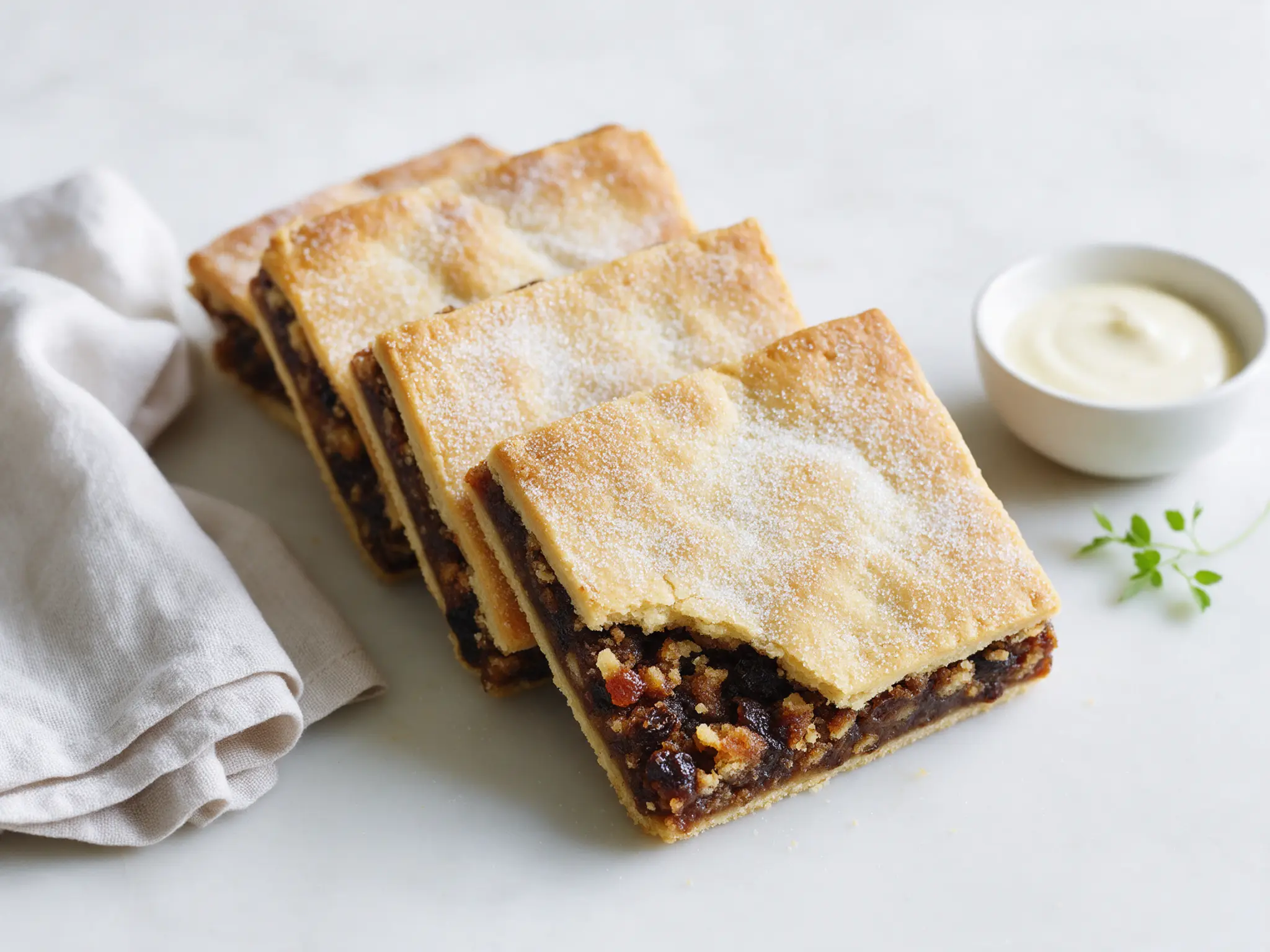
Irish Gur Cake with Spiced Fruit Filling and Pastry Lid
Ingredients
Method
- Whisk the flour, salt and 1 tbsp sugar in a 3-quart / 2.8 L bowl. Rub in the cold butter with your fingertips until the mix looks like coarse crumbs with a few pea-size flecks. Stir in the ice water with a knife until the dough clumps, adding 1 tsp more only if it won't hold when pressed.
- Press the dough into a flat disk, wrap it and chill for 30 minutes. Use that time to make the filling.
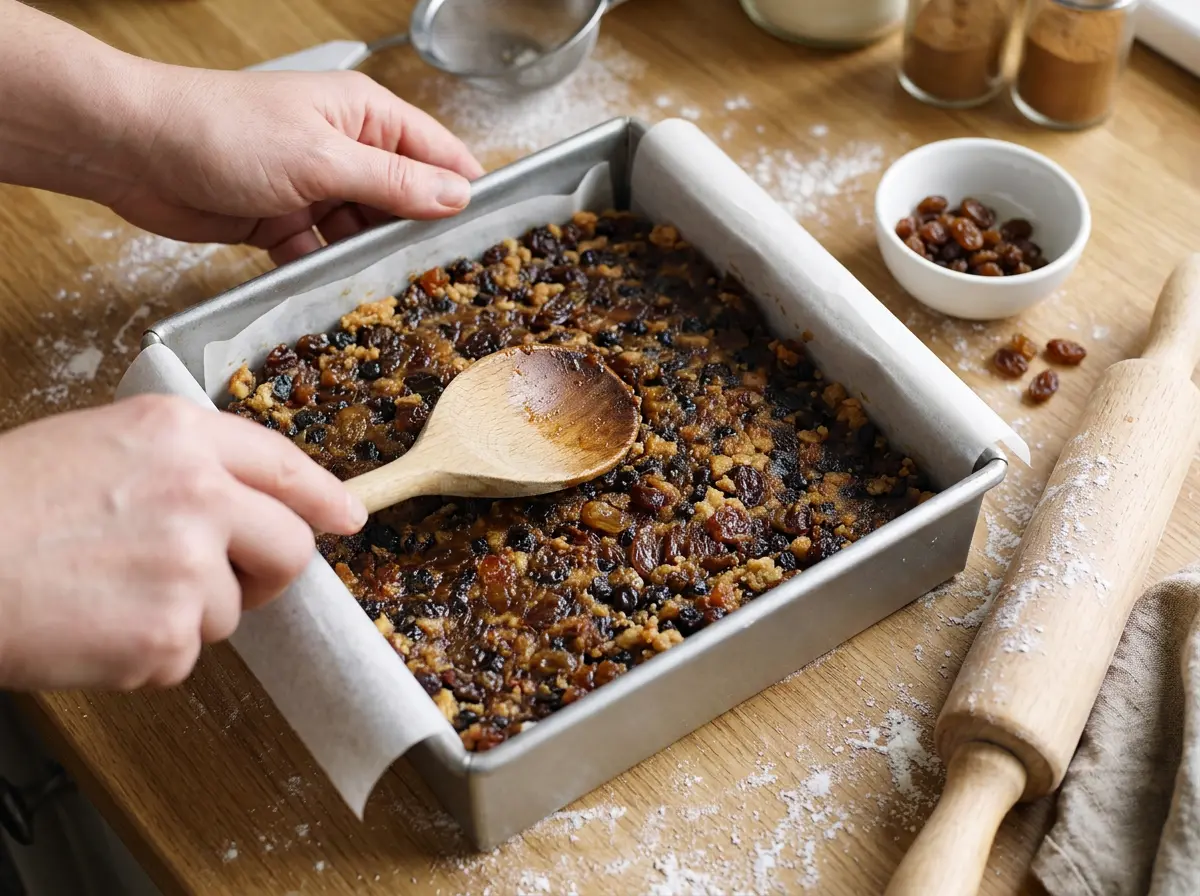
- Heat the oven to 180 C / 350 F with the baking sheet on the middle rack. In a second 3-quart / 2.8 L bowl, mix the cake crumbs, dried fruit, brown sugar and mixed spice. Stir in the melted butter, golden syrup, egg and 3 tbsp milk until the mix clumps when squeezed in your fist. If it's still crumbly, add up to 1 tbsp more milk and stop there, because a wet filling turns the base gummy.
- Grease the 20 x 20 cm / 8 x 8-inch tin and line the base and two opposite sides with parchment. Cut the chilled dough into one 360 g piece and one 180 g piece. Roll the larger piece on a floured surface into a square about 4 mm thick and 28 cm wide.
- Lower the pastry into the tin, press it into the corners and let the excess hang over the edges. Spoon in the filling and press it down firmly with the back of a spoon into an even layer.
- Roll the smaller piece into a 20 cm square, about 4 mm thick, and lay it over the filling. Fold the overhanging pastry onto the lid and press to seal. Trim any excess, brush with 1 tbsp milk, sprinkle with 1 tbsp sugar and cut 4 small slits in the lid.
- Set the tin on the hot baking sheet and bake for 40 minutes, until the lid is deep golden brown and a skewer pushed through a slit comes out with no wet filling clinging to it.
- Cool in the tin for 45 minutes. Lift the slab out by the parchment and cut into 12 squares, 3 across and 4 down.
Notes
- Chill the pastry a full 30 minutes so it doesn't shrink in the oven.
- Heat the baking sheet with the oven so the base crisps from below.
- Use stale cake, not fresh, so the crumbs absorb the syrup without turning pasty.
- Cut the squares only after the slab has cooled for 45 minutes.
Tips for Success
- Rub the butter in with your fingertips only until pea-size flecks remain, since warm hands melt it and make the pastry tough.
- Squeeze a fistful of filling to test it: it should clump and leave no wet patch on your palm.
- Press the filling firmly into the corners with the back of a spoon so the squares hold together when cut.
- Line the tin with parchment that overhangs two sides, so you can lift the whole slab out without cracking the base.
- Wait the full 45 minutes before cutting, because the filling sets as it cools and a warm slab crumbles.
Variations
- Add 2 tbsp cocoa powder to the filling and swap the mixed spice for 1 tsp cinnamon for a darker, chocolate-leaning gur cake.
- Replace half the dried fruit with chopped glace cherries or mixed peel for a brighter, more fruit-cake-style filling.
- Soak the dried fruit in 3 tbsp Irish whiskey or hot tea for 30 minutes, drain well, and cut the milk by 1 tbsp.
Storage and Reheating
Irish gur cake keeps for 4 to 5 days in the fridge in an airtight container, with parchment between the squares. At room temperature it holds for up to 2 days in a cool kitchen.
To refresh a cold square, warm it on a baking sheet at 150 C / 300 F for 8 to 10 minutes. The pastry crisps up and the filling softens. I skip the microwave because it turns the pastry soft.
Freeze wrapped squares for up to 2 months and thaw them overnight in the fridge. To work ahead, chill the pastry disk for up to 2 days and let it sit 15 minutes before rolling. The filling can be mixed and covered in the fridge up to 24 hours ahead.
Serving Suggestions
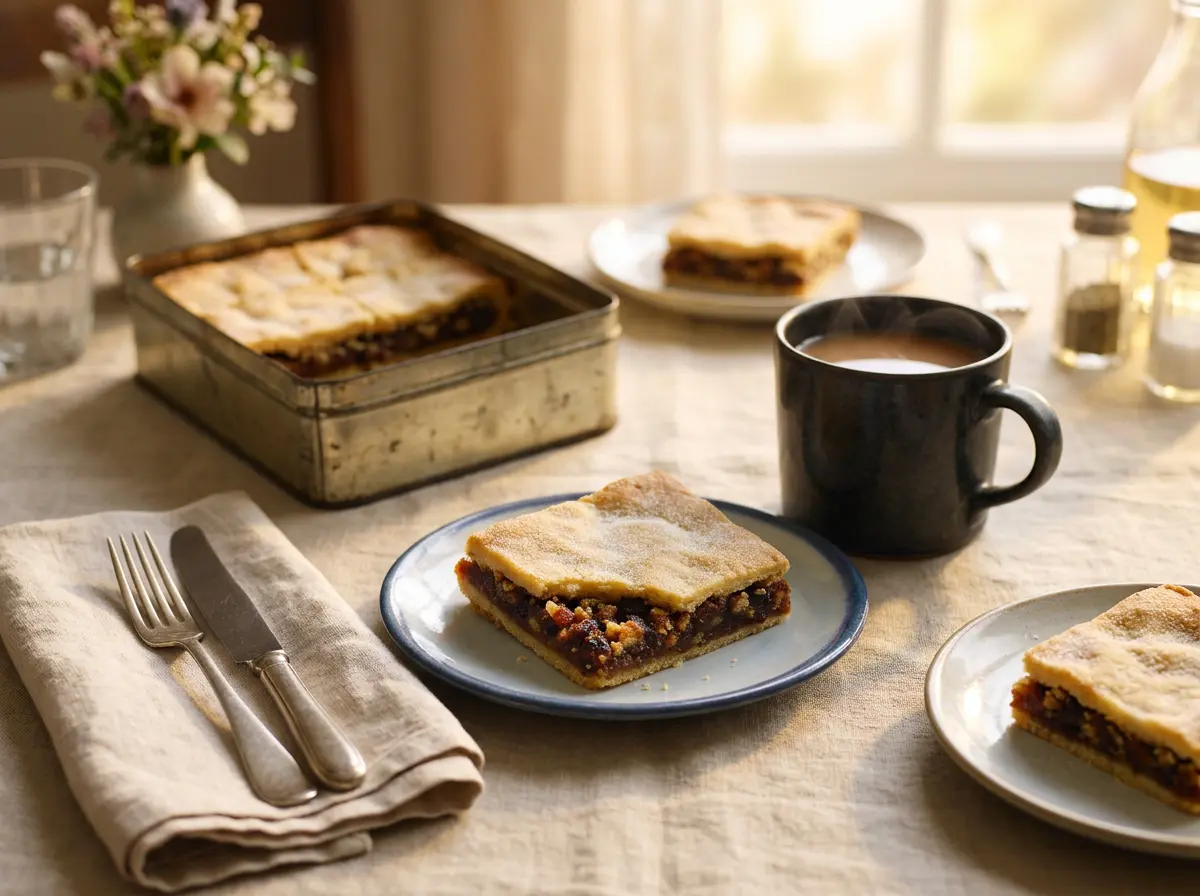
Irish gur cake is a tea-time square, served at room temperature with a strong cup of tea. Cut 12 for a crowd, or 8 bigger pieces for lunch tins.
For a dessert version, warm a square at 150 C / 300 F for 8 to 10 minutes. Spoon hot custard or cold pouring cream over the top.
It travels well in a tin lined with parchment, so it suits picnics and bake sales.
FAQ
Why is my gur cake base soggy?
A soggy gur cake base almost always means the filling was too wet. Stop adding milk at 4 tbsp, so the mix clumps when squeezed but doesn’t drip. Set the tin on a baking sheet that’s already hot in the 180 C / 350 F oven. The hot metal gives the bottom pastry a fast head start.
Can I use fresh bread instead of stale cake in gur cake?
Yes, plain white bread works. Dry 300 g of torn bread in a 150 C / 300 F oven for 10 to 12 minutes until dry but not browned, then blitz to coarse crumbs and cool them. Add the milk 1 tbsp at a time, since bread soaks up more. The flavor is plainer than with sponge.
Can you freeze gur cake, and how do you thaw it?
Yes, gur cake freezes well for up to 2 months. Cut it into 12 squares, wrap each in parchment, then bag them. Thaw overnight in the fridge and warm at 150 C / 300 F for 8 to 10 minutes to crisp the pastry. Freezing the whole slab works too, but squares thaw faster.
What goes well with a square of gur cake?
Strong Irish breakfast tea is the classic partner, since the filling is sweet and spiced. Warm custard or a spoonful of cream turns a square into dessert. A thin slice of sharp cheddar on the side also works if you like fruit cake with cheese.
How do I make gur cake dairy free?
Swap the butter for a firm plant-based block butter at the same weight, and use oat or soy milk. Avoid soft tub spreads, because their water content makes the pastry tough. Check your stale cake too, since most sponge contains butter or milk.
What’s the difference between gur cake and bread pudding?
Gur cake is a pastry-encased slab with a firm, crumbly filling, while bread pudding is soft, soaked bread baked in custard with no pastry. Gur cake filling has just enough egg and syrup to hold together. That’s why it slices cleanly into squares you can eat by hand.
Related recipes
