
Jump to Recipe
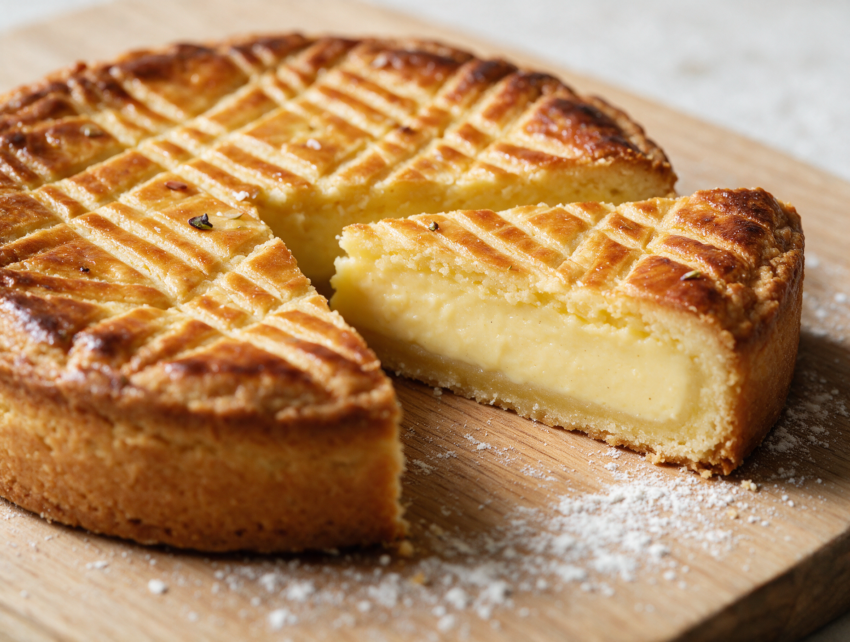
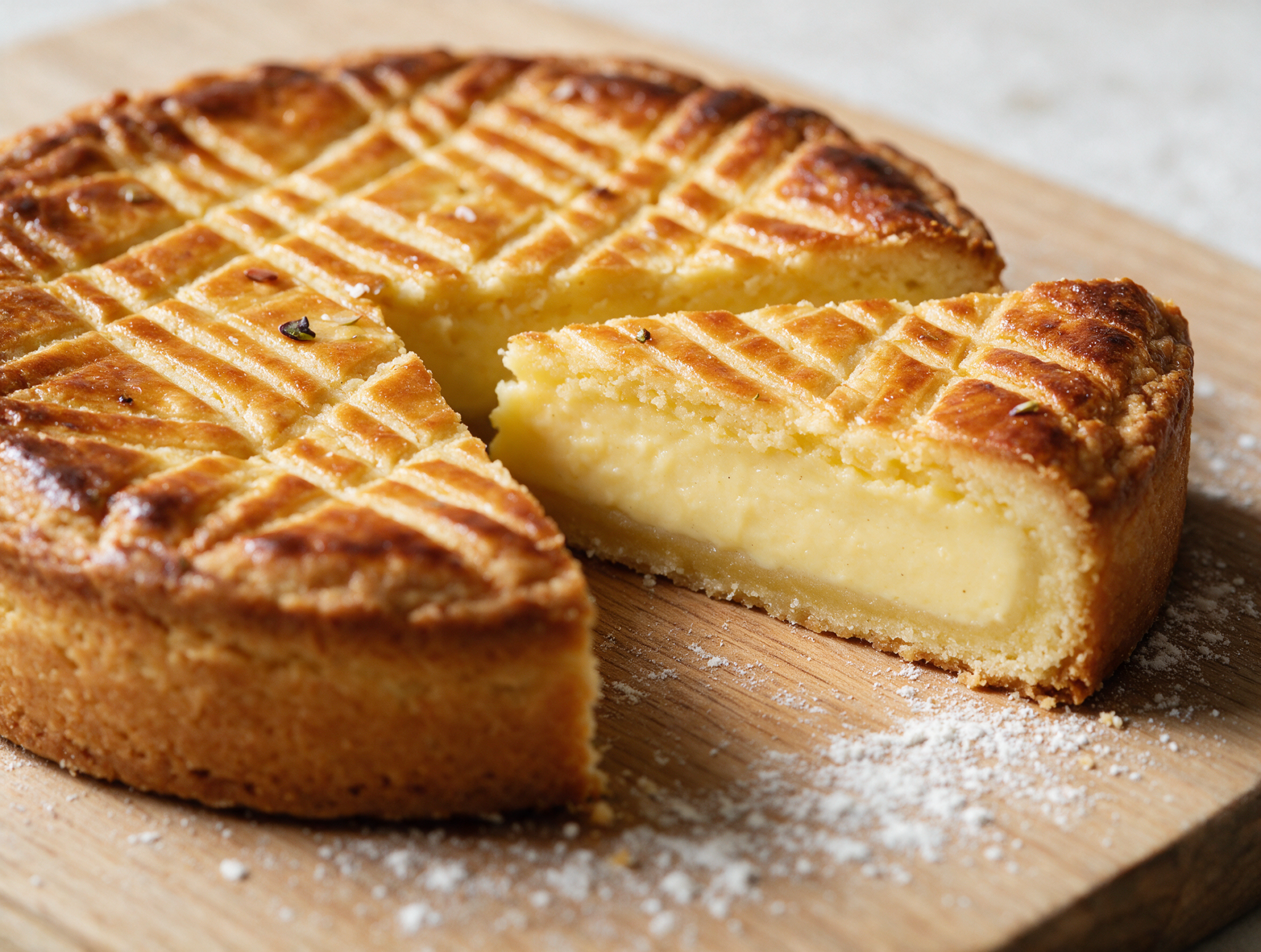
There’s something about cutting into a Gateau Basque that never gets old. The crust cracks a little. Then you hit the cream.
I first had this cake in a bakery window in Biarritz, wrapped in wax paper, still warm. It wasn’t fancy. It didn’t need to be.
The dough here is more like a soft shortbread than a cake batter, and it holds up around a thick vanilla pastry cream without turning soggy. Rum in the dough gives it a little depth. Vanilla does the same for the custard.
This isn’t a five-minute recipe. But most of the work is just waiting, chilling dough, cooling cream. The oven does the rest.
Why You’ll Love This Recipe
- Buttery shortbread crust with a crisp golden top
- Thick vanilla pastry cream center in every slice
- Make-ahead friendly, tastes better the next day
- No fancy equipment, just a saucepan and a whisk
Ingredient Notes
- all-purpose flour: Gives the dough a tender, cookie-like crumb. Don’t swap in bread flour, it turns the crust tough and chewy.
- unsalted butter: Use good butter, softened but still cool, so the dough holds its shape without spreading in the oven.
- egg yolks: Yolks alone, no whites, keep both the dough and the custard rich and tender.
- dark rum: Traditional in Basque country. Swap in the same amount of vanilla extract if you’d rather skip the alcohol.
- cornstarch: Thickens the pastry cream to a sliceable set. Cornflour, the UK term, works the same way.
- whole milk: Makes a creamier custard. Low-fat milk works too, but the filling ends up thinner.
Traditional Gateau Basque with Vanilla Pastry Cream
Ingredients
Method
- Whisk the milk and half the sugar in a 2-quart / 2 L saucepan and heat over medium until steaming, about 4 minutes.
- Meanwhile, whisk the egg yolks, remaining sugar, and cornstarch in a bowl until pale and smooth.
- Slowly pour a third of the hot milk into the yolk mixture, whisking constantly, then pour it all back into the saucepan.
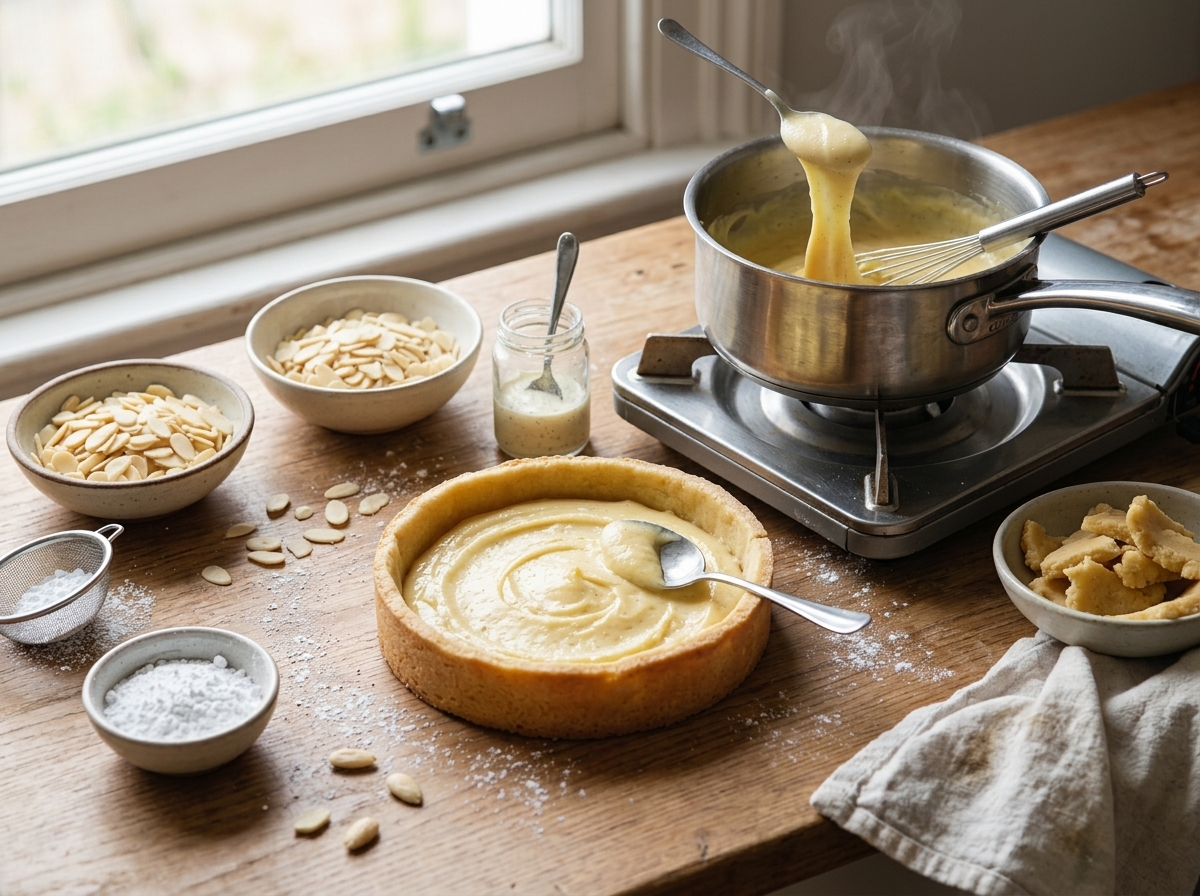
- Cook over medium-low heat, whisking constantly, until the cream thickens and holds a ribbon trail off the whisk, about 3 to 4 minutes at a gentle boil.
- Remove from heat and stir in the vanilla and rum. Press plastic wrap directly onto the surface and chill for at least 2 hours, until fully cold.
- Beat the butter and sugar in a stand mixer until light and fluffy, about 2 minutes.
- Add the egg yolks one at a time, then mix in the rum, vanilla, and lemon zest.
- Whisk the flour, baking powder, and salt together, then add to the butter mixture in two additions, mixing just until a soft dough forms.
- Divide the dough in half, flatten into disks, wrap, and chill for 2 hours, until firm enough to roll.
- Heat the oven to 180 C / 355 F. Butter a 23 cm / 9-inch springform pan.
- Roll one dough disk between two sheets of parchment to fit the base and sides of the pan, about 5 mm thick. Press into the pan, patching any cracks with your fingers.
- Spread the chilled pastry cream evenly over the dough, leaving a 1 cm border.
- Roll the second disk and lay it over the filling, pinching the edges to seal.
- Brush the top with egg wash, then score a crosshatch pattern with a fork or the tip of a knife.
- Bake for 40 to 45 minutes, until deep golden brown all over.
- Cool in the pan for 30 minutes, then release and cool completely on a rack for at least 2 hours before slicing.
Notes
- Chill dough at least 2 hours, or overnight for easier rolling.
- Cool pastry cream fully before filling, warm cream melts the bottom crust.
- Rest the baked cake 2 hours minimum before slicing for clean cuts.
- Egg wash twice for the deepest golden, shiny crust color.
Tips for Success
- Chill both dough disks for a full 2 hours so they’re firm enough to roll without tearing.
- Cook the pastry cream until it holds a ribbon trail off the whisk, about 3 to 4 minutes at a gentle boil.
- Cool the pastry cream completely before assembling, or it melts the bottom dough layer while baking.
- Score the top crust in a crosshatch pattern before baking for the classic Basque look.
- Let the baked cake rest at room temperature for at least 2 hours before slicing so the cream fully sets.
Variations
- Swap half the pastry cream for black cherry jam, the traditional Basque version served alongside custard.
- Add a teaspoon of orange zest to the dough for a brighter edge against the vanilla filling.
- Skip the rum and use almond extract instead for a nuttier, kid-friendly flavor in the dough and cream.
Storage and Reheating
Gateau Basque keeps well in the fridge, covered, for 4 to 5 days. The crust softens a bit as the days pass, but the cream stays set.
Let cold slices sit at room temperature for 20 to 30 minutes before serving, since the crust tastes better than fridge-cold. If you want the top crisp again, warm whole or sliced cake in a 150 C / 300 F oven for 8 to 10 minutes.
Freezing works for the whole baked cake, wrapped tightly, for up to 2 months. Thaw overnight in the fridge before warming.
Serving Suggestions
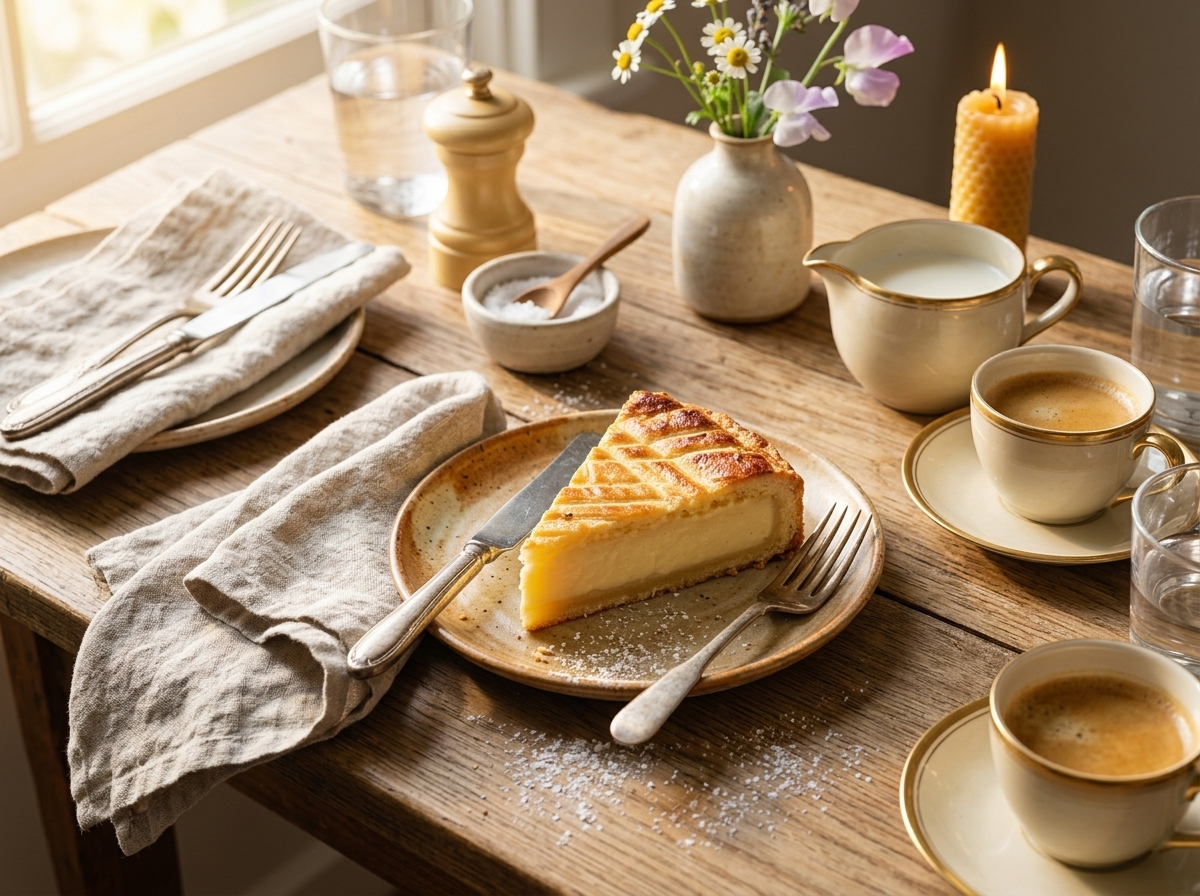
Gateau Basque doesn’t need much. A cup of strong coffee or espresso cuts through the richness.
For a summer version, add a small spoon of cherry compote or fresh berries on the side.
I like a thin slice with a glass of dessert wine after dinner, or plain with morning coffee.
FAQ
Why is my Gateau Basque pastry cream runny instead of thick?
Your pastry cream probably didn’t cook long enough. It needs a full 3 to 4 minutes at a gentle boil once it starts thickening, whisking the whole time, so the cornstarch fully activates. Pull it too early and it stays loose even after chilling. Cook until it holds a thick ribbon off the whisk, then chill completely before filling.
Can I use flour instead of cornstarch to thicken the pastry cream?
Yes, but double the amount, so 80 g flour instead of 40 g cornstarch. Flour needs a longer cook time to lose its raw taste, about 5 to 6 minutes at a gentle boil instead of 3 to 4. The texture ends up slightly less silky than cornstarch, but it still sets well enough to slice.
Can I make Gateau Basque a day ahead of serving?
Yes, and it actually tastes better the next day once the crust softens slightly and the cream fully sets. Bake it, cool completely, then cover and refrigerate overnight. Let it sit at room temperature for 20 to 30 minutes before slicing so the crust isn’t fridge-cold and hard.
What goes with Gateau Basque besides coffee?
A glass of dessert wine or a scoop of vanilla ice cream both work well alongside a slice. Fresh berries or a spoon of cherry compote on the side echo the traditional cherry jam version. Since the crust and custard are both rich, keep the side simple and not too sweet.
Is Gateau Basque gluten free?
No, the classic version isn’t, since the crust relies on wheat flour for its shortbread texture. You can try a 1:1 gluten-free flour blend in the dough, though the crust turns out more crumbly and harder to roll. The pastry cream itself is naturally gluten free if you stick with cornstarch.
What’s the difference between Gateau Basque with pastry cream and the cherry jam version?
The dough and technique are identical, only the filling changes. Pastry cream gives a custard-soft, vanilla-forward center, while the traditional black cherry jam version has a tangier, fruitier bite. Some bakers in the Basque region layer both together for contrast in every slice.
Related recipes
- our Easy Microwave Vanilla Mug Cake, Ready in 5 Minutes
- Homemade Molasses Spice Cake with Cream Cheese Glaze
- our Traditional Sticky English Lardy Cake with Spiced Fruit
- our Maple Pecan Cream Pie: Silky Custard, Toasted Pecans
