
Jump to Recipe
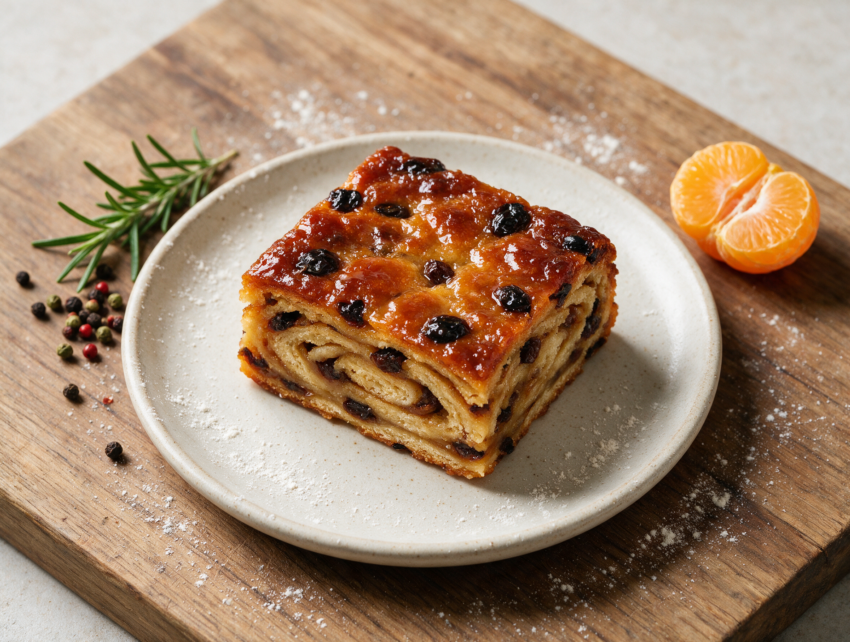
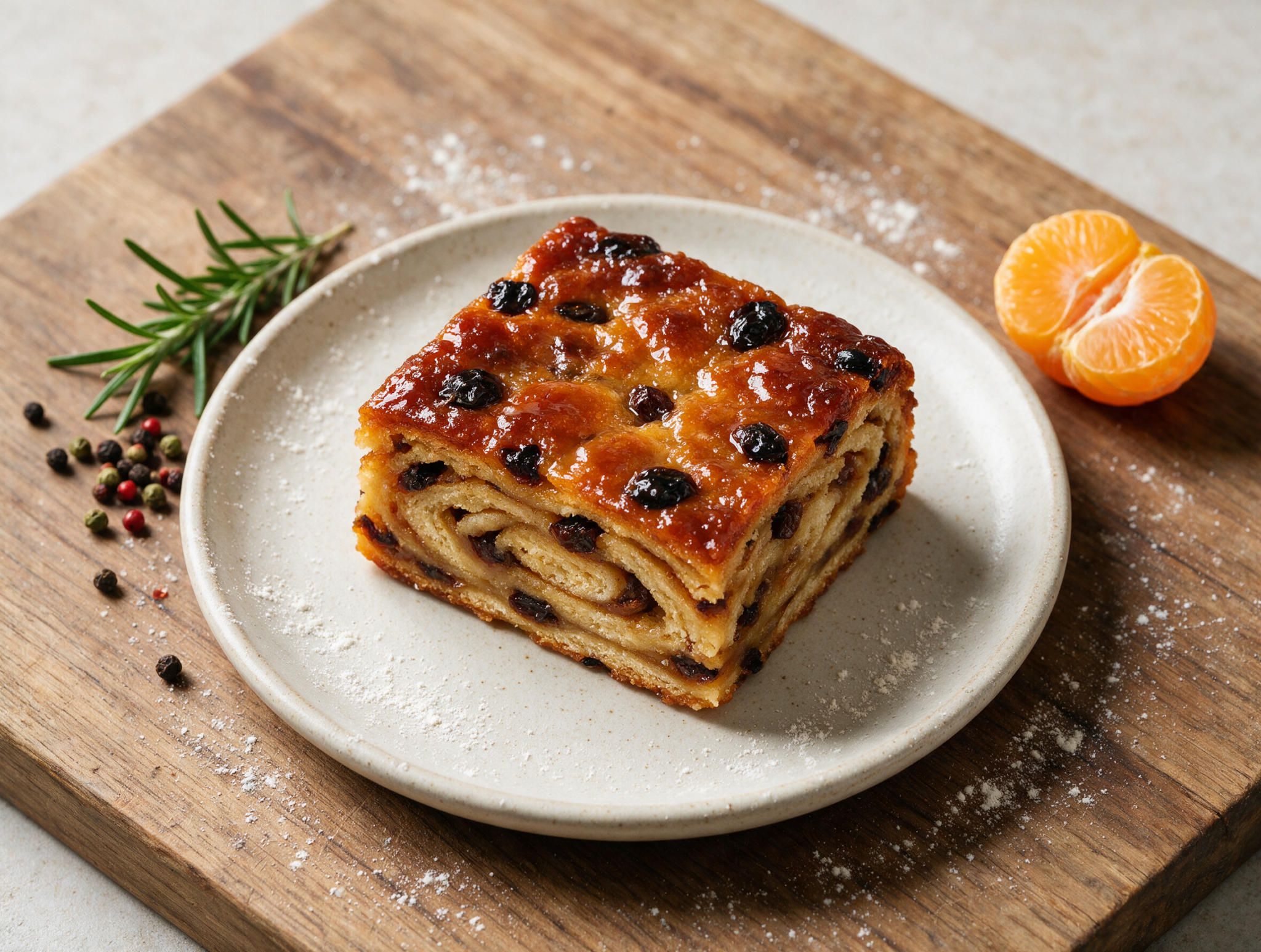
Traditional lardy cake is an English yeasted bread laminated with cold lard, sugar and dried fruit, rolled and folded the way you’d handle puff pastry, then baked until the top turns sticky and caramelized. It’s not a cake in the sponge sense at all. It’s closer to a rich, spiced bread.
I first ate a slice of this in a bakery in Wiltshire, still warm, with the sugar just starting to blister on top. The dough was soft, the currants plump, and there was a thin crackly layer where the sugar had caramelized against the tin.
This version uses the classic method: a basic bread dough folded three times with lard, sugar, currants and a warm mixed spice blend, then proofed again before baking. The lamination is what gives it flaky, buttery-tasting layers, even though there’s no butter in the dough itself.
One thing that catches people out: if you skimp on the folding or let the lard get too soft, the layers turn muddy instead of streaky. Keep it cold, work quickly, and you’ll get the pull-apart texture this bread is known for.
Why You’ll Love This Recipe
- Laminated dough gives sticky, caramelized layers without pastry skill
- Uses one dough, no eggs, no fancy equipment needed
- Keeps well for days, tastes better the next morning
- Classic English bake with real history behind every slice
Ingredient Notes
- Strong white bread flour: Gives the dough enough structure to hold the folded lard layers. All-purpose bread flour works if that’s what you have.
- Lard: Use a solid block lard, not a soft spread. Keep it cold and firm right up until you fold it into the dough.
- Mixed dried fruit: Sultanas and currants are traditional. Raisins work too but are chewier once baked.
- Mixed spice: A British blend of cinnamon, nutmeg, allspice and clove. A pinch of cinnamon and nutmeg together is a fine substitute.
- Whole milk: Adds richness to the dough. Water works but the crumb turns slightly leaner.
Traditional Sticky English Lardy Cake with Spiced Fruit
Ingredients
Method
- Warm the milk to lukewarm, about 37 C / 98 F, and stir in the yeast and 1 tbsp of the sugar. Let sit for 5 minutes until foamy.
- In a large bowl, whisk the flour, salt and remaining sugar together. Make a well and pour in the yeast mixture and melted lard.
- Mix to a shaggy dough, then knead by hand or with a stand mixer fitted with a dough hook for 8 to 10 minutes, until smooth and elastic.
- Place the dough in a lightly oiled bowl, cover, and let rise in a warm spot for 60 minutes, until roughly doubled.
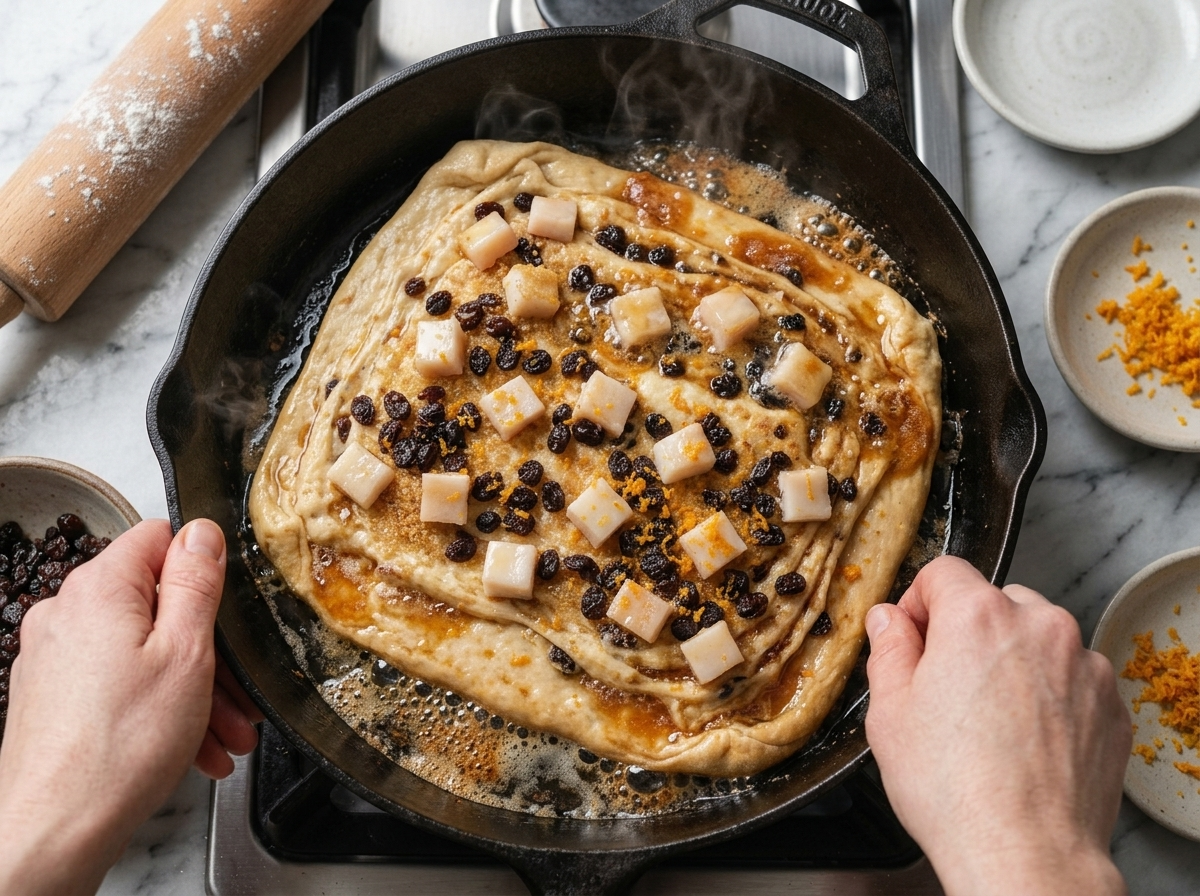
- Turn the dough onto a floured surface and roll into a rectangle about 40 x 20 cm / 16 x 8 inch. Dot the top two-thirds with a third of the cold lard, then scatter a third of the sugar, dried fruit and mixed spice over it.
- Fold the uncovered third of dough up and over the center, then fold the top third down, like folding a letter. Turn the dough 90 degrees, re-roll to the same size, and repeat the layering two more times with the remaining lard, sugar, fruit and spice, resting the dough for 20 minutes after the final fold.
- Roll the dough out to fit your 23 cm / 9-inch square baking tin. Line the tin with parchment and press the dough in evenly.
- Cover the tin loosely and let the dough proof for 40 minutes, until puffy and nearly filling the tin.
- Heat the oven to 190 C / 375 F. Score the top of the dough in a diamond pattern with a sharp knife.
- Bake for 30 to 35 minutes, until deep golden brown and an instant-read thermometer inserted into the center reads 190 F / 88 C.
- While the cake bakes, warm the water and remaining sugar for the glaze in a small saucepan until dissolved. Brush over the lardy cake as soon as it comes out of the oven.
- Cool in the tin for at least 15 minutes before lifting out and slicing into 12 squares.
Notes
- Use block lard, not a lard substitute spread, for real lamination.
- Chill the dough between folds if your kitchen is warm.
- Don't skip the second proof or the crumb turns tight.
- Line the tin with parchment for easy removal once baked.
Tips for Success
- Keep the lard cold and firm before folding, so it stays in distinct layers instead of melting into the dough.
- Roll the dough into an even rectangle each time so the folds stack neatly and bake through evenly.
- Score the top in a diamond pattern before the final rise so the sugar caramelizes into every cut.
- Bake on the middle rack and check at 30 minutes, since ovens vary and the sugar top burns fast once it starts.
- Cool the lardy cake in the tin for at least 15 minutes before turning out, or the sticky base will tear.
Variations
- Swap currants for chopped dried apricots and orange zest for a brighter, less traditional version.
- Use half lard and half butter if you want a milder flavor while keeping some of the lamination.
- Add a handful of chopped walnuts with the fruit layers for extra crunch against the sticky crumb.
Storage and Reheating
Traditional lardy cake keeps in an airtight container at room temperature for 3 to 4 days. The sugar top stays sticky, so layer parchment between slices if you stack them.
To reheat, warm a slice in a 160 C / 320 F oven for 8 to 10 minutes, which brings back the caramelized top better than a microwave does. A microwave works in a pinch for 15 to 20 seconds if you’re short on time.
For freezing, wrap the whole cake tightly in plastic then foil and freeze for up to 2 months. Thaw at room temperature for a few hours before reheating, and avoid freezing it already sliced since the fruit dries out faster.
Serving Suggestions
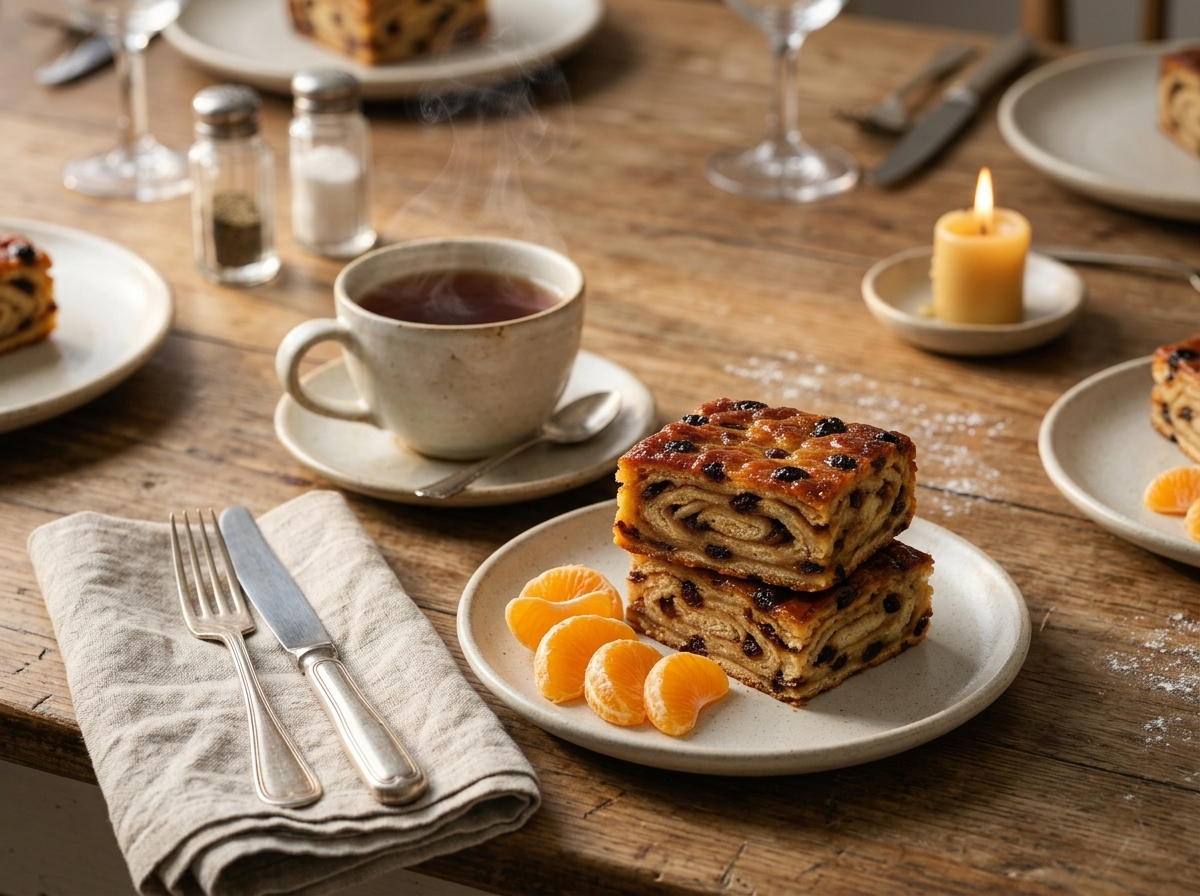
Lardy cake is best served slightly warm, cut into squares, with nothing more than a strong cup of tea or coffee alongside.
A thin scrape of salted butter on a warm slice sounds excessive but actually balances the sugar. It’s also good with warm stewed apples or a spoon of clotted cream if you’re treating it like a dessert.
For a simple afternoon spread, set it out with scones and a pot of jam. The sticky top holds up fine at room temperature for a few hours.
FAQ
Why is my lardy cake dense instead of layered and flaky?
Dense lardy cake usually means the lard melted before baking or the dough didn’t get a proper second rise. Keep the lard cold and firm when you fold it in, and give the shaped loaf a full 40 minutes to proof before it goes in the oven. Rushing either step flattens the layers.
Can I use butter instead of lard in this lardy cake recipe?
You can use butter instead of lard, though the flavor turns milder and the layers less crisp. Lard has a higher melting point, which is what creates those flaky pockets, so a half-lard, half-butter mix is a better compromise than butter alone. Traditionalists stick with lard.
Can you freeze traditional lardy cake?
Yes, traditional lardy cake freezes well for up to 2 months if wrapped tightly in plastic then foil. Thaw at room temperature for a few hours, then warm slices in a 160 C / 320 F oven for 8 to 10 minutes to bring back the sticky top. Don’t freeze it already sliced or the fruit dries out faster.
What goes well with a slice of lardy cake?
Lardy cake goes well with a strong cup of tea or coffee, since the drink cuts through the sugary top. Some people warm a slice and add a thin scrape of salted butter, which sounds heavy but actually balances the sweetness. It also works as a simple dessert with stewed apples.
Is lardy cake vegetarian?
No, traditional lardy cake isn’t vegetarian because lard is rendered pork fat, which is what gives the dough its flaky, laminated texture. If you need a vegetarian version, swap in an equal weight of cold vegetable shortening or butter, though the flavor and texture will be noticeably different from the classic bake.
What’s the difference between lardy cake and Chelsea buns?
Lardy cake and Chelsea buns are both English enriched breads, but lardy cake is laminated with lard, sugar and dried fruit like a rough puff pastry, then baked as one flat loaf. Chelsea buns use a soft egg-butter dough rolled with fruit and cut into individual spiral buns. Lardy cake is denser and stickier.
More from the kitchen
