
Jump to Recipe
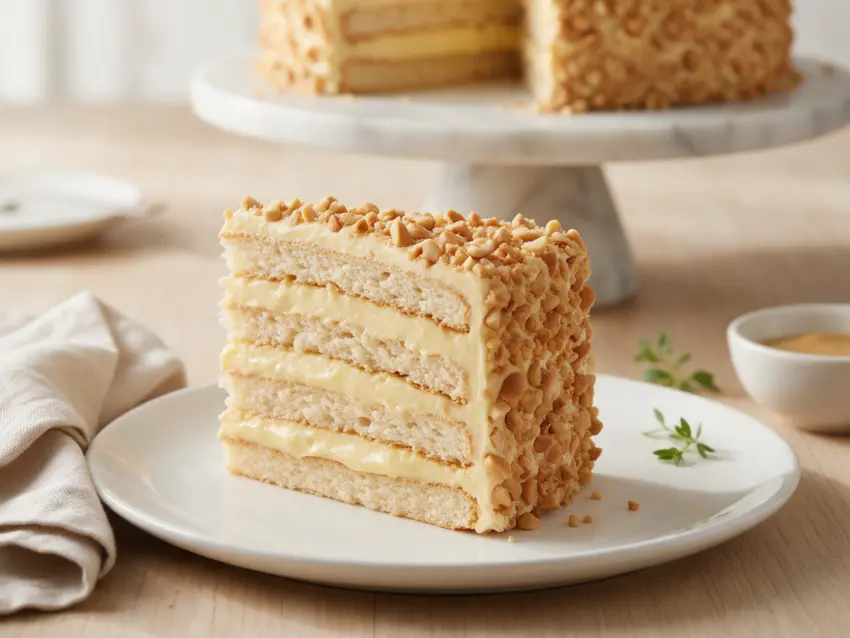
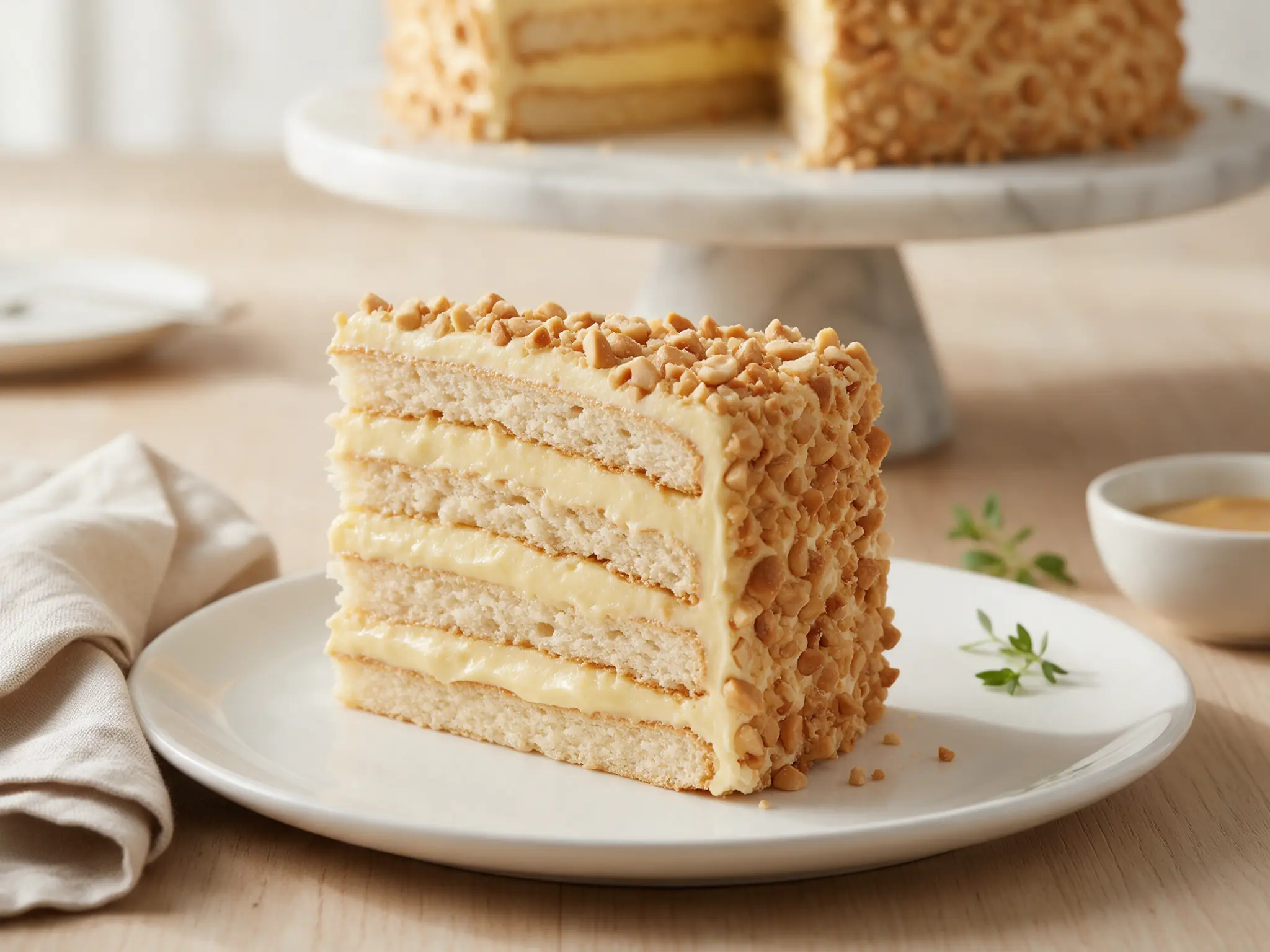
Filipino sans rival is a cake of thin cashew meringue layers sandwiched with French buttercream and rolled in toasted cashew crumbs. You bake the layers dry, stack them, and chill the cake for at least 4 hours until it slices clean.
Sans rival means “without rival” in French. Filipino bakers made it their own with cashews, and it often shows up at birthdays and holiday tables, much like oven-baked Filipino bibingka rice cake.
There’s something about that first cold bite. Crisp edges soften to a chewy center, then the buttercream melts. Nutty and sweet.
The one thing that goes wrong is underbaking. If the meringue is still tacky, it sticks to the parchment and tears when you peel. Bake until the surface is dry and the layer lifts off clean.
It looks like a project, but most of it is waiting. The layers bake while you make the buttercream, and the fridge does the rest.
Why You’ll Love This Recipe
- Crisp cashew layers turn chewy and sliceable after chilling
- Yolk buttercream that tastes rich, not sugary-sweet
- Naturally gluten-free, with no flour in the layers
- Assembles a day ahead, so party day stays calm
Ingredient Notes
- Raw cashews: Buy unsalted raw cashews and toast them yourself so they taste nutty, not stale. Blanched almonds work in the same weight if that’s what you have.
- Egg whites: Use 6 large whites at room temperature, about 200 g. Even a trace of yolk keeps them from whipping to stiff peaks, so separate each egg over a small bowl first.
- Unsalted butter: Soften it to about 20 C / 68 F, cool to the touch but easy to press. Butter that’s too warm makes the buttercream soupy.
- Cream of tartar: It stabilizes the whites. If you don’t have it, use 1/2 teaspoon lemon juice added once the whites turn foamy.
- Cornstarch: It soaks up oil from the ground cashews so the layers dry crisp instead of greasy.
Filipino Sans Rival Cake with Cashew Meringue Layers
Ingredients
Method
- Heat the oven to 150 C / 300 F with racks in the upper and lower thirds. Spread all 300 g cashews on a 33 x 46 cm / 13 x 18 inch sheet pan and toast for 10 to 12 minutes, stirring once, until fragrant and light golden. Let them cool for 10 minutes.
- Line both sheet pans with parchment. Trace two 20 cm / 8-inch circles on each sheet, using a plate or cake pan as a guide, then flip the paper so the marks face down.
- Chop 100 g of the toasted cashews into small crumbs and set them aside for the coating. Pulse the other 200 g with the cornstarch in a food processor, in short bursts, until they look like fine, dry crumbs. Stop before they clump into paste.
- Whip the egg whites and cream of tartar in the stand mixer on medium for 2 minutes until foamy. With the mixer running, add the 200 g sugar one spoonful at a time, then whip on high for 5 to 7 minutes until stiff, glossy peaks form and a bit of meringue feels smooth, not gritty, between your fingers.
- Fold the ground cashew mixture into the meringue in two additions, just until no streaks remain. Divide it among the four circles and spread each to the edge in an even layer about 8 mm / 1/3 inch thick.
- Bake for 40 minutes, swapping the pans top to bottom and rotating them at 20 minutes, until the layers are pale golden, dry to the touch, and release easily from the parchment. If a layer still feels tacky underneath, bake it 5 minutes longer.
- Stir the 150 g sugar and the water in a 1-quart / 1 L saucepan over medium heat until the sugar dissolves. Stop stirring and boil for 6 to 8 minutes until a thermometer reads 115 C / 240 F.
- While the syrup cooks, whip the yolks in the washed and dried mixer bowl on medium-high for 3 to 4 minutes until pale and thick. With the mixer on medium, pour the hot syrup down the side of the bowl in a thin stream. Whip on medium-high for 8 to 10 minutes until the bowl feels cool to the touch.
- Add the butter one tablespoon at a time, beating on medium until smooth after each addition. Mix in the vanilla and salt. Leave the buttercream at cool room temperature until the layers are ready.
- Cool the layers on the pans for 20 minutes, then peel off the parchment. Set the first layer on a cake board or plate.
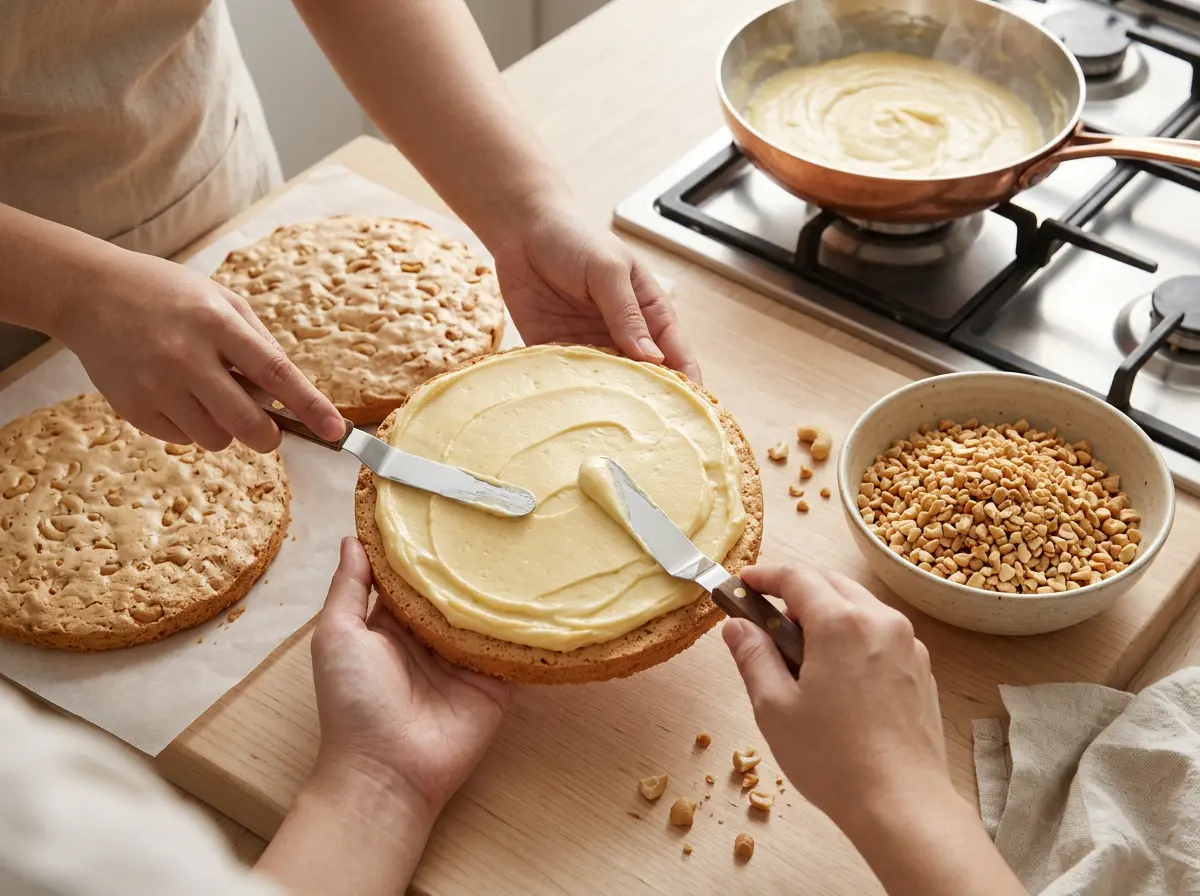
- Spread 120 ml / 1/2 cup buttercream over the first layer in an even coat. Repeat with the second and third layers, then top with the fourth layer.
- Cover the top and sides with the remaining buttercream in a thin, even coat. Press the chopped toasted cashews onto the sides and top until the cake is fully coated.
- Chill the cake for at least 4 hours, until the buttercream is firm and the layers have softened enough to slice. Cut with a long knife dipped in hot water and wiped dry between cuts, and serve cold.
Notes
- Bake the layers until dry to the touch, because underbaked meringue sticks to the parchment.
- Chill the finished cake at least 4 hours before slicing.
- Spread about 120 ml / 1/2 cup buttercream per filling layer and save the rest for the outside.
- Keep the buttercream at cool room temperature, about 20 C / 68 F, while you assemble.
Tips for Success
- Pulse the cashews with the cornstarch in short bursts and stop at fine crumbs, since over-processing makes oily paste that weighs the layers down.
- Whip the whites until stiff, glossy peaks form and the sugar no longer feels gritty between your fingers, then fold in the nuts gently.
- Trace the 20 cm / 8-inch circles on the back of the parchment, then flip it so pencil marks never touch the meringue.
- Pull the sugar syrup off the heat at 115 C / 240 F, since cooler syrup leaves the buttercream thin and runny.
- Dip a long knife in hot water and wipe it dry between cuts so the crisp layers and soft buttercream slice cleanly.
Variations
- Stir 1 tablespoon instant espresso dissolved in 1 teaspoon hot water into the finished buttercream for a mocha version.
- Use 100 g cashews and 100 g toasted almonds in the layers for a milder, slightly drier meringue. Keep the coating all cashew.
- Bake small 6 cm / 2.5-inch rounds, sandwich them with buttercream, roll in cashew crumbs, and freeze for silvanas-style cookies.
Storage and Reheating
Sans rival keeps in the fridge for 4 to 5 days. Chill it uncovered until the buttercream is firm, then wrap loosely in plastic or set it in an airtight container. The cashew coating stays crunchy, and the layers get a little chewier each day.
Freeze the whole cake for up to 1 month, wrapped tightly in plastic and foil. Thaw it in the fridge for 6 to 8 hours. Skip the countertop, because the butter-based buttercream softens and smears.
Sans rival is served cold and never warmed, since heat melts the buttercream and the layers slump. To get ahead, bake the layers up to 2 days early and keep them in an airtight container at room temperature. Then make the buttercream and assemble the day before serving. Don’t leave the finished cake out for more than 2 hours.
Serving Suggestions
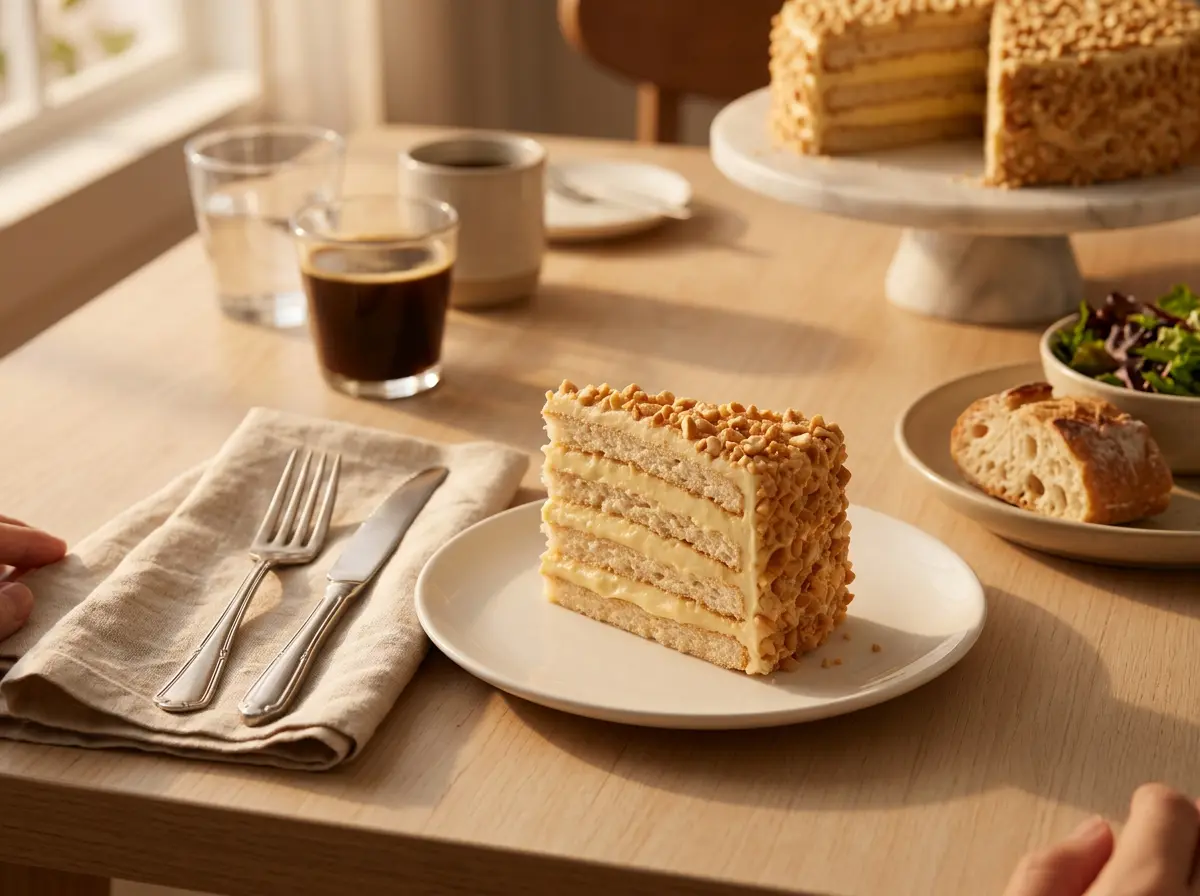
Slice sans rival straight from the fridge with a long knife dipped in hot water and wiped dry between cuts. A 20 cm / 8-inch cake cuts into 12 slices. Keep them thin, since it’s rich.
Black coffee or hot tea without sugar works well alongside. A few slices of fresh mango or strawberries on the plate add the acidity the cake doesn’t have.
Bring it to the table whole so everyone sees the layers when you cut.
FAQ
How do I know when the sans rival meringue layers are done?
Sans rival layers are done when the surface looks pale golden and dry, and the layer peels off the parchment without sticking. At 150 C / 300 F that takes about 40 minutes for layers roughly 8 mm thick. If the underside feels tacky or the paper tears the meringue, bake another 5 minutes.
Can I use almonds or pistachios instead of cashews in sans rival?
Yes, blanched almonds or pistachios work in the same weight, 200 g for the layers and 100 g for the coating. Toast them first and grind to fine crumbs. Almonds give a milder, slightly drier layer, and pistachios turn it green and cost more. Skip salted or canned roasted nuts.
Can I freeze sans rival cake, and how do I thaw it?
Yes, sans rival freezes well for up to 1 month. Chill the finished cake until firm, then wrap it tightly in plastic and foil. Thaw it in the fridge for 6 to 8 hours and slice it cold, since a softened buttercream smears under the knife.
What coffee or tea goes best with sans rival?
Black coffee, or hot tea without sugar, balances the sweet buttercream and the toasted cashew crust. Sliced fresh mango or strawberries on the side add acidity the cake doesn’t have. A small glass of cold calamansi juice works too. Keep slices thin, since each one is rich.
Is Filipino sans rival gluten free?
Yes, sans rival is naturally gluten-free, since the layers use ground cashews and 1 tablespoon of cornstarch instead of flour. Check that your cornstarch and vanilla labels don’t list wheat-derived ingredients. It does contain tree nuts, eggs, and dairy, so it isn’t safe for nut or egg allergies.
Why is my sans rival buttercream curdled or runny?
Curdled buttercream usually means the butter or the yolk base was too cold, and soupy means it was too warm. If it’s curdled, wrap the bowl in a warm towel for 30 seconds and keep whipping. If it’s soupy, chill the bowl for 10 minutes, then whip again until smooth.
Related recipes
