
Jump to Recipe
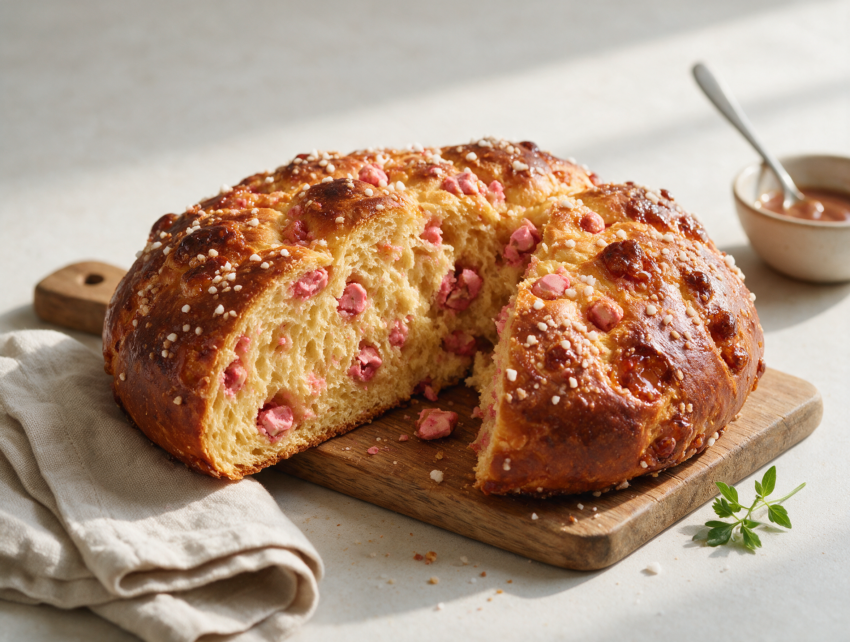
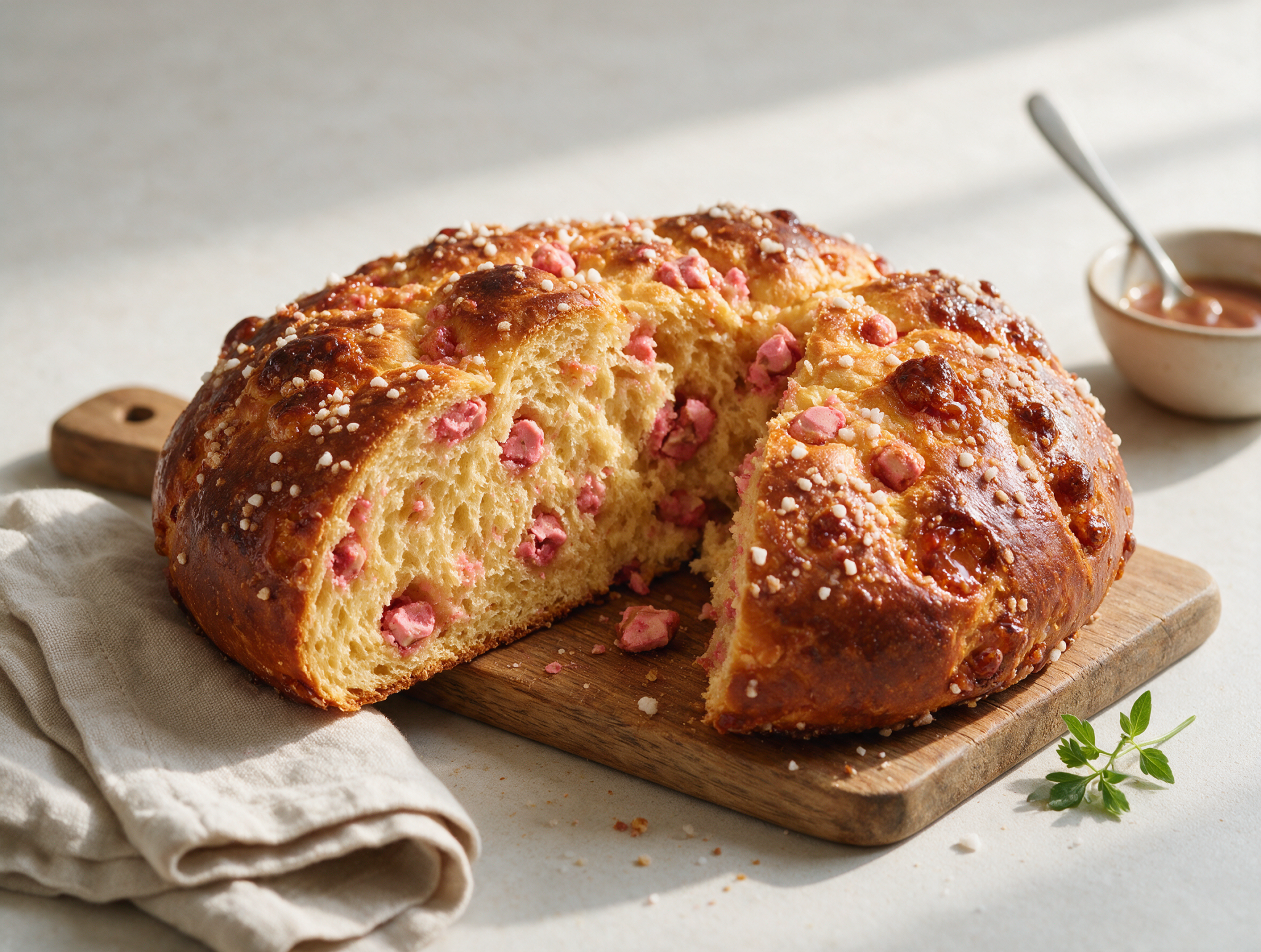
Brioche praluline is a sweet, buttery bread from Lyon, France, studded with crushed pink pralines, almonds coated in a hard shell of caramelized sugar dyed a striking rose color. The dough bakes soft and rich, with pockets of melted, sticky praline scattered through every slice.
I first spotted this in a bakery window in Lyon, the pink crumb visible through the glass. I couldn’t walk past it.
This version uses a straightforward enriched yeasted dough, no stand mixer required if you’ve got patience and a wooden spoon. The pralines do all the visual work. You just need to fold them in gently so they don’t crush into dust.
One thing I learned the hard way: if your pralines are chopped too fine, the sugar melts completely and you lose those chewy caramelized bites. Keep some pieces the size of a chickpea.
Why You’ll Love This Recipe
- Studded with sticky, caramelized pink praline pieces in every bite
- Soft, buttery crumb from a classic French enriched dough
- Make-ahead friendly with an overnight fridge rise option
- Bakes into one shareable loaf for weekend brunch spreads
Ingredient Notes
- pink pralines: Lyon-style pink pralines are caramelized almonds coated in pink sugar. Find them online from French bakeries, or substitute homemade pink candied almonds.
- bread flour: Bread flour gives the brioche a stretchier, chewier crumb than all-purpose flour, though all-purpose works in a pinch with a slightly softer texture.
- unsalted butter: Use softened, room temperature butter so it incorporates smoothly into the dough instead of breaking it apart.
- instant yeast: Instant yeast mixes straight into the dry ingredients with no proofing step. Active dry yeast works too, just dissolve it in the warm milk first.
- whole milk: Whole milk adds richness and helps activate the yeast. Warm it to about 100F/38C, hotter and it kills the yeast.
- eggs: Large eggs at room temperature blend into the dough faster and help build the soft, enriched crumb.
Buttery Homemade Brioche Praluline with Pralines
Ingredients
Method
- In the bowl of a stand mixer, combine the bread flour, sugar, salt, and instant yeast.
- Add the eggs and warmed milk. Mix on low speed with the dough hook for 3 to 4 minutes until the dough comes together into a shaggy mass.
- Increase to medium speed and knead for 8 to 10 minutes until the dough is smooth and starts pulling away from the sides of the bowl.
- Add the softened butter a few cubes at a time, waiting until each addition is fully absorbed before adding more. This takes 10 to 12 minutes. The dough will look broken at first, then come back together smooth and elastic.
- Transfer the dough to a lightly greased bowl, cover, and let rise in a warm spot (about 24C / 75F) for 90 minutes, until doubled in size.
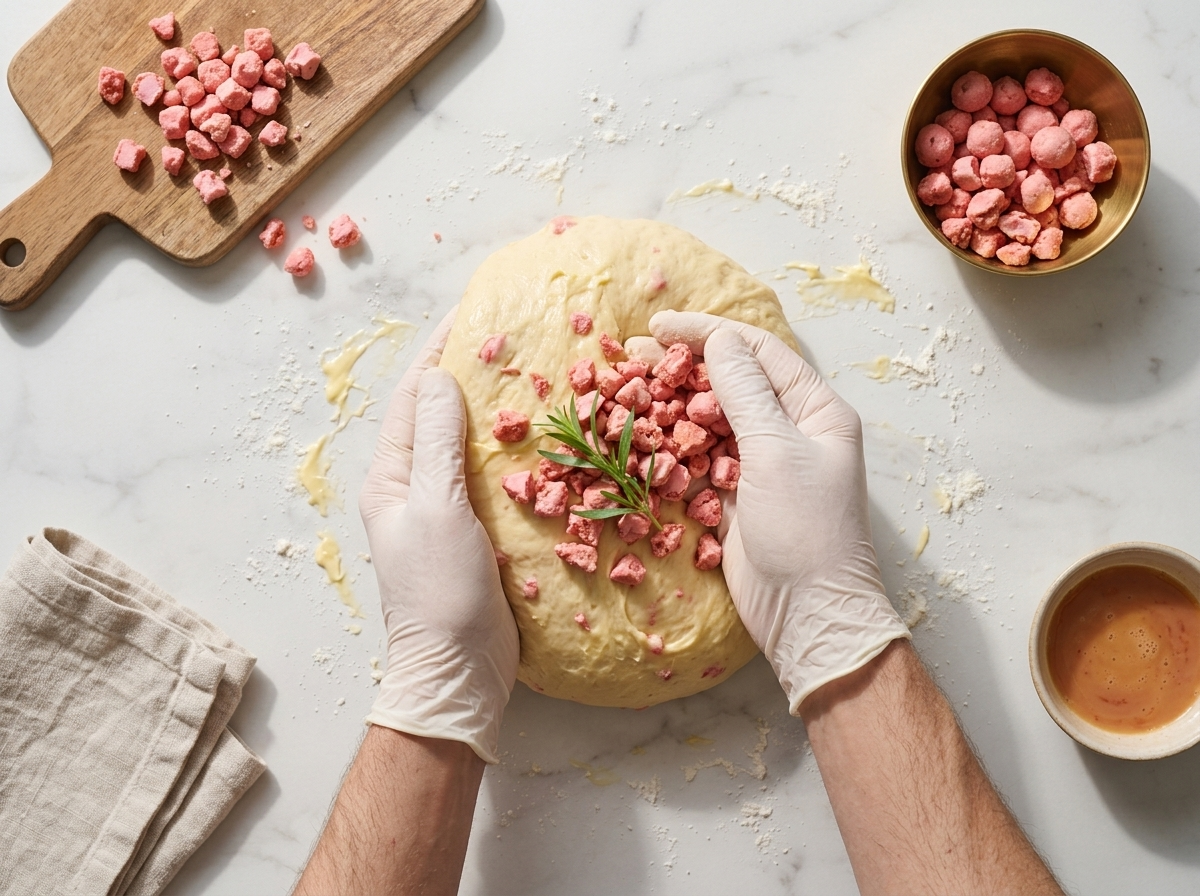
- Turn the dough onto a lightly floured surface and pat it into a rough rectangle. Scatter the chopped pralines over the top.
- Fold the dough over itself a few times by hand to distribute the pralines evenly, working gently so you don't crush the pieces into dust.
- Shape the dough into a ball and place it in a buttered 23 cm / 9-inch round cake pan. Cover loosely and let rise 45 to 60 minutes, until puffy and nearly doubled.
- Heat the oven to 180C / 350F. Whisk the egg yolk with 1 tbsp milk and brush it over the top of the loaf.
- Sprinkle the pearl sugar over the top if using. Bake for 35 to 40 minutes, tenting loosely with foil after 20 minutes if the top is browning too fast.
- Bake until the internal temperature reaches 190F / 88C and the crust is deep golden brown. The loaf should sound hollow when tapped on the bottom.
- Cool in the pan for 10 minutes, then transfer to a wire rack. Let cool at least 30 minutes before slicing, the melted praline sugar stays very hot.
Notes
- Knead butter in gradually, rushing this step leaves a greasy, dense crumb.
- Use a stand mixer if you have one, this dough is sticky and slow to knead by hand.
- Room temperature ingredients incorporate faster, pull eggs and butter out 30 minutes ahead.
- Fold pralines in gently with your hands, not the mixer, to keep pieces intact.
Tips for Success
- Warm the milk to about 100F/38C before mixing, hot milk kills the yeast and cold milk slows the rise.
- Add the softened butter in small batches, waiting for each piece to absorb before adding more, or the dough turns greasy.
- Chop the pralines into pea to chickpea sized pieces, too fine and the pink sugar melts completely into the crumb.
- Let the shaped dough rise until it looks puffy and jiggles slightly when nudged, that’s the sign it’s ready to bake.
- Cool the loaf at least 30 minutes before slicing, the melted praline sugar stays scalding hot right out of the oven.
Variations
- Swap half the pink pralines for chopped dark chocolate to balance the sweetness with a bittersweet edge.
- Braid the dough into two smaller loaves instead of one round loaf for a bakery-style presentation and shorter baking time.
- Add a teaspoon of orange blossom water to the dough for a floral note common in French brioche bakeries.
Storage and Reheating
Brioche praluline keeps at room temperature in an airtight container or bag for 2 to 3 days, the crust softens slightly but the crumb stays moist. For longer storage, wrap the whole loaf or individual slices tightly and freeze for up to 2 months.
To refresh a slice, warm it in a 150C / 300F oven for 5 to 7 minutes, or in a toaster oven until the crust crisps back up. A few seconds in the microwave works if you just want it soft and warm, though the crust won’t stay crisp.
Serving Suggestions
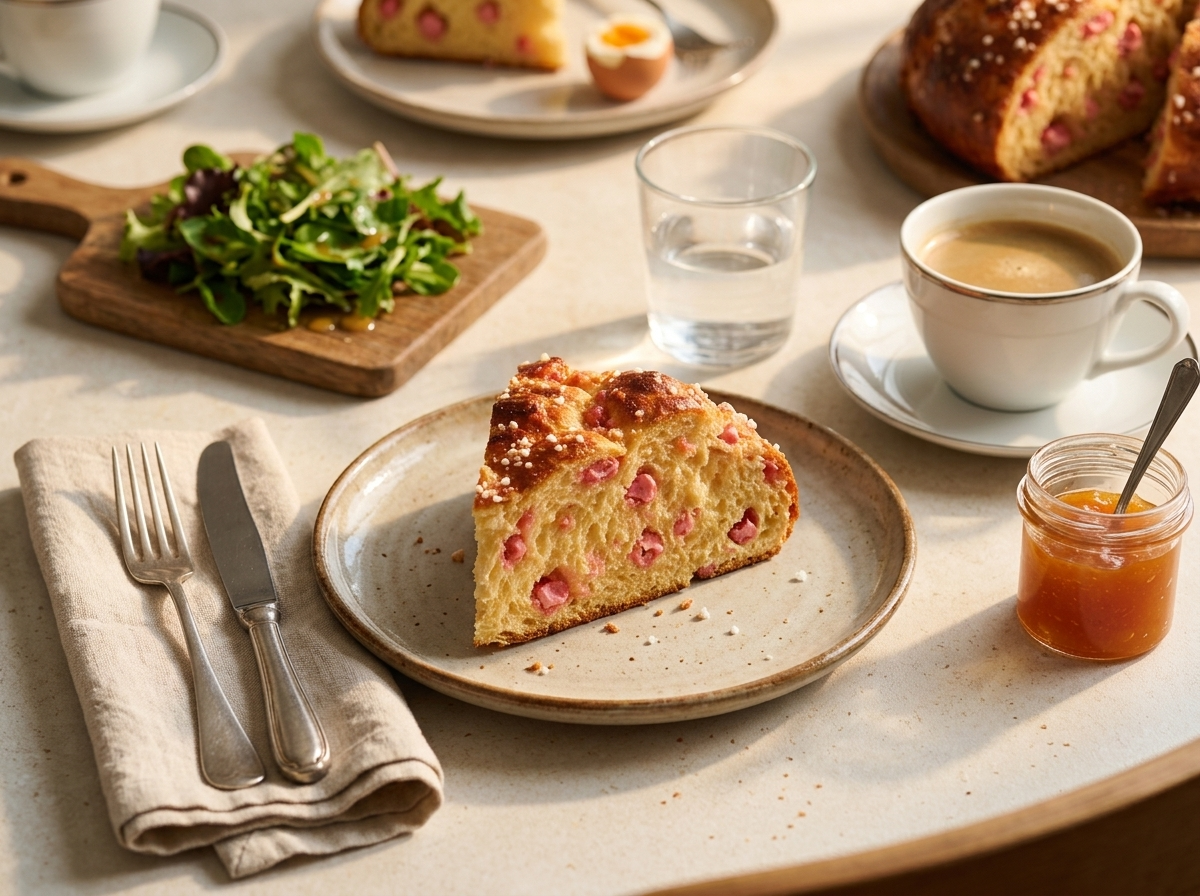
Serve brioche praluline slightly warm with strong coffee or hot chocolate, the caramelized praline pockets soften just enough to turn sticky again. A thin spread of salted butter on a toasted slice makes a solid breakfast.
For brunch, set it out alongside fresh berries or a bowl of yogurt to cut the richness. It also works as a simple dessert on its own, no extra topping needed.
FAQ
How do I know when my brioche praluline is fully baked?
Check for an internal temperature of 190F/88C using an instant-read thermometer inserted into the center. The crust should be deep golden brown and the loaf should sound hollow when tapped on the bottom. If the top browns too fast before the center is done, tent it loosely with foil around the 20-minute mark.
Can I substitute regular pralines for pink Lyon pralines?
Yes, plain caramelized almond pralines work, though you’ll lose the signature rose color that makes this bread recognizable. Look for pink pralines online from French bakeries, or make your own by simmering almonds in sugar syrup with a few drops of red food coloring until they turn glassy and pink.
Can I prep the brioche praluline dough the night before baking?
Yes, after the first rise, punch the dough down, cover it tightly, and refrigerate overnight for up to 16 hours. Fold in the chopped pralines and shape the loaf the next morning, then let it come to room temperature and finish its second rise, about 45 to 60 minutes, before baking.
What goes well with brioche praluline besides coffee?
A cup of hot chocolate or a glass of cold milk both work well against the sweet, caramelized crumb. Toasted slices with a thin layer of salted butter make a good breakfast, and fresh berries on the side cut through the richness. It also holds up as a simple dessert with no extra topping needed.
Is brioche praluline gluten-free or can I make it dairy-free?
No, this recipe isn’t gluten-free since it relies on bread flour for its stretchy, enriched crumb, and gluten-free flour blends change the texture significantly. For dairy-free, plant-based butter and oat milk work as substitutes, though the dough will be slightly less rich and may need a longer knead.
What’s the difference between brioche praluline and regular brioche?
Regular brioche is a plain, buttery enriched bread, while brioche praluline folds in chunks of pink Lyon pralines, caramelized almonds coated in a hard rose-colored sugar shell. Those pralines melt slightly during baking, leaving sticky, sweet pockets throughout the crumb that plain brioche doesn’t have.
You might also like
