
Jump to Recipe
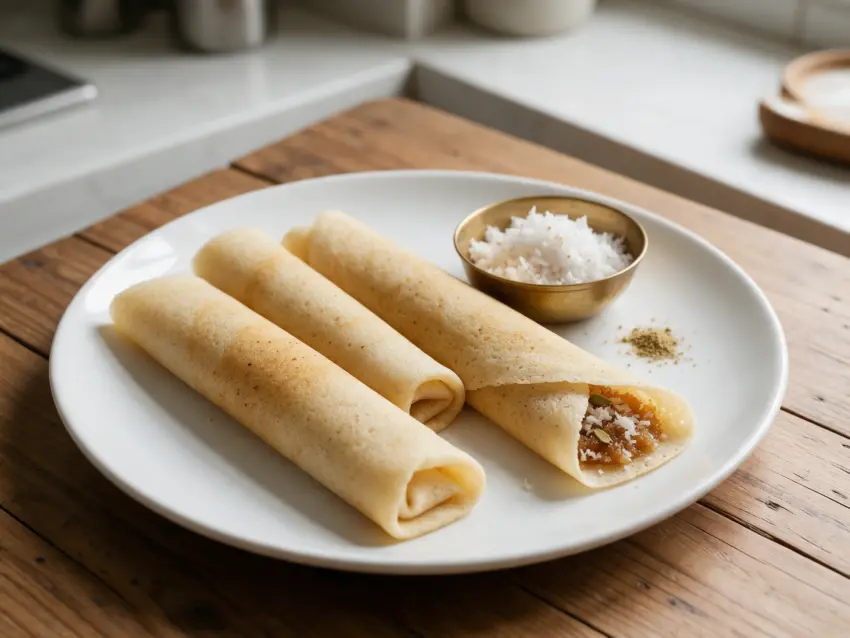
Bengali patishapta are thin crepes made from semolina, rice flour and milk, rolled around a filling of coconut cooked with jaggery. This version takes 65 minutes, including a 30-minute batter rest, and makes about 10 crepes.
There’s something about warm coconut and jaggery on a cold morning. In Bengal, patishapta show up around Poush Sankranti in mid-January, when the winter harvest is celebrated and kitchens smell of caramel and cardamom.
The crepes are soft with lightly browned edges. The filling is sticky, not wet. Nothing here needs special equipment.
One thing matters most. Keep the batter thin, like pouring cream. Thick batter makes crepes that crack when you roll them.
Why You’ll Love This Recipe
- Batter and filling both keep, so mornings stay easy
- Each thin crepe cooks in about 90 seconds
- Coconut filling stays sticky, not runny, inside the roll
- Uses pantry staples: semolina, rice flour, jaggery, milk
Ingredient Notes
- jaggery: Nolen gur (date palm jaggery) gives a caramel, slightly smoky flavor and shows up in Bengal in winter. Regular block jaggery works the rest of the year, so grate it finely so it melts fast.
- fine semolina: Look for fine sooji, not coarse rava. Coarse grains stay gritty even after the 30-minute rest.
- fresh grated coconut: Frozen grated coconut works once thawed. For desiccated coconut, use 150 g and soak it in 3 tablespoons of warm milk for 10 minutes.
- rice flour: It gives the crepes their delicate, lacy edge. Use plain white rice flour, not glutinous rice flour.
- ghee: Ghee adds a nutty smell to the filling and browns the crepe edges lightly. Coconut oil is the closest dairy-free swap.
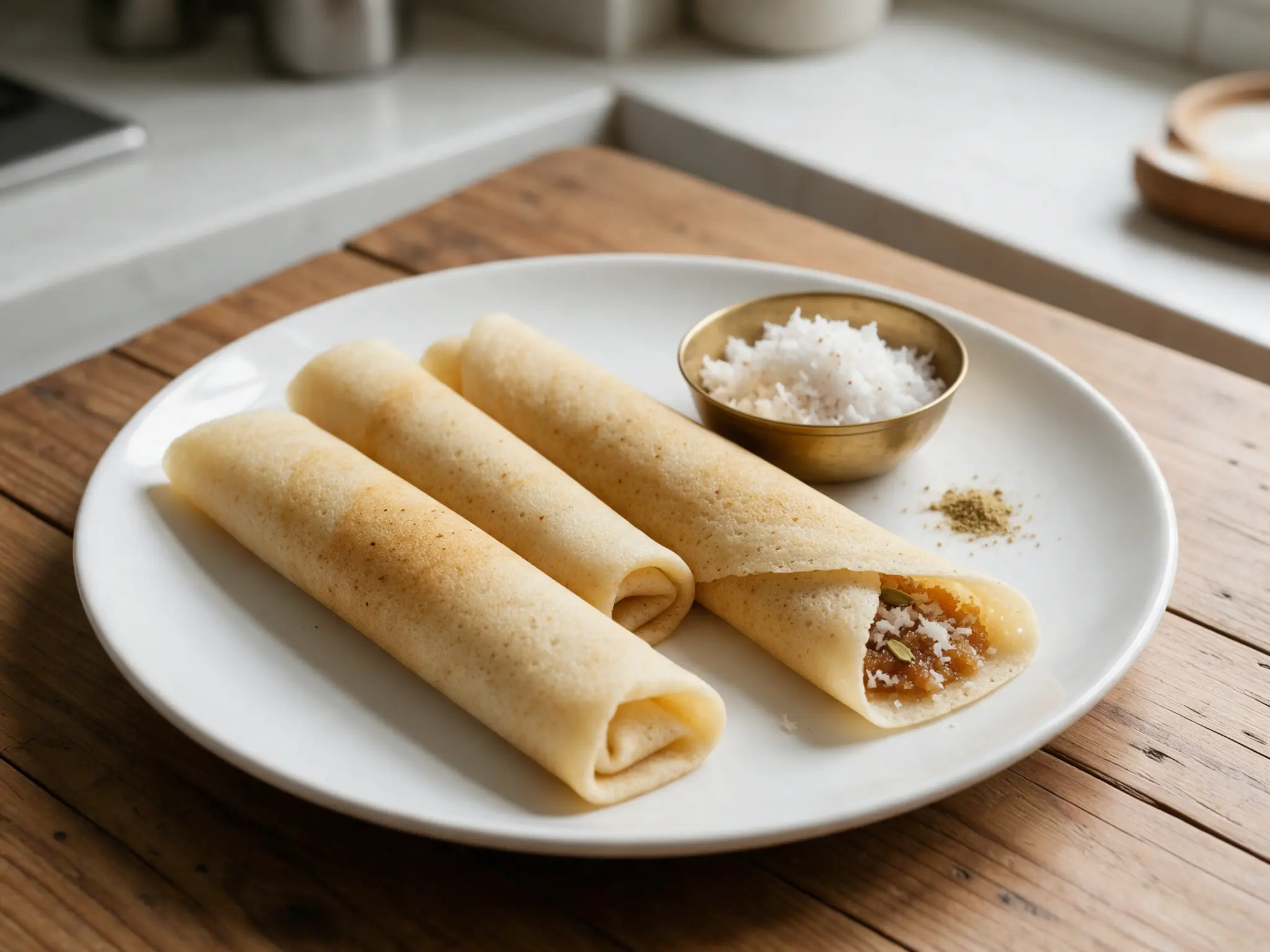
Bengali Patishapta Crepes with Coconut Jaggery Filling
Ingredients
Method
- Whisk the flour, semolina, rice flour, sugar and salt in a 2-quart / 2 L bowl. Pour in the milk and water and whisk until no lumps remain. The batter should pour like heavy cream. Cover and rest for 30 minutes so the semolina swells.
- Melt 1 tablespoon of ghee in a 1.5-quart / 1.4 L saucepan over medium-low heat. Add the grated jaggery and stir for 1 to 2 minutes until melted. Stir in the coconut, cardamom and salt.
- Cook for 6 to 8 minutes, stirring often, until the mixture turns sticky, clumps when pressed and shows no wet patches. Take it off the heat and let it cool for 5 minutes.
- Stir the rested batter. If it's thicker than heavy cream, whisk in 1 to 2 tablespoons of water. Heat a 20 cm / 8-inch nonstick skillet over medium heat for 2 minutes and brush it with a thin film of melted ghee.
- Pour in 1/4 cup / 60 ml of batter, then tilt and swirl right away to spread it into a thin round. Cook for 60 to 90 seconds, without flipping, until the top looks matte and set and the underside is pale golden with tiny brown spots.
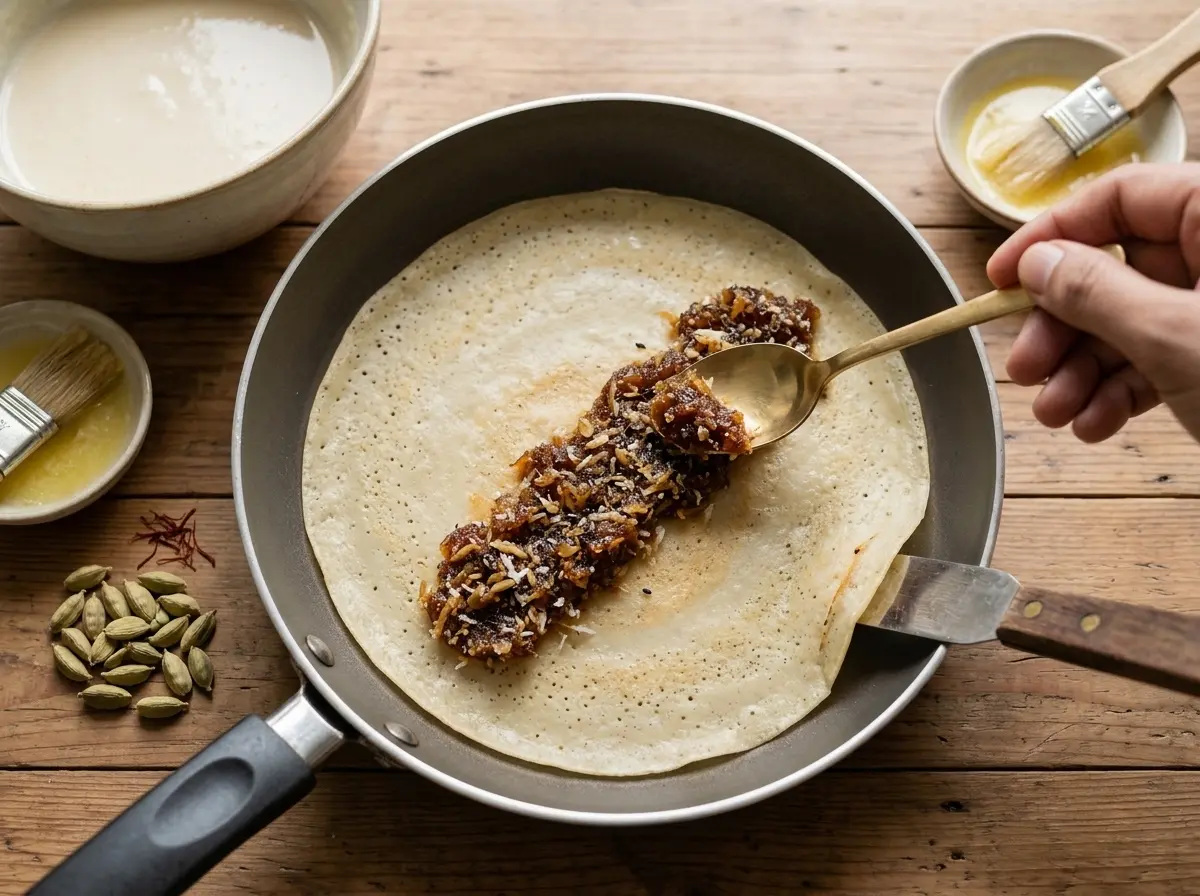
- Spoon about 2 tablespoons of filling in a line across the center. Fold in the sides, roll the crepe into a cylinder with the spatula, and hold it seam-side down for 10 to 15 seconds to seal. Slide it onto a plate.
- Repeat with the remaining batter, stirring before each pour and re-brushing the pan with ghee every second crepe. Serve warm.
Notes
- Rest the batter for 30 minutes so the semolina softens and the crepes stay tender.
- Cook the filling until it clumps, because wet filling leaks and tears the crepe.
- Stir the batter before each crepe, since semolina settles quickly.
- Use nolen gur in winter for a caramel note, and regular jaggery the rest of the year.
Tips for Success
- Stir the batter before pouring every crepe, because the semolina settles to the bottom within a minute or two.
- Cook the filling until it clumps when pressed between two fingers, since a wet filling leaks out and softens the crepe.
- Tilt and swirl the skillet the moment the batter lands, before the edges set, to get a thin, even round.
- Brush the 20 cm / 8-inch skillet with a thin film of ghee every second crepe so the surface stays lightly lacy.
- Fill and roll inside the pan while the crepe is hot, then hold it seam-side down for 10 to 15 seconds to seal.
Variations
- Fold 60 g crumbled khoya into the warm coconut filling for a fudgier, milkier center.
- Fill with 2 tablespoons of cooled, thick kheer instead of coconut for the rice pudding version made at Bengali winter festivals.
- Make it dairy free with oat milk or thinned coconut milk in the batter and coconut oil in place of ghee.
Storage and Reheating
Store filled patishapta in an airtight container in the fridge for 3 to 4 days, with a square of parchment between layers so they don’t stick. For longer storage, freeze them in a single layer, then stack with parchment and keep for up to 1 month. Thaw overnight in the fridge.
Reheat in a 20 cm / 8-inch nonstick skillet over medium-low heat for 2 to 3 minutes, turning once, until warm through and lightly crisp outside. The skillet brings back the lacy edge. A microwave works in a pinch at 20 seconds per crepe, but the crepe turns softer and chewier.
You can also work ahead in parts. Keep the batter covered in the fridge for up to 24 hours, then stir it and loosen with 2 to 3 tablespoons of water. The cooked filling keeps for 4 days in a sealed jar.
Serving Suggestions
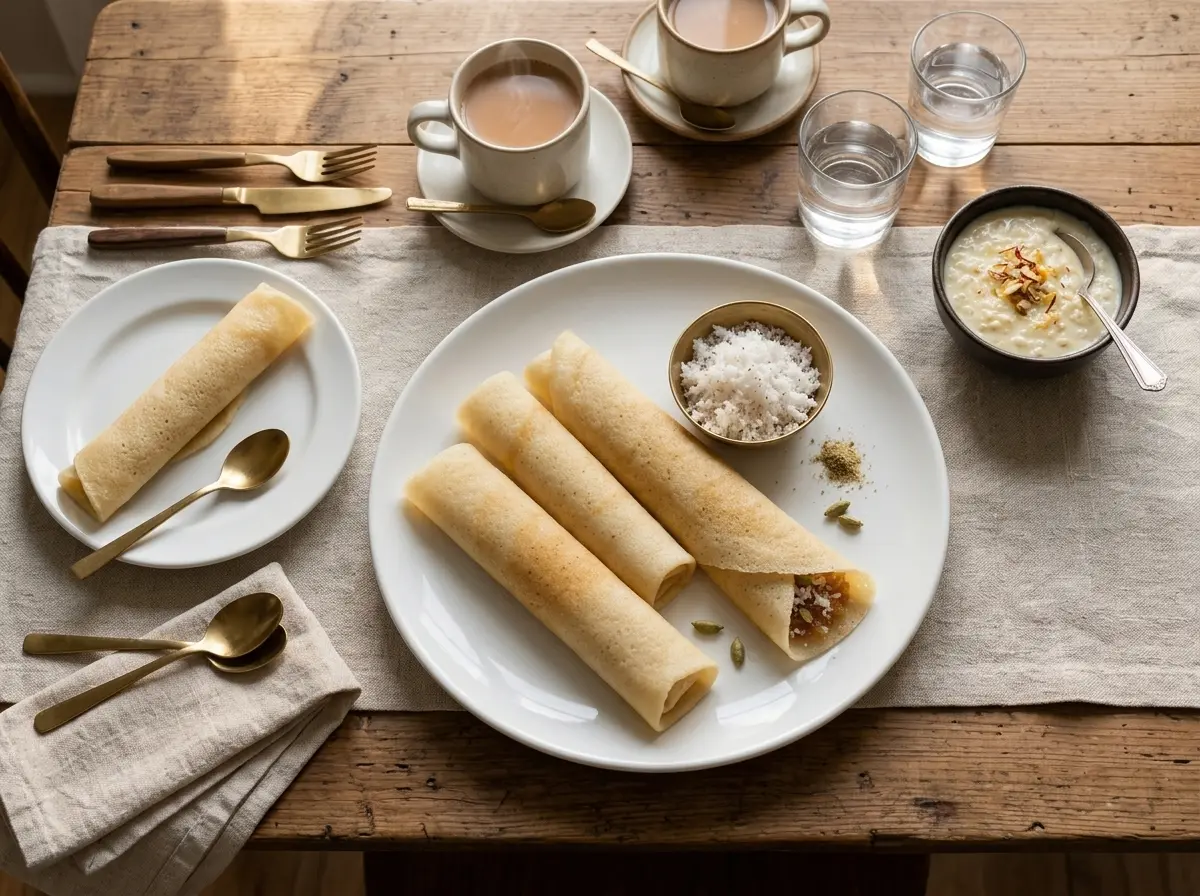
Serve patishapta warm, two per person, seam-side down on a plate. They’re best within 30 minutes of cooking, while the crepe is still soft.
A glass of hot milk tea is the classic partner. A spoon of cold kheer or thick malai on the side adds a creamy contrast to the sticky coconut.
For a Poush Sankranti spread, set them next to puli pithe or sandesh. If your filling turned out a little dry, drizzle a bit of warm nolen gur syrup over the top.
FAQ
Why do my patishapta crack or tear when I roll them?
Your batter is most likely too thick. It should pour like heavy cream, so whisk in water 1 tablespoon at a time until it does. Also roll while the crepe is hot, right in the pan, because a crepe that cools and dries on top cracks along the fold.
Can I use desiccated coconut instead of fresh in Bengali patishapta?
Yes. Use 150 g unsweetened desiccated coconut and soak it in 3 tablespoons of warm milk for 10 minutes first, so it doesn’t turn dry and gritty. Then cook it with the jaggery exactly as written. Thawed frozen grated coconut works at the full 200 g with no soaking.
Can I make the patishapta batter the night before?
Yes, cover it and refrigerate for up to 24 hours. The semolina keeps swelling, so the batter will be thicker in the morning. Stir it well and whisk in 2 to 3 tablespoons of water until it pours like heavy cream again, then cook as usual.
What goes well with patishapta besides chai?
Hot milk tea is the classic pairing, and a spoon of cold kheer or thick malai on the side adds a creamy contrast. For a festival spread, set them next to puli pithe or sandesh. A drizzle of warm nolen gur syrup helps if the filling feels dry.
How do I make patishapta dairy free?
Replace the whole milk with unsweetened oat milk or coconut milk thinned with an equal part of water, and swap the ghee for coconut oil in both the pan and the filling. Oat milk gives the closest texture. Coconut milk makes slightly richer crepes, so add 1 to 2 tablespoons of extra water if the batter looks thick.
How is patishapta different from French crepes?
Patishapta batter includes semolina and rice flour, so the crepes are slightly grainy and sturdier than a flour-and-egg crepe, and there’s no egg. They’re cooked on one side only, then filled and rolled right in the pan. The filling is always sweet, usually coconut and jaggery.
Loved this? Try these next
