
Jump to Recipe
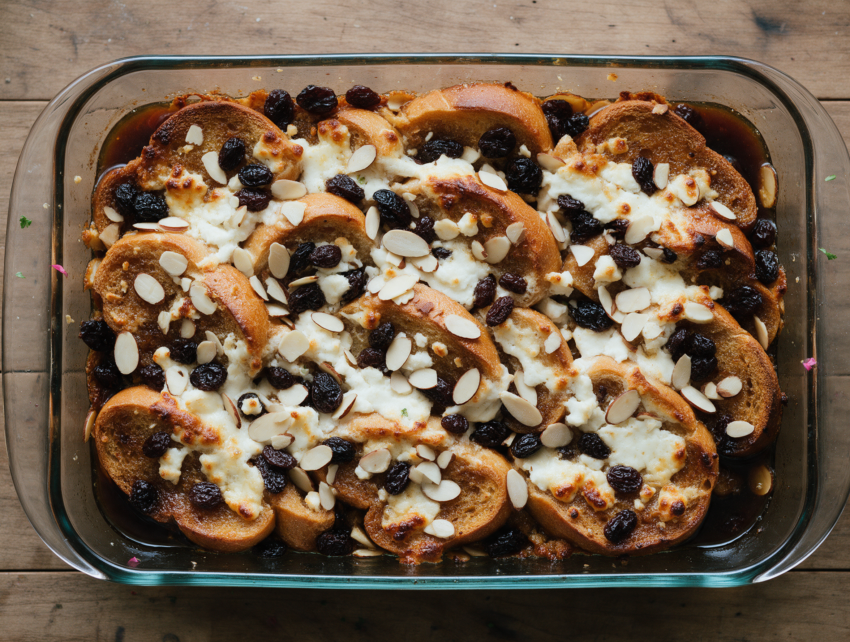
There’s something about Mexican capirotada that smells like Lent at my abuela’s stove before it even hits the oven. Cinnamon and cloves simmer in piloncillo syrup while bread fries in butter until golden at the edges.
This baked bread pudding layers toasted bolillo rolls with that spiced syrup, raisins, almonds, and melted queso fresco. It’s sweet, a little salty from the cheese, and nothing like the custard-style bread puddings found elsewhere.
I make mine the way my mom did: dry the bread first, fry it in butter, then let it drink up the syrup before it goes in the oven. No eggs, no cream. Just bread doing what bread does best when it’s given something worth soaking up.
This version keeps the classic layers of fruit, nuts, and cheese. Follow it once and you’ll see why it’s still made every spring in kitchens across Mexico.
Why You’ll Love This Recipe
- No custard to fuss over, just bread soaking up spiced syrup
- Sweet-salty balance from the queso fresco layers
- Can be assembled a day ahead and baked fresh
- Ties back to real Lenten tradition, not just a dessert
Ingredient Notes
- bolillo rolls: Use day-old rolls if you have them. Fresh telera or a crusty baguette works too, just toast it a little longer.
- piloncillo: Swap in 1 1/2 cups packed dark brown sugar if you can’t find piloncillo cones. The flavor is slightly less molasses-forward but close.
- queso fresco: Crumbly and mild. Shredded Monterey Jack melts more if you want a gooier top layer.
- Mexican cinnamon (canela): Softer and sweeter than cassia cinnamon sticks. Regular cinnamon sticks work in a pinch.
- banana: A traditional addition in many home versions. Leave it out if you want a firmer texture.
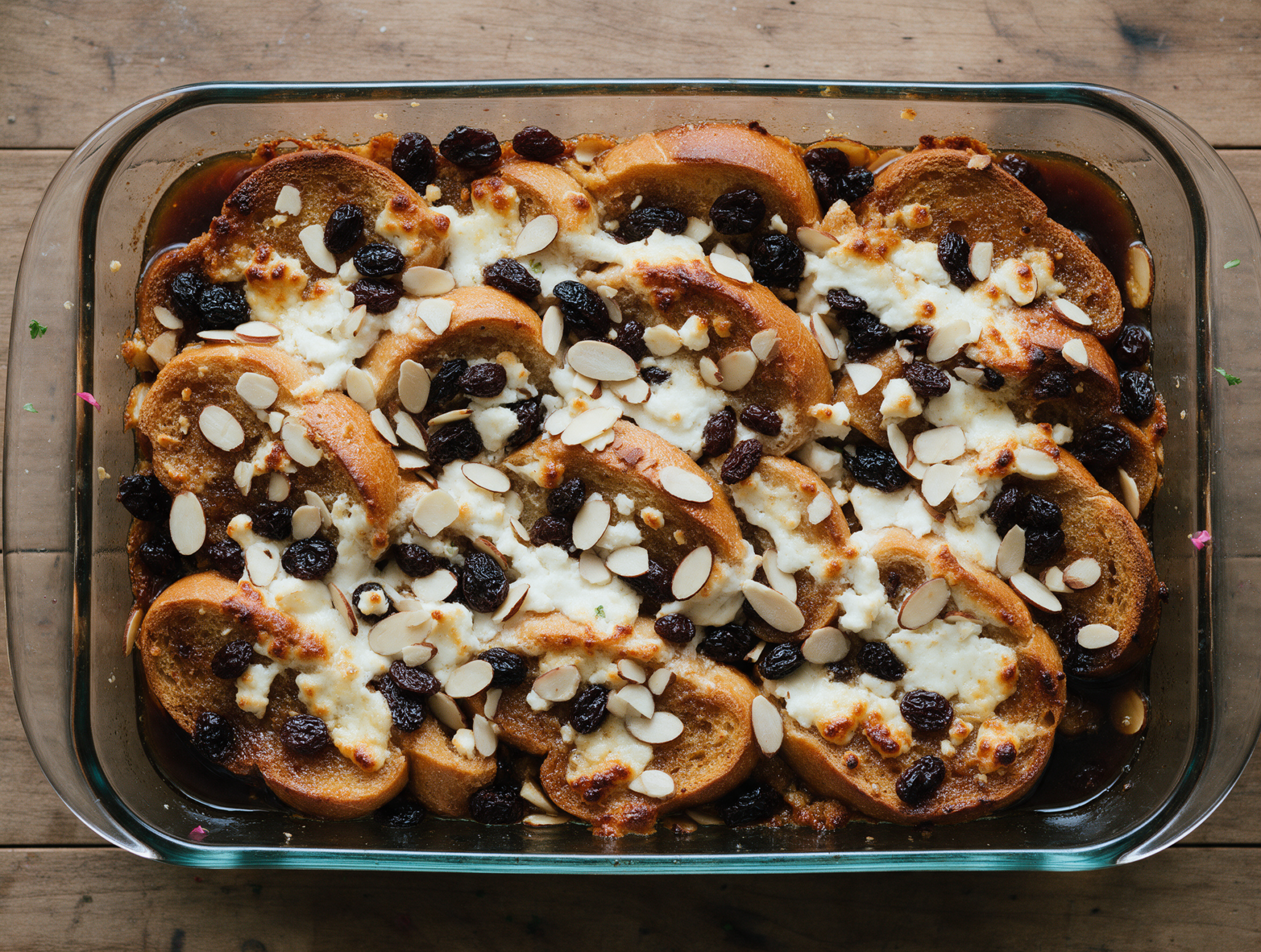
Baked Mexican Capirotada with Piloncillo and Cheese
Ingredients
Method
- Heat the oven to 175 C / 350 F. Butter a 23 x 33 cm / 9 x 13-inch baking dish.
- Combine the piloncillo, water, cinnamon sticks, cloves, and salt in a 2-quart / 1.9 L saucepan. Simmer over medium heat for 12 to 15 minutes, stirring occasionally, until the syrup coats the back of a spoon and the piloncillo has fully dissolved. Strain out the cinnamon sticks and cloves.
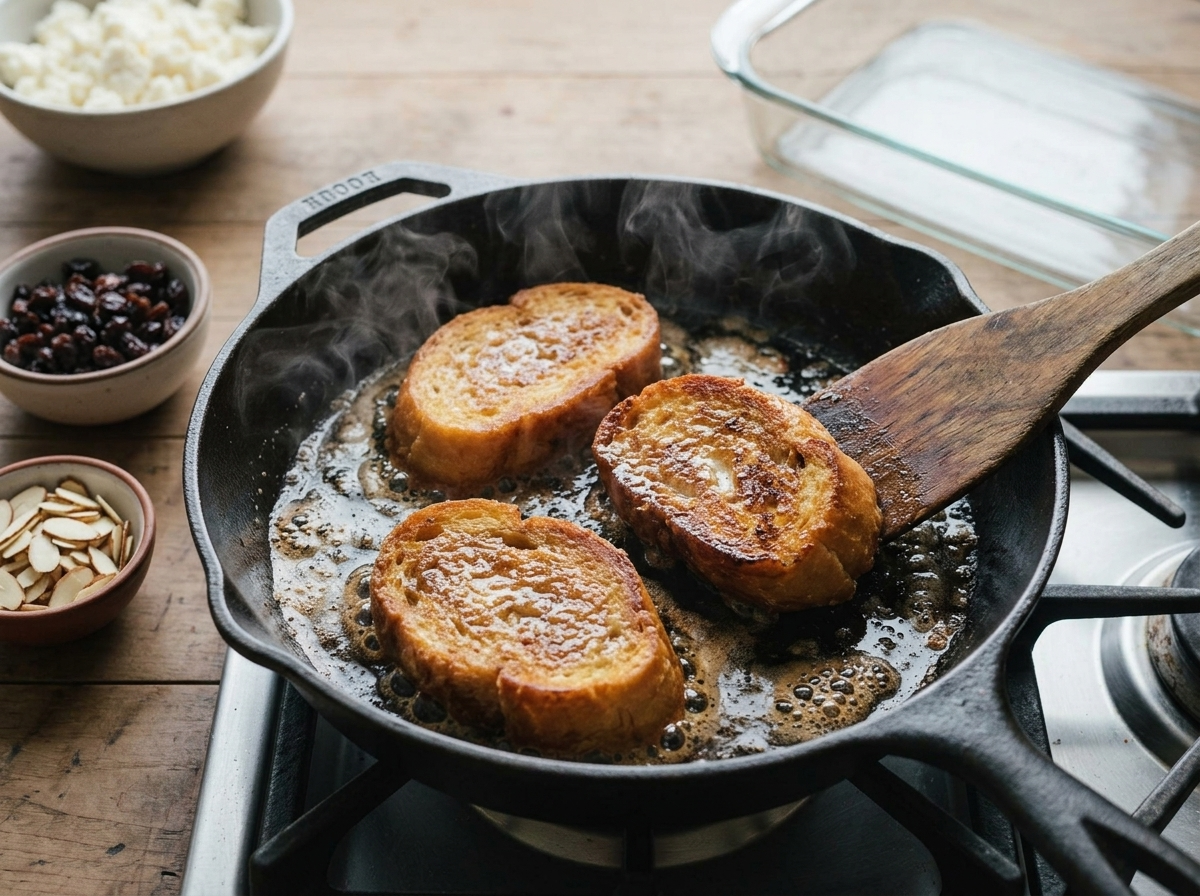
- Melt the butter in a 30 cm / 12-inch skillet over medium heat. Slice the bolillo rolls and fry the slices in two batches, about 2 minutes per side, until golden and crisp at the edges. Don't crowd the pan or the bread will steam instead of crisping.
- Arrange half the fried bolillo rolls in the prepared baking dish. Scatter over half the raisins, almonds, banana slices, and queso fresco.
- Repeat with the remaining bolillo rolls, raisins, almonds, banana, and cheese.
- Pour the warm syrup evenly over the layers, pressing down gently with a spoon so the bread soaks it up. Let it sit for 10 minutes before baking.
- Cover the dish tightly with foil and bake for 20 minutes.
- Uncover and bake for another 10 to 12 minutes, until the cheese has melted and the edges are bubbling and lightly browned.
- Cool for 10 minutes before serving warm, straight from the dish.
Notes
- Use stale or toasted bread. Fresh soft bread turns mushy once the syrup goes on.
- Strain the syrup before pouring to catch loose cinnamon and clove pieces.
- Bake covered first to keep the bread moist, then uncover to brown the cheese.
- Don't skip the rest time. Capirotada slices cleaner after 10 minutes off the heat.
Tips for Success
- Use day-old bread so it holds its shape once it’s soaked instead of turning to mush.
- Fry the bread in two batches so each slice touches the butter and browns instead of steaming.
- Simmer the syrup until it coats the back of a spoon, about 15 minutes, so the layers aren’t watery.
- Press each layer gently after pouring the syrup so the bread absorbs it evenly all the way down.
- Let the baked dish rest 10 minutes before serving so it slices cleanly instead of falling apart.
Variations
- Add sliced banana and chopped peanuts between the layers for the northern Mexico style version of this dish.
- Swap queso fresco for shredded Monterey Jack if you want a meltier, stretchier cheese layer on top.
- Stir a splash of dark rum or sherry into the syrup for a boozy version served at holiday gatherings.
Storage and Reheating
Capirotada keeps well in the fridge for 3 to 4 days in an airtight container once it’s cooled. The syrup firms up as it chills, which actually makes it easier to slice into neat squares.
Reheat individual portions in the microwave for 60 to 90 seconds, or warm the whole dish covered in a 160 C / 325 F oven for about 15 minutes. It comes out just as soft as fresh, with the cheese melting again on top.
Serving Suggestions
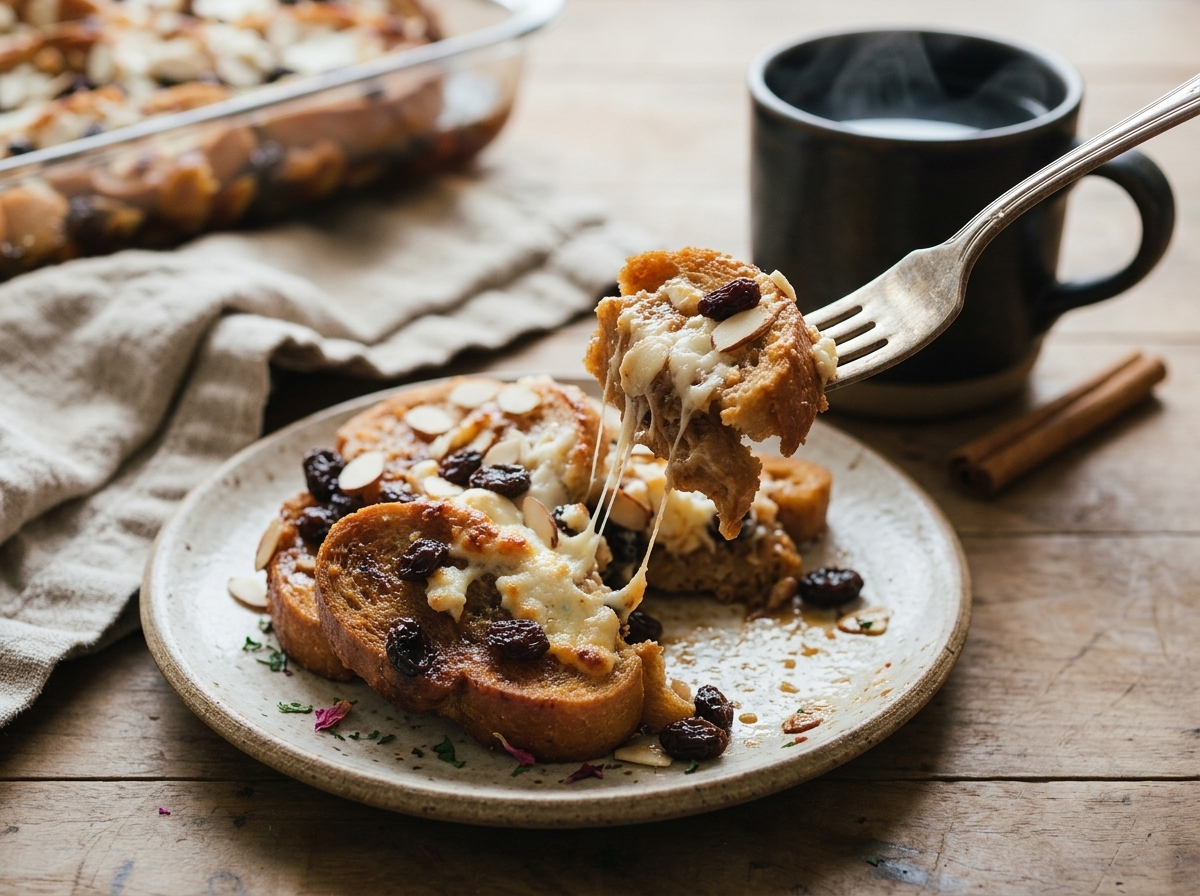
Serve capirotada warm, straight from the dish, with a drizzle of Mexican crema or a scoop of vanilla ice cream on the side. The cold cream against the warm syrup is worth doing at least once.
It shows up at breakfast in a lot of Mexican homes during Lent, usually next to a mug of coffee or champurrado. A dusting of extra ground cinnamon on top is never a bad idea.
FAQ
Why is my capirotada soggy instead of holding its shape?
Soggy capirotada usually means the bread wasn’t dry enough before it hit the syrup. Fresh, soft bread falls apart once it’s soaked, so use day-old bolillo or toast fresh slices first. Frying the bread in butter until golden also helps it hold together once the piloncillo syrup goes on.
Can I use dark brown sugar instead of piloncillo?
Yes, dark brown sugar works as a substitute for piloncillo in this capirotada. Use about 1 1/2 cups packed dark brown sugar in place of the 300 g piloncillo, and simmer it the same way with the cinnamon and cloves. The syrup tastes slightly less molasses-forward but still works well.
Can I assemble capirotada the night before baking?
Yes, you can layer the bread, fruit, nuts, and cheese in the baking dish and refrigerate it, covered, up to a day ahead. Pour the warm syrup over just before baking so the bread doesn’t turn mushy overnight. Bake straight from the fridge, adding a few extra minutes covered.
What goes well with Mexican capirotada?
Mexican capirotada pairs well with a drizzle of Mexican crema or a scoop of vanilla ice cream to balance the sweetness. Serve it alongside coffee, champurrado, or hot chocolate for a Lenten breakfast tradition. A little extra cinnamon on top never hurts either.
Is capirotada gluten free?
No, traditional capirotada isn’t gluten free since it’s built on bolillo rolls, a wheat bread. You could try a gluten-free crusty roll toasted the same way, though the texture and soak time will differ from the original. The syrup, fruit, and cheese layers are naturally gluten free on their own.
What’s the difference between capirotada and regular bread pudding?
Capirotada skips the egg custard base that defines most bread puddings and instead soaks fried bread in a spiced piloncillo syrup. It also layers in raisins, almonds, and melted queso fresco for a sweet-salty contrast similar to French Tourteau Fromager. It’s traditionally made during Lent in Mexico, much like Naples’ Easter tart, tied to symbolism in the ingredients themselves.
More from the kitchen
- this Bonet Piemontese: Baked Chocolate Amaretti Pudding
- this Classic Eve’s Pudding with Baked Apple Sponge
- our Malvern Pudding: Spiced Baked Apples with Crumb Topping
