
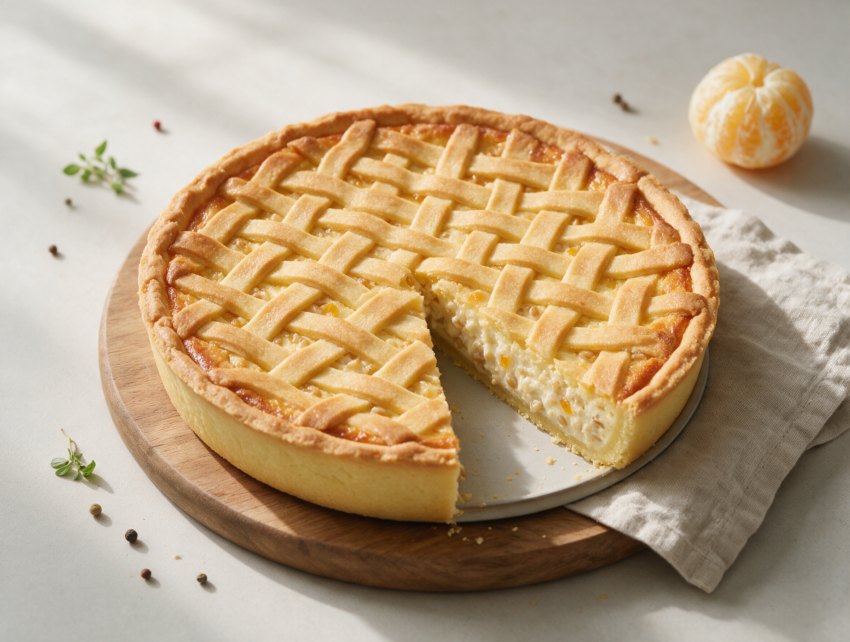
Jump to Recipe
There’s something about pastiera napoletana that feels like more than dessert. It’s the tart Neapolitan families bake days before Easter, not the morning of, because it needs time to sit.
I first had a slice at a bakery near the Spanish Quarter in Naples, still slightly cool from an overnight rest. The wheat berries gave it a chew I didn’t expect. The orange blossom water hit a few seconds after the ricotta.
This version uses jarred cooked wheat, called grano cotto, which is what most home cooks reach for anyway. It’s baked in a lemony pasta frolla shell, filled with sweetened ricotta and candied citrus, and topped with a simple lattice.
Give it the overnight rest before slicing. That’s not optional advice, it’s the difference between a good pastiera and one that actually tastes like Naples.
Why You’ll Love This Recipe
- Tastes better the longer it rests, ideal for planning ahead
- Wheat berries give the filling a chew custard tarts don’t have
- One tart feeds a crowd for Easter lunch
- Crust and filling steps can be split across two days
Ingredient Notes
- cooked wheat berries (grano cotto): Sold jarred in Italian grocery stores around Easter. If you can’t find it, simmer 150g dried wheat berries in water for about 2 hours until soft.
- ricotta: Use fresh, well-drained ricotta, ideally sheep’s milk if you can find it. Regular tub ricotta works too but needs an overnight drain in a sieve.
- candied citrus peel: A mix of candied orange and citron is traditional. Candied orange peel alone works fine if citron isn’t available.
- orange blossom water: This is what makes pastiera taste like pastiera, not vanilla custard. Find it at Middle Eastern grocers or online, don’t sub vanilla extract.
- lemon zest: Zest only the yellow part of the peel. The white pith underneath turns bitter.
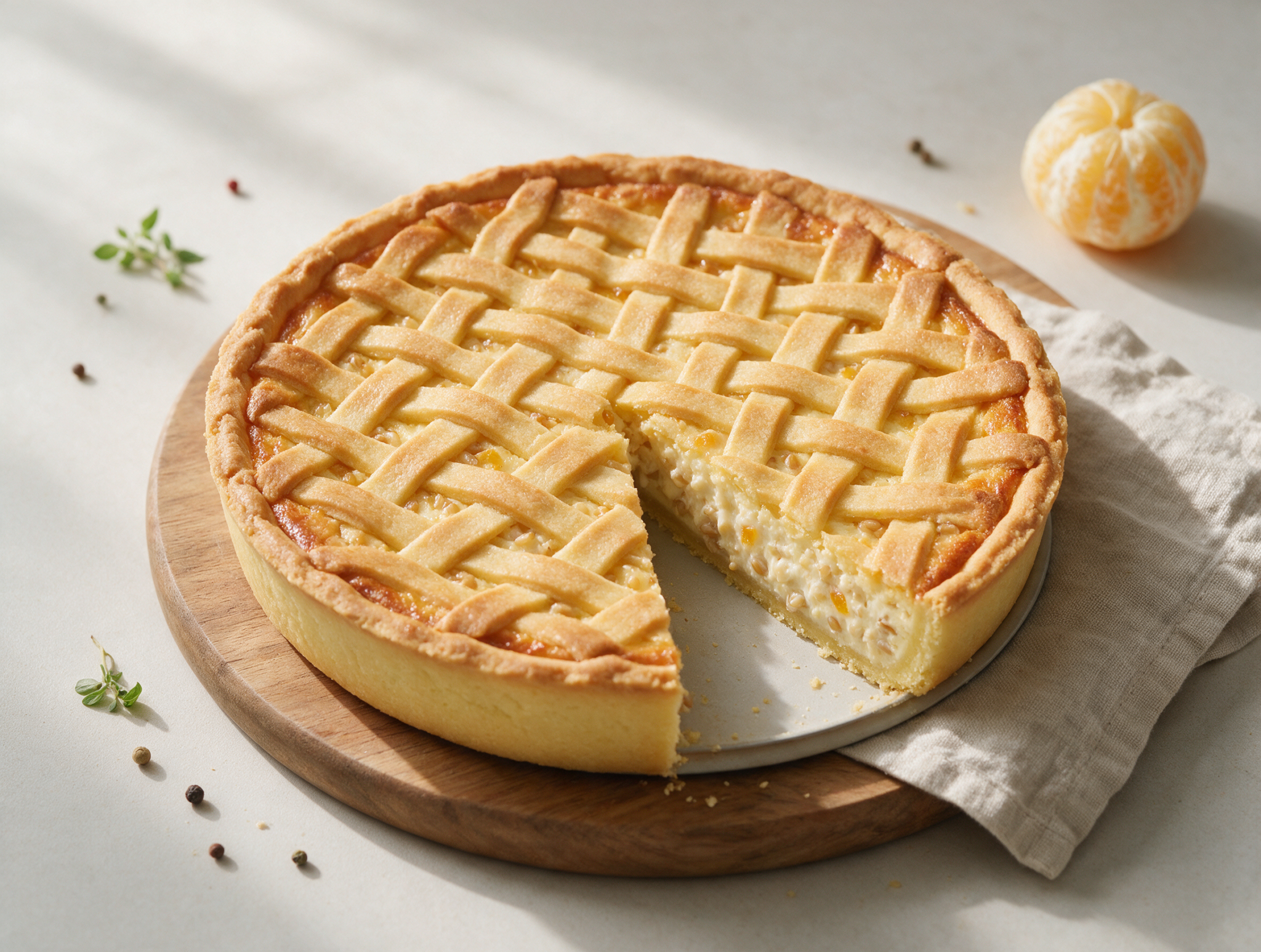
Pastiera Napoletana: Naples’ Traditional Easter Tart
Ingredients
Method
- In a large bowl, whisk together the flour, sugar, lemon zest and a pinch of salt. Add the cold butter and rub it in with your fingertips until the mixture looks like coarse crumbs.
- Make a well in the center and add the egg yolks and whole egg. Mix with a fork, then bring the dough together with your hands. Don't overwork it or the crust will turn tough.
- Flatten the dough into a disk, wrap it, and chill for 40 minutes.
- While the dough chills, combine the cooked wheat berries, milk, 20g butter and lemon zest in a 2-quart / 1.9L saucepan. Simmer over low heat for 10 to 12 minutes, stirring often, until thick and creamy like porridge. Cool to room temperature.
- In a large bowl, beat the drained ricotta with 200g sugar until smooth with no lumps, about 2 minutes.
- Add the eggs one at a time, beating well after each addition.
- Fold in the cooled wheat mixture, candied orange and citron peel, orange blossom water, cinnamon and a pinch of salt until evenly combined.
- Heat the oven to 170 C / 340 F. Grease a 25 cm / 10-inch springform or tart pan.
- Roll out two-thirds of the dough on a lightly floured surface to about 4mm thick. Line the pan, pressing it up the sides, and trim the excess.
- Pour in the ricotta filling and smooth the top.
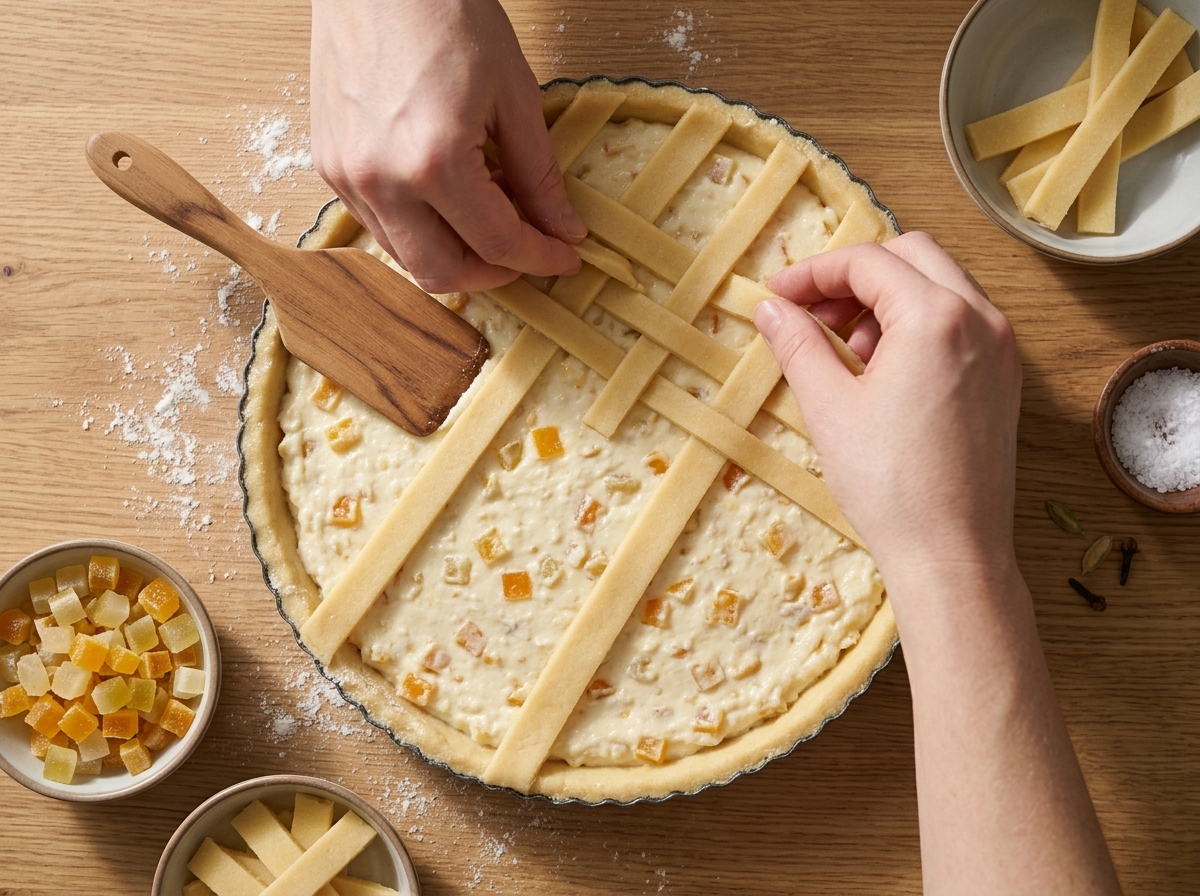
- Roll the remaining dough and cut into 8 to 10 strips about 1.5cm wide. Lay them across the filling in a lattice pattern, pressing the ends into the crust edge.
- Bake for 60 to 65 minutes, until the lattice is deep golden and the center looks set with just a slight jiggle, similar to a baked cheesecake.
- Cool completely in the pan on a rack, at least 3 hours, before unmolding. For the best flavor, let it sit at room temperature overnight before slicing.
Notes
- Drain ricotta overnight for a filling that isn't watery.
- Chill pastry dough a full 40 minutes before rolling.
- Rest the baked tart at room temp overnight before slicing.
- Use grano cotto if available, it saves hours of cooking wheat berries.
Tips for Success
- Drain the ricotta overnight in a sieve lined with cheesecloth so the filling isn’t watery.
- Don’t skip the dough chill, a warm dough will slump down the sides while baking.
- Use fresh sheep’s milk ricotta if you can find it, it holds shape better than tub ricotta.
- Space the lattice strips evenly and press the ends into the crust edge so they don’t lift.
- Let the tart cool completely before cutting or the center will still look loose.
Variations
- Swap half the candied citrus for chopped dark chocolate, a version some Neapolitan bakeries sell around Easter.
- Use whole wheat pastry flour in the crust for a nuttier, more rustic base.
- Add a tablespoon of orange zest along with the lemon for a brighter citrus note in the filling.
Storage and Reheating
Pastiera keeps at room temperature, loosely covered, for up to 2 days, and that’s actually when it tastes best. After that, move it to the fridge, covered, where it holds for 4 to 5 days.
There’s no real reheating step here. Pastiera is served at room temperature or just barely cool from the fridge, and warming it in the microwave will turn the ricotta filling grainy.
If you’ve refrigerated it, pull the tart out about an hour before serving so it comes back to room temp and the crust softens slightly.
Serving Suggestions
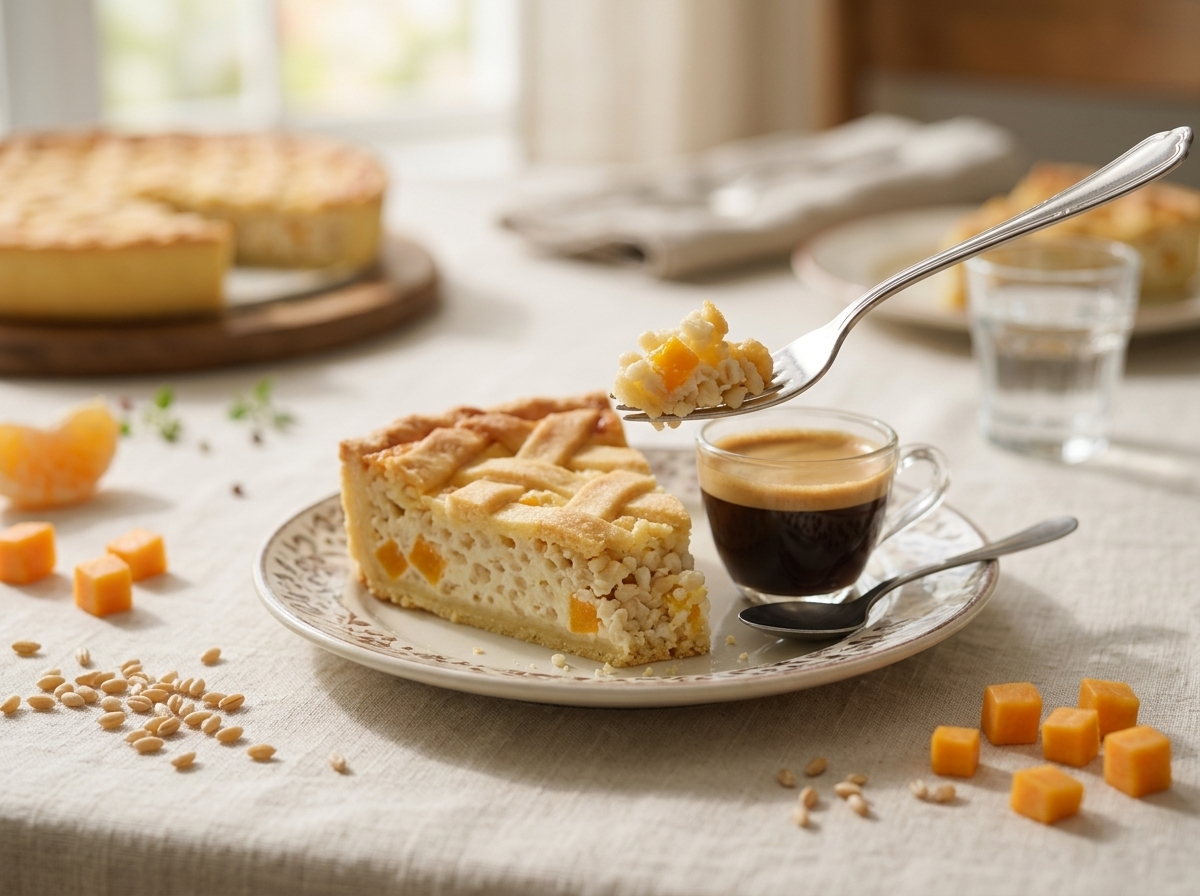
In Naples, pastiera shows up on the Easter table alongside coffee, as the centerpiece rather than an afterthought. A small glass of limoncello or Strega on the side is traditional too.
I like a thin slice with a strong espresso in the afternoon, days after Easter, once the flavors have settled.
If you’re serving a crowd, cut it into slim wedges. It’s rich enough that a full slice is plenty.
FAQ
Why is my pastiera napoletana runny in the middle after baking?
A runny center usually means the ricotta wasn’t drained well enough or the tart came out too soon. Fresh ricotta holds a lot of water, so drain it overnight in a sieve before mixing. Bake until the top is deep golden and the center only has a slight jiggle, not a wobble.
Can I use dried wheat berries instead of jarred grano cotto?
Yes, soak 150g dried wheat berries overnight, then simmer in fresh water for about 2 hours until soft, which gives you roughly 400g cooked wheat. Jarred grano cotto, sold in Italian shops around Easter, saves that step and is what most Neapolitan home cooks use.
How long does pastiera napoletana need to rest before serving?
Pastiera tastes best after resting at room temperature for at least 24 hours, sometimes 48. The flavors from the orange blossom water and citrus settle and mellow overnight, which is why Neapolitan cooks bake it days before Easter, not the morning of.
What’s the difference between pastiera napoletana and a regular cheesecake?
Pastiera swaps cream cheese for ricotta and adds cooked wheat berries, which gives it a slightly chewy, grain-flecked texture cheesecake doesn’t have. It’s also lighter and less sweet, scented with orange blossom water and candied citrus instead of vanilla.
What goes well with a slice of pastiera napoletana?
A small glass of limoncello or a strong espresso is the classic pairing in Naples. Both cut through the richness of the ricotta and wheat filling and echo the citrus notes already baked into the tart.
Is pastiera napoletana gluten-free, and can I make it dairy-free?
No, this recipe isn’t gluten-free since it relies on wheat berries and a flour-based pastry crust, and there’s no reliable swap that keeps the texture intact. It’s not dairy-free either, since the filling depends on ricotta and butter for its custardy texture.
Loved this? Try these next
