
Jump to Recipe
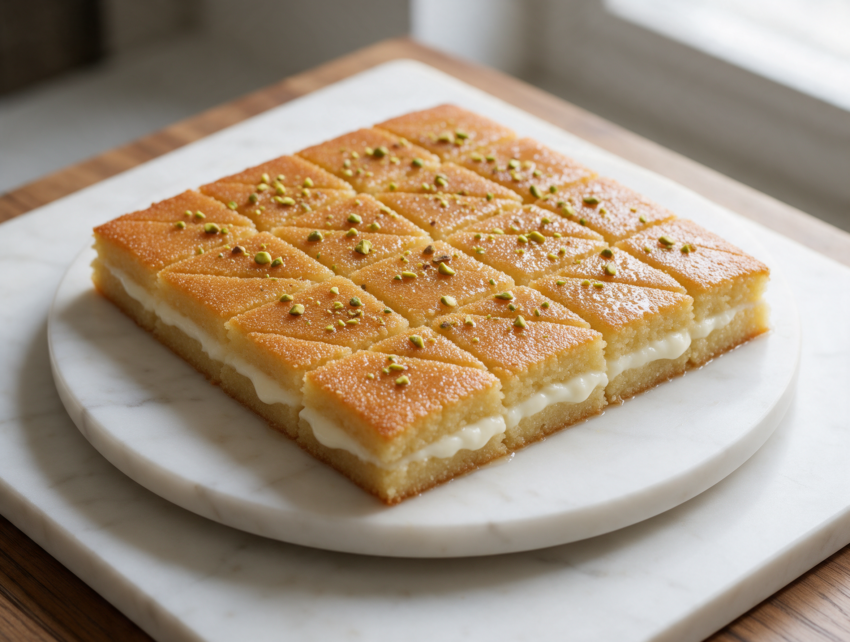
There’s something about a pan of madlouka cooling on the counter that stops me every time. The smell of rosewater and toasted semolina fills the kitchen before the first slice ever gets cut.
Madlouka is a Lebanese semolina cake baked in two layers with a silky ashta cream tucked in the middle, then soaked in orange blossom syrup while it’s still hot from the oven. It’s a cousin to basbousa, but the cream filling makes it richer and a little more special-occasion.
I first had it at a friend’s house in Beirut, served in small diamond-cut pieces with strong coffee. The top was golden and slightly crisp, the inside soft and damp with syrup, and that cream layer in the middle was the whole point.
This version uses a quick cornstarch-set ashta instead of the traditional clotted cream, since real ashta takes hours and most kitchens don’t have access to Lebanese buffalo milk. It sets up just as sliceable and tastes close enough that nobody’s ever noticed the swap.
Why You’ll Love This Recipe
- Two soft semolina layers with a creamy center
- Ashta filling made simple with cornstarch, no waiting
- Syrup soaks in while the cake is still hot
- Make-ahead friendly, tastes even better the next day
Ingredient Notes
- Semolina: Fine semolina gives a smoother crumb, but coarse (samid) works too and adds a slightly grainier bite.
- Yogurt: Full-fat plain yogurt keeps the batter tender. Low-fat works but the crumb comes out drier.
- Ghee: Melted unsalted butter is a fine substitute if you don’t have ghee on hand.
- Tahini: Brushed onto the pan instead of butter, this is the traditional Lebanese touch that gives the crust a nutty edge.
- Heavy cream and cornstarch: This pair mimics clotted ashta cream without the hours of simmering real ashta needs.
- Rosewater and orange blossom water: Use both if you can. If you only have one, orange blossom water is slightly milder and easier to overpour.
- Pistachios: Crush them coarsely so you still get texture on top, not just green dust.
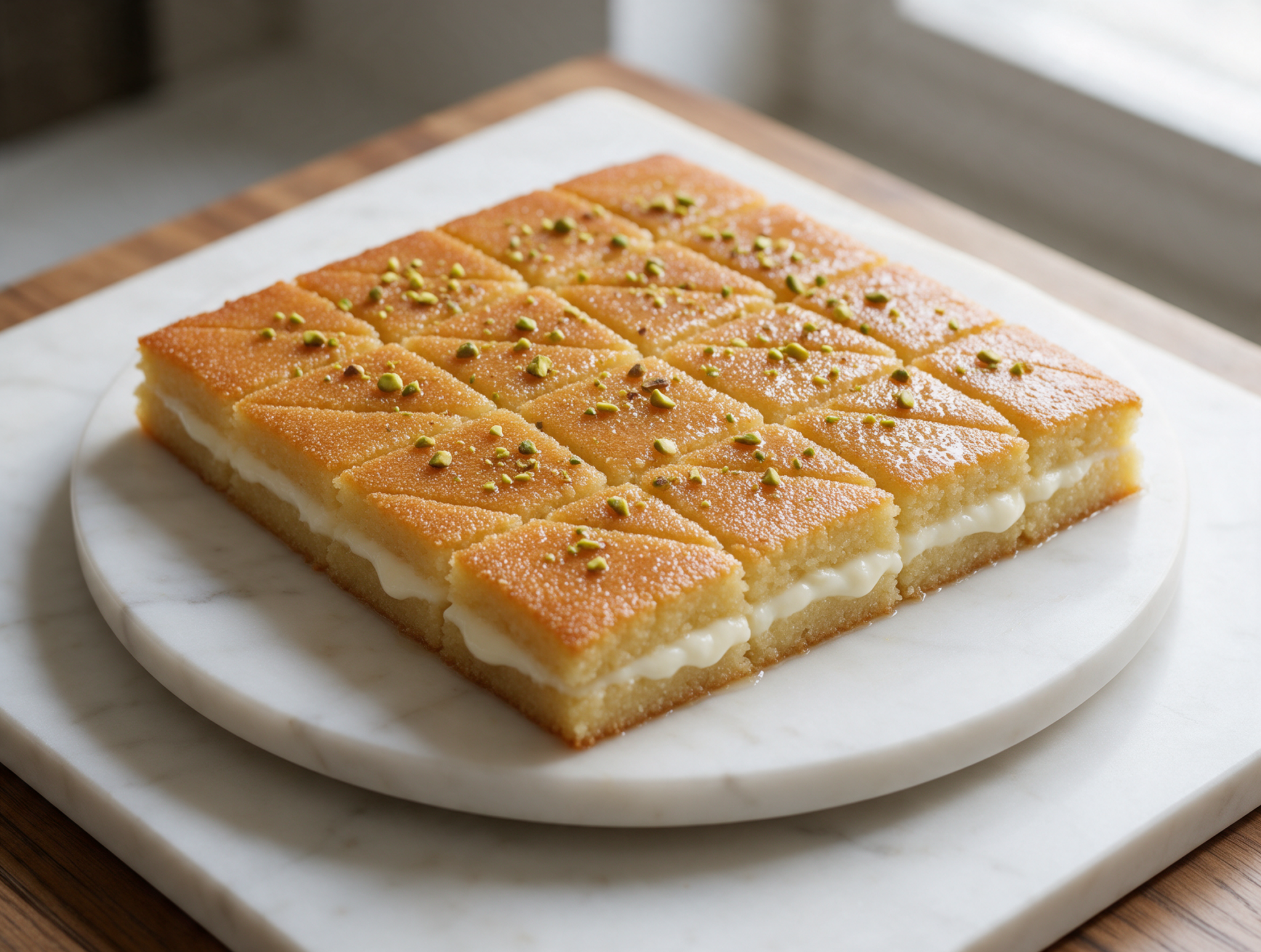
Baked Madlouka: Lebanese Semolina Cake in Syrup
Ingredients
Method
- In a 2-quart/1.9L saucepan, combine the syrup sugar, water, and lemon juice. Bring to a simmer over medium heat and cook for 8 to 10 minutes, until slightly thickened. Remove from heat, stir in the rosewater and orange blossom water, and set aside to cool completely.
- In a separate 2-quart/1.9L saucepan, whisk the milk, heavy cream, sugar, and cornstarch together while still cold. Set over medium heat and cook, whisking constantly, for 6 to 8 minutes, until the mixture thickens enough to coat the back of a spoon.
- Remove the ashta from the heat and stir in the rosewater. Pour into a shallow bowl, press plastic wrap directly onto the surface, and cool to room temperature.
- Heat the oven to 180C/350F. Brush a 23x33cm/9x13-inch baking pan generously with the tahini, coating the bottom and sides.
- In a large mixing bowl, whisk the yogurt, sugar, and melted ghee together until smooth. Add the semolina, baking powder, and salt, and stir until you have a thick, spreadable batter. Let it rest for 10 minutes.
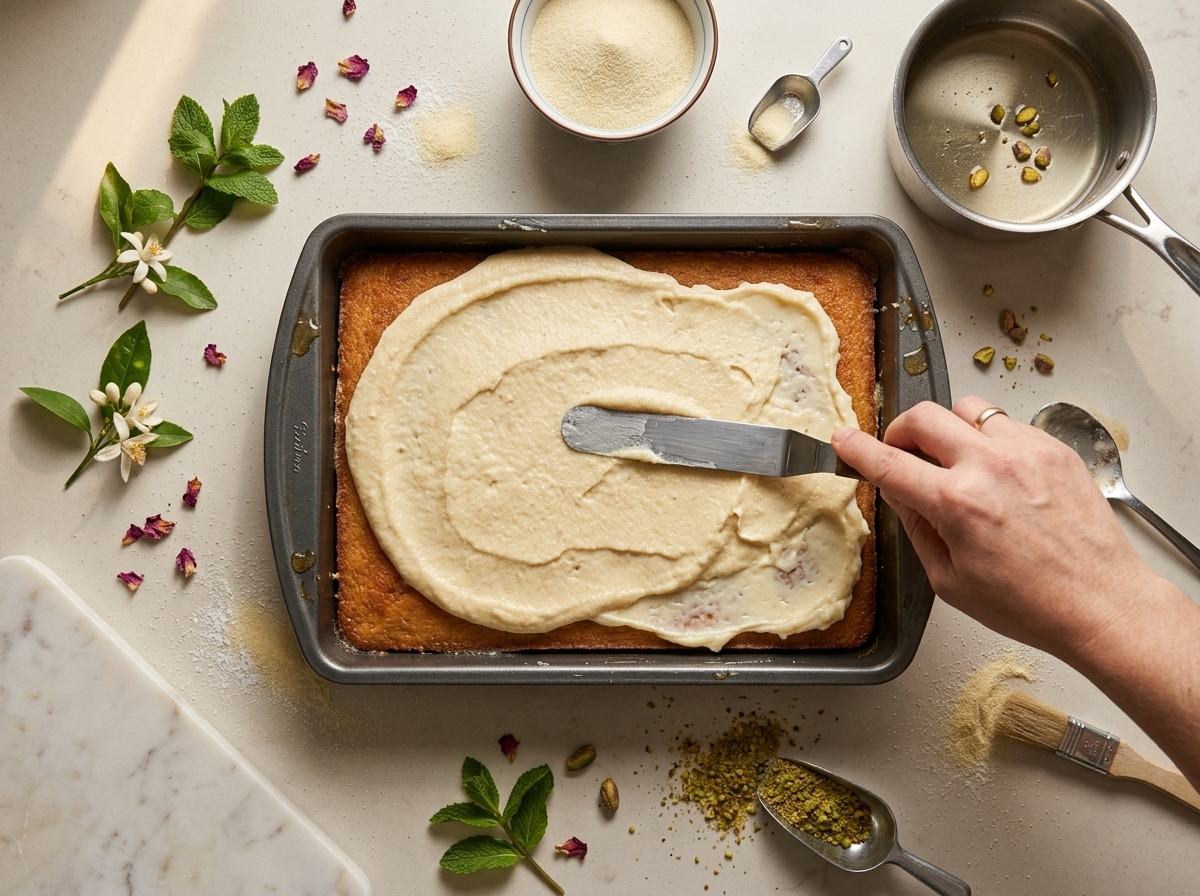
- Spread half the batter into the prepared pan in an even layer. Spoon the cooled ashta cream over the top, spreading to within 1cm/0.5-inch of the edges. Cover with the remaining batter, smoothing the top so the cream is fully sealed in.
- Score the top layer into diamonds or squares with a sharp knife, cutting only through the top layer of batter.
- Bake for 35 to 40 minutes, until the top is deep golden brown and springs back when pressed.
- Remove from the oven and immediately ladle the cooled syrup evenly over the hot cake. Let it sit for 10 to 15 minutes to soak in.
- Re-cut along the score lines and scatter the crushed pistachios over the top.
- Let the cake cool for at least 15 minutes before serving, or cool fully and serve at room temperature.
Notes
- Cool the ashta completely before spreading, warm cream melts into the batter.
- Pour cooled syrup over the hot cake, never hot syrup on a hot cake.
- Score only the top layer before baking so pieces separate cleanly after soaking.
- Coarse or fine semolina both work, coarse gives a slightly grainier bite.
Tips for Success
- Cool the syrup fully before pouring so it soaks into the semolina instead of pooling on top.
- Cook the ashta cream until it coats the back of a spoon, thin cream will leak out during baking.
- Score the top layer into diamonds before baking so the syrup soaks in evenly after.
- Brush the pan with tahini instead of butter for the nutty edge that’s traditional in Lebanese baking.
- Let the cake rest 15 minutes after soaking so the syrup settles before you cut clean pieces.
Variations
- Swap the ashta for sweetened mascarpone whisked with a splash of orange blossom water for a faster filling.
- Skip the middle layer and bake it as a single-layer basbousa-style cake if you want something quicker.
- Mix ground pistachios into the top layer of batter for a nuttier crumb and extra color.
Storage and Reheating
Madlouka keeps well covered at room temperature for 2 days, or in the fridge for up to 5 days once the syrup has soaked in fully.
Serve it at room temperature, or warm individual pieces in the microwave for 10 to 15 seconds if you like it slightly soft. Don’t cover it while warm or the top layer turns soggy from trapped steam.
I don’t recommend freezing this one. The ashta cream separates a little once thawed and the texture never fully bounces back.
Serving Suggestions
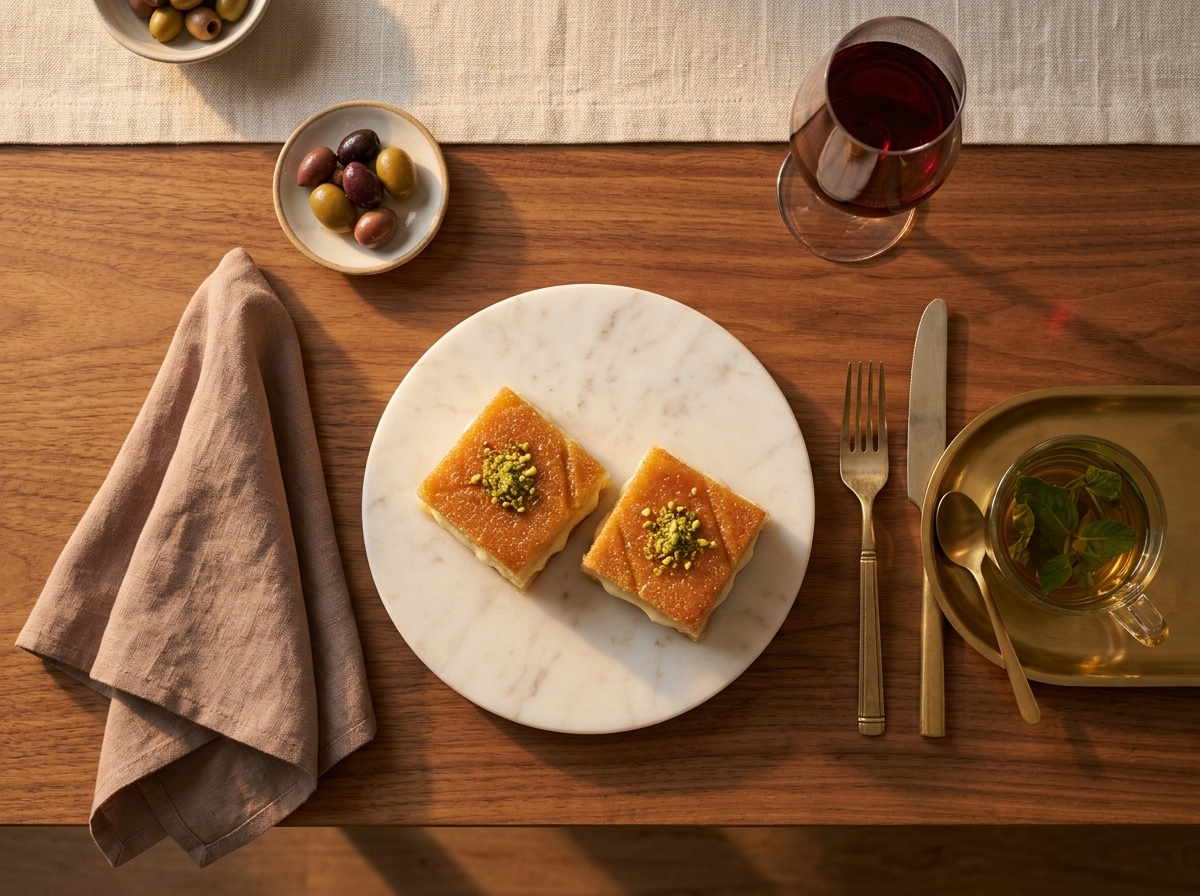
Lebanese coffee or mint tea is the classic pairing here, cutting through the sweetness of the syrup. A small cup alongside a piece of madlouka is how I usually see it served after a meal.
Fresh orange segments on the side pick up the orange blossom flavor in the syrup. A spoon of extra ashta cream on top works too, if you want to lean into the richness.
Cut it small. This is a dense, syrup-soaked dessert, and a 5cm/2-inch diamond is usually plenty per person.
FAQ
Why did my madlouka come out soggy in the middle instead of set?
That usually means the ashta cream wasn’t cooked long enough before it went into the pan. Cook it until it coats the back of a spoon, about 6 to 8 minutes, so it holds its shape between the two semolina layers instead of leaking out during the 35 to 40 minute bake.
Can I use ricotta or mascarpone instead of ashta cream in madlouka?
Yes, sweetened mascarpone whisked with a little orange blossom water works well as a shortcut filling. Ricotta is thinner and grainier, so drain it first and expect a less silky center than the cornstarch-set ashta in this recipe.
Can I make madlouka a day ahead?
Yes, and it actually tastes better after the syrup has had time to soak in overnight. Bake and soak it the day before, cover the pan tightly, and store at room temperature or in the fridge until you’re ready to serve.
What goes well with madlouka besides coffee?
Lebanese coffee or mint tea is the classic pairing, but fresh orange segments or a spoon of extra ashta on the side work too. The cake is rich and sweet on its own, so a plain, unsweetened drink balances it out.
Is madlouka gluten free?
No, this recipe isn’t gluten free since it’s built on semolina, which is a wheat product. There isn’t a reliable one-to-one gluten-free swap for semolina’s texture here, so this version is best for people who eat regular wheat.
What’s the difference between madlouka and basbousa?
Madlouka has a cream filling baked between two semolina layers, while basbousa is a single layer soaked in syrup with no filling. Both use the same syrup-soaked semolina base, but madlouka is closer to a layered cake than basbousa’s plain, one-layer texture.
You might also like
