
Jump to Recipe
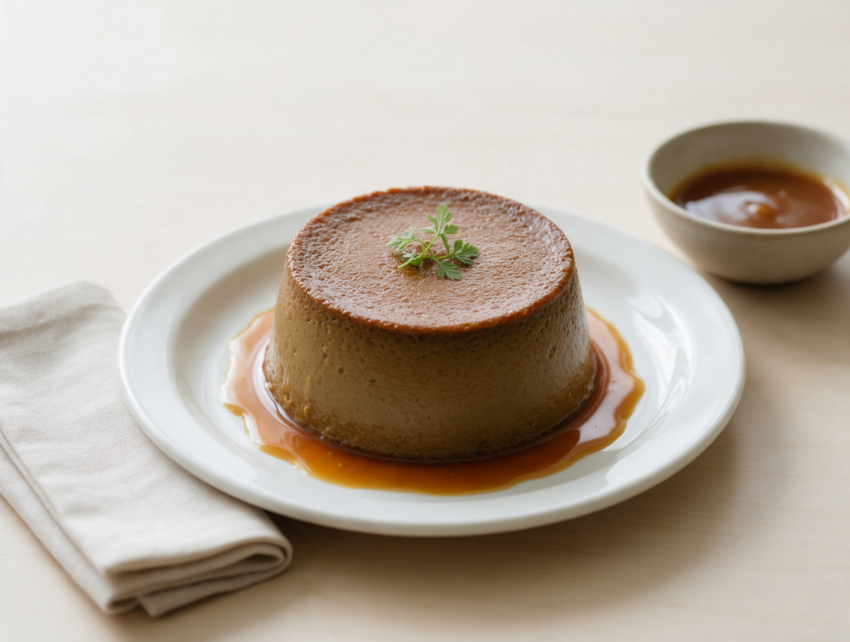
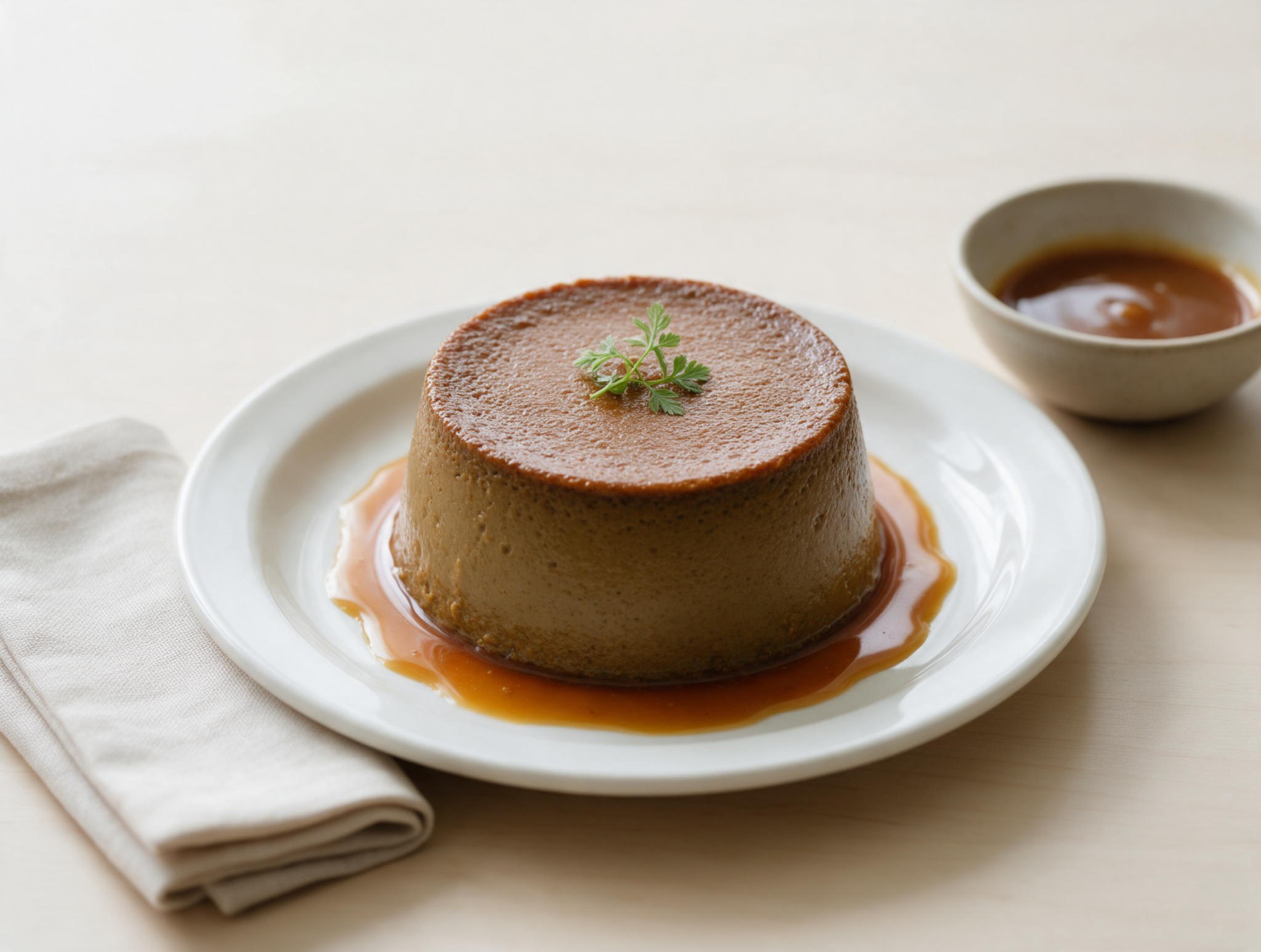
Baked hojicha caramel custard is a crème caramel made with roasted Japanese green tea steeped into the milk and cream. You bake it in a water bath at 160 C / 320 F, chill it for at least 4 hours, and flip it onto a plate so the caramel pools around it.
There’s something about hojicha that smells like toasted nuts and warm bread. The leaves are roasted over high heat, so the tea is low in bitterness and lower in caffeine than most green teas. It pairs well with burnt sugar.
I started making this after finishing a bag of loose leaf and wanting something sweeter than another cup. Six ramekins. Two small saucepans. No special tools.
The one thing that goes wrong is overbaking. Pull the custards while the centers still wobble, or they turn grainy and pocked with tiny holes.
Why You’ll Love This Recipe
- Roasted hojicha tastes toasty, not grassy or bitter
- Everyday pantry ingredients and no special equipment needed
- Bakes and chills ahead, so dessert is ready before guests arrive
- The caramel turns into sauce on its own while it chills
Ingredient Notes
- hojicha leaves: Use roasted loose leaf hojicha, which looks brown rather than green. Four hojicha tea bags work in place of 12 g loose leaf.
- whole milk and heavy cream: The 2 to 1 ratio gives a custard that is soft but still holds its shape when unmolded. Low-fat milk makes it watery.
- egg yolks: The 3 extra yolks add richness and a smoother set. Save the whites for meringues or an omelet.
- granulated sugar: Plain white sugar makes the cleanest caramel and is easiest to judge by color. Skip brown sugar for the caramel layer.
Baked Hojicha Caramel Custard with Toasty Tea Flavor
Ingredients
Method
- Warm the milk, cream and hojicha in a 2-quart / 1.9 L saucepan over medium heat for 4 to 5 minutes, until steam rises and tiny bubbles form at the edges. Don't let it boil. Take it off the heat, cover, and steep for 15 minutes.
- While the tea steeps, heat the oven to 160 C / 320 F and set six 180 ml / 6 oz ramekins in a 33 x 23 cm / 13 x 9 inch roasting pan. Stir the caramel sugar and water in a 1.5-quart / 1.4 L saucepan over medium heat until the sugar dissolves. Stop stirring and cook for 6 to 8 minutes, swirling the pan, until the syrup is deep amber.
- Pour about 1 tbsp of caramel into each ramekin and tilt to coat the bottom. It hardens within a minute, so work fast.
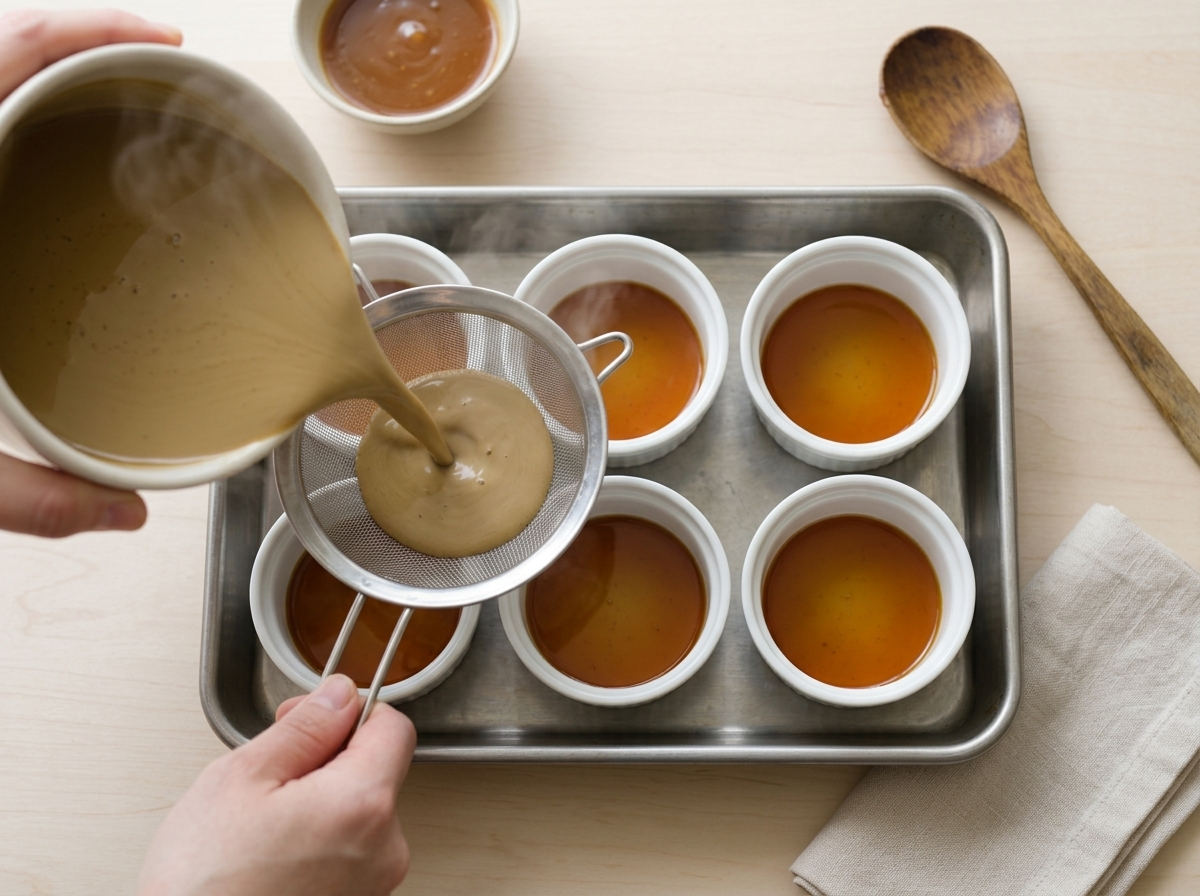
- Strain the steeped milk through a fine-mesh sieve into a jug, pressing the leaves gently. You should have about 540 ml. Whisk the eggs, yolks, 80 g sugar and salt in a bowl until no streaks remain and the mixture isn't foamy. Slowly pour in the warm milk while whisking, then add the vanilla and strain the base once more to catch foam.
- Divide the custard among the ramekins, about 135 ml each. Slide the pan onto the oven rack, then pour the hot water around the ramekins until it reaches halfway up their sides, about 2.5 cm / 1 inch. Tent the pan loosely with foil.
- Bake for 30 to 35 minutes. The edges should be set and the centers should wobble like gelatin when you nudge the pan, with a thermometer reading 77 C / 170 F. Pull them there. They keep firming as they cool, and overbaked custard turns grainy.
- Lift the ramekins out with tongs and cool on a rack for 30 minutes. Cover with plastic wrap and chill for at least 4 hours.
- To serve, run a thin knife around each custard, set a rimmed plate on top, and flip. Give the ramekin one gentle shake, lift it off, and let the caramel sauce run over the custard.
Notes
- Use roasted loose leaf hojicha, not green tea, for the toasty flavor.
- Pull the custards at 77 C / 170 F while the centers still wobble.
- Chill at least 4 hours so the caramel turns to sauce and the custard firms.
- Run a thin knife around each custard before flipping it onto the plate.
Tips for Success
- Pull the caramel at deep amber, the color of an old copper coin, and pour it into the ramekins right away before it hardens.
- Keep the milk below a boil while it steeps, since a rolling boil pulls out bitterness and can form a skin on top.
- Strain the custard base twice, once to remove leaves and again after whisking, to catch foam and any stray bits of egg white.
- Set the roasting pan on the oven rack first, then pour in the hot water, so you don’t slosh it into the ramekins.
- Chill the custards at least 4 hours so the caramel loosens into sauce and the custard firms enough to unmold cleanly.
Variations
- Sprinkle 1 tsp toasted black sesame seeds over each unmolded custard for a nutty crunch that echoes the roasted tea.
- Swap the 80 g white sugar in the custard for light brown sugar to add a deeper molasses note.
- Finish each plate with a pinch of flaky sea salt over the caramel to sharpen the sweetness.
Storage and Reheating
Hojicha caramel custard keeps in the fridge for 2 to 3 days, covered with plastic wrap in its ramekins. Don’t unmold until you’re ready to eat. The custard holds its shape better inside, and the caramel stays in the ramekin as sauce.
Serve it cold. Warming a set egg custard breaks the silky texture and thins the caramel, so it’s best straight from the fridge. For a make-ahead plan, bake and chill the custards 2 to 3 days early, then unmold on the day.
Skip the freezer. Thawed custard weeps liquid and turns spongy.
Serving Suggestions
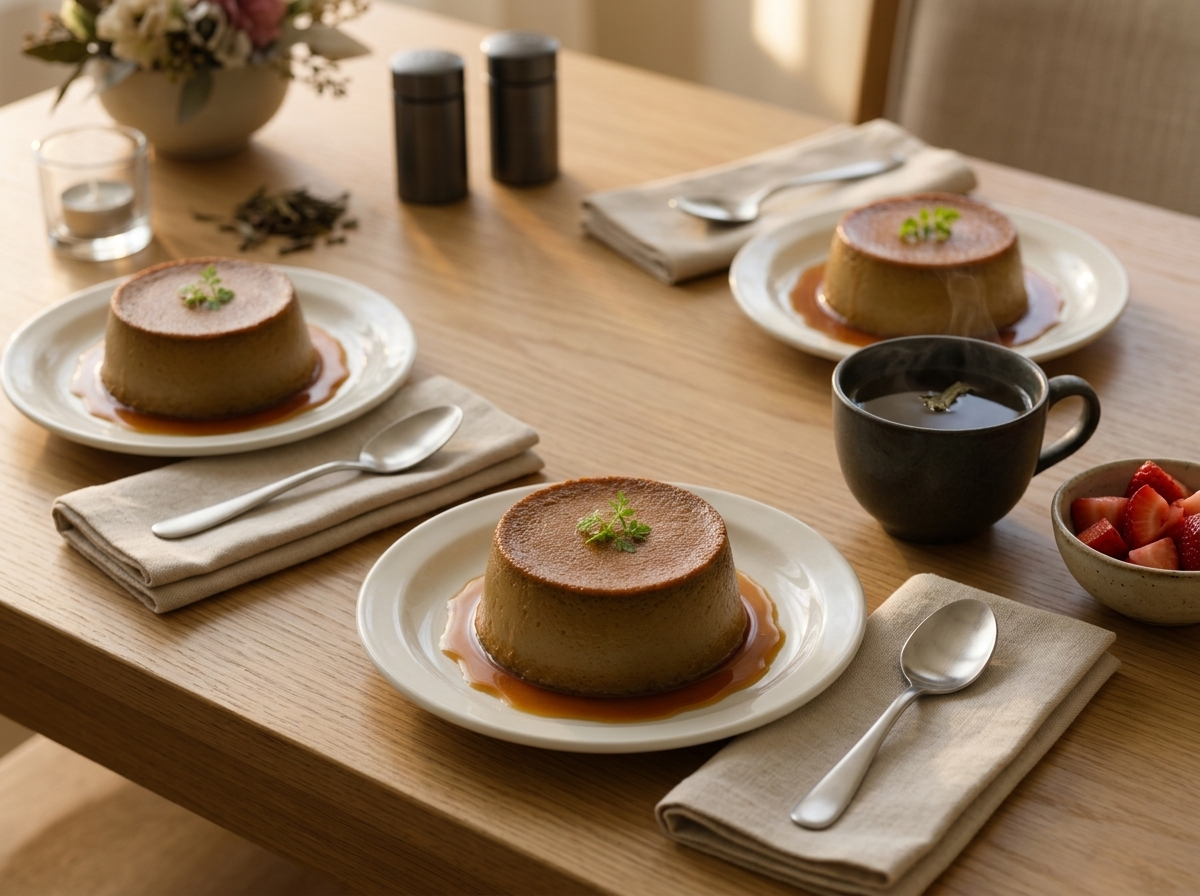
Hojicha caramel custard is best served cold, flipped onto a rimmed plate so the caramel pools around it. Run a thin knife around the edge and give the ramekin one gentle shake before lifting.
Add something fresh or crisp on the side. Sliced strawberries, a spoon of lightly whipped cream, or toasted black sesame all work. A small cup of hot hojicha next to the plate is a good match.
Keep portions small. Each custard is about 340 kcal and rich enough that one is plenty.
FAQ
Why is my hojicha caramel custard full of tiny holes?
Tiny holes mean the custard got too hot. Overbaked eggs trap steam bubbles and the texture turns grainy instead of silky. Bake at 160 C / 320 F with hot water halfway up the ramekins, and pull them at 77 C / 170 F while the centers still wobble. They finish setting as they cool.
Can I use hojicha powder instead of loose leaf hojicha?
Yes, use about 2 tsp (4 g) hojicha powder in place of 12 g loose leaf. Whisk it into the warm milk and cream, then strain through a fine-mesh sieve so no grit ends up in the custard. You can skip the 15-minute steep, and the flavor comes out a little darker.
Can I make hojicha caramel custard ahead, and does it freeze?
Yes, bake it 2 to 3 days ahead and keep the custards covered in their ramekins in the fridge. Flip them out just before serving so the caramel stays glossy. Don’t freeze them. The eggs weep when thawed and the custard turns spongy.
What goes well with hojicha caramel custard?
Something fresh or crisp balances the soft, sweet custard. I serve it with sliced strawberries, a spoon of lightly whipped cream, or a pinch of toasted black sesame seeds. A small cup of hot hojicha on the side suits the roasted flavor.
How do I make hojicha caramel custard dairy free?
Swap the whole milk for unsweetened oat milk and the heavy cream for full-fat canned coconut milk, using the same amounts. The custard sets slightly softer and tastes faintly of coconut. It still contains eggs, so it isn’t vegan.
What’s the difference between hojicha caramel custard and crème caramel or flan?
Hojicha caramel custard is a crème caramel with roasted tea steeped into the dairy. Classic crème caramel uses milk and whole eggs, and many flans use condensed milk. Here, cream and extra yolks make it richer, and the hojicha adds a toasty note that plays against the caramel.
You might also like
- the Classic Baked Venezuelan Quesillo with Caramel
- Jericalla: Guadalajara’s Baked Cinnamon Custard Cups recipe
- this Bienmesabe Venezolano: Coconut Rum Custard Dessert
