
Jump to Recipe
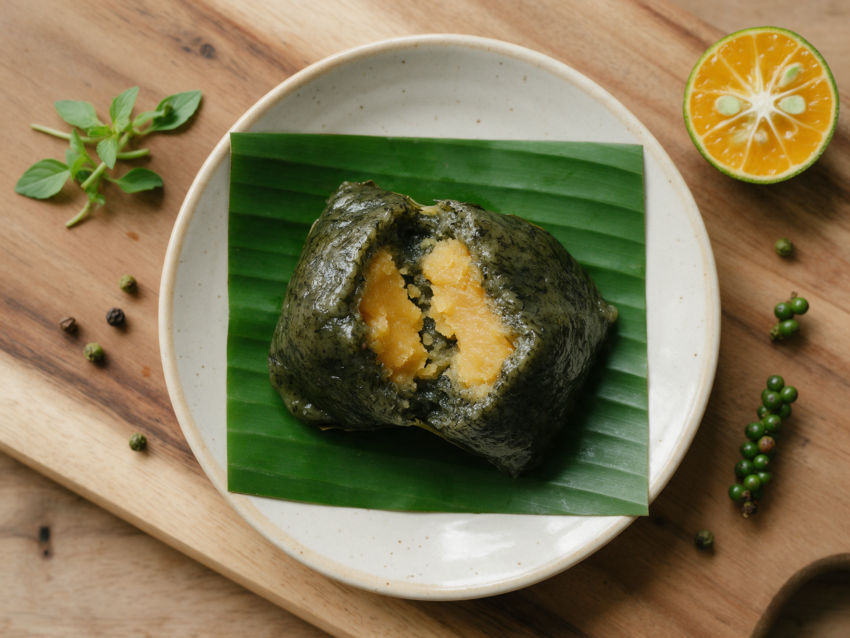
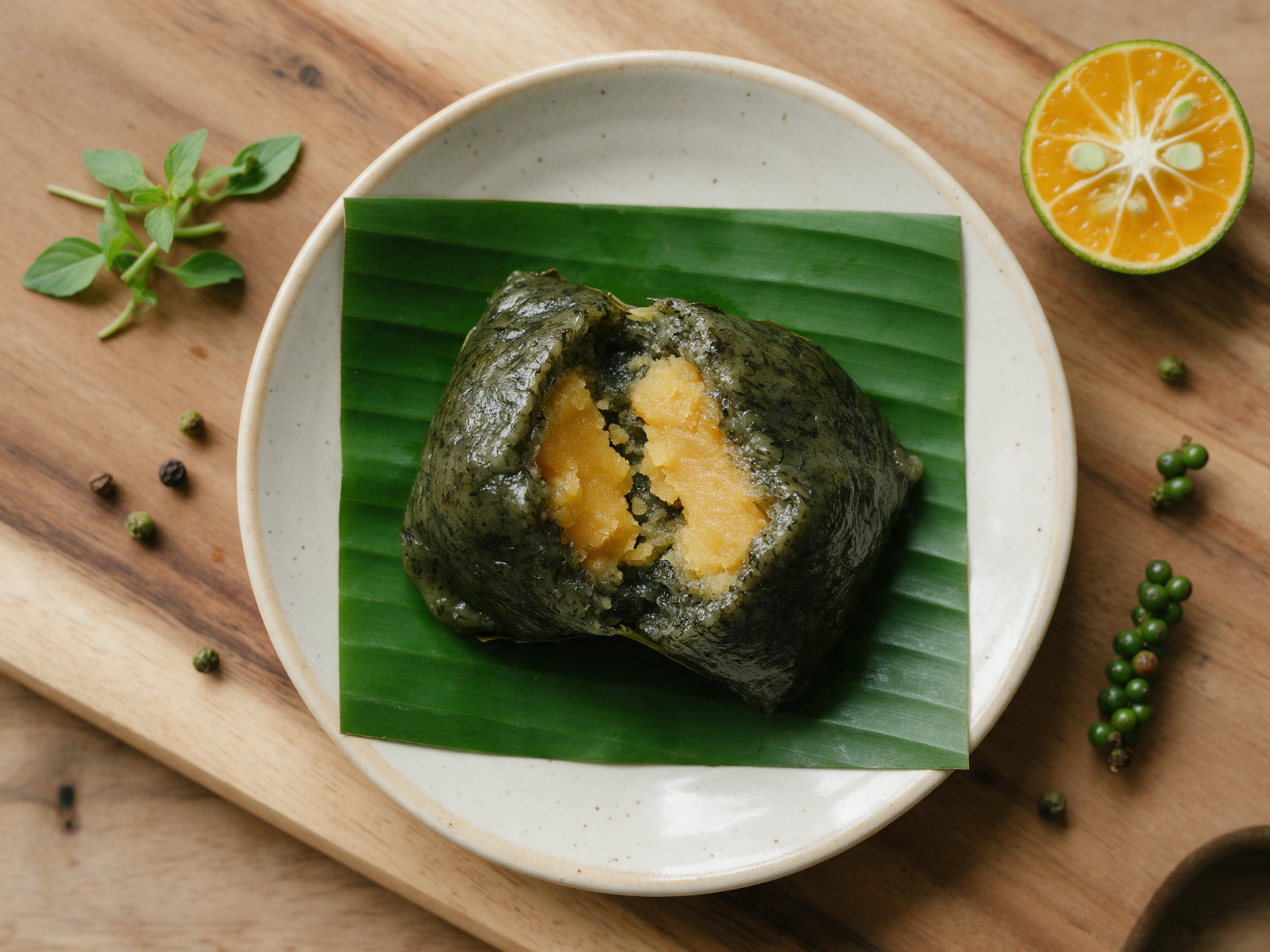
Bánh ít lá gai is a steamed Vietnamese rice cake from Bình Định province, colored deep green-black by pounded gai leaves worked straight into glutinous rice dough. Inside each one sits a sweet mung bean and coconut filling. The whole cake gets wrapped in banana leaf and steamed until the dough turns glossy and slightly chewy, the same steaming logic behind Korean songpyeon rice cakes steamed over pine needles.
I had my first one at a roadside stall near Quy Nhon, still warm from the steamer. The leaf peeled back and stuck a little to the dough. That’s normal, not a sign of anything gone wrong.
You don’t need fresh gai leaves to make this at home. Dried lá gai leaves, sold in most Asian grocery stores or online, work the same way once soaked and boiled soft.
The dough takes some kneading and the filling needs patience on the stove, but neither step is hard. What you get back is a chewy, faintly earthy cake that isn’t as sweet as it looks.
Why You’ll Love This Recipe
- Naturally gluten-free dough made from sweet rice flour
- Deep green-black color comes from real gai leaves, no dye
- Keeps well at room temperature for a couple of days
- Filling is just mung bean, coconut, and sugar, nothing fussy
Ingredient Notes
- Dried lá gai leaves: Sold in Asian grocery stores or online. Soak and boil until fully soft before pounding into paste, fresh leaves work too if you can find them.
- Glutinous rice flour: Also called sweet rice flour. It’s what gives the dough its chewy pull, don’t swap it for regular rice flour.
- Split mung beans: Use peeled, dried, split beans so they mash smooth without needing to pick off skins.
- Shredded coconut: Unsweetened dried coconut works fine, fresh grated coconut gives a slightly juicier filling.
- Banana leaves: Frozen banana leaf from the freezer section works well, thaw and wipe dry before using.
- Sugar: Cut the dough sugar to 150 g if you want a less sweet cake, the filling sugar can stay as is.
Bánh Ít Lá Gai: Steamed Vietnamese Sticky Rice Cakes
Ingredients
Method
- Rinse the split mung beans, then soak in hot water for 30 minutes. Drain well.
- Steam the beans in a steamer basket over boiling water for 25 minutes, until soft enough to mash with a fork.
- Mash the hot beans smooth, then move to a 26 cm / 10-inch nonstick skillet with the sugar, shredded coconut, oil, vanilla, and salt. Cook over low heat for 6 to 8 minutes, stirring constantly, until the mixture pulls into one mass that holds its shape on the spoon.
- Let the filling cool to room temperature, then roll into 16 balls, about 20 g each. Cover and set aside.
- Rinse the dried lá gai leaves and soak in warm water for 30 minutes to soften. Drain, then boil in fresh water for 25 minutes, until fully tender and dark.
- Drain the leaves and squeeze out as much water as you can. Blend or pound into a smooth, fibrous paste.
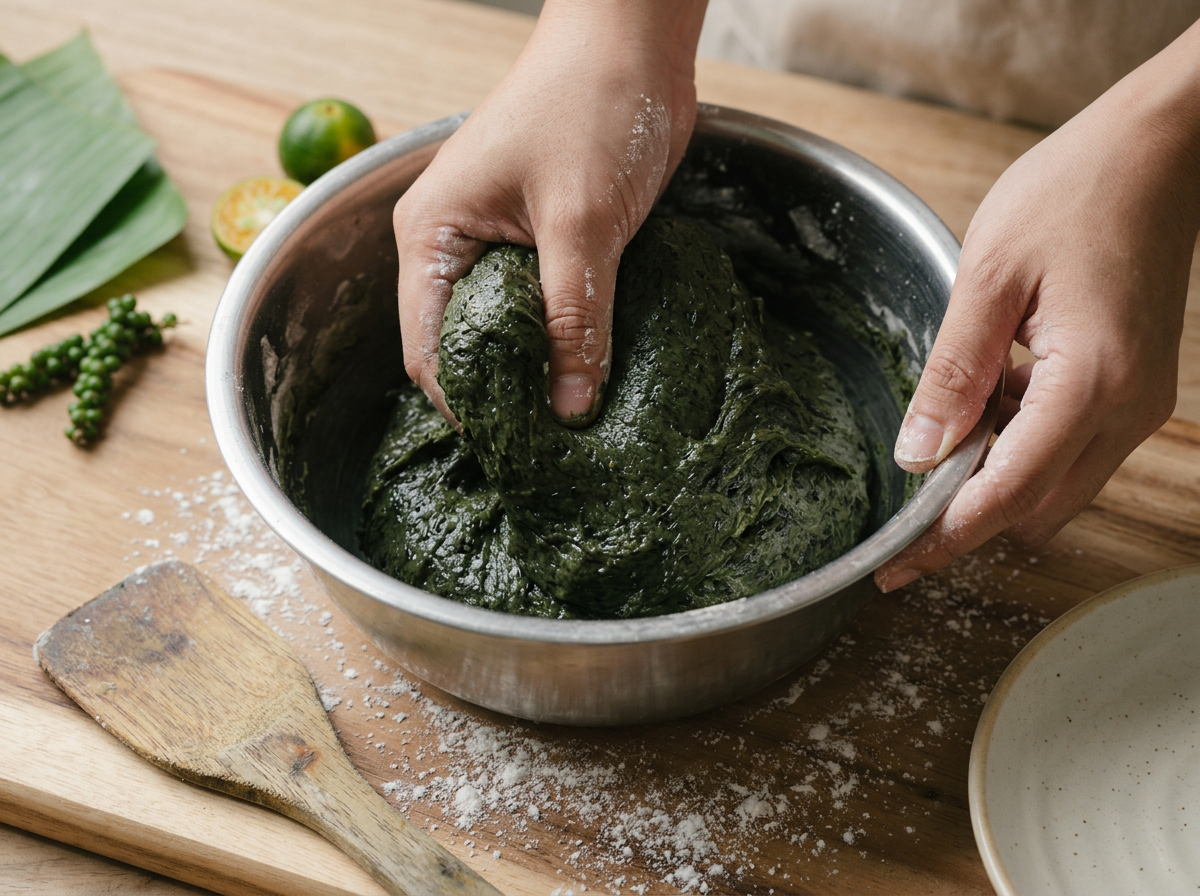
- In a large bowl, combine the lá gai paste, glutinous rice flour, sugar, oil, and salt. Knead by hand, adding water a tablespoon at a time, until the dough turns smooth, dark, and elastic and no longer sticks to your fingers, about 8 to 10 minutes.
- Cover the dough and rest for 15 minutes.
- Divide the dough into 16 pieces, about 40 g each, and roll into balls. Flatten each into a disk about 7 cm / 2.5-inch wide.
- Set a mung bean ball in the center of each disk. Gather the dough up around the filling, pinch to seal, then roll gently back into a smooth ball.
- Brush a banana leaf square lightly with oil. Place a dough ball in the center and fold the leaf around it into a tight parcel, tucking the ends underneath.
- Arrange the wrapped cakes seam side down in a steamer basket, without letting them touch each other. Steam over boiling water for 35 minutes, until the dough feels firm and glossy through the leaf.
- Lift out of the steamer and cool for at least 15 minutes before unwrapping. Serve at room temperature.
Notes
- Use peeled split mung beans, not whole beans with skins, for a smooth filling.
- Dried lá gai leaves need soaking and boiling before they'll blend into paste.
- Sixteen cakes come from 40 g dough portions and 20 g filling balls.
- Banana leaf must be pliable, not brittle, or it cracks when folded.
Tips for Success
- Squeeze the boiled lá gai leaves completely dry before blending, or the dough turns too wet to shape.
- Knead the dough for a full 8 to 10 minutes, the same kind of pounding that turns glutinous rice into chewy injeolmi rice cakes, so the leaf fibers blend evenly and the color turns uniform.
- Cook the mung bean filling until it pulls into one mass on the spoon, much like the honey-sesame filling used for Korean gyeongdan rice balls, or runny filling leaks through the wrapped dough.
- Rest the dough for 15 minutes before shaping, it firms up and stops sticking to your hands.
- Soften banana leaves over a gas flame for a few seconds each side so they fold without cracking.
Variations
- Stir finely chopped roasted peanuts into the mung bean filling for crunch, a common touch in Central Vietnam.
- Swap white sugar for dark palm sugar in the dough for a caramel note and a deeper black color.
- Add a spoonful of mashed durian to the filling if you want the stronger flavor some Bình Định cooks use.
Storage and Reheating
Bánh ít lá gai keeps well because steaming already cooked it through and the banana leaf seals in moisture. Leave wrapped cakes at room temperature for up to 2 days, or refrigerate in an airtight container for 5 to 7 days.
To reheat, resteam the wrapped cakes for 8 to 10 minutes, the same way you’d revive a steamed Korean yakbap rice cake, or unwrap and microwave one cake for 30 to 40 seconds. Both bring the dough back to soft and glossy.
For longer storage, freeze the wrapped cakes for up to 2 months. Thaw overnight in the fridge, then resteam for 10 minutes before serving.
Serving Suggestions
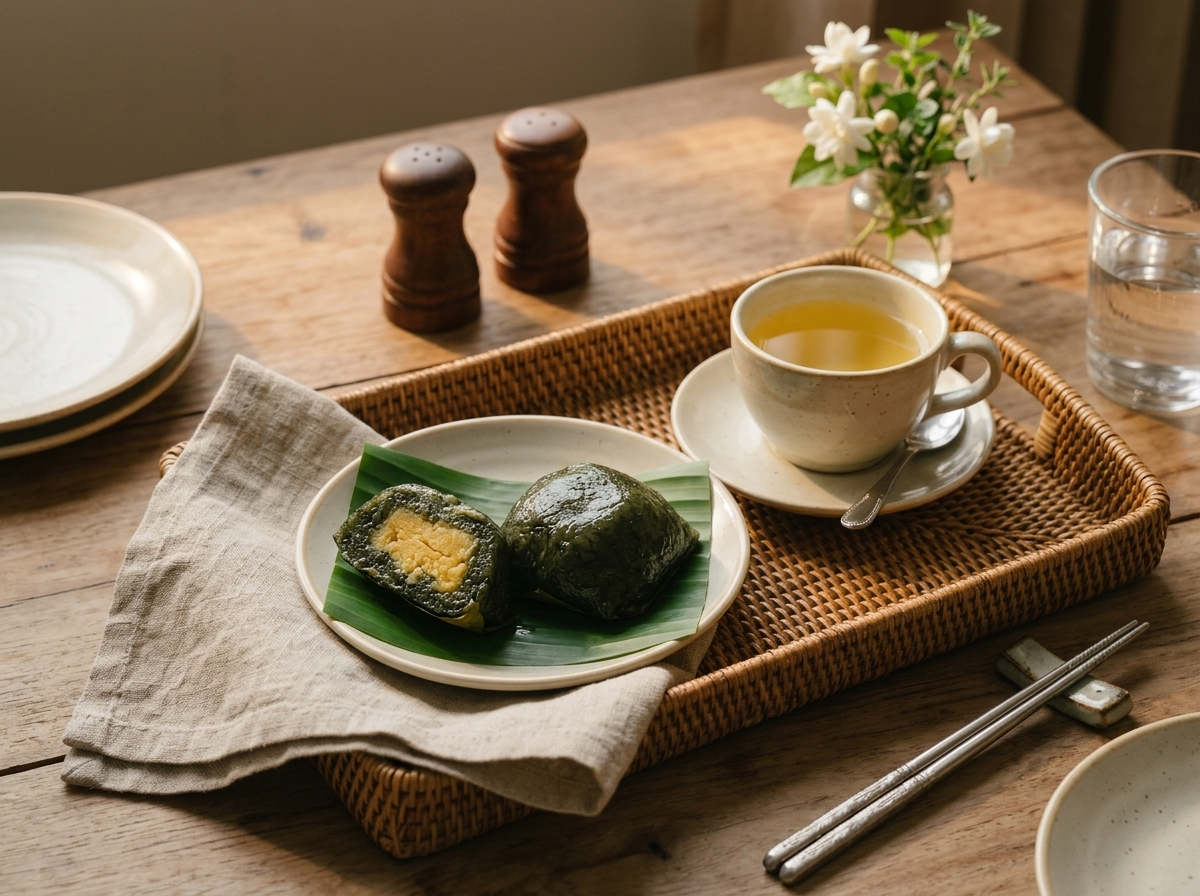
Bánh ít lá gai is a tea-time snack in Vietnam, not really a dessert served after a meal. A small plate with hot green tea or jasmine tea is the standard pairing.
Serve them at room temperature, still in the banana leaf if you’re setting out a platter for guests. Unwrap one at a time so the rest stay soft and moist.
They travel well too. Wrapped cakes hold up in a lunch box or as a gift box for Tet without falling apart.
FAQ
Why is my bánh ít lá gai dough too sticky to shape?
Your dough likely has too much water or wasn’t kneaded long enough. Squeeze the boiled lá gai leaves completely dry before adding them, and knead for a full 8 to 10 minutes. If it’s still sticky, work in an extra tablespoon of glutinous rice flour at a time until it holds together.
Can I use fresh gai leaves instead of dried?
Yes, fresh lá gai leaves are the traditional choice if you can find them. Use about 400 to 500 g of fresh leaves, boiled until soft, in place of the 50 g of dried leaves. The color and flavor turn out slightly greener and less earthy than with dried leaves.
How long do bánh ít lá gai keep and can I freeze them?
They keep at room temperature for up to 2 days, or in the fridge for 5 to 7 days, still wrapped in banana leaf. You can also freeze them for up to 2 months. Thaw in the fridge overnight, then resteam for 10 minutes to bring the dough back to soft.
What goes well with bánh ít lá gai?
Hot green tea or jasmine tea is the classic pairing, since the cake itself isn’t overly sweet despite the sugar in the filling. Vietnamese black coffee also works if you want something stronger. Serve a few on a small plate instead of as a full dessert course.
Is bánh ít lá gai gluten free?
Yes, despite the name, glutinous rice flour contains no gluten, it just means the rice turns sticky when cooked. The rest of the ingredients, gai leaves, mung beans, coconut, and sugar, are naturally gluten free too. Double check your banana leaves and any added flavorings if you have celiac disease.
What’s the difference between bánh ít lá gai and bánh ít trần?
Bánh ít lá gai has a dark, chewy dough colored with gai leaves and is always wrapped in banana leaf before steaming. Bánh ít trần skips the leaf coloring and the wrapper entirely, so the plain white dough and filling are visible, and it’s usually eaten with a savory topping instead of on its own.
Loved this? Try these next
- Songpyeon: Korean Steamed Rice Cakes with Sesame
- our Steamed Yakbap: Korean Sweet Rice Cake with Chestnuts
