
Jump to Recipe
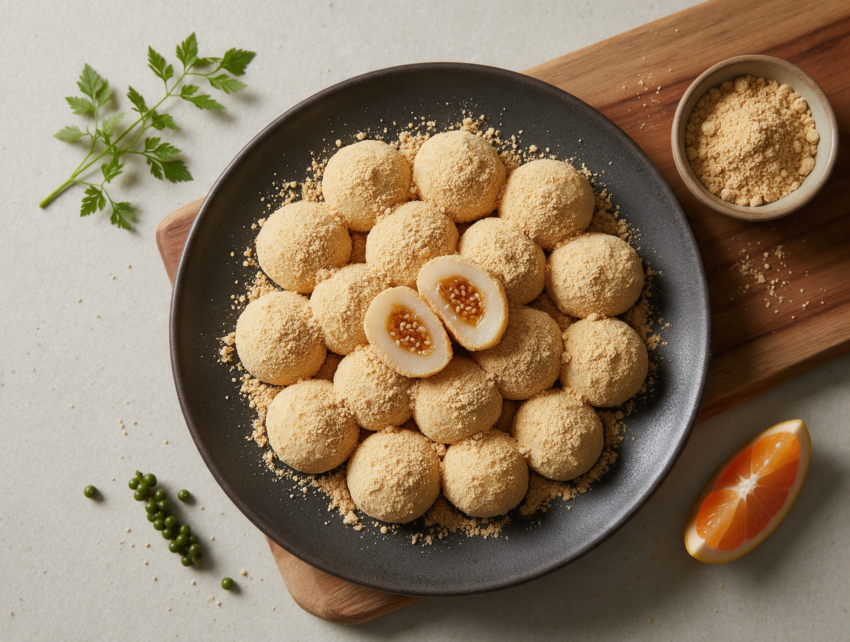
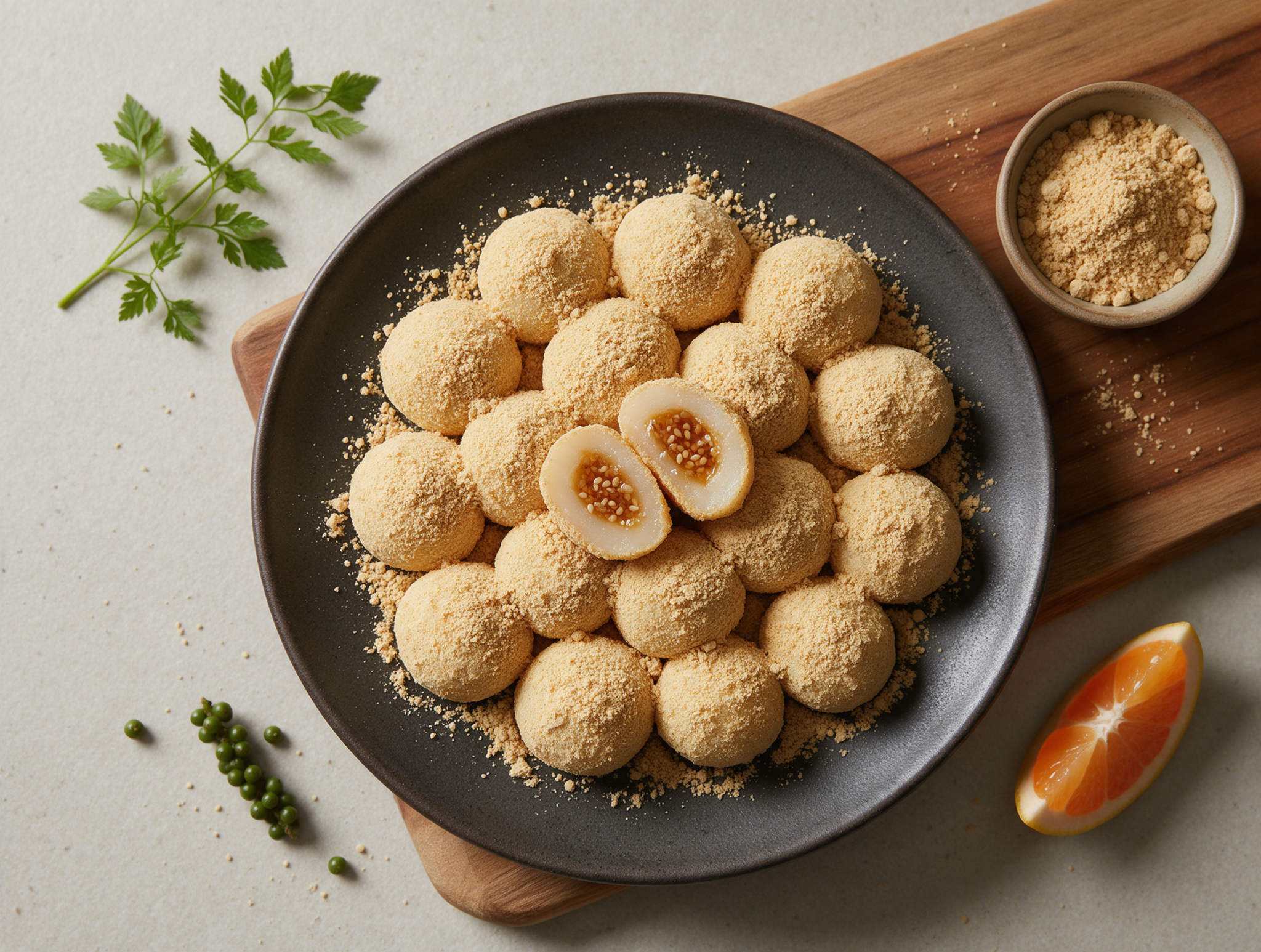
Gyeongdan are small Korean rice balls made from glutinous rice flour, boiled until chewy, then rolled in toasted soybean powder or sesame seeds. They’re a Chuseok classic, traditionally shaped by hand and served in stacks on a plate, still faintly warm.
I first ate these at a friend’s mother’s table in Seoul, still warm from the pot, dusted heavy with konggaru. She’d hidden a pinch of honey and cinnamon inside each one, so the plain-looking outside gave way to a warm sweet center.
This version keeps her filling. The dough is just three ingredients, and the whole batch of about 20 balls boils in under five minutes.
The one place people go wrong is rushing the coating step while the balls are still hot straight from the pot. Shock them in ice water first, or the soybean powder clumps instead of sticking in an even layer.
Why You’ll Love This Recipe
- Only three ingredients in the dough itself
- Soft, chewy texture closer to mochi than bread
- Hidden honey-sesame center in every bite
- Boils in under five minutes per batch
Ingredient Notes
- glutinous rice flour (chapssal-garu): This is sweet rice flour, not regular rice flour. Regular rice flour has no elasticity and the dough falls apart in the water.
- hot water: Use water straight off the boil, not warm tap water. Hot water gelatinizes the starch so the dough turns stretchy instead of crumbly.
- honey: Gives the filling its melty sweetness. Maple syrup or brown sugar syrup work as a substitute if you’re out of honey.
- toasted sesame seeds: Adds crunch inside the filling. Crushed toasted peanuts are a good stand-in if that’s what you have.
- toasted soybean powder (konggaru): The classic gyeongdan coating, nutty and slightly sweet. Ground toasted sesame seeds or unsweetened shredded coconut work if you can’t find it.
Gyeongdan Rice Balls with Honey Sesame Filling
Ingredients
Method
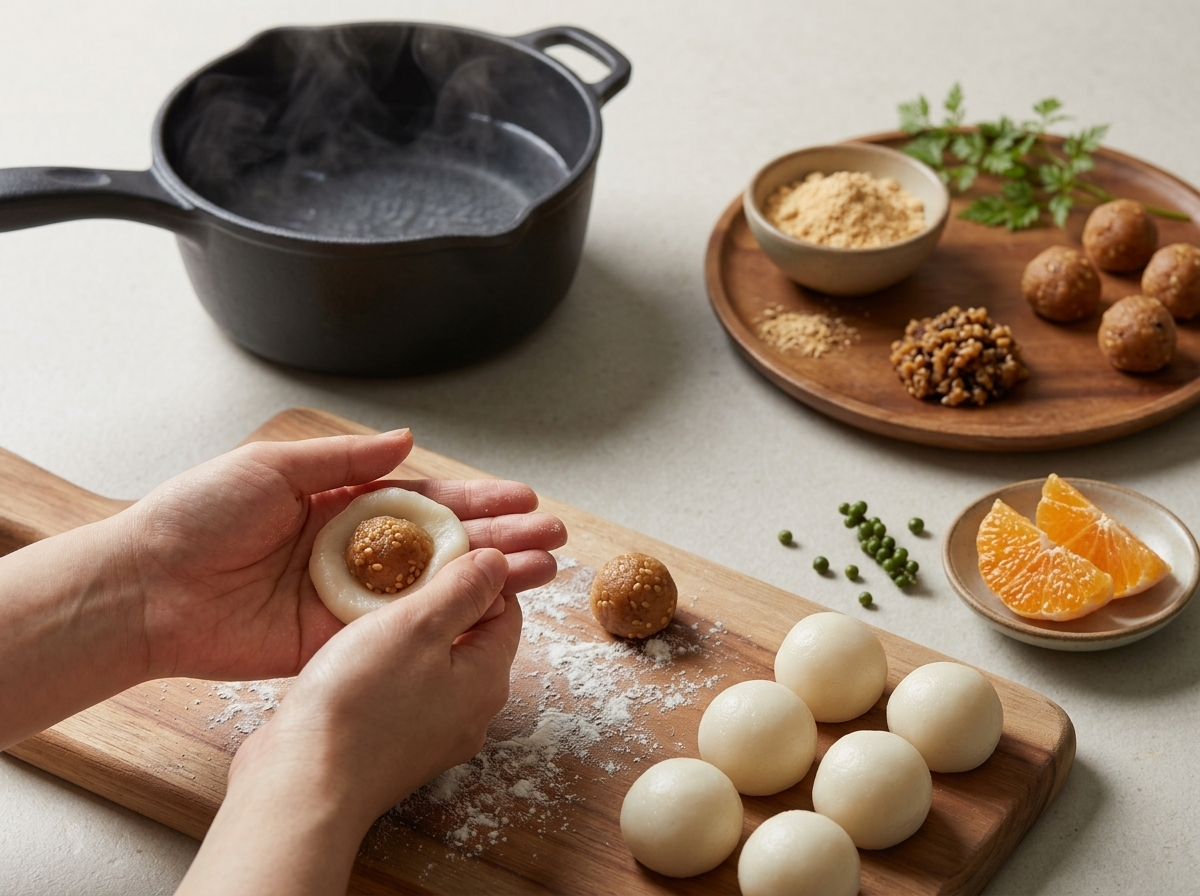
- Stir the honey, toasted sesame seeds and cinnamon together in a small bowl. Roll into 20 small balls, about 1/2 teaspoon each, and set on a plate. Freeze for 10 minutes so they hold their shape.
- Whisk the glutinous rice flour and salt together in a mixing bowl. Pour in the hot water gradually, stirring with a spoon, until a shaggy dough forms.
- Knead the dough in the bowl for 2 to 3 minutes, until smooth and pliable, like soft playdough with no dry cracks. Add a splash more hot water if it feels stiff.
- Divide the dough into about 20 pieces, roughly 20 g each. Roll each into a ball, then flatten into a small disk in your palm.
- Place a frozen filling ball in the center of each disk. Fold the edges up around the filling, pinch to seal, then roll smooth again between your palms.
- Bring the water in a 3-quart / 2.8 L saucepan to a rolling boil. Drop in half the rice balls, gently, so they have room to float without sticking together.
- Boil for 3 to 4 minutes, until the balls rise to the surface, then let them simmer 1 more minute so the center cooks through.
- Lift the cooked balls out with a slotted spoon into a bowl of ice water. Repeat with the second batch. Let both batches sit in the ice water for 2 minutes, until firm and cool enough to handle.
- Stir the toasted soybean powder, sugar and a pinch of salt together on a shallow plate.
- Drain the rice balls well and roll them, a few at a time, in the soybean powder mixture until fully coated.
- Arrange on a plate and serve within a few hours, while the outside is still soft and the center is warm-ish.
Notes
- Freeze the filling balls for 10 minutes before wrapping so they hold their shape.
- Boil in two batches so the rice balls have room to float without sticking together.
- Don't skip the ice water bath, it firms up the outside and keeps the shape neat.
- Coat right before serving for the best texture on the soybean powder layer.
Tips for Success
- Use boiling water, not warm water, so the glutinous rice flour hydrates into an elastic dough instead of a crumbly one.
- Test one ball in simmering water first, then adjust the whole batch with a little more flour or water if it falls apart.
- Keep each filling ball to about 1/2 teaspoon so the dough seals fully around it without splitting open.
- Shock the cooked rice balls in ice water right away to stop the cooking and firm up the chewy exterior.
- Coat the rice balls while they’re still a little damp, not dripping wet, so the soybean powder clings evenly, the same way kinako coats chilled kuzumochi jelly.
Variations
- Swap the honey-sesame filling for sweetened red bean paste for a more traditional Chuseok-style gyeongdan.
- Mix a few drops of matcha or beet powder into the hot water for naturally pink or green dough.
- Skip the filling entirely and roll plain boiled balls in toasted sesame seeds mixed with a little sugar.
Storage and Reheating
Gyeongdan taste best within a few hours of boiling, while the dough is still soft. If you have leftovers, store the coated balls in an airtight container in the fridge for up to 2 days. The dough firms up considerably once chilled.
To bring them back, microwave a few balls covered with a damp paper towel for 15 to 20 seconds, just until soft and chewy again. Coat with fresh soybean powder after reheating if the original coating has gone patchy.
To make ahead, shape the filled, uncooked dough balls and freeze them on a tray until solid, then transfer to a bag for up to 1 month. Boil straight from frozen, adding 1 to 2 extra minutes to the boiling time.
Serving Suggestions
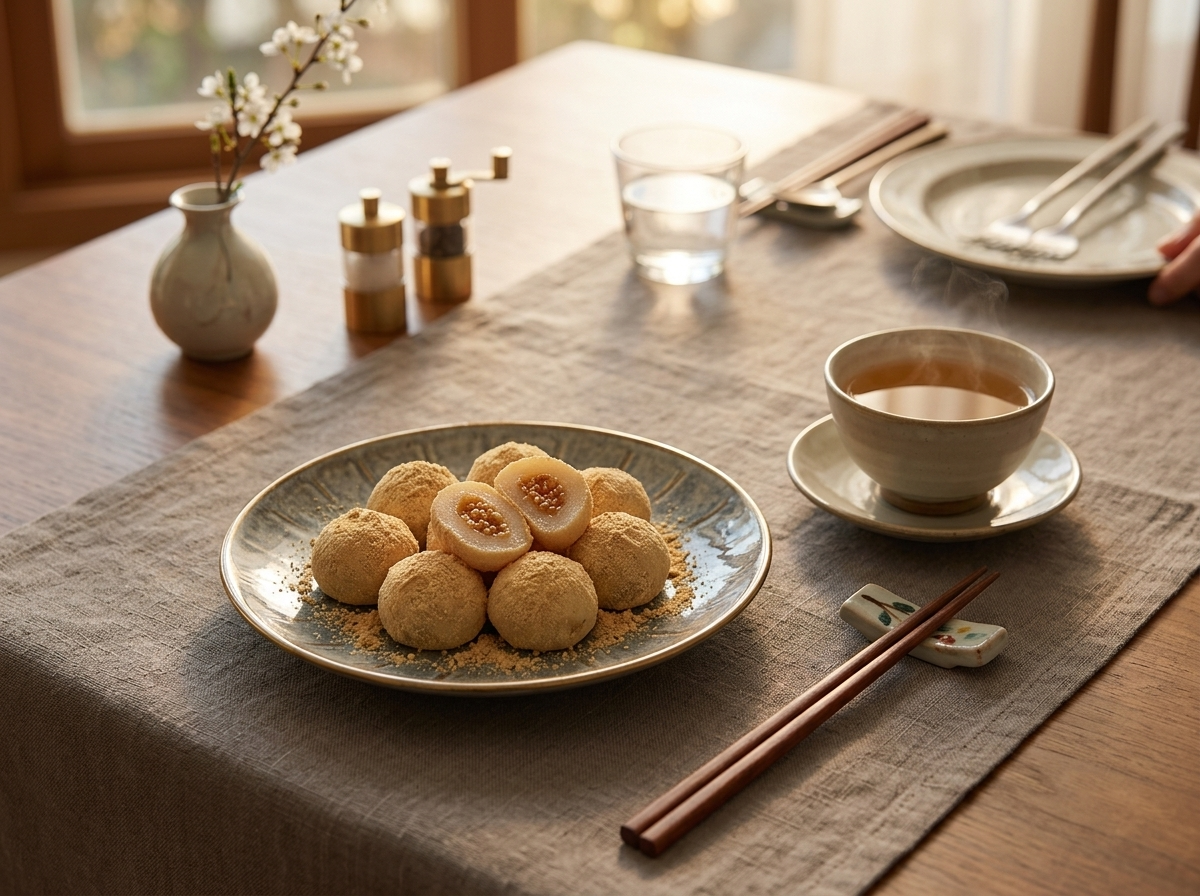
Gyeongdan work well as a light dessert after a Korean meal, arranged on a plate with an extra dusting of soybean powder on top.
Serve them with a pot of barley tea (boricha) or cinnamon punch (sujeonggwa) to balance the sweetness of the honey filling.
For a snack spread, pile them next to fresh fruit or other treats like Korean hotteok pancakes for color and texture contrast.
FAQ
Why are my gyeongdan rice balls falling apart in the boiling water?
This usually means the dough was too dry or the water used to mix it wasn’t hot enough to activate the starch. Knead in a splash more hot water until the dough feels smooth and pliable, and test one ball in simmering water before boiling the whole batch.
Can I use regular rice flour instead of glutinous rice flour for gyeongdan?
No, regular rice flour won’t give you the chewy texture gyeongdan is known for. Glutinous rice flour, also called sweet rice flour or chapssal-garu, has a different starch structure that turns elastic and stretchy once hydrated with hot water.
Can I freeze gyeongdan rice balls before boiling them?
Yes, shape the filled, uncooked dough balls and freeze them on a tray until solid, then bag them for up to 1 month. Boil straight from frozen, adding 1 to 2 extra minutes to the boiling time so the center cooks through.
What goes well with gyeongdan besides soybean powder?
Toasted sesame seeds or unsweetened shredded coconut both make good coating swaps if you can’t find soybean powder. For drinks, a warm cup of barley tea or cinnamon punch cuts through the sweetness of the honey filling nicely.
Is gyeongdan gluten free?
Yes, glutinous rice flour contains no gluten despite the name, it just refers to the sticky texture. Double check your honey and soybean powder are processed in a gluten-free facility if you’re baking for someone with celiac disease.
What’s the difference between gyeongdan and songpyeon?
Gyeongdan are round rice balls that get boiled and rolled in a dry powder coating, a method not unlike shaping three-color hanami dango, while songpyeon are half-moon shaped rice cakes steamed over pine needles, usually filled with sesame or bean paste. Both are Chuseok staples but the shape, filling and cooking method are different.
Related recipes
