
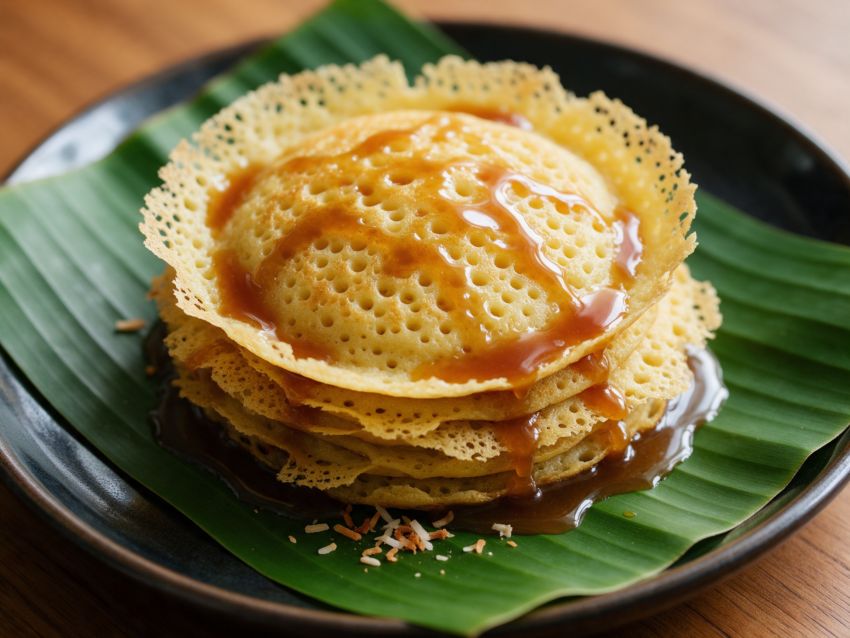
Jump to Recipe
Serabi kuah kinca is an Indonesian rice flour pancake cooked in a small pan until the edges turn lacy and golden, then served warm with kuah kinca, a syrup made from palm sugar and coconut milk. The pancake stays soft and spongy in the center, almost like a thick crepe crossed with a mini pancake.
I first had this from a street cart in Bandung, poured straight from a thermos of syrup into a paper cone of warm serabi. The batter smelled like coconut and yeast, faintly sour in a good way.
This version uses a wide nonstick skillet instead of the traditional clay serabi pan, so you don’t need special equipment. The batter rests for 30 minutes to build a few bubbles while the syrup reduces on the stove.
Serve it as a snack, breakfast, or afternoon treat. A stack of three pancakes with warm syrup is usually enough for one person.
Why You’ll Love This Recipe
- Only one wide skillet needed, no special serabi mold required
- Batter comes together in 15 minutes, then mostly rests itself
- Palm sugar syrup keeps well in the fridge for later
- Naturally dairy-free thanks to coconut milk in both batter and sauce
Ingredient Notes
- rice flour: Use fine rice flour, not glutinous rice flour, for a light, spongy crumb once cooked.
- all-purpose flour: Adds a bit of chew and helps the pancake hold together. Swap in more rice flour for a gluten-free version.
- coconut milk: Full-fat canned coconut milk gives the richest batter and syrup. Light coconut milk works too but tastes thinner.
- instant yeast: Gives the batter its classic tiny bubbles and faint tang. Baking powder works in a pinch, but the flavor turns out flatter.
- palm sugar: Also called gula jawa or gula merah, sold in dark brown discs or logs. Dark brown sugar is the closest substitute.
- pandan leaf: Adds a grassy, vanilla-like aroma to both batter and syrup. Leave it out if you can’t find it, the dish still works fine.
- salt: Balances the sweetness in both the batter and the finished syrup.
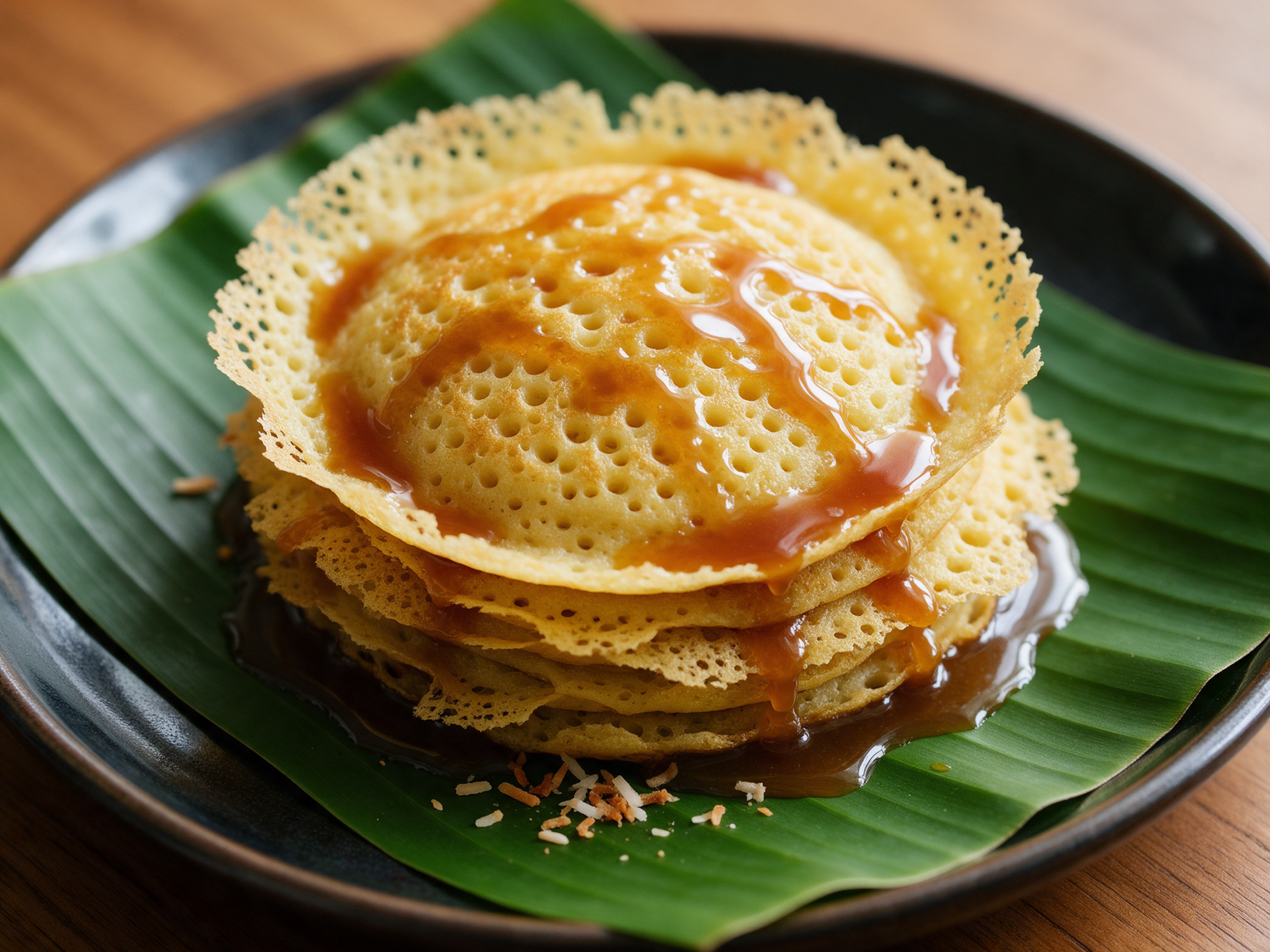
Griddled Serabi Pancakes with Palm Sugar Kinca Sauce
Ingredients
Method
- In a mixing bowl, whisk together the rice flour, all-purpose flour, sugar, instant yeast, and salt.
- Slowly whisk in the coconut milk and water until you have a smooth, lump-free batter about the thickness of heavy cream. Tuck in the knotted pandan leaves if using.
- Cover the bowl and let the batter rest at room temperature for 30 minutes, until small bubbles appear on the surface.
- Meanwhile, combine the palm sugar, 150 ml water, and the extra pandan leaf in a 1-quart / 1 L saucepan. Simmer over medium heat, stirring occasionally, for 5 minutes until the sugar fully dissolves.
- Strain the syrup through a fine-mesh strainer into a clean saucepan to remove any grit. Stir in the coconut milk and salt, then simmer for 5 to 6 minutes more, until slightly thickened and it coats the back of a spoon. Keep warm over low heat.
- Heat a 30 cm / 12-inch nonstick skillet over medium-low heat. Give it a light wipe with oil for the first batch only.
- Ladle about 3 tablespoons of batter into the skillet for each pancake, spacing 3 rounds apart so the edges don't touch.
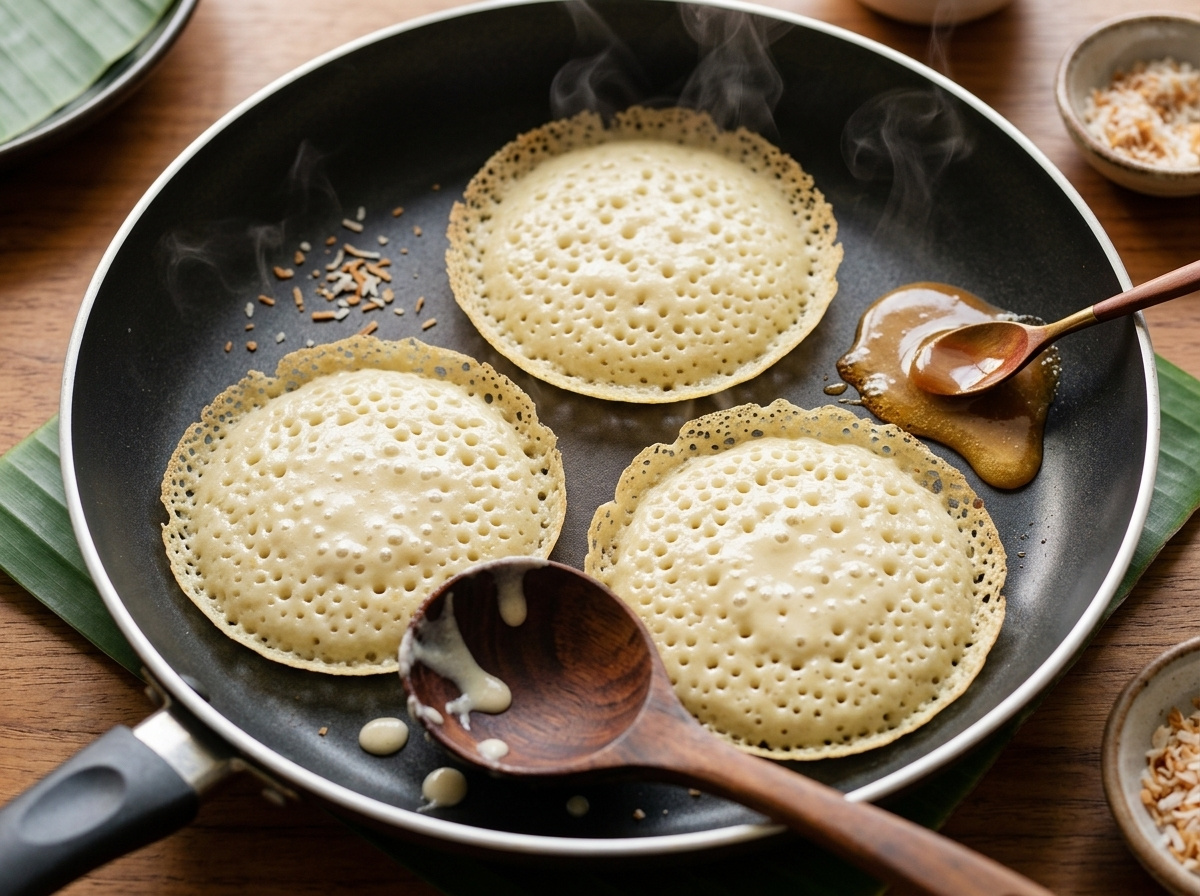
- Cover the skillet and cook for 3 to 4 minutes without flipping, until the tops are covered in tiny holes, the edges look lacy and golden, and the centers spring back when touched.
- Transfer the cooked serabi to a plate and repeat with the remaining batter, about 5 more batches, lowering the heat if the bottoms brown before the centers set.
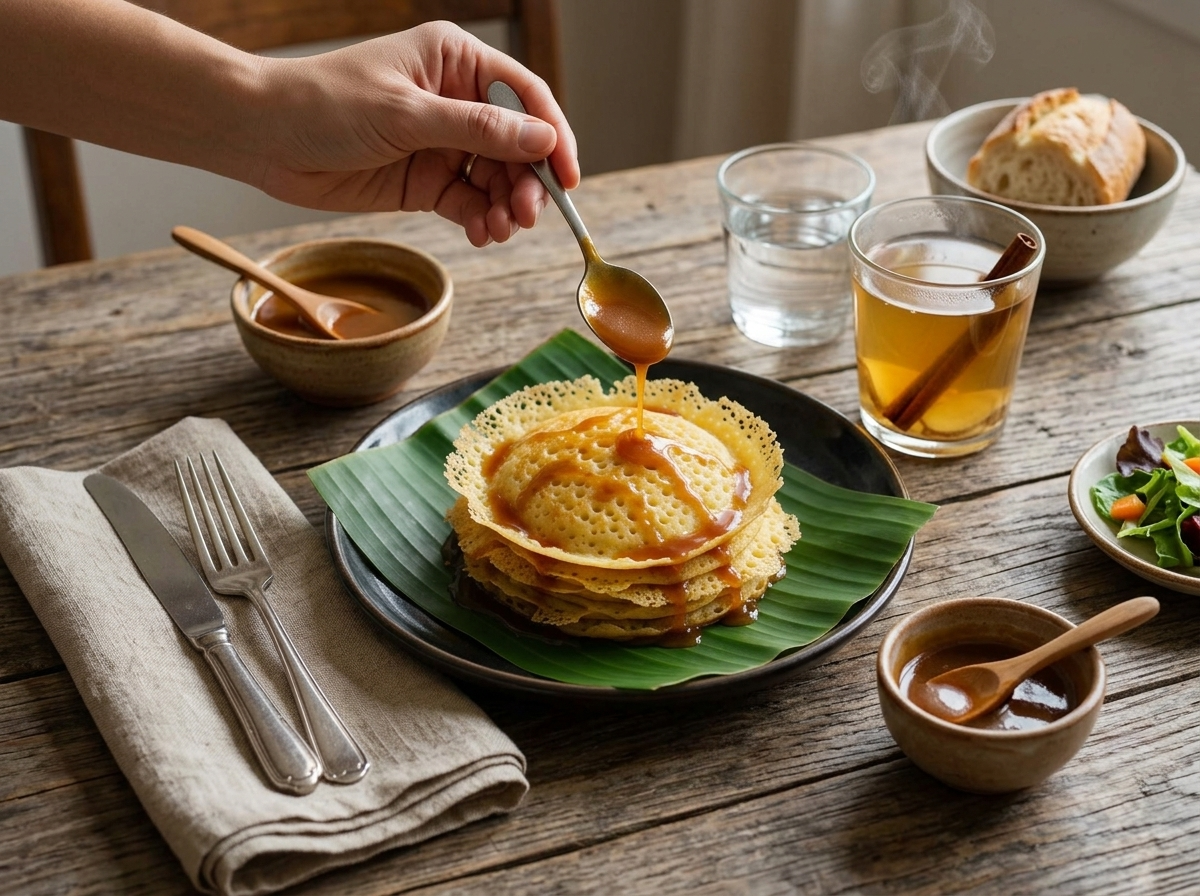
- Stack 3 warm pancakes per plate and spoon the warm kinca syrup generously over the top. Serve right away.
Notes
- Use a wide nonstick skillet if you don't have a traditional clay serabi pan
- Batter should look like thick crepe batter, thin with water if too stiff
- Palm sugar blocks vary in hardness, chop with a knife before measuring
- Don't flip the pancakes, they cook through under the lid
Tips for Success
- Let the batter rest a full 30 minutes so small bubbles form on top. Skipping this step gives flat, dense pancakes.
- Keep the skillet on medium-low heat and cover it while cooking so the tops steam through without burning the bottoms.
- Strain the palm sugar syrup before adding coconut milk to catch any bark or grit from the sugar block.
- Swirl each ladle of batter slightly as you pour to help form the classic lacy, bubbled edge.
- Warm the kinca sauce again over low heat just before serving if it has thickened too much in the fridge.
Variations
- Add a few drops of pandan extract to the batter for bright green color if you skip fresh pandan leaves.
- Stir shredded young coconut into the finished syrup for a chewier, more textured kuah kinca.
- Make a savory version by topping plain pancakes with grated coconut and a pinch of salt, skipping the sugar syrup entirely.
Storage and Reheating
Serabi keeps for 2 days in an airtight container at room temperature, or up to 4 days in the fridge. Store the kinca syrup separately in a sealed jar in the fridge for up to a week.
Reheat pancakes in a dry 10 cm / 4-inch skillet over low heat for 1 to 2 minutes per side, or microwave 3 to 4 pancakes for 20 to 30 seconds until warm. Warm the syrup in a small saucepan over low heat, or in 15-second microwave bursts, stirring between each, until pourable again.
Serabi does not freeze well since the texture turns rubbery once thawed. If you want to prep ahead, make the syrup a few days early and mix the batter fresh the morning you plan to cook.
Serving Suggestions
Serabi kuah kinca works as a mid-morning snack or after-dinner treat alongside hot ginger tea or black coffee.
Stack three warm pancakes on a small plate and pour the syrup generously over the top just before eating, letting it pool underneath.
For a bigger spread, set the pancakes and syrup out separately next to other Indonesian sweets like pisang goreng or klepon so everyone can build their own plate.
FAQ
Why are my serabi pancakes dense instead of spongy?
Usually it’s underproofed batter or old yeast. Give the batter the full 30-minute rest until small bubbles show on top. If it still looks flat after resting, your yeast may be dead and won’t puff up once it hits the hot pan. A thinner, crepe-like batter also helps, so add a splash of water if yours looks too thick.
Can I use brown sugar instead of palm sugar in the kinca sauce?
Dark brown sugar is the closest substitute if you can’t find palm sugar (gula jawa). Use the same 150 g amount, though the syrup will taste sweeter and less smoky than the real thing. A small pinch of extra salt helps bring back some of that missing depth.
Can I make the kinca sauce ahead for serabi kuah kinca?
Yes, the syrup keeps in a sealed jar in the fridge for up to a week. Warm it gently in a small saucepan or in short microwave bursts before pouring over freshly cooked pancakes. Make the batter fresh the day you plan to cook, since it doesn’t hold well overnight.
What pairs well with serabi kuah kinca for a snack table?
Hot ginger tea or black coffee cuts through the sweetness of the palm sugar syrup nicely. For a bigger spread, add other Indonesian snacks like pisang goreng or klepon so people can mix and match. A sprinkle of toasted coconut on top adds a bit of texture too.
Is serabi kuah kinca gluten free?
Not as written, since the batter includes a small amount of all-purpose flour for chew. Swap that 30 g for extra rice flour and it becomes gluten free, though the pancakes turn out a bit more delicate. Check that your yeast and palm sugar are processed without cross-contact if that matters to you.
What’s the difference between this serabi and savory serabi Bandung?
This version, common in Solo and Jakarta, is sweet and served swimming in warm palm sugar coconut syrup called kuah kinca. Serabi Bandung is thinner and usually topped with savory oncom, or served plain with a light coconut sauce and no palm sugar at all. Both start from the same rice flour batter.
You might also like
