
Jump to Recipe
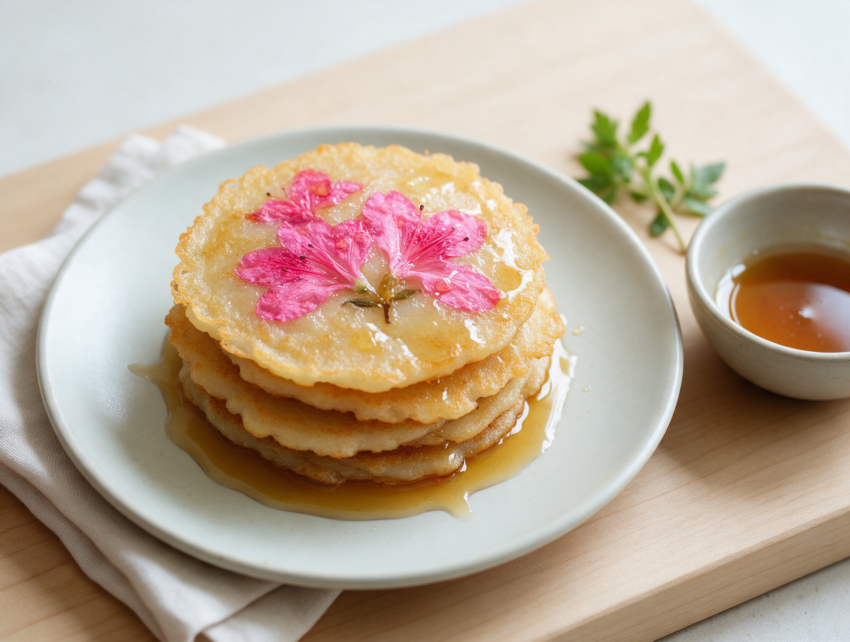
There’s something about pressing a flower into pancake dough that stops you for a second. Hwajeon does exactly that.
I first had this Korean rice pancake in early spring, made with real azalea petals pan-fried right into the batter. It sounds delicate. It’s actually pretty forgiving.
The dough is just glutinous rice flour, salt, and boiling water, kneaded until it feels like soft playdough. You flatten small disks, pan-fry them in a little oil, and press petals onto the top the second you flip.
A warm honey syrup goes over the top at the end. That’s it. No fancy equipment, no hard-to-find ingredients besides the flowers themselves.
Why You’ll Love This Recipe
- Uses only 3 pantry staples plus real flower petals
- Ready in about 40 minutes start to finish
- No special equipment beyond a nonstick skillet
- Naturally gluten free thanks to glutinous rice flour
Ingredient Notes
- glutinous rice flour: Look for chapssalgaru at a Korean grocery store; regular rice flour won’t give the same chewy, slightly translucent texture.
- edible flowers: Use pesticide-free petals labeled safe to eat, like azalea (remove the stamens), pansy, or dried rose. Skip florist flowers, they’re often treated with chemicals.
- boiling water: Hot water partially cooks the starch in the flour, which is why the dough turns pliable and slightly translucent as you knead it.
- honey: Wildflower or acacia honey both work fine. Warm it gently with a splash of water so it pours easily over the pancakes.
- neutral oil: Grapeseed or another neutral oil works best since it won’t fight with the honey syrup’s flavor.
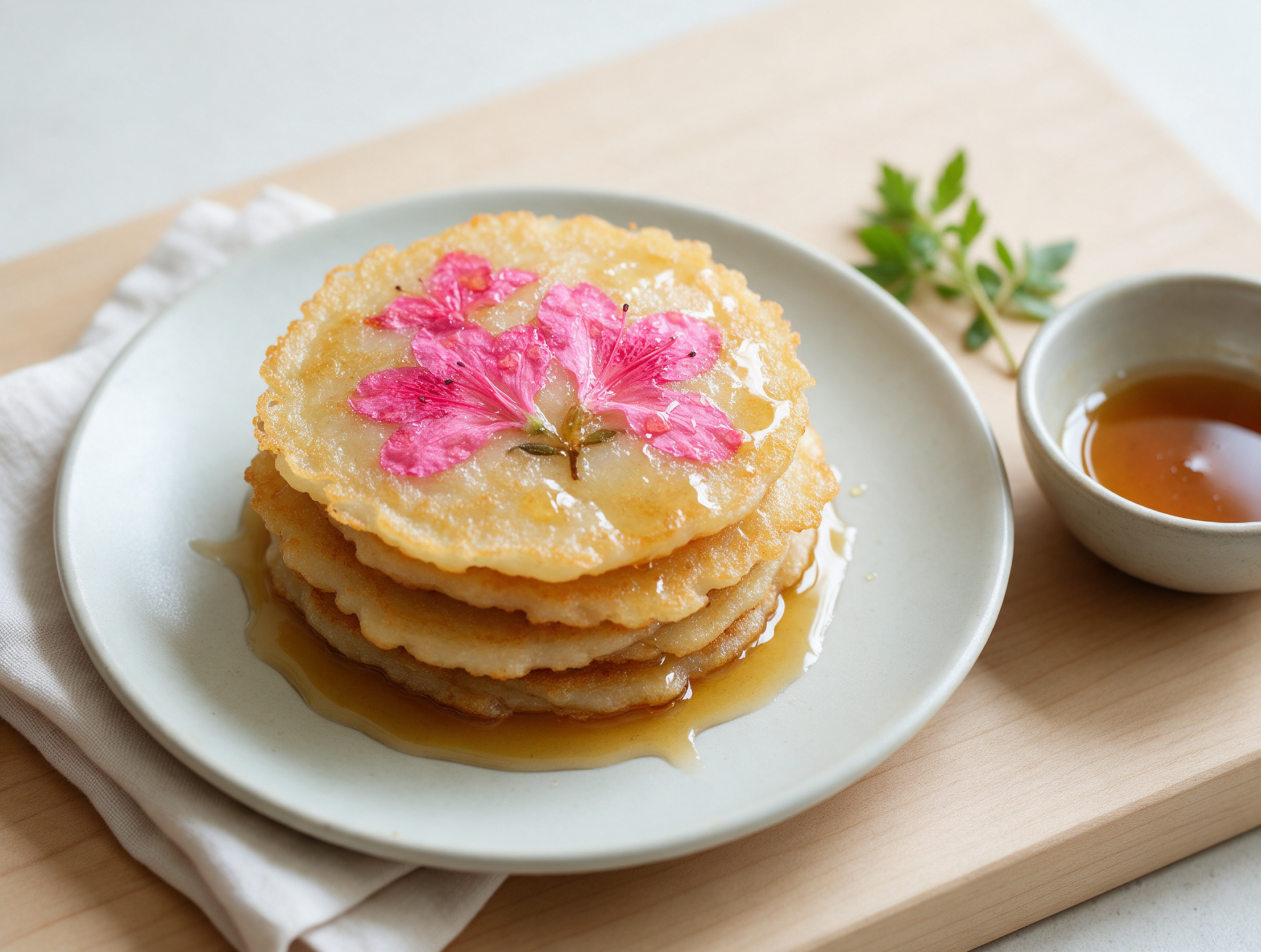
Pan-Fried Hwajeon Flower Pancakes with Honey Syrup
Ingredients
Method
- Rinse the edible flower petals gently in cool water and pat dry with paper towels. Trim off any green stem or bitter white base.
- Whisk the glutinous rice flour and salt together in a mixing bowl. Pour in the boiling water gradually, stirring with a wooden spoon until it forms a shaggy dough.
- Once the dough is cool enough to handle, knead it in the bowl for 2 to 3 minutes until smooth, like soft playdough. Cover with a damp towel and rest for 10 minutes.
- Divide the dough into 12 pieces, about 25 g each. Roll into balls, then flatten each into a disk 6 cm / 2.5 inches wide and 5 mm thick.
- Heat the 26 cm / 10-inch nonstick skillet over medium-low. Add 1 tsp of oil and swirl to coat.
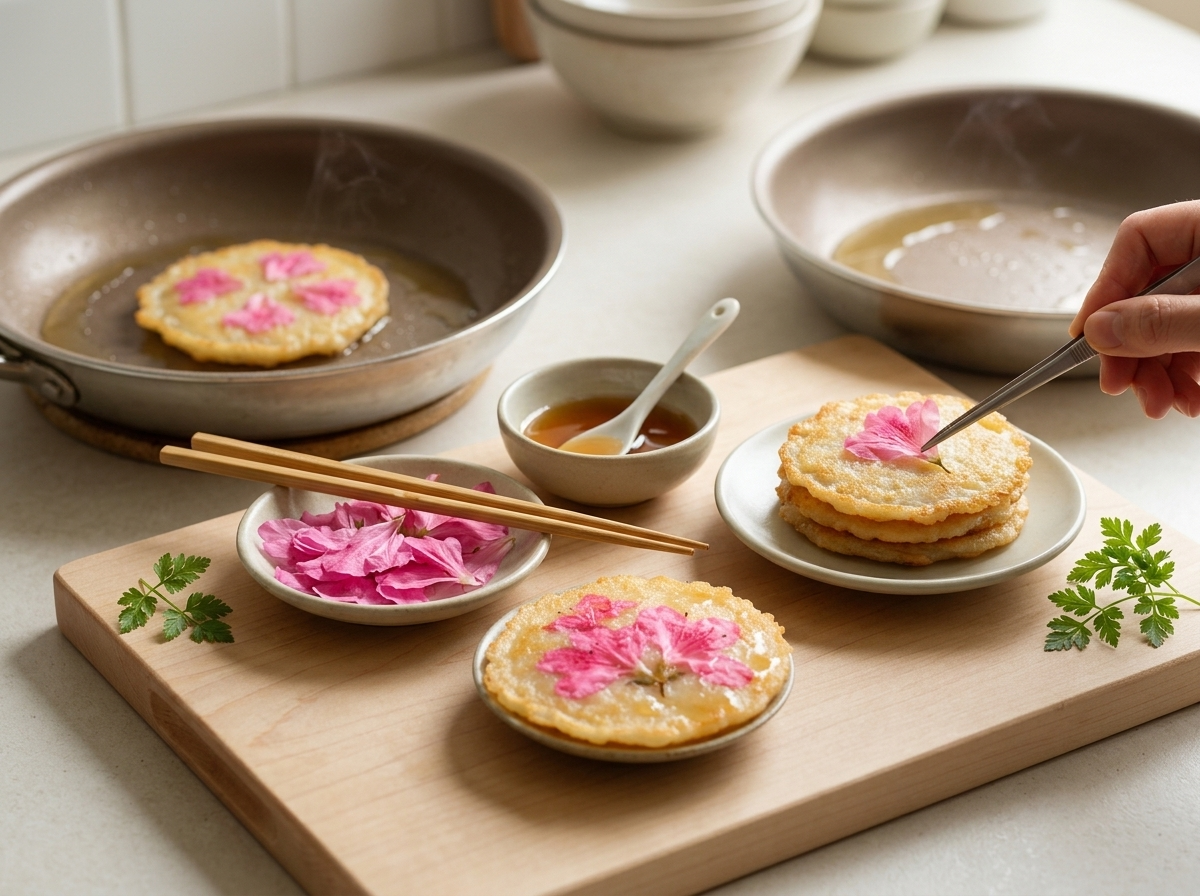
- Place 3 to 4 dough disks in the skillet at a time, leaving space between them. Cook for about 2 minutes, until the bottom turns golden in spots and slightly translucent.
- Flip each pancake, then immediately press 2 to 3 flower petals onto the just-flipped top while it's still soft, so they stick.
- Cook 1 to 2 more minutes until the petal side sets, the pancake is cooked through, and the edges are lightly crisp. Transfer to a plate.
- Wipe the skillet clean and add fresh oil for each new batch. Repeat with the remaining dough disks and petals.
- Combine the honey and water in a small saucepan over low heat. Stir for about 1 minute until loosely blended; don't let it boil.
- Drizzle the warm honey syrup over the pancakes just before serving, or serve it on the side for dipping.
Notes
- Use pesticide-free flowers only; florist flowers may contain chemical treatments.
- Rest dough 10 minutes covered before shaping for easier handling.
- Fry in small batches so pan heat stays even.
- Add petals immediately after flipping while the top is still soft.
Tips for Success
- Rest the dough for 10 minutes under a damp towel so it stays pliable and doesn’t crack when you flatten it.
- Press flowers onto the pancake the moment you flip it, while that side is still soft enough for petals to stick.
- Cook in batches of 3 to 4 disks so the skillet temperature stays even and nothing sticks together.
- Wipe the skillet and add fresh oil between batches so the petals don’t scorch on leftover browned bits.
- Warm the honey syrup gently over low heat instead of boiling it, so it stays pourable without turning sticky.
Variations
- Swap fresh azalea petals for pansies, chrysanthemum petals, or dried rose petals when spring flowers aren’t in season.
- Stir a pinch of ground cinnamon into the honey syrup for a warmer, spiced version of the classic glaze.
- Make a savory version by skipping the honey and serving the pancakes plain alongside soy-pickled vegetables.
Storage and Reheating
Hwajeon tastes best within a few hours of frying, while the edges are still a little crisp and the petals look bright.
If you have leftovers, store them in an airtight container in the fridge for up to 2 days. The rice dough firms up as it cools, so don’t expect the same tender bite the next day.
Reheat leftover pancakes in a dry 26 cm / 10-inch skillet over medium-low heat for 1 to 2 minutes per side, just until warmed through and the edges crisp back up slightly. Skip the microwave, it turns the chewy dough gummy and the petals soggy.
Serving Suggestions
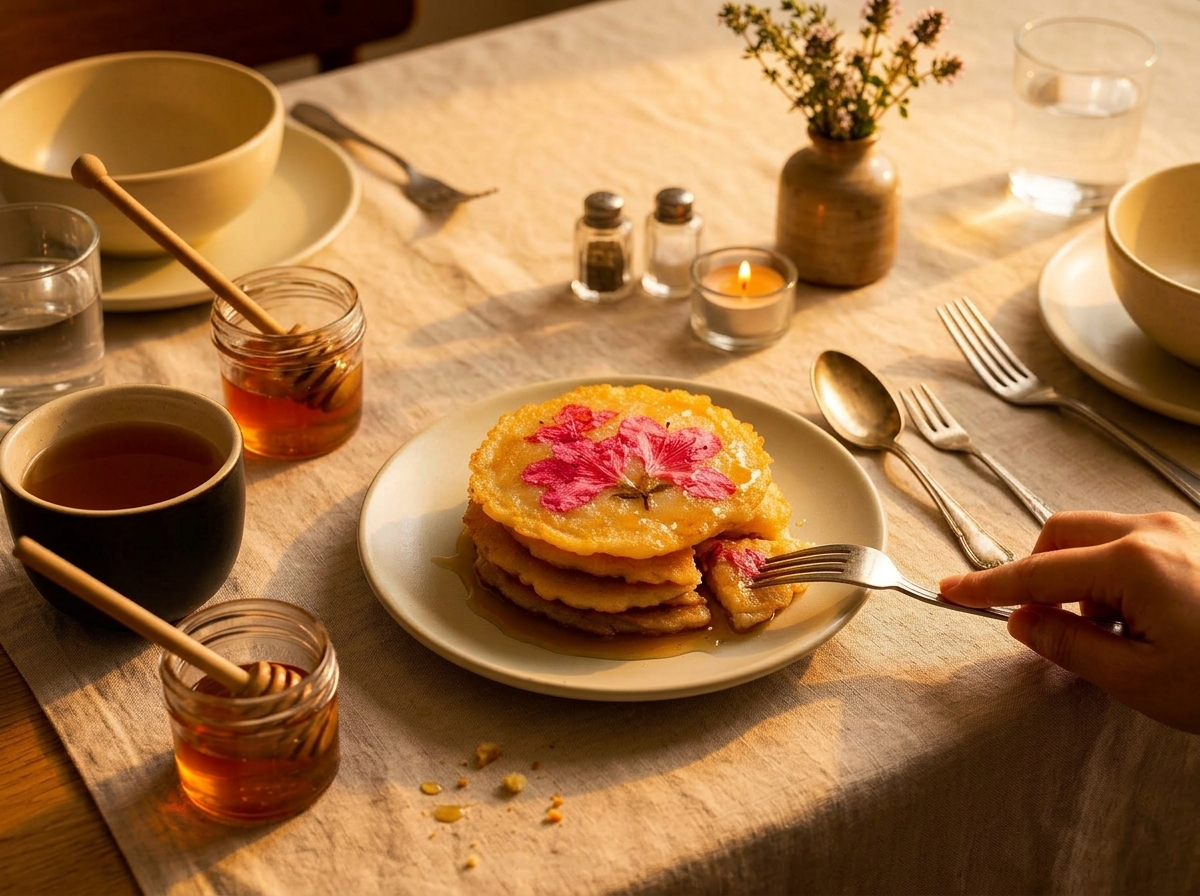
Serve hwajeon warm, right after drizzling with honey syrup, while the petals still look bright against the pale dough.
They pair well with a cup of unsweetened barley tea (boricha) or green tea, both of which cut through the sweetness.
For a small spring gathering, plate them alongside other Korean rice cakes (tteok) or fresh strawberries for color contrast.
FAQ
Why did my hwajeon fall apart when I flipped it?
This usually means the dough disk was rolled too thin or the pan wasn’t hot enough before you added it. Keep disks about 5 mm thick and let the bottom turn golden and slightly translucent, roughly 2 minutes, before flipping. A thin metal spatula and a quick, confident flip also help the pancake hold together.
Can I use dried rose petals instead of fresh azalea flowers for hwajeon?
Yes, dried rose petals work well and are easier to find outside of azalea season in spring. Soak them in cool water for a minute to soften before pressing onto the pancake, since dry petals can be brittle. Pansies and chrysanthemum petals are other traditional substitutes.
Can I make the hwajeon dough ahead of time and store it in the fridge?
You can make the dough up to a day ahead and keep it wrapped tightly in plastic in the fridge. Let it sit at room temperature for 15 to 20 minutes before shaping, since cold glutinous rice dough gets stiff and cracks when flattened. Fry and add the petals fresh, right before serving.
What goes well with hwajeon besides honey syrup?
Unsweetened barley tea or green tea works well since the mild bitterness balances the honey’s sweetness. Fresh strawberries or other spring fruit make a nice plate alongside the pancakes for color and a bit of acidity. Some cooks also serve a light cinnamon-sugar dusting instead of syrup.
Is hwajeon gluten free?
Yes, hwajeon is naturally gluten free because it’s made with glutinous rice flour, which despite the name contains no wheat gluten. Just check your honey and any add-ins don’t include gluten-based additives if you’re cooking for someone with celiac disease. The rest of the recipe is simple rice flour, water, and flowers.
What’s the difference between hwajeon and other Korean jeon pancakes?
Hwajeon is a sweet rice cake pancake made with glutinous rice flour and topped with real flower petals, usually eaten as a dessert or spring treat. Most other jeon are savory, made with wheat or mung bean flour and pan-fried with vegetables, meat, or seafood. Hwajeon belongs to the tteok, or rice cake, family rather than the savory jeon family.
If you enjoyed this, try
