Ingredients
Method
Make the Batter and Syrup
- In a mixing bowl, whisk together the rice flour, all-purpose flour, sugar, instant yeast, and salt.
- Slowly whisk in the coconut milk and water until you have a smooth, lump-free batter about the thickness of heavy cream. Tuck in the knotted pandan leaves if using.
- Cover the bowl and let the batter rest at room temperature for 30 minutes, until small bubbles appear on the surface.
- Meanwhile, combine the palm sugar, 150 ml water, and the extra pandan leaf in a 1-quart / 1 L saucepan. Simmer over medium heat, stirring occasionally, for 5 minutes until the sugar fully dissolves.
- Strain the syrup through a fine-mesh strainer into a clean saucepan to remove any grit. Stir in the coconut milk and salt, then simmer for 5 to 6 minutes more, until slightly thickened and it coats the back of a spoon. Keep warm over low heat.
Cook and Serve the Serabi
- Heat a 30 cm / 12-inch nonstick skillet over medium-low heat. Give it a light wipe with oil for the first batch only.
- Ladle about 3 tablespoons of batter into the skillet for each pancake, spacing 3 rounds apart so the edges don't touch.
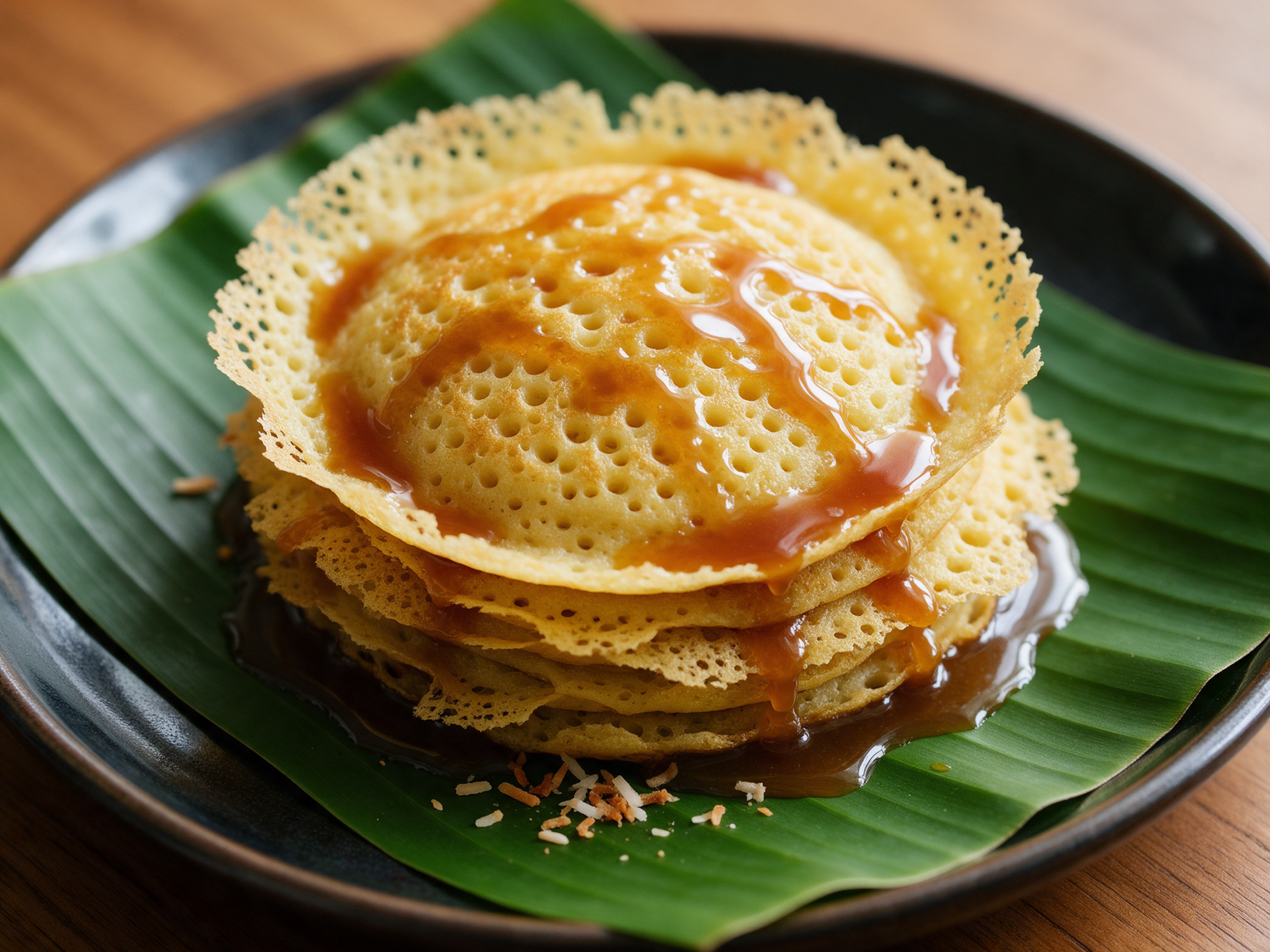
- Cover the skillet and cook for 3 to 4 minutes without flipping, until the tops are covered in tiny holes, the edges look lacy and golden, and the centers spring back when touched.
- Transfer the cooked serabi to a plate and repeat with the remaining batter, about 5 more batches, lowering the heat if the bottoms brown before the centers set.
- Stack 3 warm pancakes per plate and spoon the warm kinca syrup generously over the top. Serve right away.
Notes
- Use a wide nonstick skillet if you don't have a traditional clay serabi pan
- Batter should look like thick crepe batter, thin with water if too stiff
- Palm sugar blocks vary in hardness, chop with a knife before measuring
- Don't flip the pancakes, they cook through under the lid