
Jump to Recipe
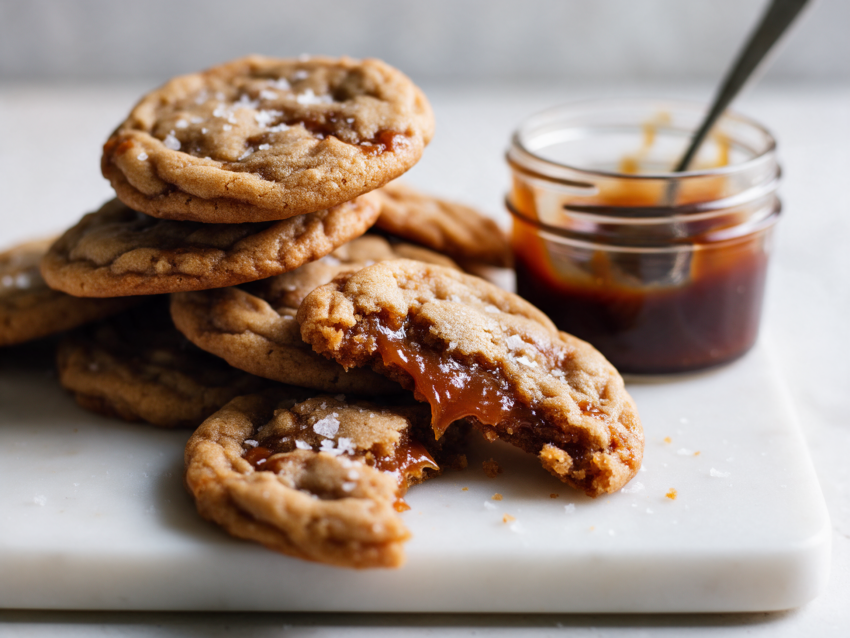
Tamarind caramel cookies are chewy brown-sugar cookies with a pocket of sticky, tangy caramel in the center. The tamarind gives the caramel a fruity sourness, so each bite tastes like more than sugar.
There’s something about sour and sweet together that keeps you reaching for another. Tamarind candy is a favorite from Mexico to Thailand to India, and it works in caramel the same way.
The dough is plain. Nothing fussy. The caramel takes about 10 minutes at the stove, and it’s ready when it turns the color of an old copper penny.
One thing matters most. Chill the caramel until it’s thick like soft fudge. If it’s still runny when you fill the dough, it leaks out and scorches on the pan.
Why You’ll Love This Recipe
- Tangy tamarind keeps the caramel from tasting one-note sweet
- Chilled caramel centers stay put instead of leaking onto the pan
- Plain pantry dough, and only the tamarind paste needs a store trip
- Filled dough balls freeze and bake straight from the freezer
Ingredient Notes
- tamarind paste: Use the thick, jammy seedless paste sold in jars or tubs at Asian and Latin grocers. If you only find block pulp, soak 30 g in 2 tbsp hot water and press it through a sieve.
- heavy cream: Use it at room temperature so it doesn’t spatter as hard when it hits the hot sugar. Full-fat canned coconut cream works for a dairy-free caramel.
- light brown sugar: Dark brown sugar works too and gives a stronger molasses flavor. Pack it into the cup or weigh it.
- flaky sea salt: A pinch on each warm cookie sharpens the caramel. If you only have fine salt, use a few grains per cookie.
- unsalted butter: Soften it until a finger leaves a dent but the stick still holds its shape. Greasy, melty butter makes the cookies spread thin.
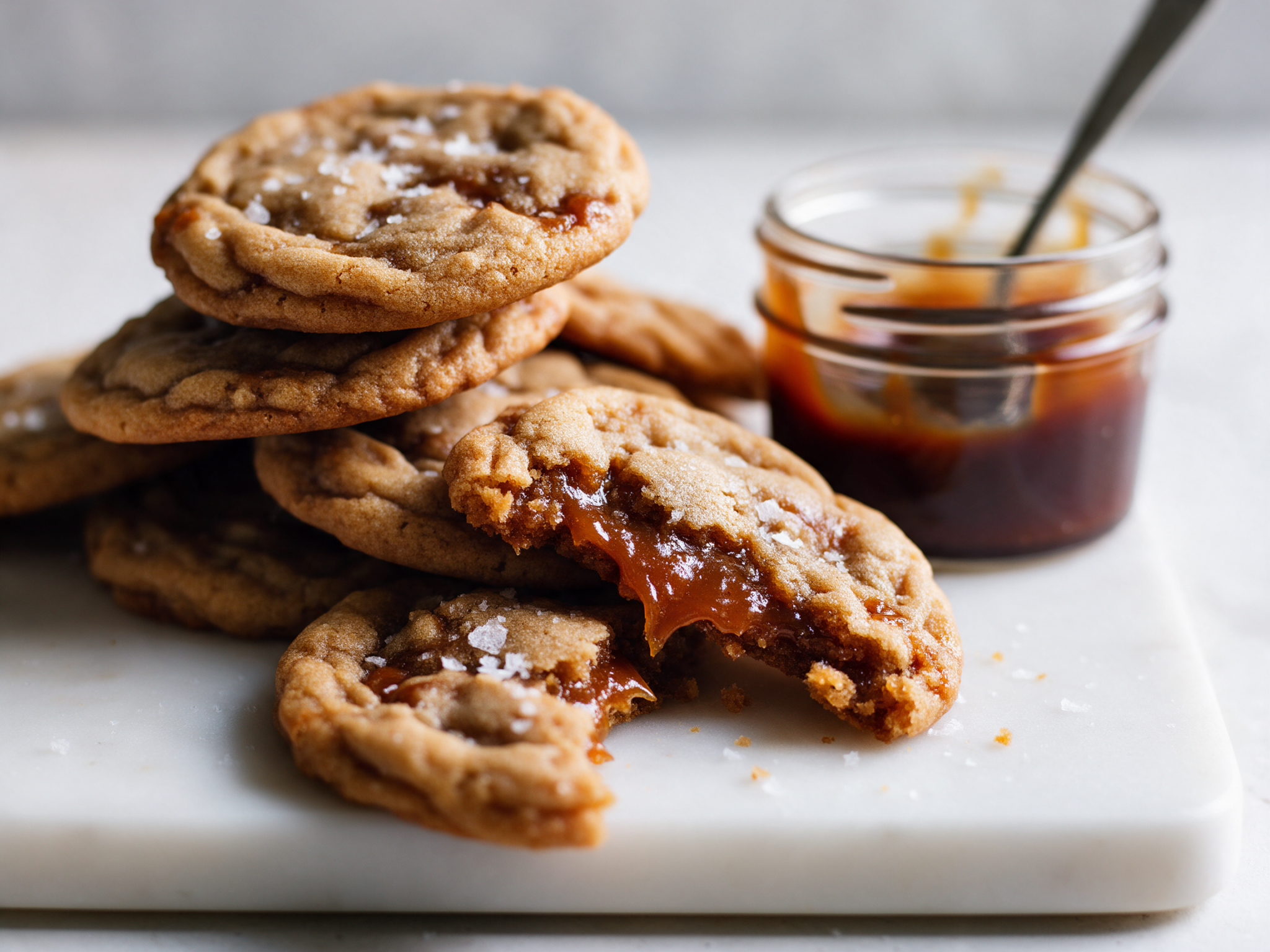
Chewy Tamarind Caramel Cookies with Flaky Sea Salt
Ingredients
Method
- Make the dough. In a 4-quart / 4 L bowl, beat 170 g softened butter with 100 g brown sugar and 50 g granulated sugar on medium speed for 2 to 3 minutes, until pale and fluffy. Beat in the egg and 1 tsp vanilla. Whisk 240 g flour, 1/2 tsp baking soda and 1/2 tsp salt together, then mix it in on low speed until no dry streaks remain.
- Make the caramel. In an 18 cm / 7-inch (2-quart / 1.9 L) heavy-bottomed saucepan, stir 100 g sugar with 2 tbsp water over medium heat until the sugar dissolves, then stop stirring. Cook for 6 to 8 minutes, swirling the pan now and then, until the syrup turns deep amber, the color of an old copper penny. Take it off the heat and whisk in the 60 ml cream (it will bubble up), then the butter, tamarind paste and 1/4 tsp salt. Simmer on low for 1 minute until smooth.
- Chill both. Scrape the caramel into a small heat-proof bowl and wrap the dough in plastic. Refrigerate both for 45 minutes, until the caramel is thick like soft fudge and the dough feels firm.
- Heat the oven to 175 C / 350 F with racks in the upper and lower thirds. Line two 33 x 46 cm / 13 x 18-inch sheet pans with parchment. Weigh the dough into 12 portions of about 50 g each.
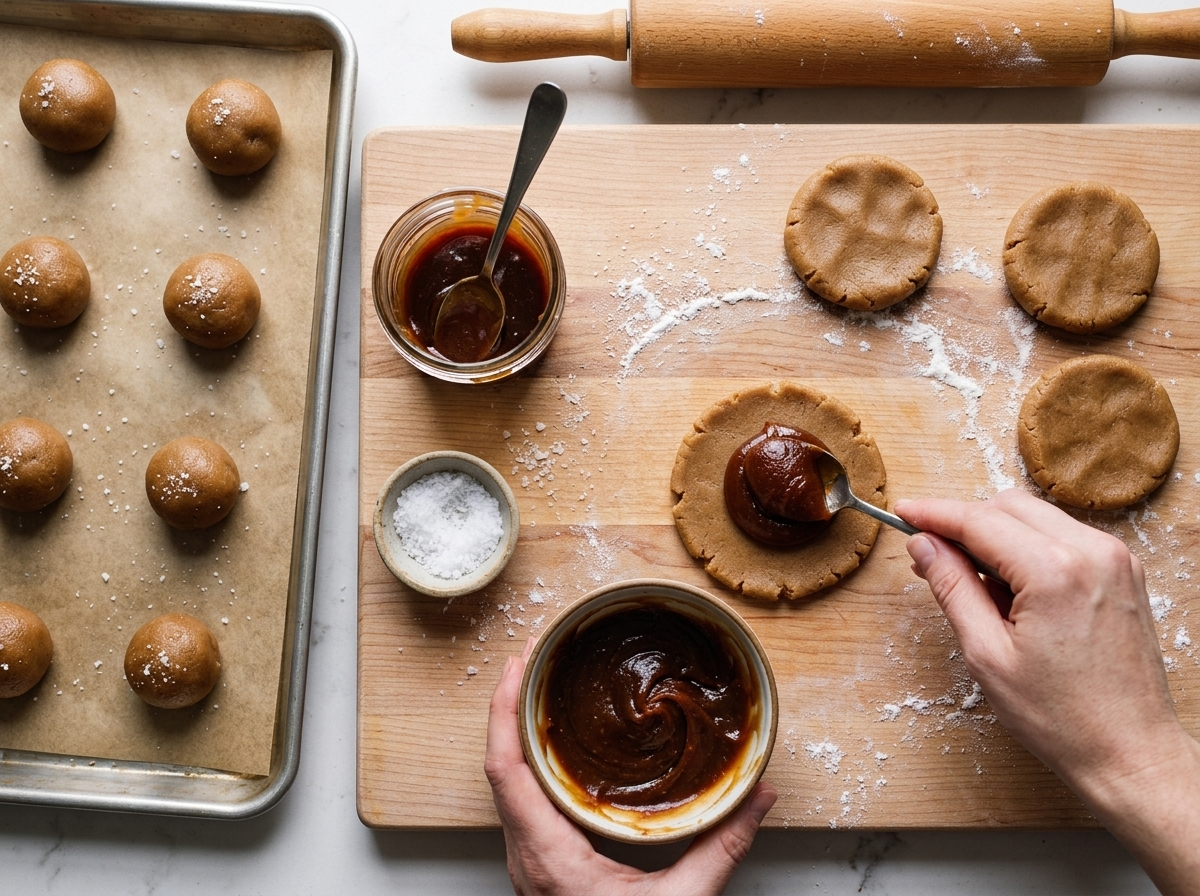
- Fill the cookies. Flatten one portion in your palm into a 7 cm / 3-inch disk, set a heaping teaspoon of chilled caramel in the middle, then pinch the edges closed and roll into a ball. Place the balls seam-side down, 6 per pan, 5 cm / 2 inches apart.
- Bake for 12 minutes, swapping the pans between racks and turning them at the 6-minute mark, until the edges are golden and set and the tops still look slightly soft. Sprinkle each cookie with flaky salt right away.
- Cool the cookies on the pans for 5 minutes, then move them to a wire rack. Spoon any leftover caramel into a jar and refrigerate it.
Notes
- Weigh the dough into 50 g portions so all 12 cookies bake in the same time.
- Keep the filling to one heaping teaspoon of caramel per cookie, since more pushes through the seam.
- Use thick seedless tamarind paste from a jar or tub, not thin pourable concentrate.
- Sprinkle flaky salt right after baking, while the tops are still warm enough to hold it.
- Space the balls 5 cm / 2 inches apart, since they spread to about 8 cm / 3 inches.
Tips for Success
- Weigh the flour at 240 g instead of scooping it, since packed cups give dry, cakey cookies that crack around the caramel.
- Stop stirring once the sugar dissolves and swirl the saucepan instead, so crystals don’t form and turn the caramel grainy.
- Pull the caramel off the heat at the color of an old copper penny, because darker sugar tastes bitter next to the tamarind.
- Pinch each seam shut and bake the balls seam-side down, so the caramel stays sealed inside as the dough spreads.
- Take the pans out while the centers still look slightly soft, then let the cookies finish setting on the hot pan for 5 minutes.
Variations
- Knead 100 g chopped dark chocolate into the dough before chilling for a bittersweet contrast against the tangy caramel.
- Roll each filled dough ball in 2 tbsp turbinado sugar before baking for a crackly, sparkly crust.
- Stir 1/2 tsp chili-lime seasoning into the caramel with the tamarind for a flavor that nods to Mexican tamarind candy.
Storage and Reheating
Store baked tamarind caramel cookies in an airtight container at room temperature for 3 to 4 days. Put parchment between layers, because the caramel centers stay a little tacky.
To bring back the soft center, microwave one cookie for 8 seconds. Or warm a pan of cookies at 150 C / 300 F for 4 minutes.
Freeze shaped, filled dough balls for up to 2 months and bake them from frozen at 175 C / 350 F for 14 to 15 minutes. Leftover caramel keeps in a sealed jar in the fridge for up to 2 weeks.
Serving Suggestions
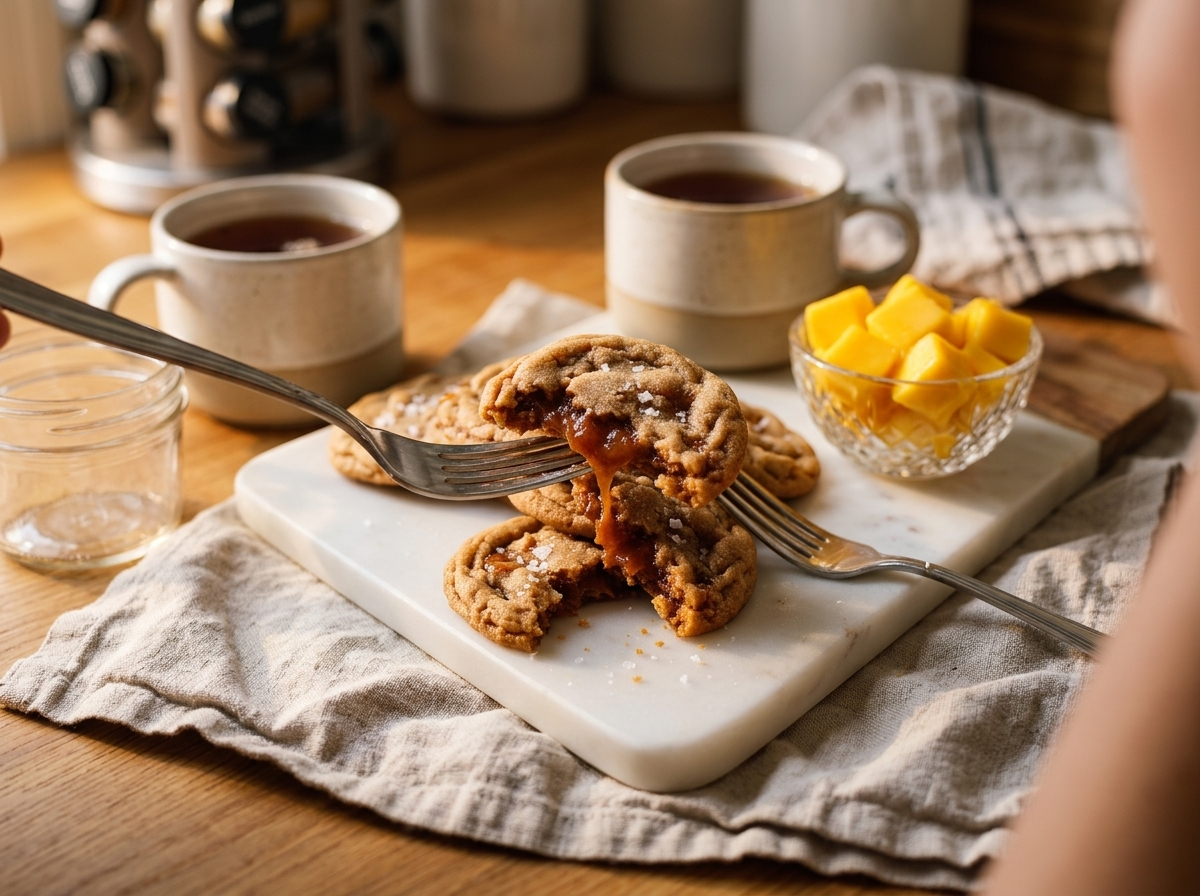
Serve the cookies slightly warm, when the caramel center is soft and stretchy. Set them out with black tea, strong coffee, or cold milk.
For dessert, sandwich a scoop of vanilla ice cream between two cookies. Sliced mango or pineapple on the side picks up the sweet-sour edge of the tamarind.
For gifting, pack them in a tin with parchment squares between layers. The parchment keeps the caramel from sticking.
FAQ
How do I know when the tamarind caramel is dark enough?
Take the sugar off the heat when it turns deep amber, close to the color of an old copper penny, usually 6 to 8 minutes in. It should smell nutty and toasty. If it smells acrid or looks nearly black, it’s burnt, and the tamarind will taste bitter, so start over.
Can I use tamarind pulp from a block instead of tamarind paste?
Yes. Before you start, soak 30 g of block tamarind pulp in 2 tbsp hot water for 10 minutes, mash it, then press it through a fine sieve to remove seeds and fibers. Use the smooth purée in place of the paste. Skip the sieve and the caramel turns gritty.
Can I freeze tamarind caramel cookie dough before baking?
Yes. Freeze the filled, shaped dough balls on a tray for 1 hour, then bag them for up to 2 months. Bake straight from frozen at 175 C / 350 F for 14 to 15 minutes, until the edges are golden and set. Don’t thaw them first, or the caramel softens and leaks.
What goes well with tamarind caramel cookies?
Black tea, strong coffee, or cold milk all work because their bitterness balances the sugar. A scoop of vanilla ice cream between two warm cookies is my favorite way to eat them. For a plate, add sliced mango or pineapple, since tamarind and tropical fruit share a sweet-sour edge.
Why is my tamarind caramel leaking out of the cookies?
The caramel was probably too soft or the seam wasn’t sealed. Chill the caramel until it’s thick like soft fudge, about 45 minutes, and use no more than a heaping teaspoon per cookie. Pinch the dough closed, roll it into a ball, and bake it seam-side down.
How do I make tamarind caramel cookies dairy free?
Swap both amounts of butter for the same weight of dairy-free baking sticks, and use full-fat canned coconut cream in the caramel instead of heavy cream. The cookies stay chewy, and the coconut adds a faint flavor that works with tamarind. They still contain egg and wheat flour.
More from the kitchen
