
Jump to Recipe
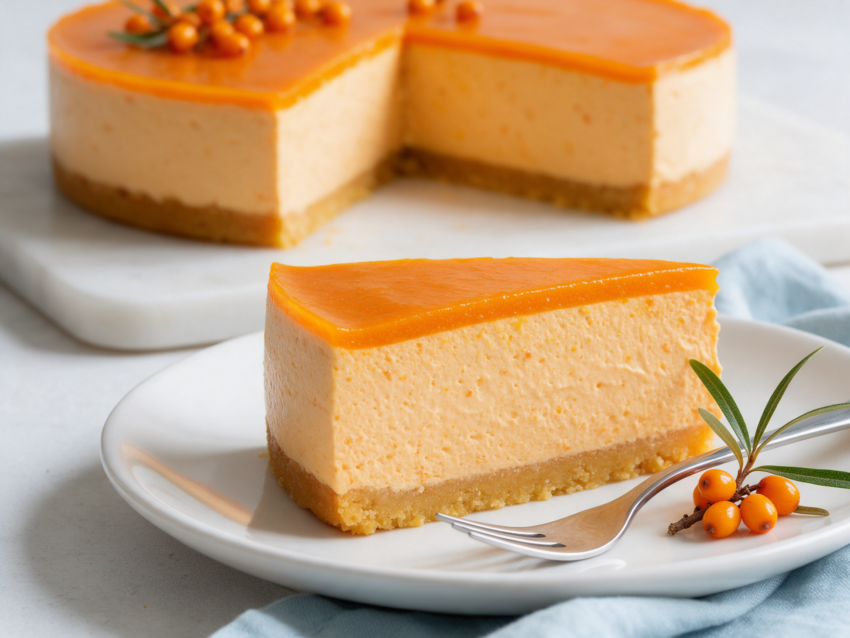
This no-bake sea buckthorn mousse cake has a buttery biscuit base, a tart orange mousse, and a thin berry glaze on top. It sets in the fridge and slices cleanly from a 20 cm / 8-inch springform.
There’s something about sea buckthorn that stops you mid-bite. Sour first, then sweet, a little like passion fruit and orange. I first had it as a spoonful of jam at a farmers’ market, and I’ve been chasing that bite since.
The one thing that can go wrong is the gelatin. Stir it into cold puree and it seizes into rubbery threads. Keep the puree lukewarm and you’re fine.
Plan on about 6 hours, almost all of it chilling. Hands-on time is closer to 45 minutes.
Why You’ll Love This Recipe
- No oven needed, just a stovetop and a fridge
- Tart berry mousse that stays light, not heavy
- Make it a day ahead and slice cleanly
- Frozen berries work, so no foraging required
Ingredient Notes
- Frozen sea buckthorn berries: Look for them in Nordic or Eastern European shops, or online. Thaw them overnight in the fridge and use all the juice they release. Mango puree with 2 tbsp lemon juice is the closest stand-in, though milder.
- Digestive biscuits: Graham crackers or plain shortbread work at the same weight. Use a biscuit that isn’t too sweet, since the berries already bring sugar.
- Powdered gelatin: 8 g is about 2 1/2 tsp. If you only have sheets, check the pack for weight per sheet, since 4 sheets at 2 g each equals 8 g.
- Mascarpone: It gives the mousse body and a soft, milky tang. Full-fat cream cheese works at the same weight but tastes sharper.
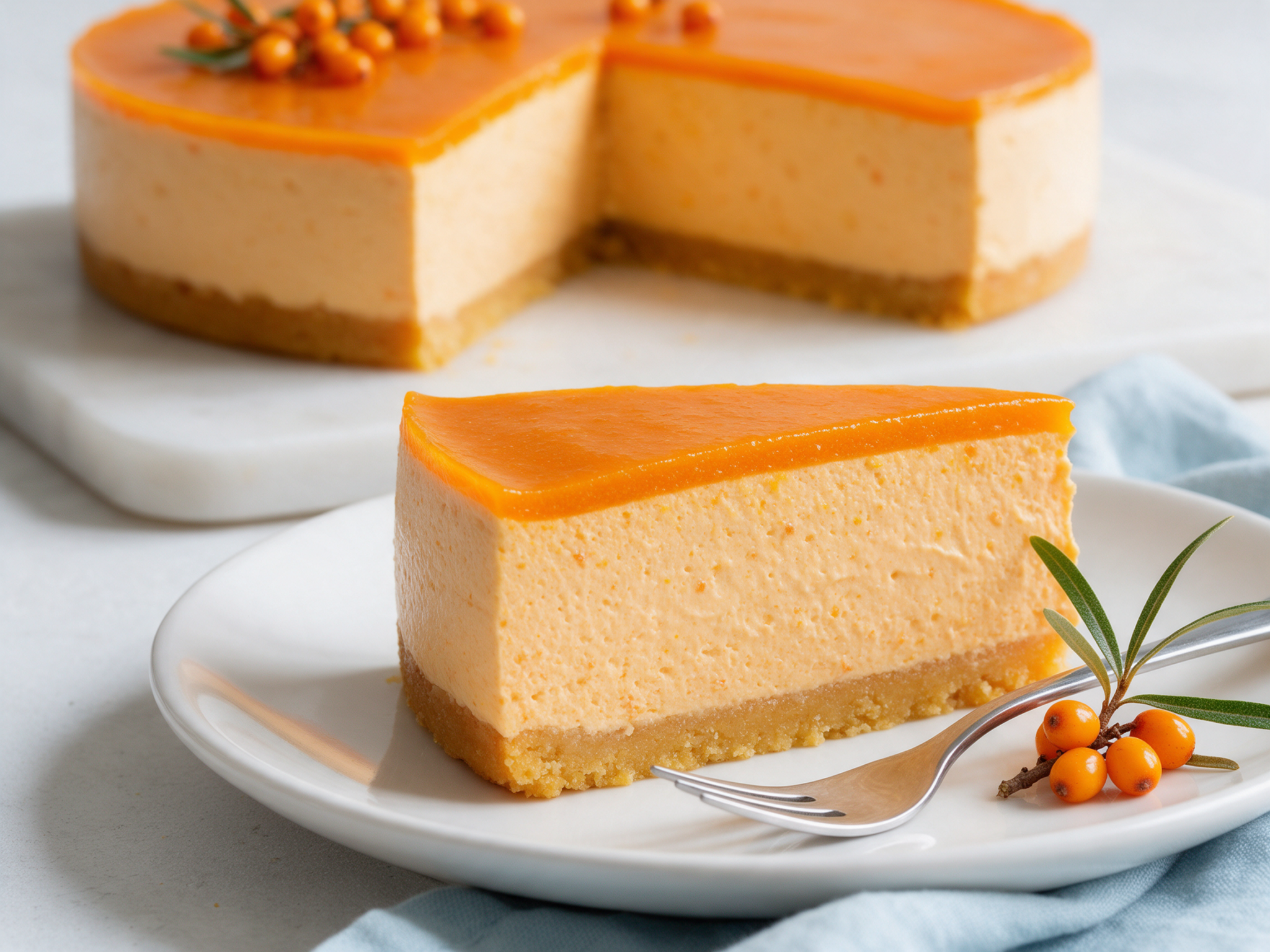
No-Bake Sea Buckthorn Mousse Cake with Biscuit Base
Ingredients
Method
- Crush 200 g digestive biscuits to fine crumbs in a zip bag with a rolling pin. Stir in 90 g melted butter and a pinch of salt until it looks like wet sand. Press the mixture firmly into the bottom of a 20 cm / 8-inch springform pan with the flat bottom of a glass, then chill for 15 minutes while you make the puree.
- Combine 450 g thawed berries, 110 g sugar, and 30 ml water in an 18 cm / 7-inch saucepan. Simmer over medium-low heat for 8 minutes, stirring now and then, until the berries burst and the liquid turns glossy orange.
- Press the berries through a fine-mesh sieve into a bowl, scraping the underside, until only seeds and skins are left. You should have about 290 g puree. Weigh out 220 g for the mousse and set 70 g aside for the glaze.
- Let the 220 g puree cool for about 15 minutes, until it feels lukewarm at 35 C / 95 F. Meanwhile, sprinkle 8 g gelatin over 40 ml cold water and leave it for 5 minutes to bloom. Microwave for 10 seconds until clear, then whisk it into the lukewarm puree. Let it stand 5 more minutes at room temperature.
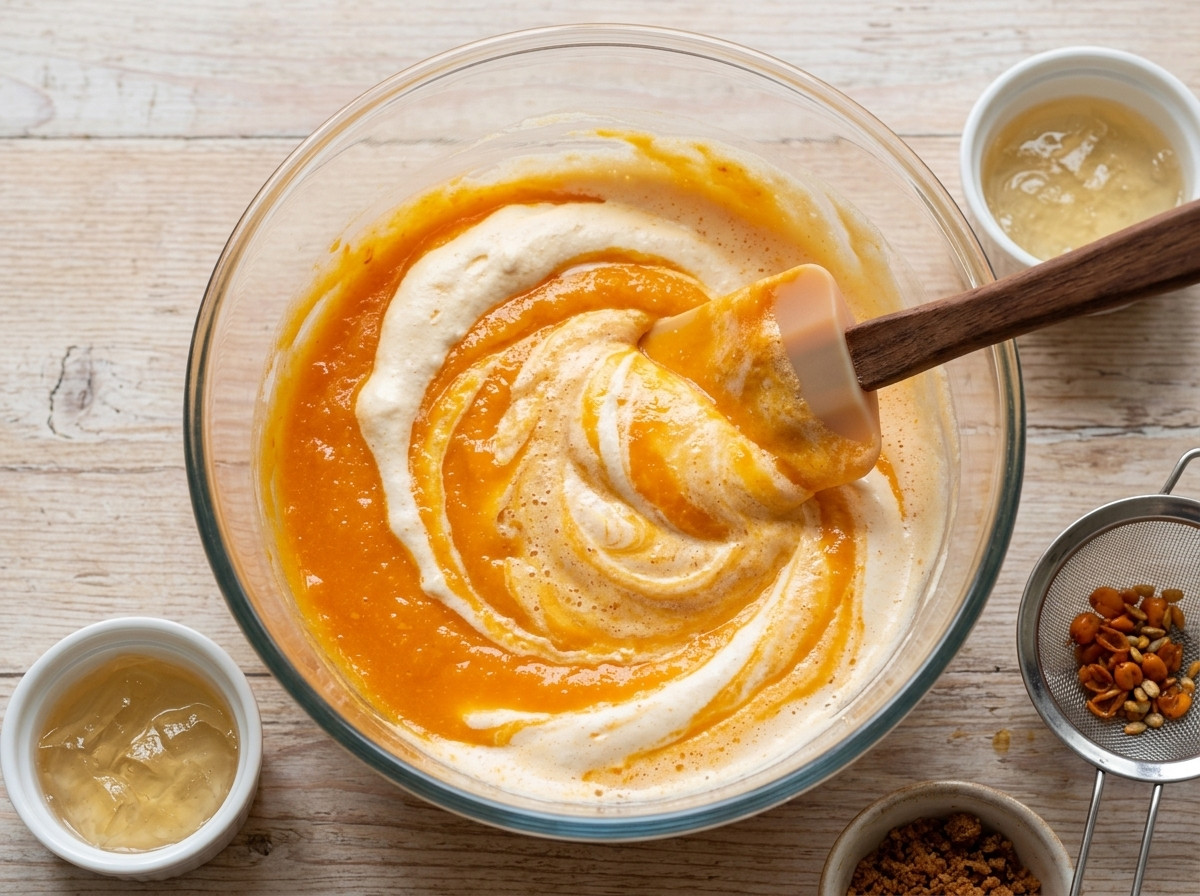
- Whip 250 ml cold cream, 120 g mascarpone, and 40 g powdered sugar in a large bowl with a hand mixer for about 2 minutes, to soft peaks that droop slightly from the beaters. Fold a third of it into the puree to loosen it, then fold in the rest in two additions until no orange streaks remain.
- Scrape the mousse over the chilled base and smooth the top with the back of a spoon. Tap the pan gently on the counter to settle it. Chill for 4 hours, until the edges are firm and the center barely wobbles when you nudge the pan.
- In the last 15 minutes of chilling, sprinkle 2 g gelatin over 2 tsp cold water and leave for 5 minutes. Warm the reserved 70 g puree in a small bowl in the microwave for 15 seconds, stir in the gelatin until dissolved, and cool for 5 minutes until barely warm.
- Pour the glaze gently over the set mousse, tilting the pan so it covers the surface in a thin layer. Chill for 1 hour, until the glaze is firm. Run a thin knife around the edge, release the springform, and let the cake stand 10 minutes before slicing into 8 pieces.
Notes
- Thaw the berries overnight in the fridge and use every drop of juice they release.
- Weigh out 70 g of strained puree for the glaze before you start the mousse.
- Chill the base for 15 minutes while the puree simmers so it firms up before the mousse goes on.
- Keep the cake cold until the moment you slice, since the mousse softens quickly at room temperature.
Tips for Success
- Press the puree through a fine-mesh sieve with a flexible spatula, scraping the underside, until only dry seeds and skins are left behind.
- Touch the puree with a fingertip before adding gelatin. It should feel lukewarm, around 35 C / 95 F, never cold.
- Whip the cream and mascarpone to soft peaks that droop slightly from the whisk, then fold them into the puree in three additions.
- Press the crumbs firmly with the flat bottom of a glass so the base slices cleanly instead of crumbling.
- Dip a knife in hot water and wipe it dry between cuts to get clean slices that show the layers.
Variations
- Whisk 80 g melted, cooled white chocolate into the mascarpone before whipping to soften the tartness for kids or cautious guests.
- Swap the digestives for 200 g crushed ginger biscuits to give the base a spiced edge that suits the sharp berries.
- Spoon the mousse into 8 small glasses over crushed biscuits, skip the glaze, and chill for 2 to 3 hours.
Storage and Reheating
Sea buckthorn mousse cake keeps 3 to 4 days in the fridge, covered loosely with foil or in a lidded container. The glaze stays glossy for the first 2 days and dulls a little after.
It’s a cold dessert, so there’s nothing to reheat. Take it out of the fridge 10 minutes before slicing, no longer, because the mousse softens fast at room temperature.
To make it ahead, press the base into the pan up to 2 days early and keep it wrapped in the fridge. The whole cake, glaze included, can be finished 1 day before serving. I don’t freeze it, since thawing turns the mousse slightly dense.
Serving Suggestions
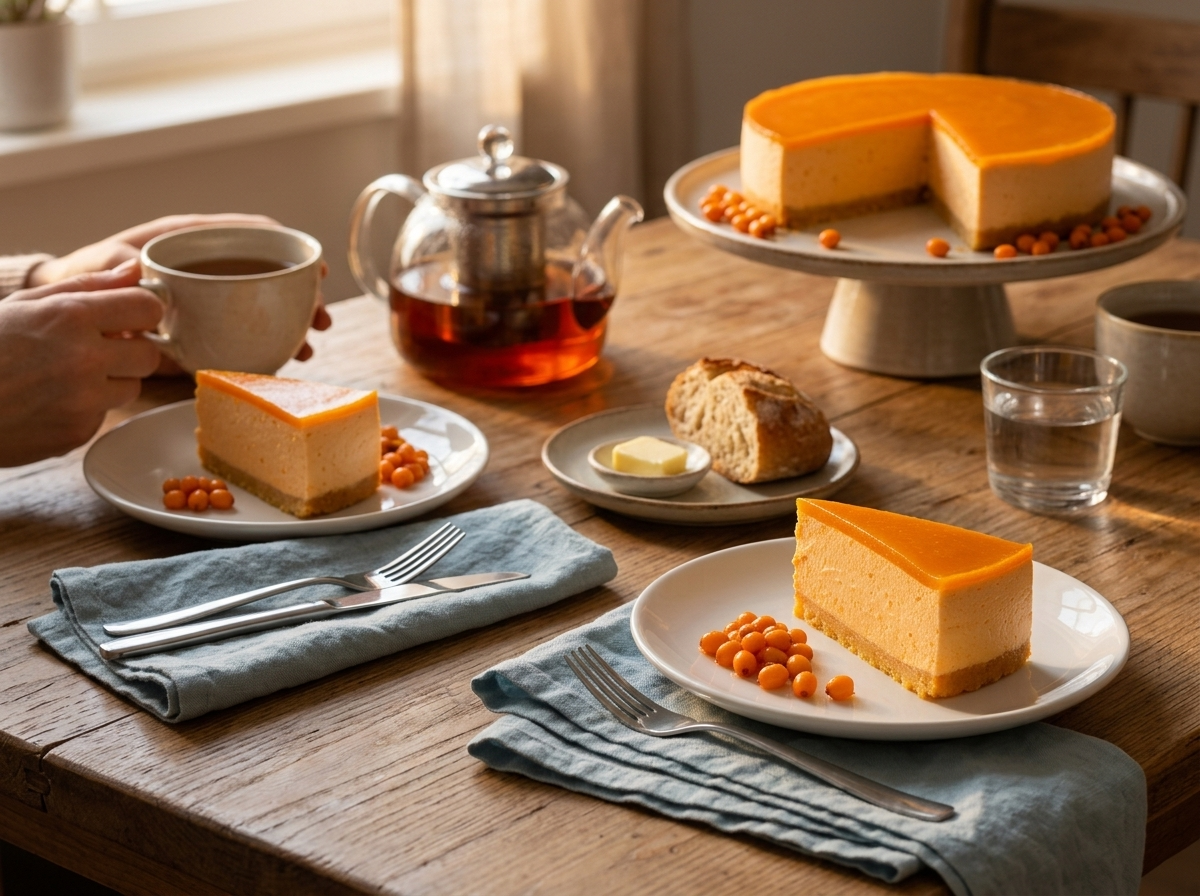
Serve the cake cold, in slim slices on small plates. A 1/8 slice is rich, so you don’t need much alongside it.
Black tea or Earl Grey suits the tartness. A dry sparkling wine works for an evening table.
Fresh orange segments or a spoonful of unsweetened whipped cream soften the sour edge for anyone new to the berry.
FAQ
Why are there rubbery strings in my sea buckthorn mousse?
Rubbery strings mean the melted gelatin hit puree that was too cold and set before it could blend in. Stir it into puree that feels lukewarm, around 35 C / 95 F. If threads already formed, rewarm the puree to about 40 C / 104 F, whisk hard, and strain it before folding in the cream.
How do I know when the sea buckthorn mousse cake is set?
The mousse is set when the edges look firm and the center barely wobbles as you nudge the pan, usually after 4 hours in the fridge. It shouldn’t ripple like liquid. Add the glaze only at this point, then chill for 1 more hour.
Can I use sea buckthorn juice instead of frozen berries?
Yes. Use 220 g of unsweetened juice for the mousse and warm it with about 80 g sugar until dissolved, then cool it and add the gelatin as written. Juice has no pulp, so the mousse will be lighter in color. I’d skip jam, since it’s too sweet to balance the cream.
Can I make sea buckthorn mousse cake the day before serving?
Yes, and it slices well after a night in the fridge. Finish the whole cake, glaze included, up to 1 day ahead and keep it covered in the pan. It holds 3 to 4 days in total. Unmold it just before serving and let it stand 10 minutes.
What goes well with sea buckthorn mousse cake?
Black tea, Earl Grey, or strong coffee balance the tartness best. For an evening table, a dry sparkling wine works. On the plate, fresh orange segments or a spoonful of unsweetened whipped cream soften the sour edge for guests who haven’t tried sea buckthorn before.
Is sea buckthorn mousse cake gluten free?
Not as written, because digestive biscuits contain wheat. Swap in the same weight of gluten-free digestives or ginger biscuits and the rest of the cake stays the same. It also isn’t vegetarian, since the mousse and glaze are set with gelatin.
Loved this? Try these next
- this Chocotorta: Argentina’s No-Bake Dulce de Leche Cake
- No-Bake Oblatne Wafer Cake with Walnut-Cocoa Filling recipe
