
Jump to Recipe
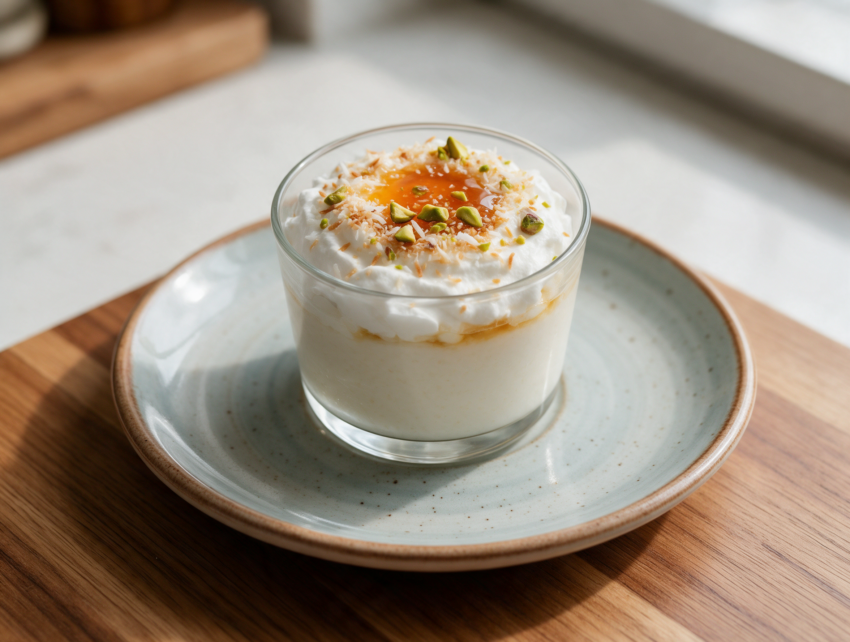
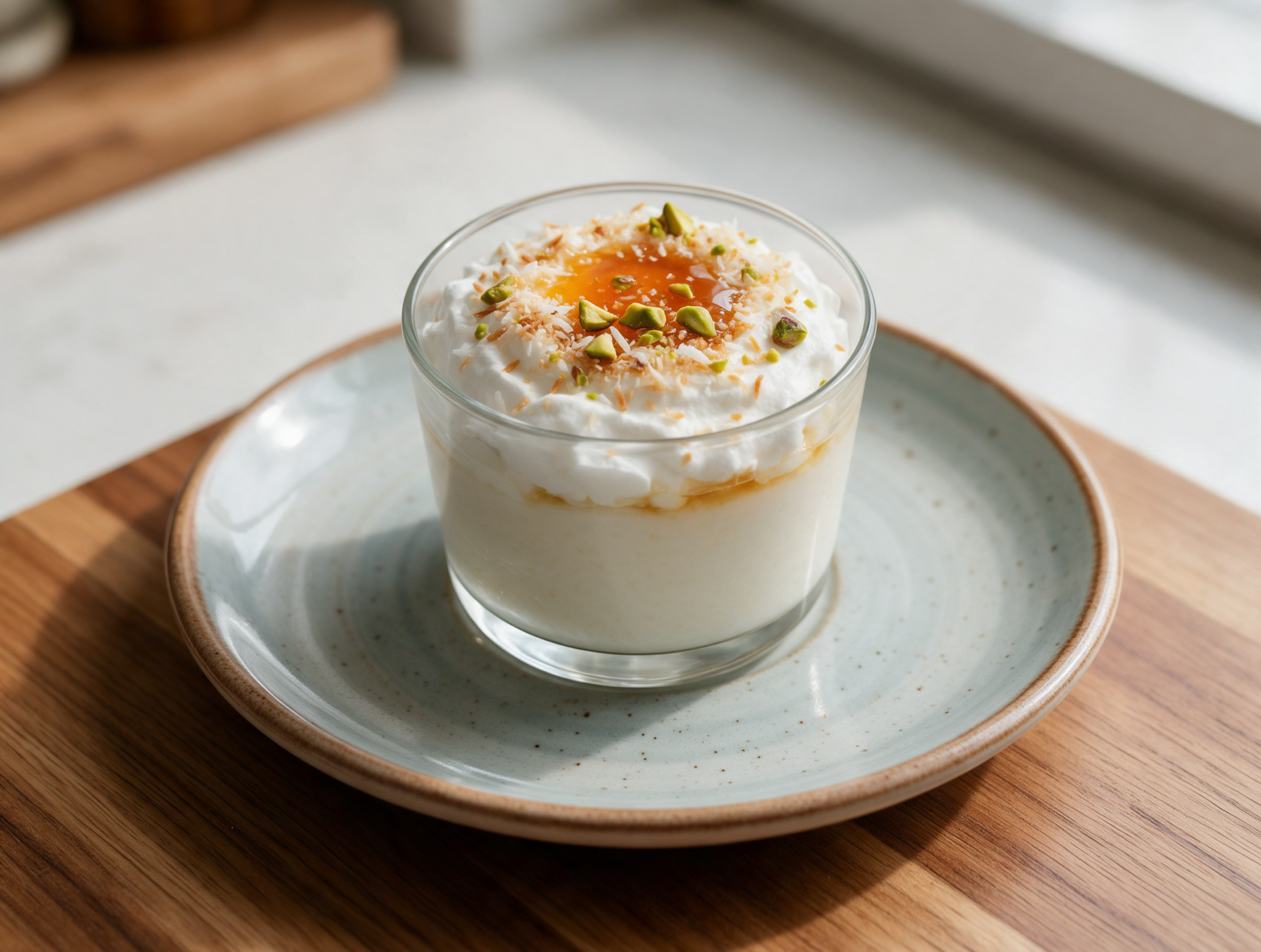
Layali Lubnan means ‘Lebanese nights,’ and it’s a chilled semolina milk pudding topped with sweetened cream, coconut, pistachios, and a drizzle of orange blossom syrup.
I had my first bowl at a small restaurant in Beirut after a very long, very hot day. It was cold, soft, and floral in a way I didn’t expect from something that looked like plain custard.
The pudding itself is basic pantry stuff. Milk, semolina, sugar, a little cornstarch for insurance. The syrup and toppings are where the dish gets its personality.
Most of the work here is patience, not skill. You whisk the pudding until it thickens, pour it into a dish, and let the fridge do the rest.
Why You’ll Love This Recipe
- Ready with 10 minutes of active stovetop cooking
- Make-ahead dessert that only improves after a long chill
- No oven, no eggs, no water bath needed
- Floral orange blossom syrup makes it taste like a restaurant dish
Ingredient Notes
- Fine semolina: Use the fine grind, not the coarse one meant for couscous, or the pudding turns gritty.
- Cornstarch: Backs up the semolina so the pudding sets firmly enough to slice or scoop cleanly.
- Orange blossom water: Adds the floral note this dessert is known for. Rose water works too, or use half of each.
- Heavy cream: Whipped soft, it stands in for ashta (Lebanese clotted cream), which is harder to find outside the Middle East.
- Shredded coconut: Unsweetened is best here since the syrup already brings plenty of sugar.
Layali Lubnan (Lebanese Milk Pudding)
Ingredients
Method
- Whisk the semolina and cornstarch into 250 ml of the cold milk in a bowl until no lumps remain. Set aside.
- Pour the remaining 750 ml milk and the sugar into a 3-quart / 2.8 L heavy-bottomed saucepan. Heat over medium, whisking often, until warm and the sugar dissolves, about 4 minutes.
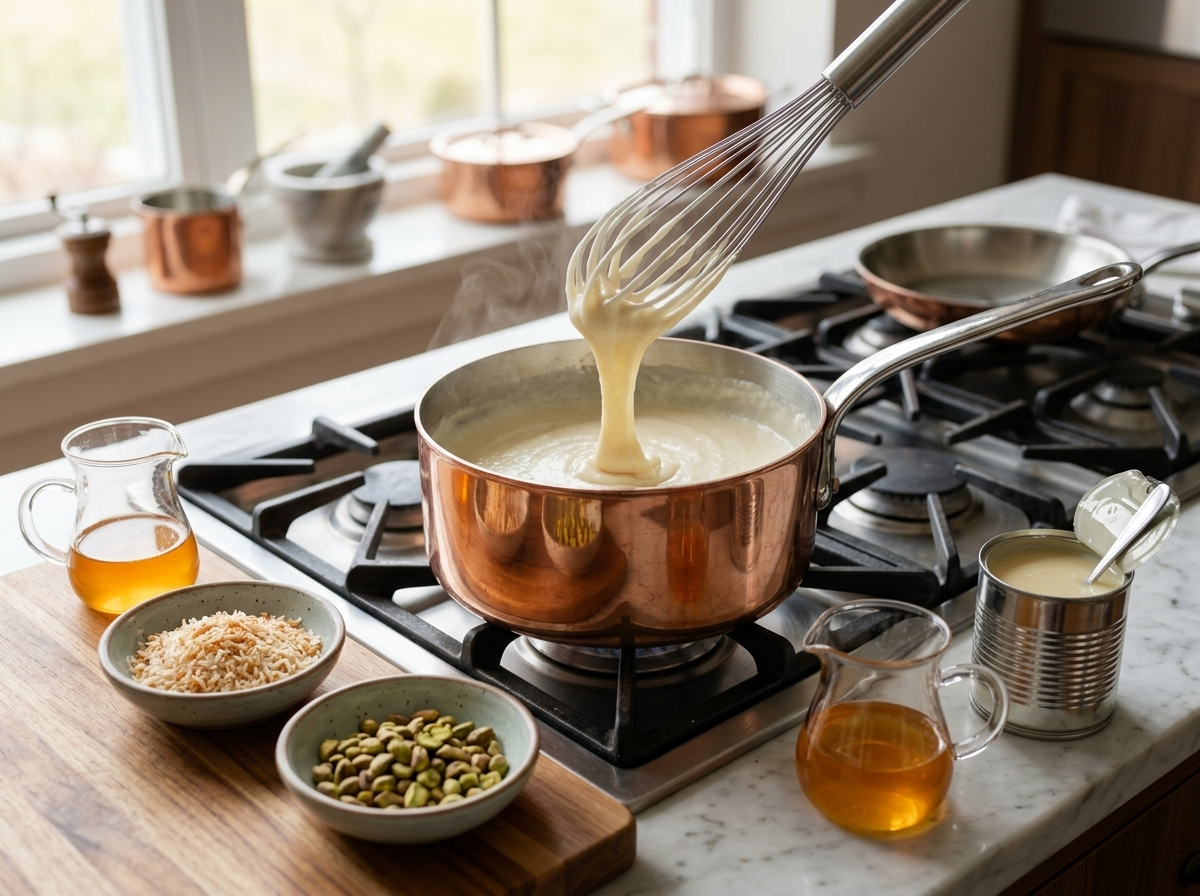
- Whisk in the semolina slurry. Keep whisking constantly over medium heat and cook for 8 to 10 minutes, until the mixture thickens and coats the back of a spoon, with a line drawn through it holding for a second.
- Remove from heat and stir in the rose water and orange blossom water.
- Pour into a 9 x 13 inch / 23 x 33 cm dish or divide among 6 individual glasses. Smooth the top, cool at room temperature for 20 minutes, then cover and refrigerate at least 4 hours, until fully set and no longer liquid in the center.
- Combine the sugar, water, and lemon juice in a small saucepan. Bring to a simmer over medium heat, stirring until the sugar dissolves, 3 to 4 minutes.
- Simmer without stirring for 5 minutes, until slightly thickened. Remove from heat, stir in the orange blossom water, and cool completely before using, it will thicken further as it sits.
- Whip the heavy cream to soft peaks. Spread or dollop it evenly over the chilled pudding.
- Sprinkle the shredded coconut and chopped pistachios over the cream layer.
- Drizzle each portion with 1 to 2 tablespoons of the cooled syrup just before serving, and pass extra syrup on the side.
Notes
- Whisk the semolina slurry into cold milk to prevent lumps forming in the hot pot.
- Don't stop whisking once the pudding thickens, it scorches fast on the pot bottom.
- Cool the syrup completely before pouring, warm syrup melts the whipped cream layer.
- Chill at least 4 hours for a clean set, overnight is even better.
Tips for Success
- Whisk the semolina slurry into cold milk first to avoid lumps forming in the hot pot.
- Keep whisking constantly once the pudding starts to thicken, or it will scorch on the bottom.
- Cook until the mixture coats the back of a spoon and a line drawn through it holds for a second.
- Cool the syrup fully before pouring, since warm syrup will melt the cream topping.
- Chill the pudding at least 4 hours; anything less and the center stays loose when you cut into it.
Variations
- Swap half the milk for coconut milk and skip the shredded coconut for a different texture.
- Layer the pudding in individual glasses for a plated dessert instead of one large dish.
- Add a few strands of saffron to the milk while it heats for color and a warm, earthy note.
Storage and Reheating
Layali Lubnan keeps well in the fridge for 3 to 4 days. Cover the dish tightly with plastic wrap or store individual portions in sealed containers so the pudding doesn’t pick up other fridge smells.
This dessert is meant to be eaten cold, so there’s no reheating step here. If you’re making it ahead, keep the syrup and cream topping separate and add them just before serving so the coconut and pistachios stay dry and crunchy instead of going soggy.
Freezing isn’t a good idea. The semolina pudding turns grainy and weeps liquid once thawed, so plan to make it within the week you’ll eat it.
Serving Suggestions
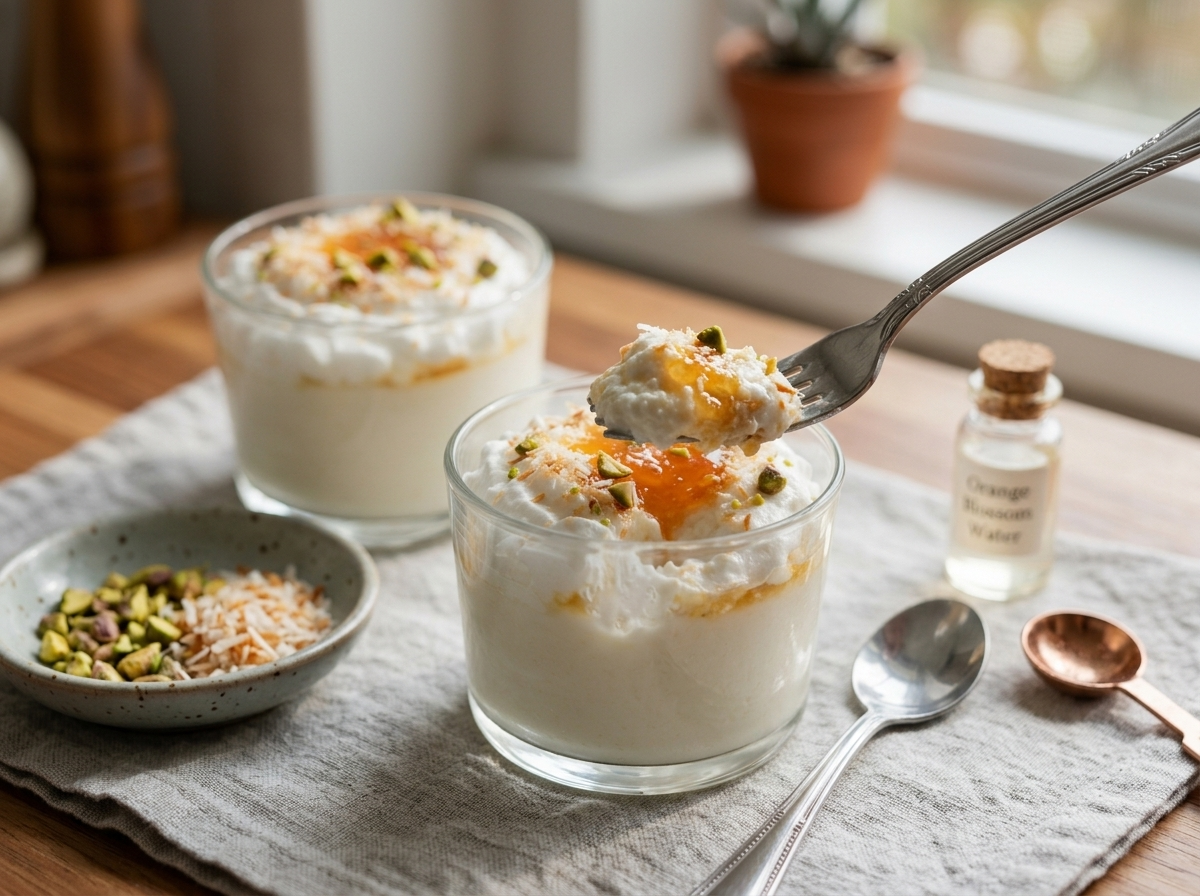
Serve Layali Lubnan cold, straight from the fridge, in small glass bowls or cups so the cream and syrup layers show through.
A plate of fresh fruit like pomegranate seeds or sliced strawberries on the side adds a tart contrast to the sweet syrup. Mint tea or Turkish coffee afterward is the traditional finish.
For a dinner party, spoon the pudding into small glasses ahead of time and add the toppings tableside so each guest gets a fresh, crisp layer of coconut and pistachio.
FAQ
Why is my layali lubnan pudding too runny and won’t set?
It usually means the pudding was pulled off the heat too early. Keep whisking over medium heat until it visibly thickens and coats the back of a spoon, about 8 to 10 minutes, not just until it looks slightly thicker than milk. It will firm up more in the fridge, but it needs to already hold shape on the spoon before chilling.
Can I use cornstarch instead of semolina in layali lubnan?
You can, but the texture changes to something closer to a smooth blancmange instead of the slightly grainy, custard-like bite semolina gives. If you go this route, use about 60 g cornstarch for the full batch and whisk it into cold milk first, same as the semolina slurry.
How long does layali lubnan keep in the fridge, and can I freeze it?
It keeps 3 to 4 days covered in the fridge, best with the syrup and toppings stored separately. Freezing isn’t recommended since the semolina base turns grainy and releases liquid once thawed, so make it only a few days before you plan to serve it.
What goes well with layali lubnan besides the classic ashta topping?
Fresh pomegranate seeds, sliced strawberries, or a spoon of tart yogurt all cut through the sweetness well. A cup of mint tea or Turkish coffee afterward is the traditional pairing in Lebanon and balances the floral syrup nicely.
Is layali lubnan gluten free since it’s made with semolina?
No, semolina is made from durum wheat, so this pudding contains gluten. To make a gluten-free version, swap the semolina entirely for cornstarch or rice flour, using about 60 g in place of the 100 g of semolina in the recipe.
What’s the difference between layali lubnan and muhallabia?
Muhallabia is a plainer milk pudding thickened with cornstarch or rice flour and usually served with just crushed nuts on top. Layali Lubnan uses semolina for a slightly grainier texture and is layered with sweetened cream, coconut, and orange blossom syrup, making it richer and more elaborate.
Related recipes
