
Jump to Recipe
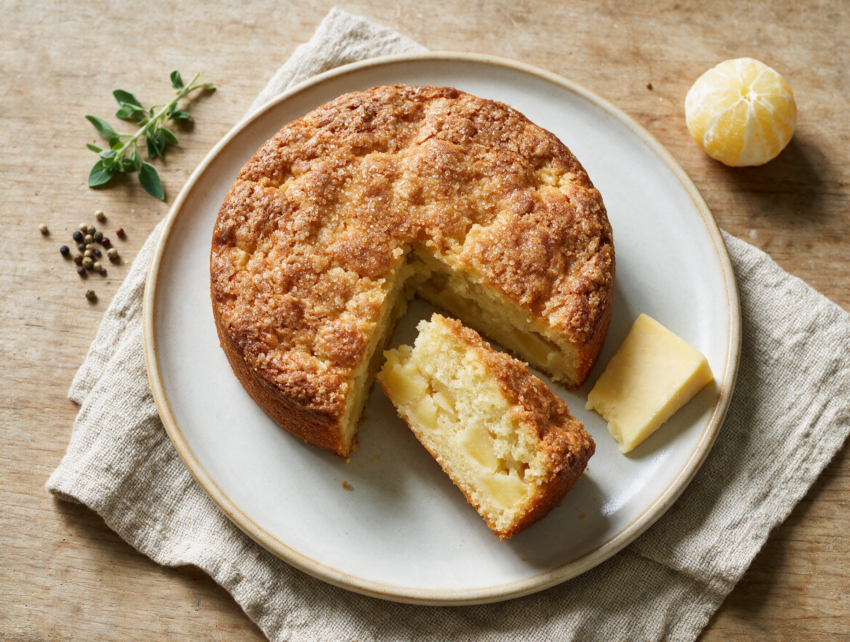
There’s something about a Kentish apple cake that makes the whole kitchen smell warmer while it’s still in the oven.
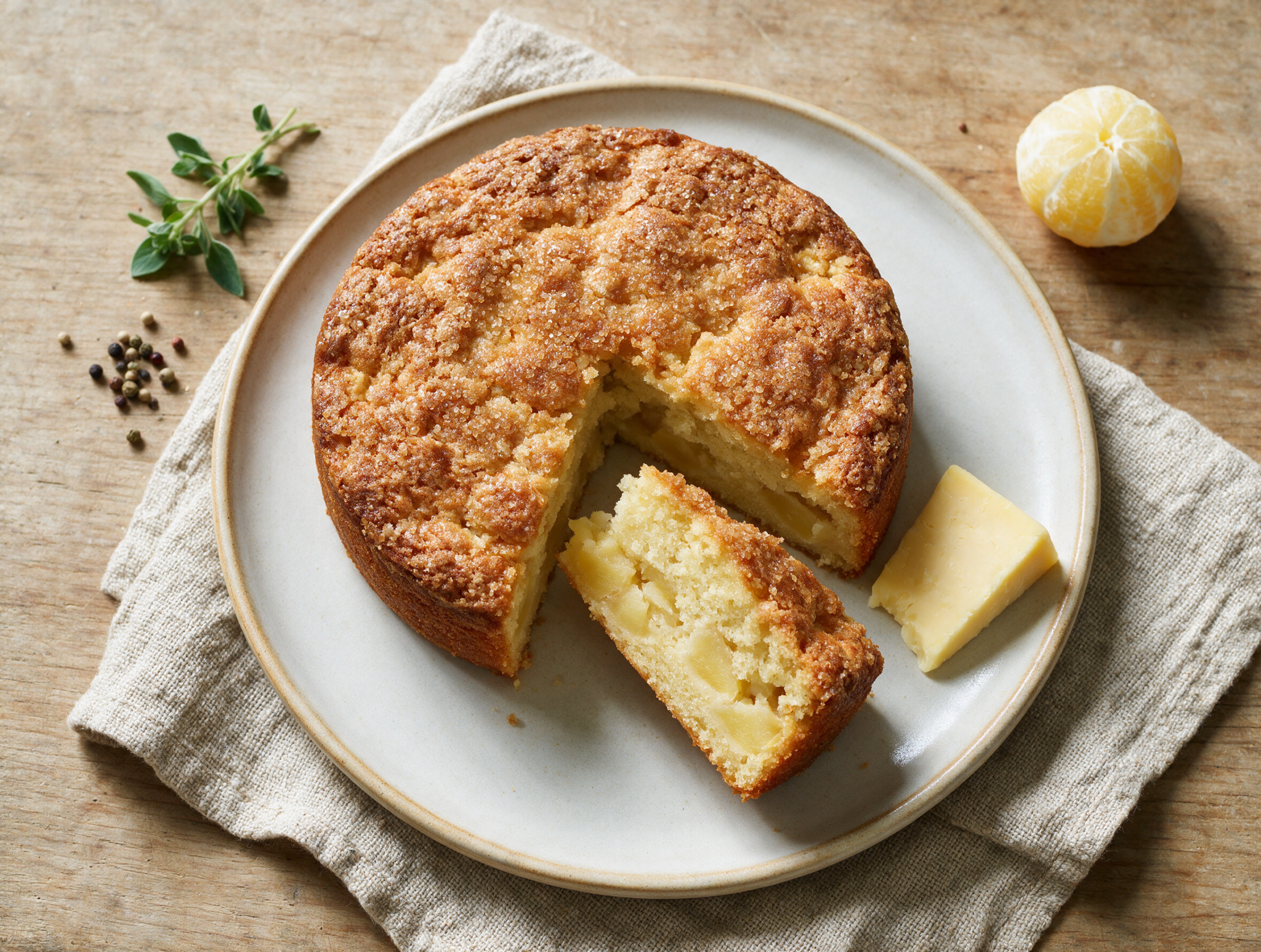
Kent’s been called the garden of England for centuries because of its orchards, and this cake is the reason why. It’s a plain, honest sponge studded with chunks of tart apple and finished with a crunchy sugar crust.
No fancy spices here. Just butter, lemon zest, and apples doing the work.
I’ve made this with apples that were barely ripe and it still turned out fine, the tartness just cuts through the sugar a bit more. Dice the apples small and even, or the middle stays wet even after 60 minutes in the oven.
Serve it with a wedge of strong cheddar if you want to go full Kent. Sounds odd until you try it.
Why You’ll Love This Recipe
- One bowl batter, no mixer needed beyond creaming butter and sugar
- Diced apples stay juicy under a crunchy demerara crust
- Keeps well for days, tastes even better on day two
- No exotic spices, just butter, lemon zest, and apples
Ingredient Notes
- Bramley apples: These cook down soft and tart, which is what gives this cake its texture. Granny Smiths work as a substitute but hold their shape more.
- self-raising flour: Gives the sponge its lift without extra work. Swap with plain flour plus 2 1/2 tsp baking powder if that’s what you’ve got.
- lemon zest: Brightens the whole cake so it doesn’t taste flat next to the sugar crust. Don’t skip it even if you’re low on lemons.
- demerara sugar: Gives the crunchy top its texture. Turbinado sugar works the same way if demerara isn’t available.
- unsalted butter: Room temperature butter creams smoothly with the sugar. Cold butter will leave lumps in the batter.
Classic Kentish Apple Cake with a Golden Sugar Crust
Ingredients
Method
- Heat the oven to 180 C / 350 F. Grease a 20 cm / 8-inch springform tin and line the base with parchment.
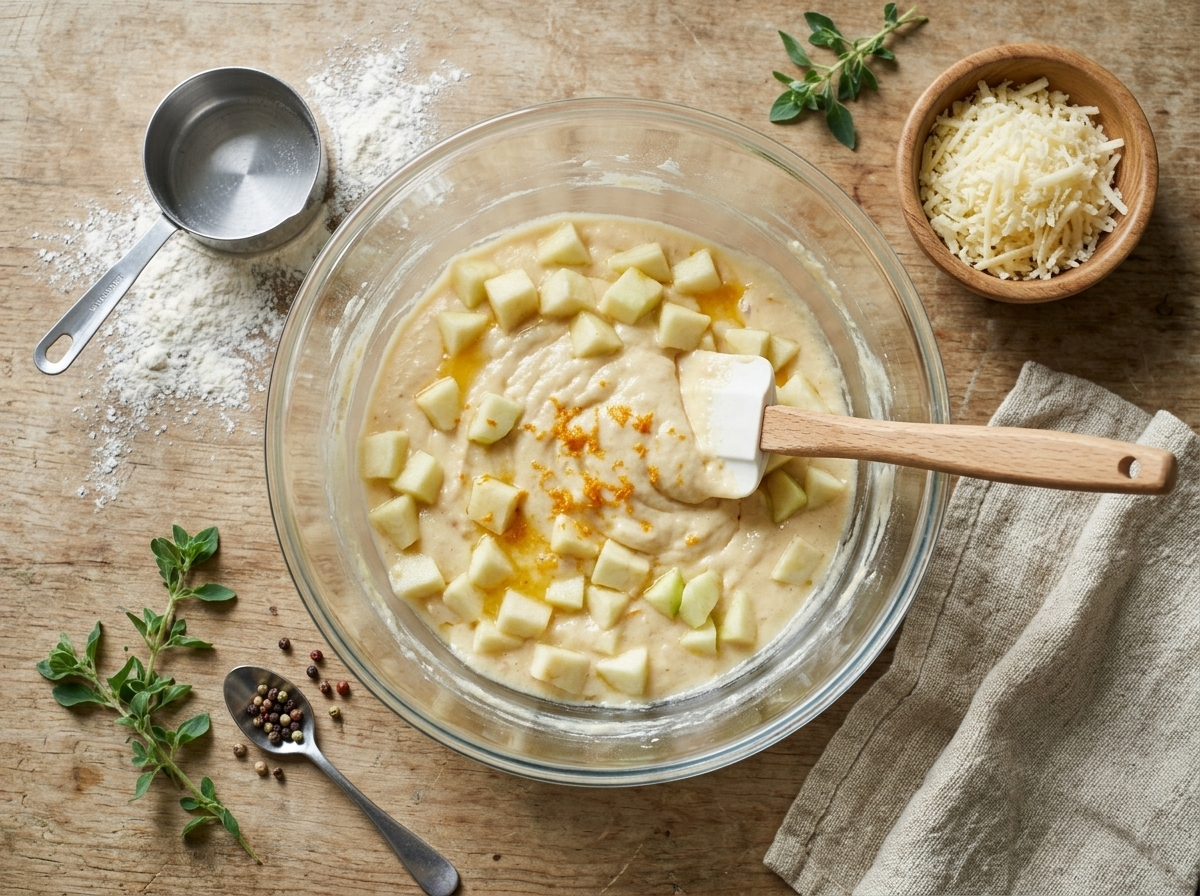
- Peel, core, and dice the Bramley apples into 1 cm pieces. Set aside.
- Cream the butter and caster sugar together in a large mixing bowl with an electric hand mixer for 3 to 4 minutes, until pale and fluffy.
- Beat in the eggs one at a time, then mix in the lemon zest.
- Sift the self-raising flour, baking powder, and salt over the batter. Fold in gently with a rubber spatula until just combined.
- Fold in the diced apples, then add the milk a tablespoon at a time until the batter falls off the spatula in a thick ribbon.
- Spoon the batter into the prepared tin and level the top. Scatter the demerara sugar evenly over the surface.
- Bake for 55 to 65 minutes, until a skewer inserted in the center comes out clean and the top is deep golden. Tent loosely with foil after 40 minutes if it's browning too fast.
- Cool the cake in the tin for 15 minutes, then release the springform sides and transfer to a wire rack to cool completely.
- Slice and serve at room temperature, with a wedge of cheddar or a spoon of clotted cream if you like.
Notes
- Use a springform tin so the sugar crust doesn't stick to the sides.
- Weigh the apples after peeling and coring, not before.
- Don't skip the lemon zest, it keeps the cake from tasting flat.
- Trust the skewer test over the clock, the middle sinks if underbaked.
Tips for Success
- Dice the apples into 1 cm pieces so they cook through without leaving a wet, gummy layer in the middle.
- Check the cake at 50 minutes with a skewer, then again every 5 minutes until it comes out clean.
- Tent the top loosely with foil after 40 minutes if it’s browning faster than the center is setting.
- Use room temperature butter and eggs so the batter creams smoothly and doesn’t split.
- Let the cake sit in the tin for 15 minutes before releasing the sides, or it can crack apart.
Variations
- Add 1/2 tsp ground cinnamon or mixed spice to the batter for a warmer, spiced version of this cake.
- Swap half the apples for pears for a softer, less tart take on the same recipe.
- Stir 50 g chopped walnuts into the batter for crunch alongside the apple pieces.
Storage and Reheating
Kentish apple cake keeps at room temperature for 3 to 4 days in an airtight tin. The sugar crust softens a little after day one, but the crumb actually gets better as the apples settle into the sponge.
For longer storage, wrap the cooled cake tightly in foil and freeze for up to 2 months. Thaw it overnight at room temperature before slicing.
This cake doesn’t need reheating. It’s meant to be eaten at room temperature, and warming it in the microwave just turns the apple pieces mushy.
Serving Suggestions
Serve it Kent-style, with a slab of strong cheddar or a crumbly local cheese on the side. The salty tang against the sweet apple is worth trying at least once.
For dessert, add a jug of warm custard or a spoon of clotted cream. Both soak into the crumb without drowning the apple pieces.
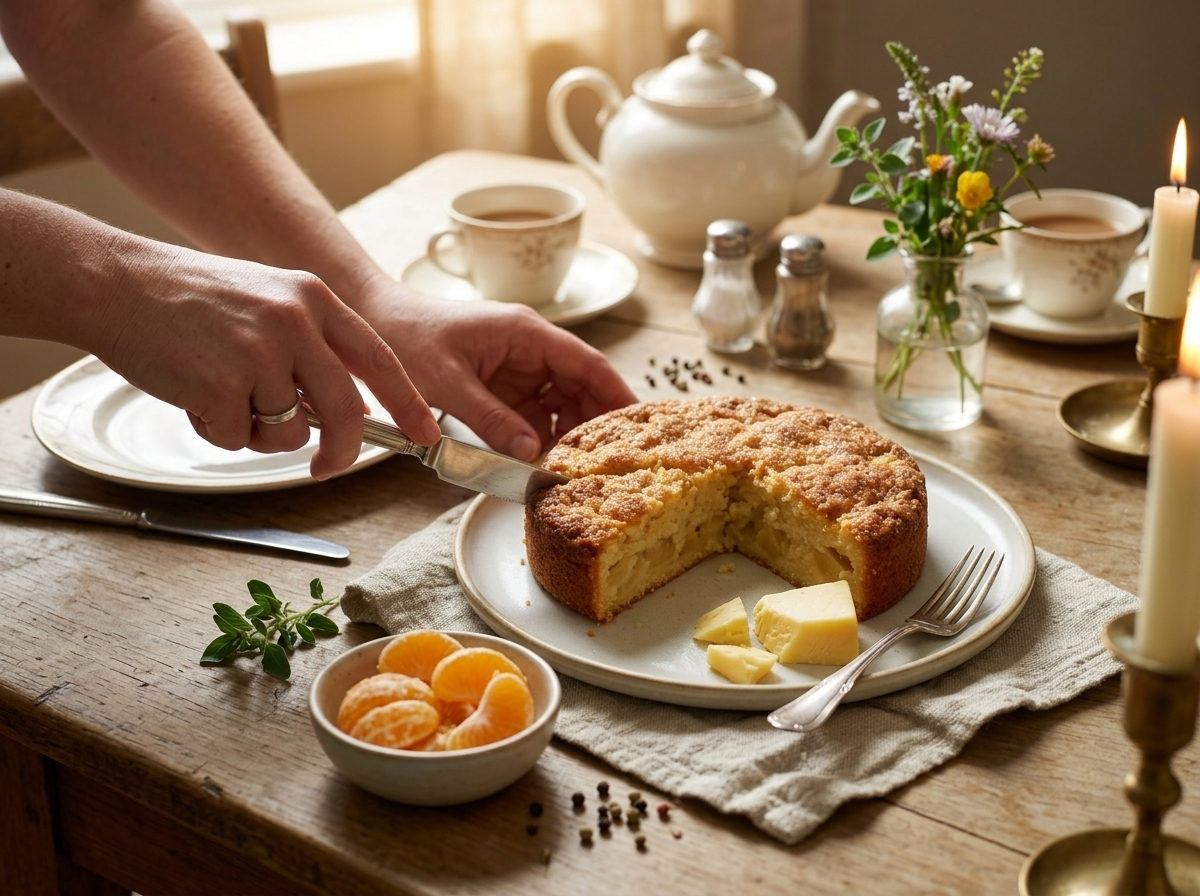
At tea time, a plain slice with a strong cup of tea is enough. That’s how it’s eaten in most Kent kitchens.
FAQ
Why is the middle of my Kentish apple cake still wet after baking?
This usually means the apple pieces were cut too large or the cake came out early. Dice the apples into 1 cm pieces so they cook through evenly, and test with a skewer at 50 minutes, then every 5 minutes after. If the top browns too fast, tent it with foil rather than pulling the cake out early.
Can I use Granny Smith apples instead of Bramleys in this recipe?
Yes, though the texture changes a bit. Bramleys break down into soft pockets as they bake, while Granny Smiths hold their shape and give a firmer bite. Either works, just keep the dice small so the apples cook through at the same rate as the sponge.
Can I freeze Kentish apple cake?
Yes, wrap the cooled cake tightly in foil or plastic and freeze for up to 2 months. Thaw it overnight at room temperature before slicing, and skip reheating since it’s meant to be served plain, not warmed.
What should I serve with Kentish apple cake besides tea?
A wedge of sharp cheddar is the traditional pairing in Kent, and the salt against the sweet apple works better than it sounds. For dessert, warm custard or clotted cream both soak into the crumb without making it soggy.
Is Kentish apple cake gluten free?
Not as written, since it uses self-raising wheat flour. Swap in a 1:1 gluten-free self-raising flour blend and add an extra egg yolk if the batter looks dry, and it bakes up close to the original.
What makes a cake specifically ‘Kentish’ apple cake?
The Kentish version stays plain, with no cinnamon or nutmeg, letting the apples and a bit of lemon zest carry the flavor. Kent’s orchards produce most of England’s apples, and the cake traditionally comes with a slice of local cheese instead of cream.
You might also like
- the Soft One-Bowl Cinnamon Yogurt Cake with Sugar Swirl
- this Classic Gateau Nantais Cake with Dark Rum Glaze
