
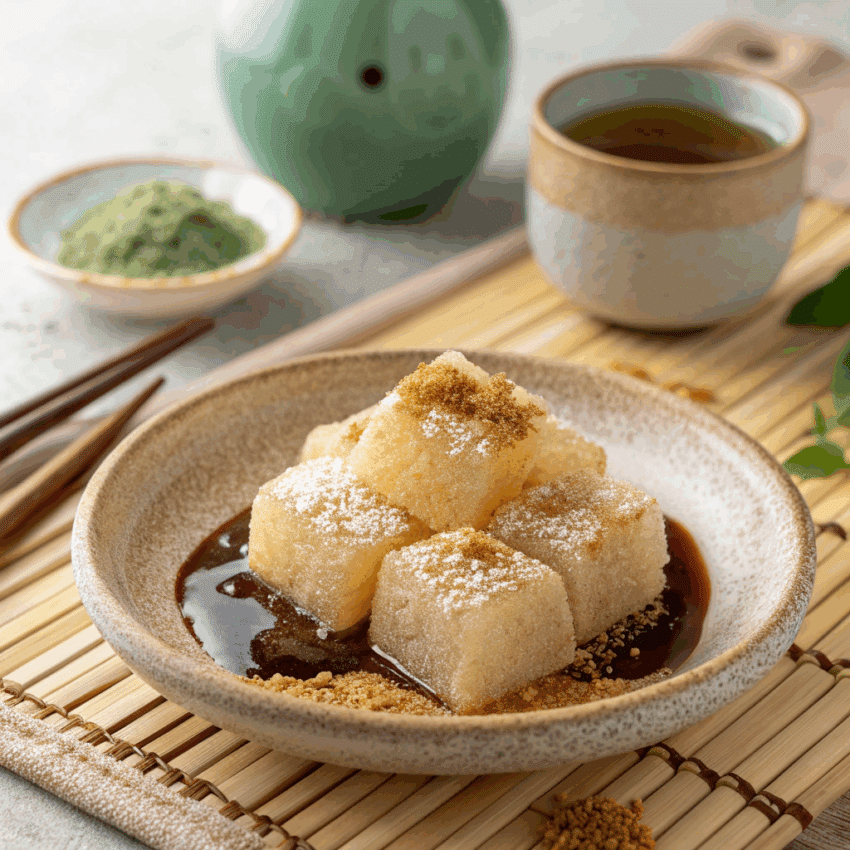
If you’ve ever wandered through a Japanese sweets shop or sipped tea at a traditional tea house, you might have noticed a delicate, jelly-like treat called warabi mochi. Unlike the chewy mochi most of us know, warabi mochi is soft, bouncy, and melts in your mouth. Today, I’m going to guide you through making Japanese warabi mochi with kinako, sprinkled with roasted soybean flour and drizzled with a touch of brown sugar syrup. It’s a simple yet mesmerizing Japanese dessert that brings a taste of Japan straight into your kitchen.
What is Warabi Mochi?
Warabi mochi isn’t your regular mochi. It’s made from warabi starch, derived from the bracken fern. The starch gives it a soft, slightly gelatinous texture that sets it apart from sticky rice mochi. This treat has been a favorite in Japan for centuries, especially during the summer months, because it’s light and refreshing.
Warabi mochi is often served chilled, dusted with kinako (roasted soybean flour) or drizzled with brown sugar syrup, making it a simple yet elegant Japanese wagashi. For those exploring Japanese sweets for the first time, this treat is a perfect introduction. It’s soft, subtly sweet, and utterly satisfying.
Ingredients You’ll Need
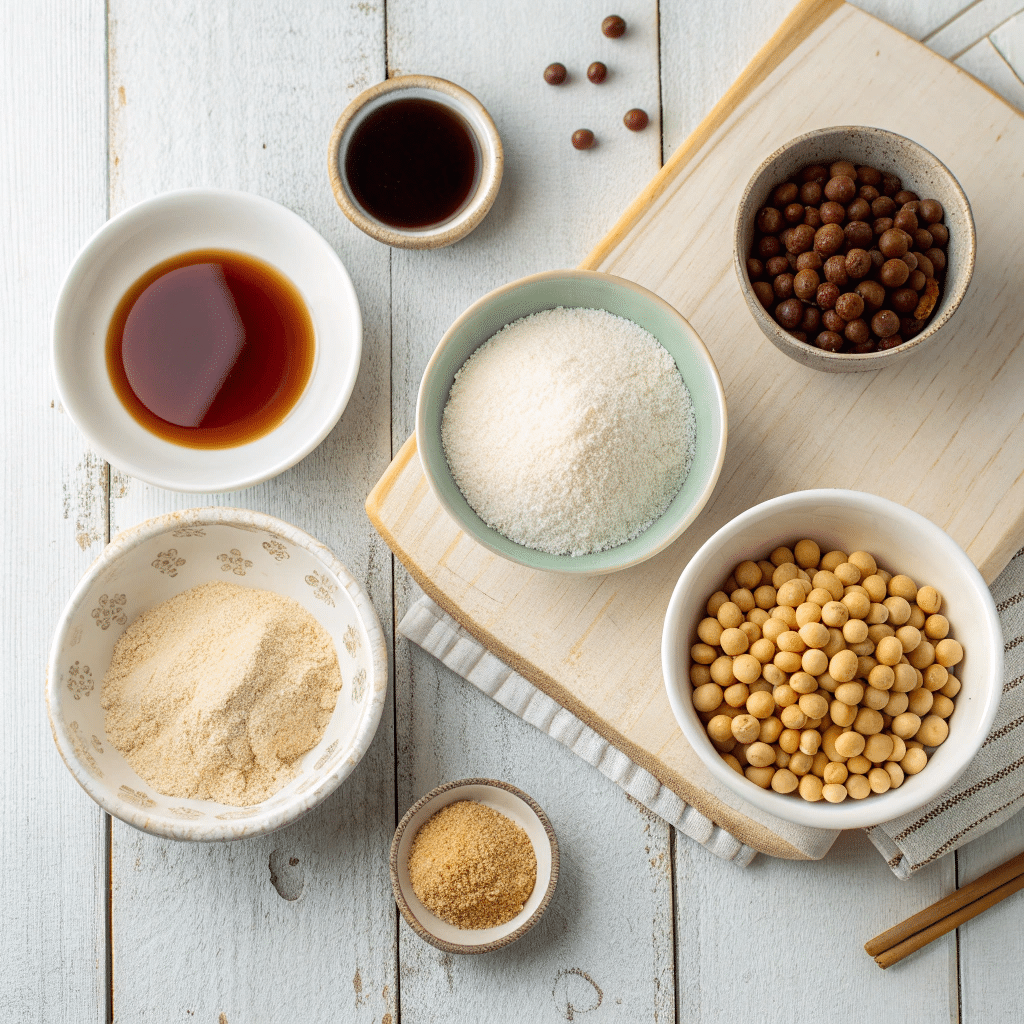
Before we get our hands sticky, let’s gather the essentials. This recipe keeps things simple while staying authentic.
For the Mochi:
- 1/2 cup warabi starch (or substitute with potato starch if unavailable)
- 2 tbsp sugar
- 1 cup water
For the Topping:
- 1/4 cup kinako (roasted soybean flour)
- 3 tbsp brown sugar syrup (or kuromitsu, a traditional Japanese syrup)
Optional additions: sweet red bean paste (azuki bean) for a classic touch, or a few Okinawan sweet potato mochi cubes for variation.
Step-by-Step Warabi Mochi Recipe
Making warabi mochi might look intimidating at first, but trust me—it’s easier than it seems. Here’s the lowdown.
1. Mix Your Ingredients
Combine warabi starch, sugar, and water in a small saucepan. Stir until the starch dissolves completely. No lumps, or your mochi will have an uneven texture.
2. Cook the Mixture
Place the saucepan over medium heat. Stir constantly. You’ll notice the mixture starting to thicken and turn translucent. This is the magic moment where starch transforms into soft, jiggly mochi. Keep stirring—patience is key, but don’t overthink it.
3. Transfer and Cool
Once the mochi is thick and glossy, pour it into a lightly oiled tray or container. Smooth it out and let it cool for about 15–20 minutes. If you want a firmer texture, chill it in the fridge for an hour.
4. Cut and Serve
Dust your surface with kinako. Carefully remove the mochi and cut it into bite-sized cubes. Roll each cube lightly in kinako, ensuring every piece gets coated. Drizzle brown sugar syrup over the top before serving.
There you go—a delightful, soft, melt-in-your-mouth Japanese treat ready for enjoying with tea or just on its own.
Tips for Perfect Warabi Mochi
- Avoid clumps: Always dissolve starch thoroughly before heating.
- Use gentle heat: High heat can make mochi rubbery. Medium heat ensures the soft texture everyone loves.
- Serve chilled: Warabi mochi tastes best when slightly chilled, especially in summer.
- Customize toppings: While kinako and syrup are traditional, feel free to add a dollop of sweet red bean paste or even a light dusting of matcha powder for color and flavor.
Why You’ll Love This Japanese Dessert
Warabi mochi isn’t just tasty; it’s a fun treat to make. Watching the translucent mixture thicken and wobble is oddly satisfying. It’s soft, slightly sweet, and the nutty roasted soybean flavor from kinako gives it a comforting depth. Plus, making this Japanese snack at home means you can enjoy it anytime—no need to hunt down a Japanese confectionery store.
This recipe is also versatile. Pair it with a scoop of mochi ice cream for a fusion dessert or add a sprinkle of azuki bean for extra sweetness. It’s a blank canvas for anyone who loves Japanese treats.
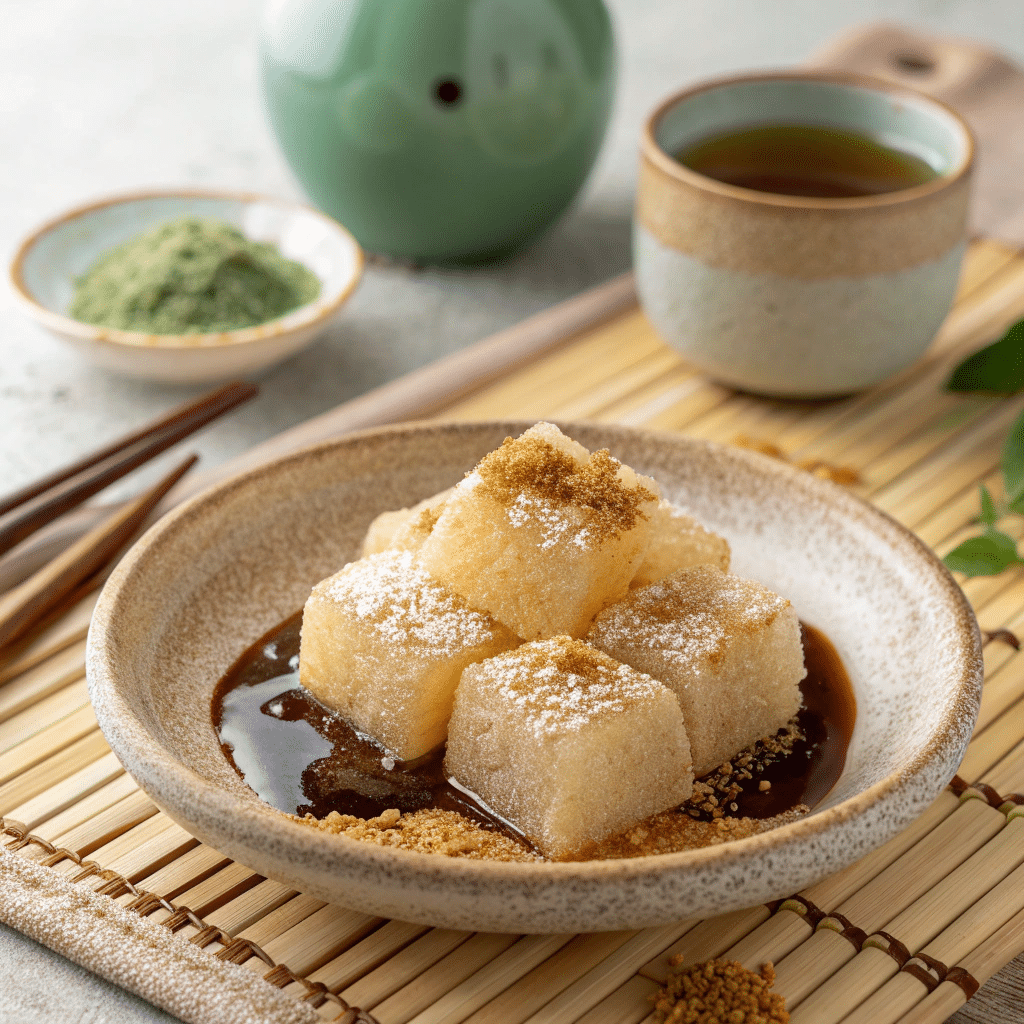
Japanese Warabi Mochi with Kinako
Ingredients
Method
- Mix Ingredients: In a small saucepan, combine warabi starch, sugar, and water. Stir until the starch is completely dissolved.
- Cook Mochi: Place the pan over medium heat. Stir constantly until the mixture thickens and turns translucent. This takes about 5–7 minutes.
- Transfer to Tray: Pour the cooked mochi into a lightly oiled tray or container. Smooth it out evenly. Let it cool for 15–20 minutes or chill for a firmer texture.
- Cut Mochi: Once cooled, cut the mochi into bite-sized cubes using a sharp knife.
- Add Toppings: Dust the cubes generously with kinako. Drizzle brown sugar syrup on top. Optionally, serve with sweet red bean paste or Okinawan sweet potato cubes.
- Serve: Enjoy chilled for a refreshing treat or room temperature if preferred.
Notes
- Use medium heat to avoid overcooking and keep the mochi soft.
- For an authentic Japanese touch, chill the mochi slightly before serving.
- You can serve with tea or pair with mochi ice cream for a fusion dessert.
- This dessert is best eaten the same day since it contains no preservatives.
Frequently Asked Questions (FAQ)
Q: What is mochi in Japanese food?
A: Mochi is a Japanese rice cake made from glutinous rice. Warabi mochi differs as it’s made from starch rather than rice, giving it a soft, jelly-like texture.
Q: Can I use regular mochi instead of warabi mochi?
A: Not exactly. Regular mochi is chewy and sticky, whereas warabi mochi is soft and melts in your mouth. They’re delicious in their own ways, but textures differ.
Q: How long does warabi mochi last?
A: Because it contains no preservatives, it’s best eaten the same day. Refrigeration helps keep it fresh for up to 24 hours.
Q: Can I make this recipe vegan?
A: Absolutely! This recipe is naturally vegan—just make sure your brown sugar syrup doesn’t contain additives.
