
Jump to Recipe
There’s something about the smell of orange zest hitting warm chocolate that stops me every time. It’s sharp, a little floral, and it wakes up the chocolate instead of hiding under it.
I started making this bark for holiday gift bags a few years back, after getting tired of paying too much for the fancy chocolate orange bars at the store. Turns out the real thing takes about 15 minutes of hands-on work.
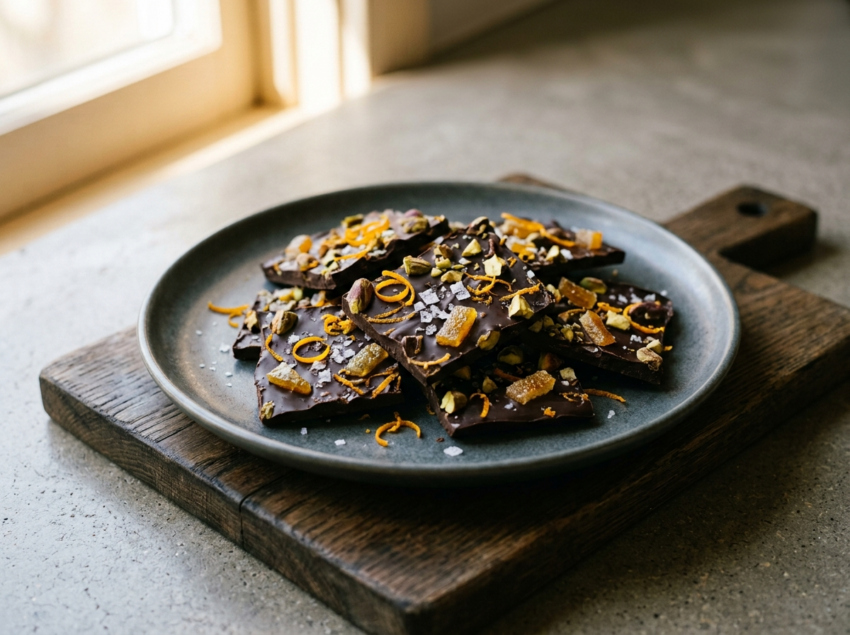
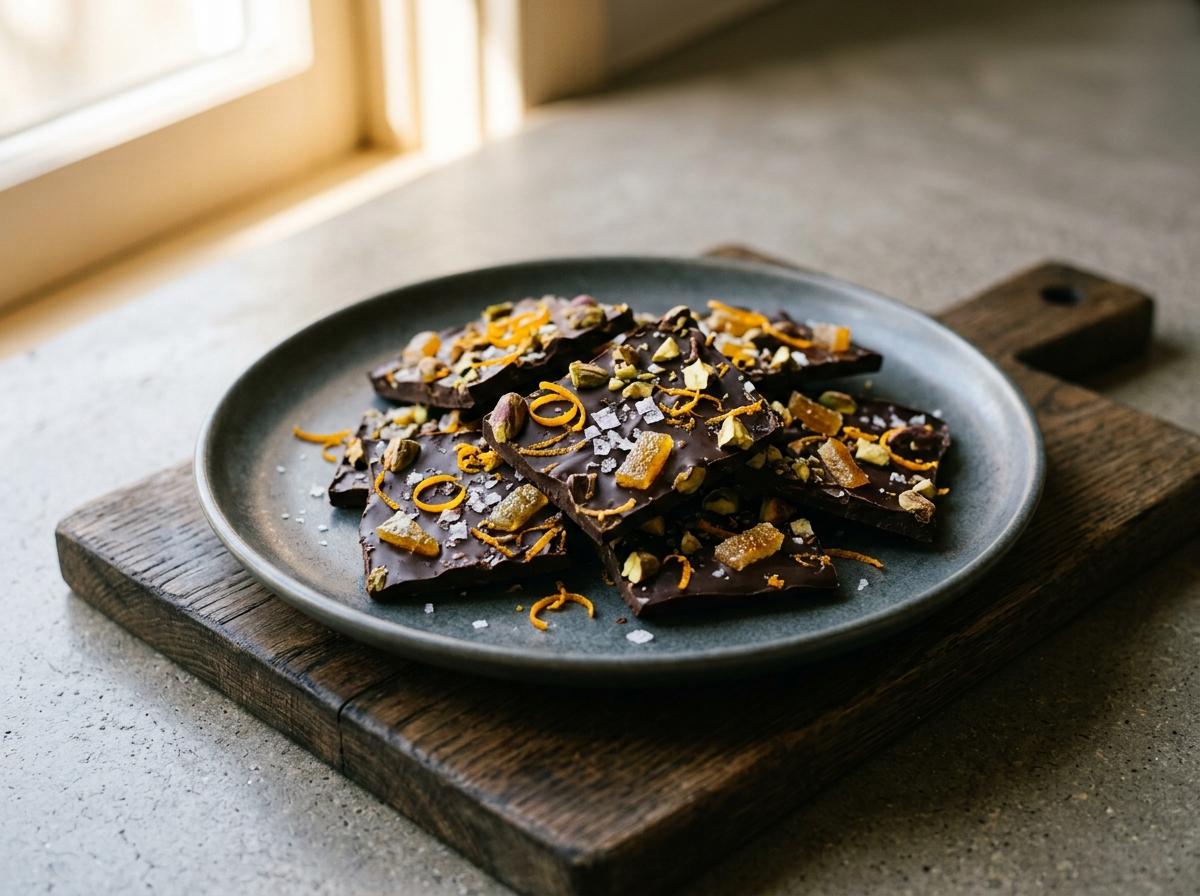
Dark chocolate orange bark is just melted chocolate spread thin, topped with candied orange peel, toasted pistachios, and a few flakes of sea salt, then chilled until it snaps. No oven, no candy thermometer drama, no fuss.
The only real trick is keeping water away from your melting chocolate. One stray drop and it seizes into a grainy paste that won’t spread. Dry bowl, dry spatula, and you’re fine.
Why You’ll Love This Recipe
- Ready in under 90 minutes with only 15 minutes of active work
- Uses just one bowl and a sheet pan, no candy thermometer needed
- Keeps well for weeks, so it works for gifting or make-ahead treats
- Easy to customize with whatever nuts or dried fruit you have on hand
Ingredient Notes
- Dark chocolate (60-70% cacao): Use chocolate bars or callets, not chocolate chips, since chips have stabilizers that keep them from melting smooth.
- Orange zest: Zest the orange before you segment or peel it, and avoid the white pith underneath since it turns bitter.
- Candied orange peel: Store-bought works fine, or use dried orange slices for a drier, chewier bite instead.
- Pistachios: Toast them 4 to 5 minutes in a dry skillet first, this deepens the flavor a lot compared to raw nuts.
- Flaky sea salt: Use a coarse finishing salt like Maldon, not table salt, so it stays crunchy instead of dissolving into the chocolate.
- White chocolate (optional): A thin drizzle on top adds contrast in color and a milder sweetness against the dark chocolate.
Dark Chocolate Orange Bark with Sea Salt
Ingredients
Method
- Line a sheet pan with parchment paper and set it aside.
- Melt the dark chocolate in a heatproof bowl set over a pan of barely simmering water, stirring often, until smooth and it reaches 46 C / 115 F.
- Remove from heat and stir in half the orange zest.
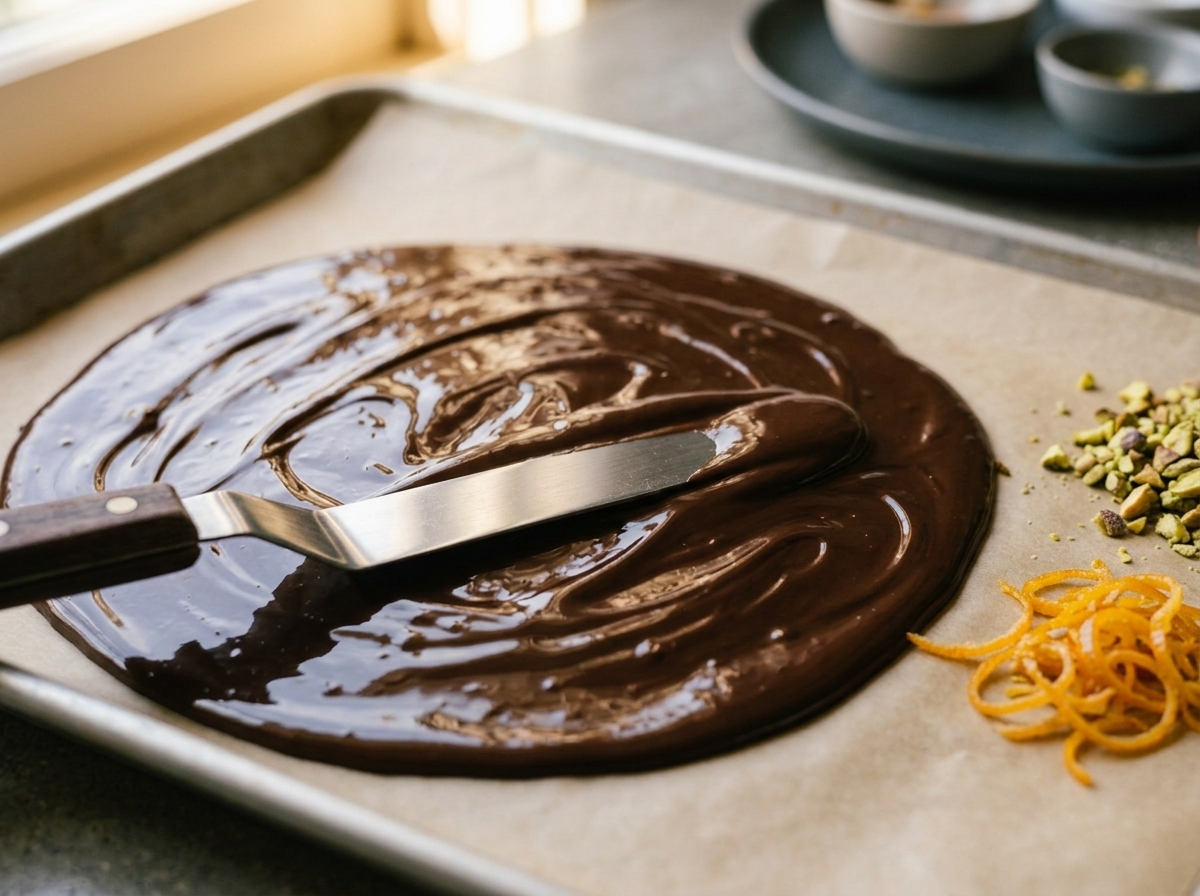
- Pour the melted chocolate onto the prepared pan and spread it into an even layer about 5mm thick with an offset spatula.
- Scatter the candied orange peel, pistachios, remaining zest, and sea salt over the surface, pressing gently so they stick.
- If using, drizzle the melted white chocolate over the top in thin lines.
- Chill in the fridge for 60 minutes, or until fully firm and matte, not shiny or tacky to the touch.
- Break into rough pieces by hand and store in an airtight container.
Notes
- Melt chocolate low and slow to avoid scorching or seizing.
- Keep every bowl and utensil bone dry before it touches the chocolate.
- Toast nuts ahead of time so they're cool when you scatter them.
- Break bark by hand into rough pieces, don't try to cut it neatly.
Tips for Success
- Chop chocolate into even, small pieces so it melts at the same rate without scorching.
- Wipe your bowl and spatula completely dry before melting, since even a drop of water can seize the chocolate.
- Spread the chocolate to an even 5mm thickness so the bark breaks into clean, even pieces later.
- Press toppings gently into the surface right after spreading, before the chocolate starts to set.
- Chill the bark on a flat shelf so it sets level, otherwise it pools thicker on one side.
Variations
- Swap pistachios for toasted almonds or hazelnuts if that’s what you have in the pantry.
- Add a pinch of chili flakes or cardamom to the melted chocolate for a warmer, spiced version.
- Drizzle melted white chocolate in thin lines across the top before chilling for a marbled look.
Storage and Reheating
Dark chocolate orange bark keeps well at room temperature in an airtight container for up to 2 weeks, as long as your kitchen stays cooler than 70F/21C. In warmer weather, store it in the fridge instead, where it’ll last closer to a month.
Layer pieces between sheets of parchment paper so they don’t stick together or scratch each other’s surface. There’s no reheating step here, this bark is meant to be eaten cold or at room temperature straight from the container.
If you’re freezing it for longer storage, wrap the whole slab tightly in plastic before breaking it into pieces, then freeze for up to 3 months. Thaw it in the fridge overnight before breaking and serving.
Serving Suggestions
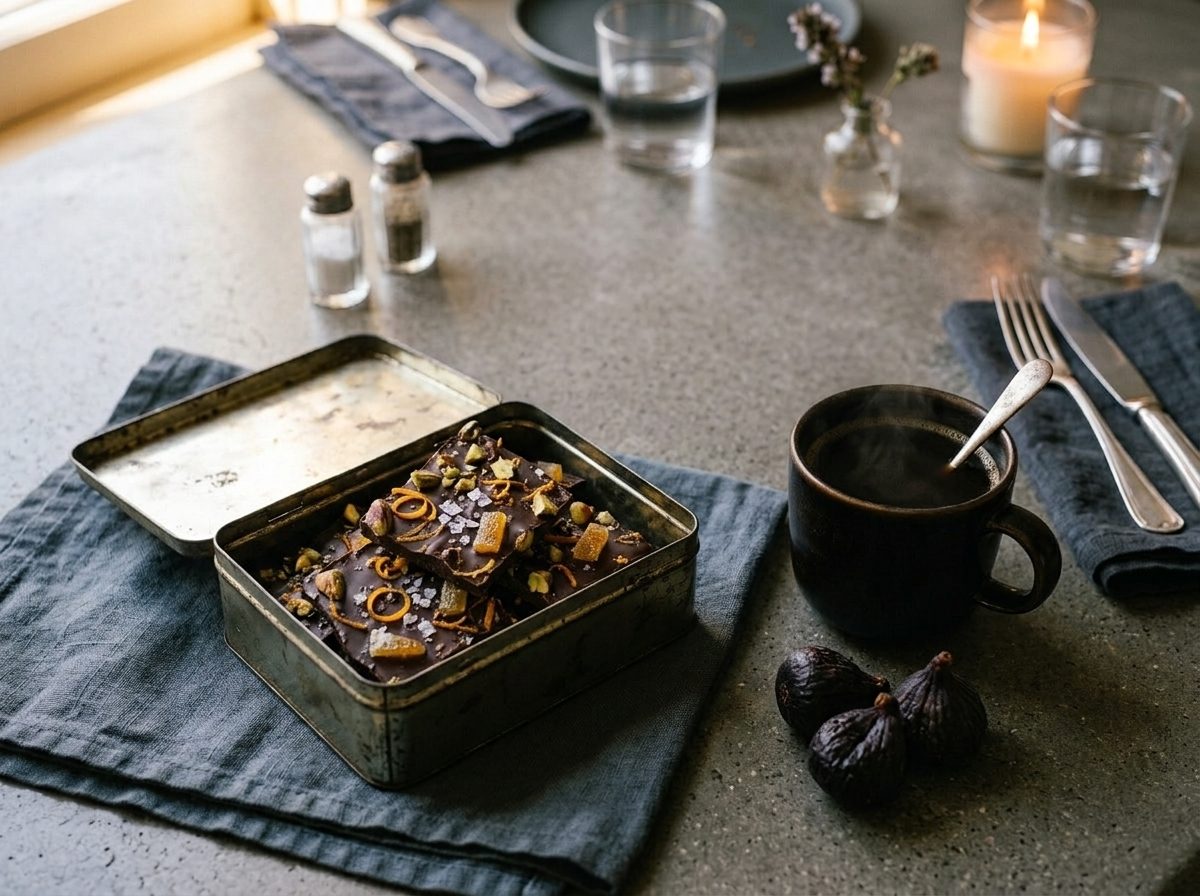
Dark chocolate orange bark works well broken into rough shards and piled onto a dessert board next to dried figs, marcona almonds, and a wedge of soft cheese. The bitterness in the chocolate plays well against something salty or funky.
I also like it crumbled over vanilla ice cream or Greek yogurt for a quick dessert with texture. A few pieces alongside coffee or a glass of port after dinner works too.
For gifting, stack pieces in a small tin lined with parchment. It travels well and doesn’t need to be kept cold for short trips.
FAQ
Why does my dark chocolate orange bark turn white and streaky after it sets?
That streaky white film is called bloom, and it happens when cocoa butter separates and rises to the surface, usually from melting the chocolate too fast or letting it warm up and re-cool. It’s still safe to eat and tastes fine, but it won’t have the same snap. Melt gently and chill it steadily to avoid this.
Can I use milk chocolate instead of dark chocolate for this orange bark?
Yes, you can swap in milk chocolate, though it melts a bit faster and sets softer than dark chocolate. The orange flavor gets a little muted since milk chocolate is sweeter, so I’d add extra zest to compensate. A 60-70% dark chocolate still gives the sharpest contrast with the citrus.
How long does dark chocolate orange bark keep in an airtight container?
It keeps up to 2 weeks at room temperature in an airtight container, longer if your kitchen runs cool. In humid or warm weather, refrigerate it instead, where it stays good for close to a month. Always layer pieces with parchment so they don’t fuse together.
What goes well with dark chocolate orange bark on a dessert board?
Dried figs, marcona almonds, and a soft, mild cheese all work well alongside this bark, since the bitterness in dark chocolate needs something salty or fatty to balance it. Coffee or a glass of port also pairs naturally with the orange and dark cacao notes.
Is dark chocolate orange bark gluten free and dairy free?
It’s naturally gluten free since there’s no flour involved, and it’s dairy free as long as you check your chocolate’s label, since some dark chocolate bars are processed with milk or on shared lines. Look for a bar marked dairy free if that matters to you.
What’s the difference between this bark and something like Terry’s Chocolate Orange?
Terry’s Chocolate Orange is a solid, molded chocolate with orange oil mixed straight into the chocolate itself, so the flavor is even throughout. This bark uses fresh zest and chewy candied peel scattered on top, which gives you pockets of concentrated citrus and texture instead of one uniform flavor.
Loved this? Try these next
