
Jump to Recipe
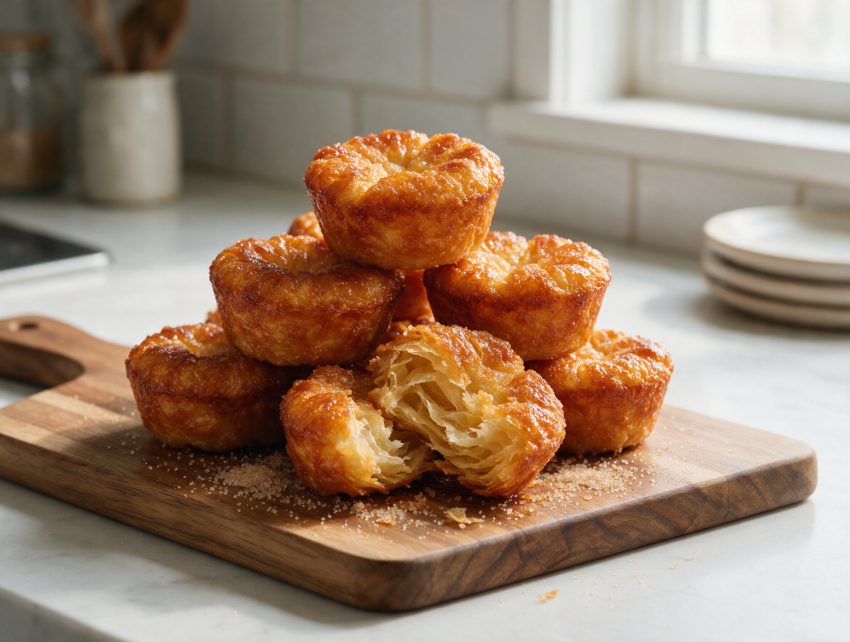
Kouign amann is a Breton pastry made from laminated yeasted dough, folded with cold butter and sugar until it bakes into crisp, caramelized layers with a soft center. This kouign amann recipe uses an overnight chill to make the lamination easier to manage at home.
I first had one in a bakery window in Brittany, still warm and wrapped in wax paper. The sugar had melted into the folds and turned the outside almost glassy.
This version takes about two days, not because it’s hard, but because the dough needs cold rest between folds. Rush that part and the butter melts into the dough instead of staying in sheets, and you lose the layers entirely.
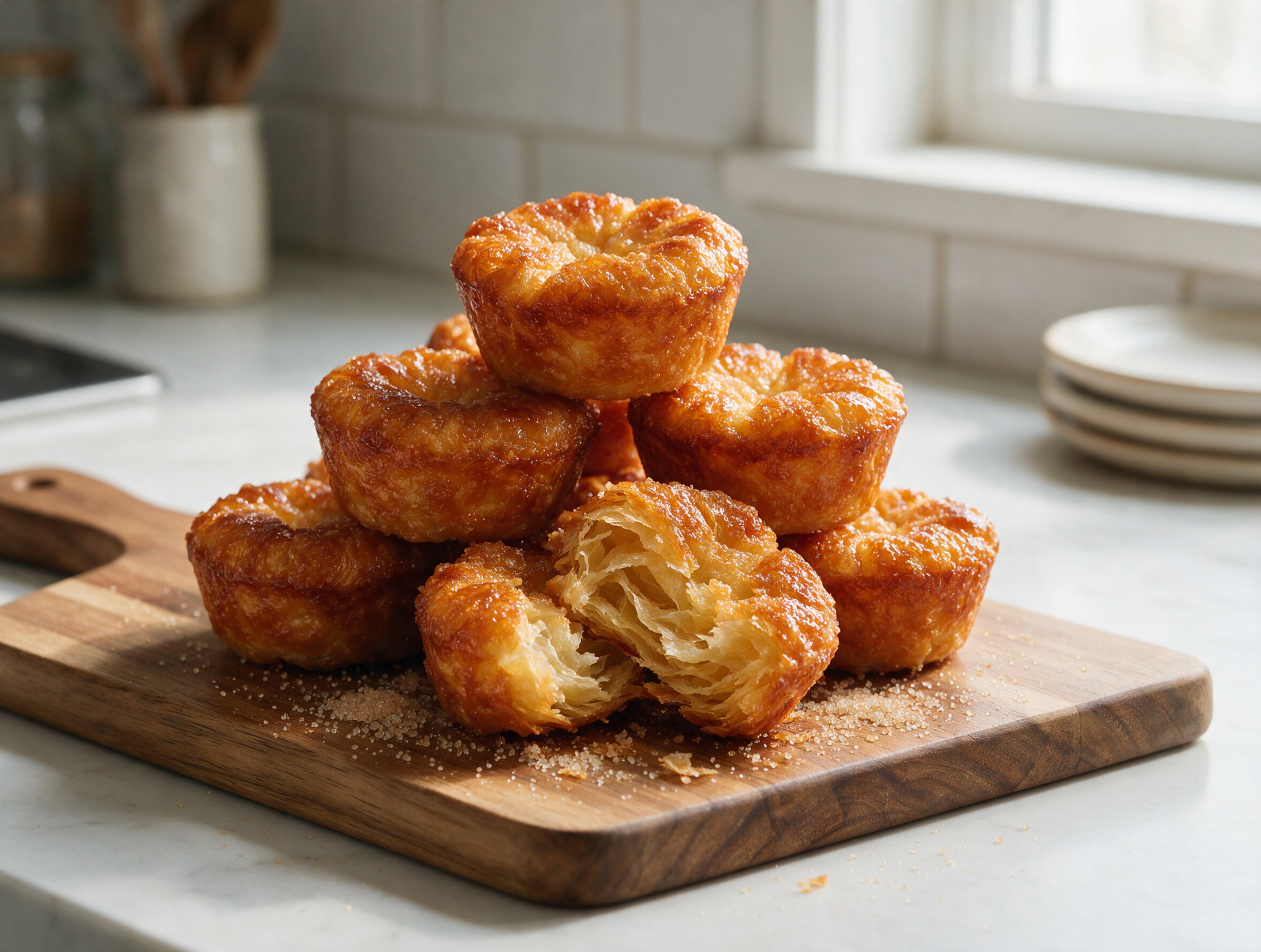
The payoff is a pastry that shatters on the first bite, then gives way to a soft, buttery inside. Croissant dough’s sweeter, stickier cousin.
Why You’ll Love This Recipe
- Shattering caramelized crust with a soft, buttery center
- Make-ahead friendly, dough chills overnight before baking
- No special equipment beyond a rolling pin and muffin tin
- Tastes like a Breton bakery without leaving your kitchen
Ingredient Notes
- bread flour: Bread flour’s higher protein gives the layers more structure. All-purpose works too, but the layers turn out a touch softer.
- unsalted butter (block): Use a high-fat European-style butter if you can find it. Less water content means crisper, more distinct layers.
- granulated sugar: Regular white sugar caramelizes cleanly. Skip powdered or brown sugar for the folding layers, they burn faster and stick.
- instant yeast: Instant yeast skips the extra proofing step active dry yeast needs. If using active dry, dissolve it in the warm milk for 10 minutes first.
Homemade Flaky Kouign Amann with Caramelized Crust
Ingredients
Method
- Warm the milk to 43 C / 110 F, whisk in the yeast, and let it sit for 5 minutes until foamy.
- In a stand mixer or large bowl, combine the flour, salt, and sugar. Add the yeast mixture and the 15 g softened butter, mix until a rough dough forms, then knead for 5 minutes until smooth but still soft.
- Shape into a ball, place in an oiled bowl, cover, and let rise at room temperature for 45 minutes until puffed but not doubled.
- Punch down gently, flatten into a rough rectangle, wrap in plastic, and chill for 20 minutes.
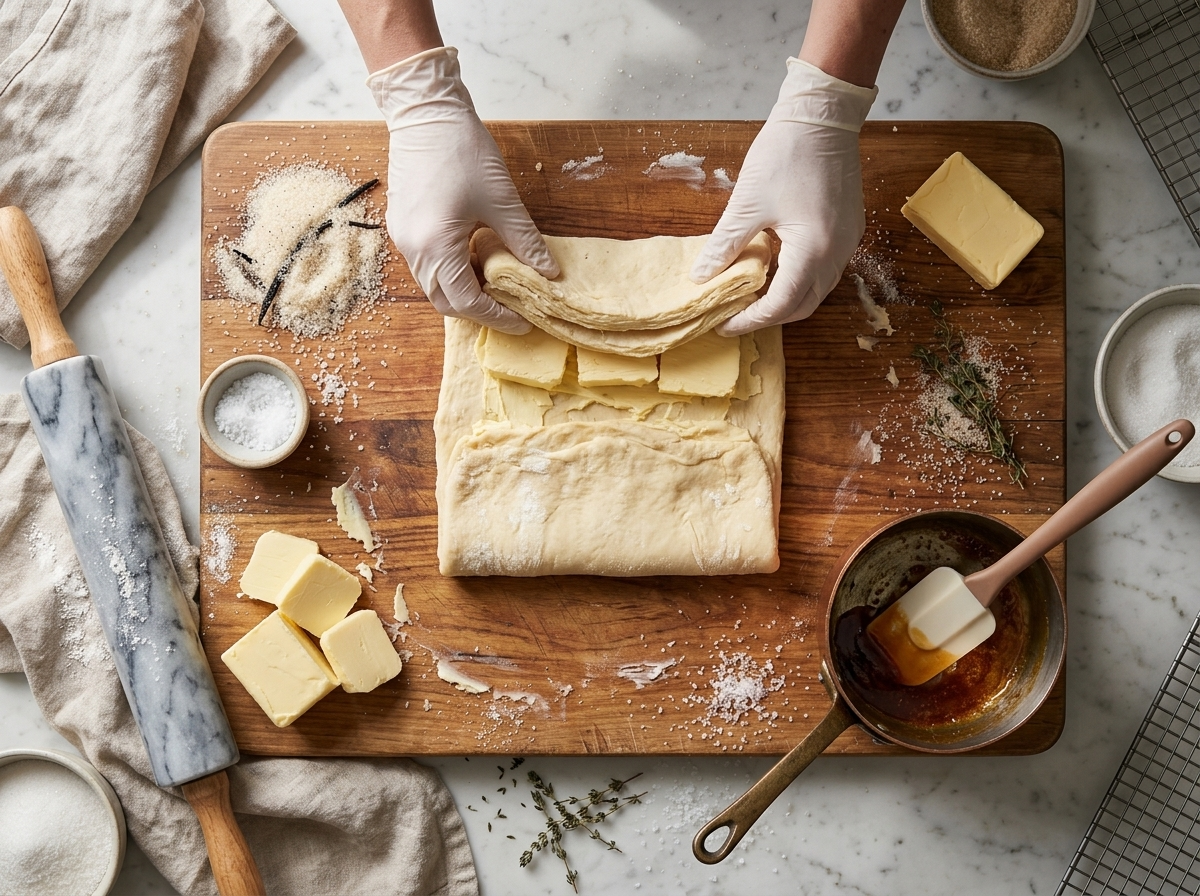
- Pound the cold 200 g butter block between two sheets of parchment into a 15 x 15 cm / 6 x 6-inch square, about 1 cm thick. Keep it cold, don't let it turn greasy.
- Roll the chilled dough into a rectangle roughly twice the size of the butter square. Place the butter in the center, fold the dough edges over to fully enclose it, and pinch the seams shut.
- Roll the dough into a 30 x 20 cm / 12 x 8-inch rectangle. Do a letter fold, one third over the center, then the other third over that, wrap, and chill for 20 minutes.
- Repeat the roll-and-fold two more times, chilling 20 minutes between each. Wrap and refrigerate overnight, at least 8 hours, so the butter firms fully.
- Sprinkle half the remaining sugar (75 g) onto the work surface and roll the dough on top so the sugar presses into the bottom. Flip, sprinkle the rest on top, and roll to a 32 x 24 cm / 13 x 9-inch rectangle, pressing sugar into both sides.
- Trim the edges square and cut the dough into 8 even squares.
- Fold all four corners of each square into the center like an envelope, pressing to seal. Drop each one, fold-side down, into a buttered muffin tin, using 8 of the 12 cups.
- Cover loosely and proof at room temperature for 60 minutes, until puffed and slightly domed over the rim.
- Heat the oven to 200 C / 400 F. Sprinkle a pinch of leftover sugar over each pastry.
- Bake for 25 to 30 minutes, until deeply caramelized, dark amber at the edges, and the sugar has bubbled into a crisp shell.
- Let cool in the tin for 5 minutes, the sugar is molten and will burn. Run a knife around the edges, turn out onto a rack, and cool 10 minutes before eating, the caramel sets as it cools.
Notes
- Chill dough for 20 minutes between every fold, don't skip this.
- Overnight chill firms the butter fully before the final sugar fold.
- Butter should feel cold and pliable, not greasy, when you laminate.
- A little butter pooling in the tin during baking is normal.
Tips for Success
- Keep the butter cold throughout lamination, if it starts to soften, wrap the dough and chill it for 10 minutes.
- Weigh your flour and butter instead of using cups, laminated dough depends on exact ratios to hold its layers.
- Work quickly during rolling and folding steps, a warm kitchen is the main reason butter leaks out during baking.
- Set the muffin tin on a sheet pan before baking, it catches any sugar that bubbles over the rim.
- Let the pastries cool for at least 10 minutes before eating, the caramel is molten straight out of the oven.
Variations
- Add a thin layer of almond paste under the sugar before the final fold for a nutty, chewier center.
- Swap half the granulated sugar for light brown sugar to add a deeper, almost toffee-like caramel flavor.
- Tuck a few thin apple slices into the folded square before baking for a fruity twist on the classic.
Storage and Reheating
Kouign amann is best the day it’s baked, when the sugar shell is still crisp, but it holds up for a few days after.
Store cooled pastries in an airtight container at room temperature for up to 2 days, or in the fridge for up to 4 days. Room temp keeps the crust crisper, the fridge is better if your kitchen runs humid.
Reheat in a 180 C / 350 F oven for 5 to 6 minutes to melt the sugar shell back into a crisp finish. Skip the microwave, it turns the caramel soft and chewy instead of crisp.
Serving Suggestions
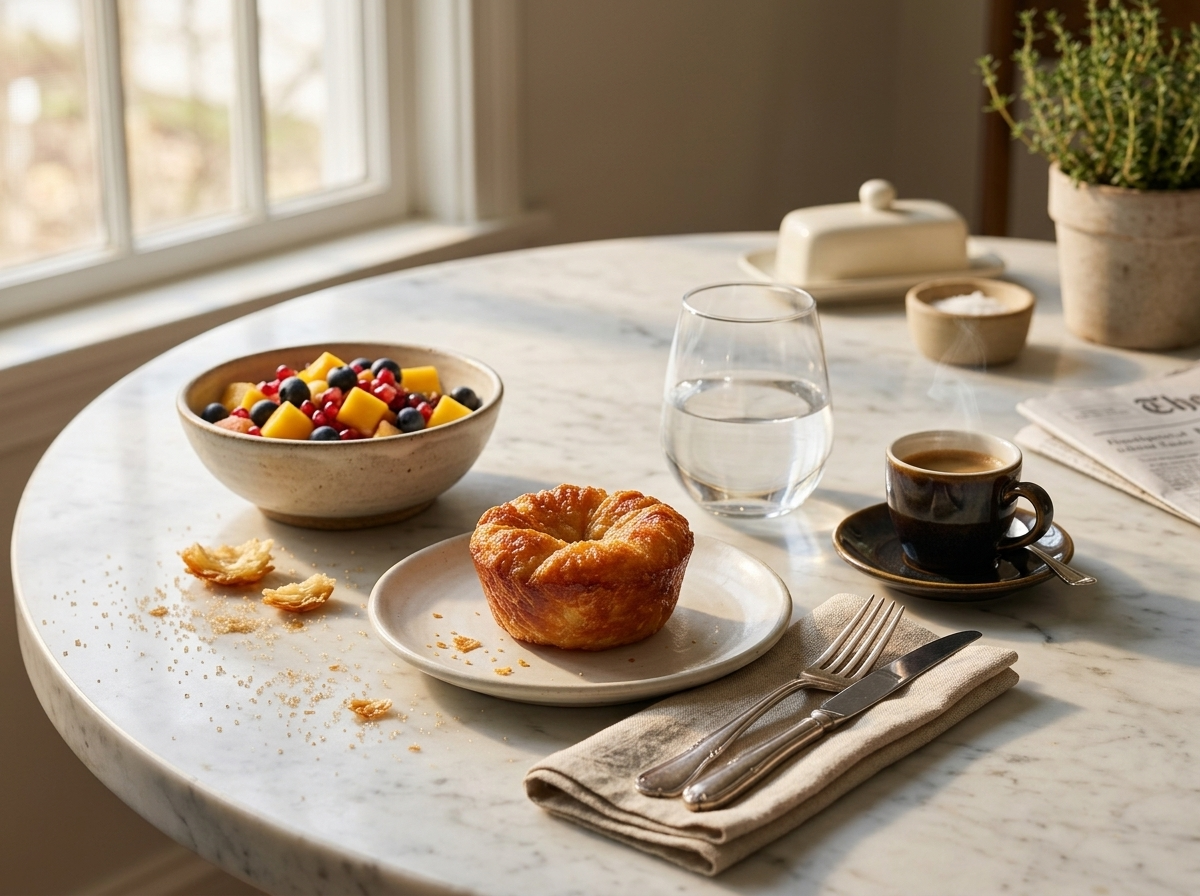
Kouign amann is rich enough to serve on its own with nothing but strong coffee alongside.
For breakfast, I’ll set a few out next to soft scrambled eggs and fresh fruit, the contrast of sweet and savory works well on the same plate.
For dessert, warm one slightly and add a small scoop of vanilla ice cream, the melted sugar shell mixes right into the cream.
FAQ
Why is my kouign amann leaking butter while it bakes?
Butter leaking out usually means it melted into the dough during lamination instead of staying in cold, defined layers. This happens if the kitchen was warm or the dough sat out too long between folds. Chill the dough for 20 minutes between every fold, and work fast if your kitchen runs warm. A little butter pooling in the muffin tin is normal, it caramelizes into the crust.
Can I use all-purpose flour instead of bread flour for kouign amann?
Yes, all-purpose flour works, though bread flour gives the layers more structure to hold up against all that butter. With all-purpose, the dough will be slightly softer and the layers a touch less defined after baking. Either way, keep the butter cold, that matters more than the flour type.
Can I freeze kouign amann dough before baking?
Yes, freeze the shaped, unproofed pastries in the muffin tin for up to 1 month. Thaw them in the fridge overnight, then let them proof at room temp for 60 to 75 minutes before sprinkling with sugar and baking as directed. Baked kouign amann also freezes well for up to 1 month, wrapped tightly.
What pairs well with the caramelized crust of kouign amann?
Strong black coffee or espresso cuts through the sweetness and butter, which is why it’s the classic Breton pairing. A dollop of unsweetened whipped cream or a few slices of tart apple work too if you’re serving it as dessert. Skip anything else sweet, the pastry is rich enough on its own.
Is kouign amann gluten free?
No, kouign amann relies on wheat flour’s gluten to form the stretchy, laminated layers that trap the butter and sugar. Gluten-free flour blends don’t develop the same elasticity, so the dough tears during rolling and the layers collapse. There isn’t a reliable gluten-free version of this specific technique yet.
What’s the difference between kouign amann and a croissant?
Kouign amann has sugar folded directly into the dough’s layers, which caramelizes in the oven into a crisp, almost brittle shell, while croissant dough has no sugar laminated inside. Croissants are also rolled into a crescent shape rather than the folded square kouign amann uses. The result is a chewier, more caramelized bite.
Loved this? Try these next
