
Jump to Recipe
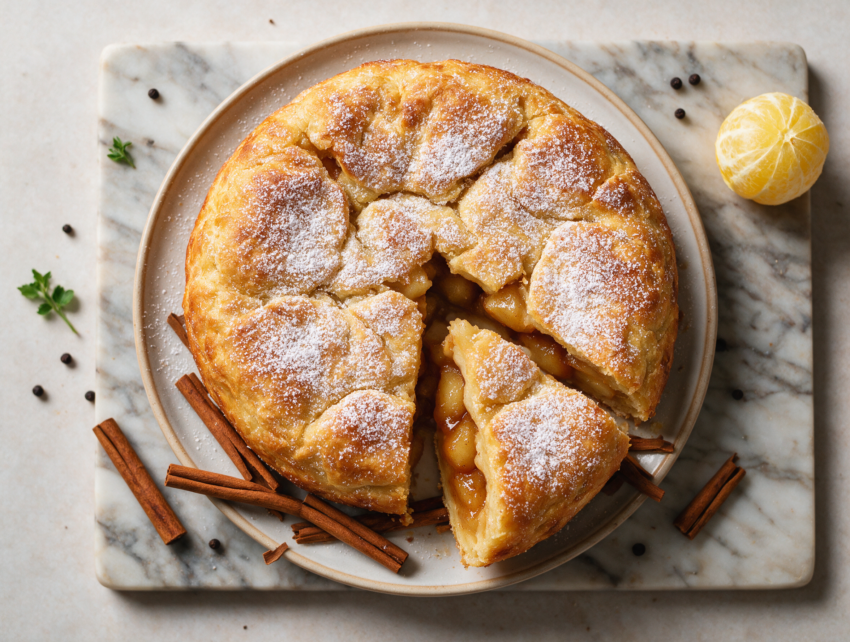
Pompe aux pommes is a French apple pastry from Gascony, made by stretching a thin, oil-enriched dough over apples cooked down with butter, sugar, and armagnac, then baking it until the crust turns deep gold and crackly.
I first had a slice of this at a farmhouse table in the Landes, still warm, dusted with powdered sugar, next to a glass of something stronger than coffee. The apples had gone soft and jammy under a crust that shattered when you cut into it.
It’s not puff pastry and it’s not phyllo, though it lands somewhere between the two once it bakes. The dough gets pulled by hand until it’s thin enough to read through, which sounds harder than it actually is.
This version gives you real timing and real cues, so you know when the apples are ready and when the dough is thin enough without tearing. Bake it once and you’ll see why Gascon families still make it every Christmas.
Why You’ll Love This Recipe
- Crust shatters into golden, crackly shards
- Apples cook down soft with armagnac depth
- No fancy equipment, just your hands and patience
- Feeds a crowd from one round pastry
Ingredient Notes
- Flour: Plain all-purpose works fine here. Bread flour gives slightly more stretch if the dough keeps springing back.
- Active dry yeast: Instant yeast works too, just skip dissolving it in water and mix it straight into the flour.
- Apples: Golden Delicious or Reinette hold their shape when cooked. Granny Smith works as a tarter substitute.
- Armagnac: Calvados or dark rum both work as a swap. For a non-alcoholic version, use apple juice reduced by half.
- Neutral oil: Sunflower or grapeseed oil keeps the dough easy to stretch. Melted butter makes a richer, slightly heavier dough.
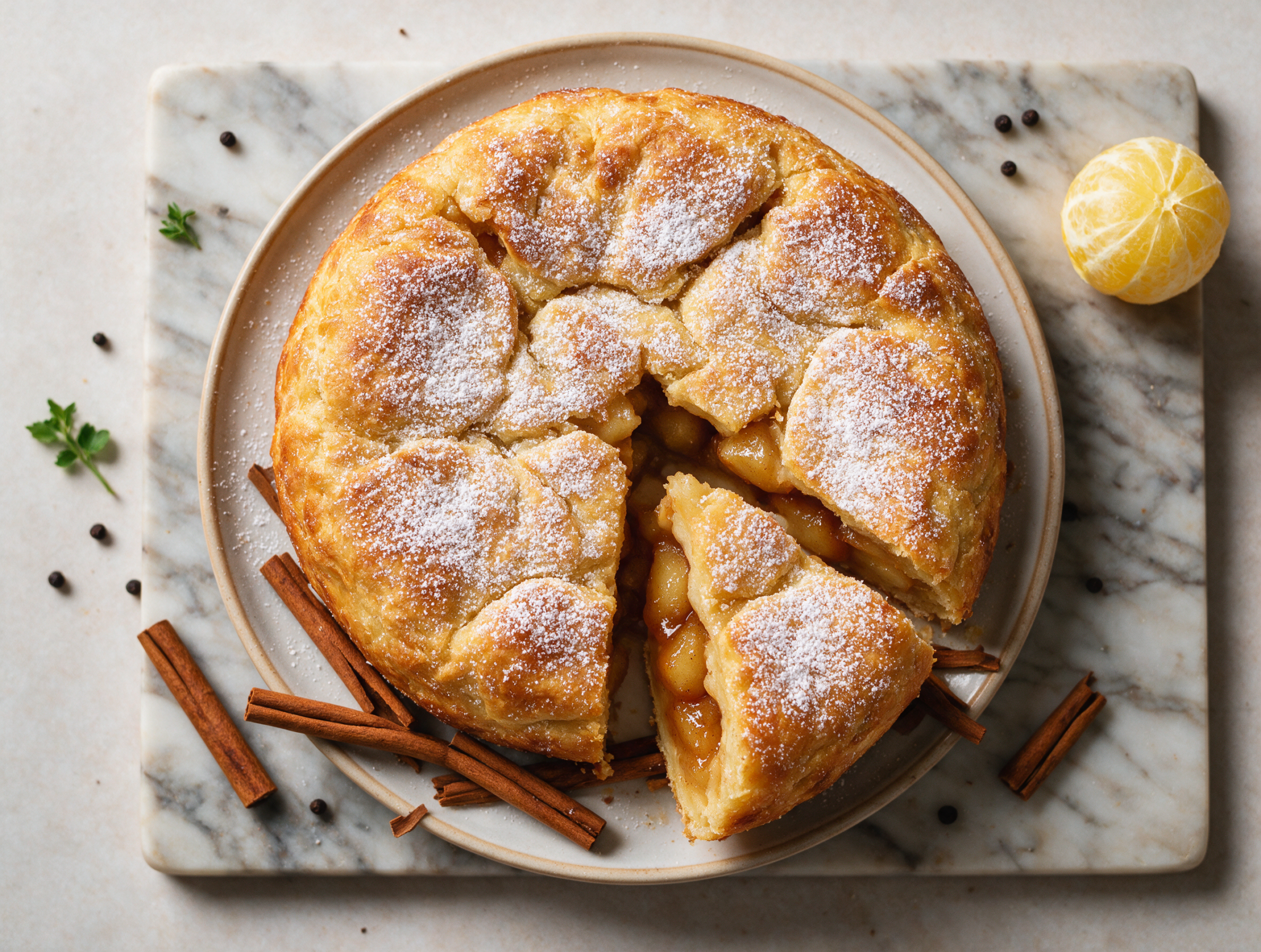
Golden Baked Pompe aux Pommes with Armagnac Apples
Ingredients
Method
- In a large mixing bowl, whisk the flour, sugar, and salt together. Dissolve the yeast in the lukewarm water and add it to the bowl along with the egg and oil. Mix until a shaggy dough forms.
- Knead the dough on a floured surface for 8 to 10 minutes until smooth and elastic. Shape into a ball, cover with a clean kitchen towel, and let rise in a warm spot for 90 minutes, until doubled.
- Peel, core, and slice the apples into 5 mm-thick wedges. Melt the 60 g butter in a 30 cm / 12-inch skillet over medium heat.
- Add the apples, sugar, and cinnamon to the skillet. Cook for 12 to 15 minutes, stirring occasionally, until the apples soften and the juices reduce to a thick glaze.
- Pour in the armagnac and cook for 1 more minute to burn off the raw alcohol edge. Remove from heat and let the filling cool to room temperature.
- Heat the oven to 190 C / 375 F. Line a 32 cm / 12.5-inch round baking sheet or pizza pan with parchment.
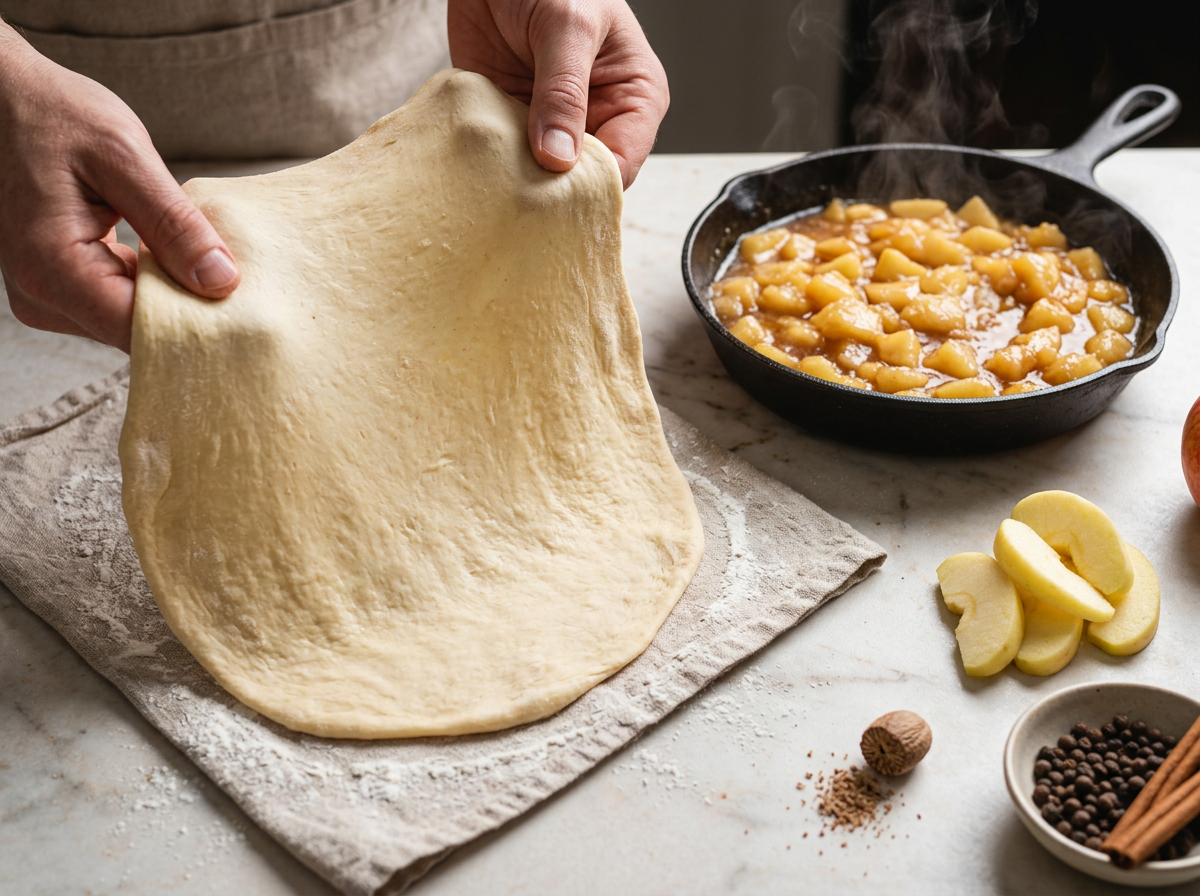
- Divide the risen dough into two pieces, one slightly larger than the other. On a floured kitchen towel, stretch the larger piece with your hands until it's thin enough to see the towel pattern through it, about 45 cm / 18 inches across.
- Lift the dough onto the prepared pan, letting the edges hang over the sides. Brush with the melted butter, then spread the cooled apple filling over the center, leaving a 5 cm / 2-inch border.
- Stretch the second piece of dough the same way and lay it over the apples. Fold the overhanging edges from the bottom layer up and over the top layer, pleating loosely, then brush the whole top with melted butter.
- Bake for 35 to 40 minutes, until the crust is deep golden brown and crackly, rotating the pan once halfway through.
- Cool on the pan for 15 minutes, then dust generously with powdered sugar before slicing.
Notes
- Dough should be thin enough to see a towel pattern through it before assembling.
- Cool the apple filling fully or it will steam the dough while baking.
- Armagnac can be swapped for Calvados or reduced apple juice.
- Pleat the top edges loosely so steam can escape while it bakes.
Tips for Success
- Stretch the dough over the back of your hands, not a rolling pin, so it thins evenly without tearing.
- Cook the apples until the juices reduce to a thick glaze, about 12 to 15 minutes, so the pastry doesn’t turn soggy.
- Brush every layer of dough with melted butter to get the flaky, shattering crust pompe aux pommes is known for.
- Let the dough rest for a full 90 minutes before stretching, or it will spring back and refuse to thin out.
- Use a firm baking apple like Golden Delicious or Reinette so the slices hold their shape instead of turning to mush.
Variations
- Swap armagnac for Calvados or dark rum if that’s what you have open in the cupboard.
- Add a handful of raisins soaked in the armagnac for extra sweetness in every bite.
- Use store-bought phyllo sheets brushed with butter as a shortcut when you don’t have time to stretch dough.
Storage and Reheating
Pompe aux pommes keeps at room temperature, loosely covered, for up to 2 days. After that, move it to the fridge in an airtight container for up to 4 days.
To bring back the crackly texture, reheat slices in the oven at 180 C / 350 F for 8 to 10 minutes. Skip the microwave, it turns the crust soft and chewy instead of crisp.
The pastry doesn’t freeze well once baked since the thin dough gets soggy on thawing. If you want to plan ahead, make the apple filling up to 2 days early and stretch the dough fresh on baking day.
Serving Suggestions
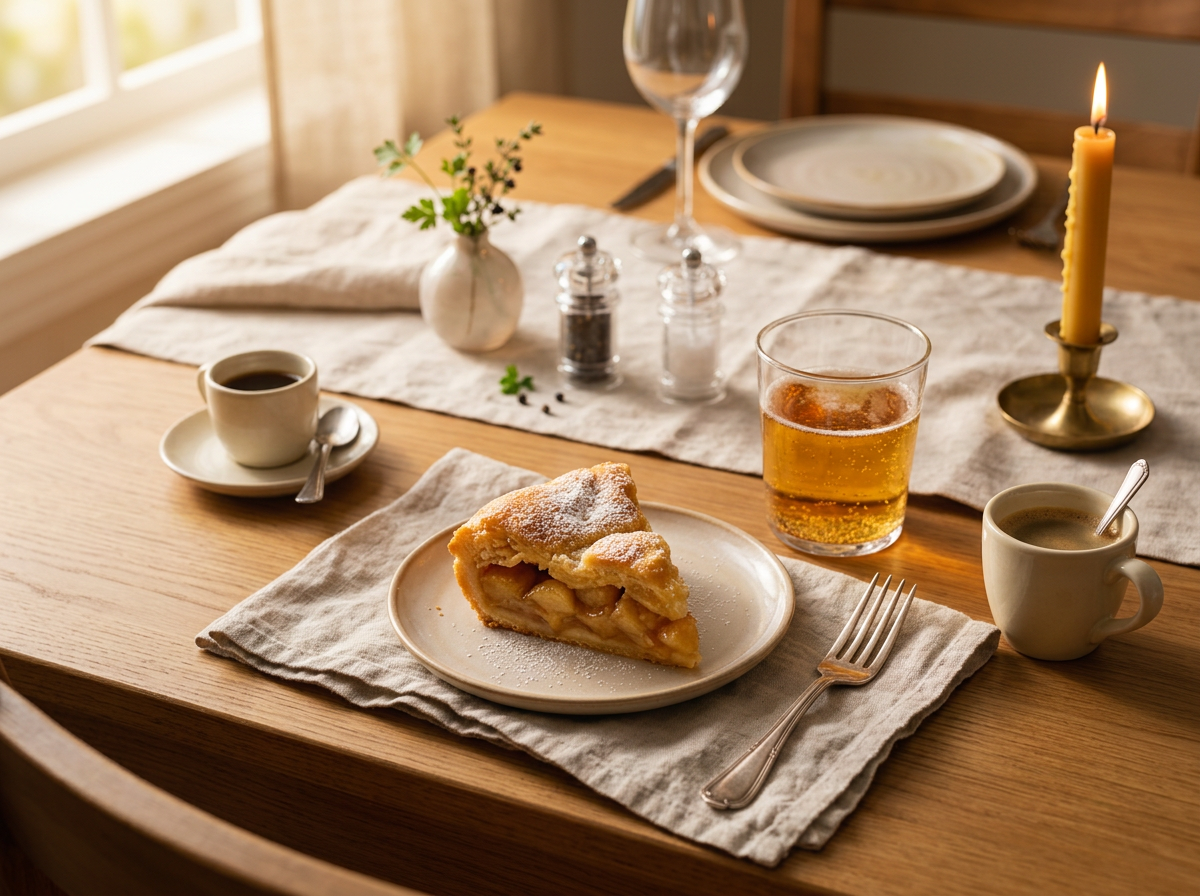
Serve pompe aux pommes warm, within an hour of coming out of the oven, dusted heavily with powdered sugar. A spoonful of crème fraîche or a scoop of vanilla ice cream plays well against the warm apples.
For drinks, a glass of dry cider fits the Gascon roots of the dish, or pour a strong espresso if it’s a breakfast or brunch situation.
Cut it into wedges at the table rather than plating slices ahead of time. The crust stays crisper if it isn’t sitting covered.
FAQ
Why did my pompe aux pommes turn out soggy instead of crackly?
Soggy pastry usually means the apple filling was still juicy when you assembled it. Cook the apples until the liquid reduces to a thick glaze, about 12 to 15 minutes, and let the filling cool fully before spreading it over the dough. Wet filling steams the pastry from the inside instead of letting it crisp.
Can I use puff pastry instead of stretching the dough by hand?
You can, though the texture changes. Puff pastry bakes flakier and more layered, while the traditional stretched dough bakes thin and crackly, closer to strudel. If you’re short on time, two sheets of puff pastry brushed with butter make a fair stand-in for weeknight baking.
Can I make the apple filling ahead for pompe aux pommes?
Yes, the apple filling holds well in the fridge for up to 2 days in a sealed container. Cool it fully before storing, then bring it back to room temperature before spreading it on the dough. The dough itself is best made and stretched the same day it’s baked.
What goes well with pompe aux pommes besides powdered sugar?
Crème fraîche or a scoop of vanilla ice cream both work well against the warm apple filling. A glass of dry cider or a strong espresso rounds out the plate, since the pastry itself isn’t overly sweet. Serve it warm for the best contrast between crust and filling.
Is pompe aux pommes dairy free?
No, this recipe uses butter both in the apple filling and for brushing the dough layers, so it’s not dairy free as written. You can swap the butter for a neutral vegan margarine, though the crust will taste less rich and won’t brown quite as deeply.
What’s the difference between pompe aux pommes and tarte tatin?
Pompe aux pommes uses a thin, stretched yeasted dough wrapped around cooked apples and bakes right side up, while tarte tatin is a pastry tart baked upside down over caramelized apples then flipped. Pompe aux pommes comes from Gascony, tarte tatin from the Loire Valley, and one is crackly and light, the other sticky and caramelized.
If you enjoyed this, try
- the Malvern Pudding: Spiced Baked Apples with Crumb Topping
- Golden Baked Om Ali (Egyptian Bread Pudding) recipe
