
Jump to Recipe
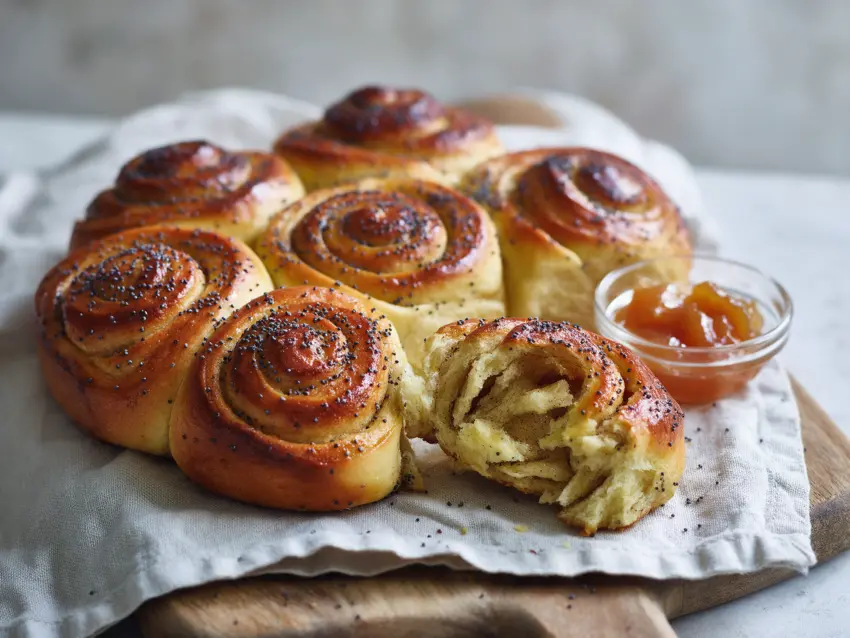
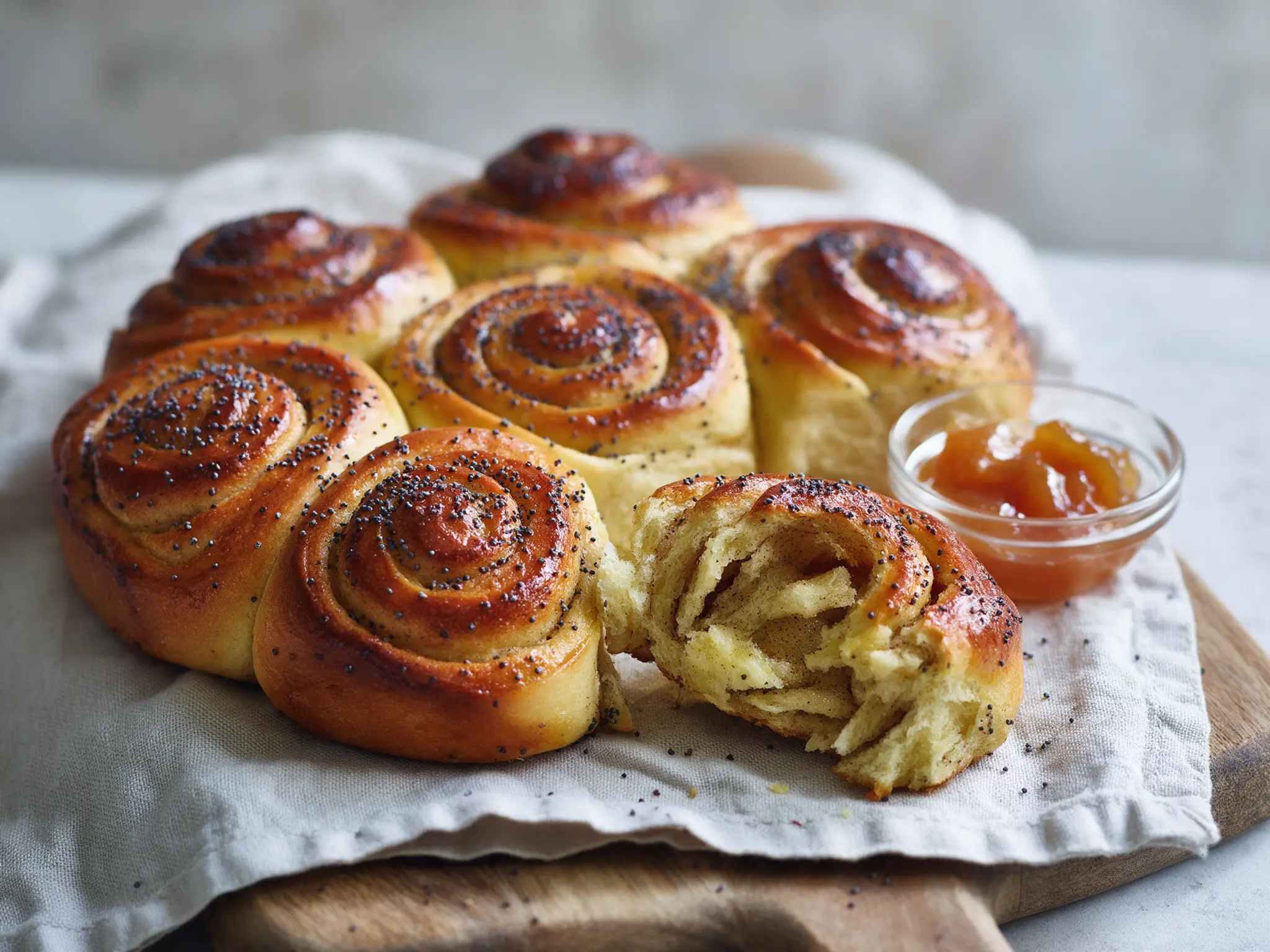
Azerbaijani shirin gogal is a sweet layered bread: yeast dough rolled thin, spread with cardamom butter, and coiled into a spiral that peels apart in ribbons. This version makes 8 buns and takes about 2 and a half hours, most of it hands-off rising.
There’s something about the smell when that butter hits a hot oven. Cardamom first. Then the saffron-yolk glaze turning deep gold.
Gogal is a Novruz tradition in Azerbaijan, baked in March for the spring new year alongside pakhlava and nut-filled shekerbura pastry. The sweet shirin version is the one that ends up next to the tea glasses.
My first batch leaked butter all over the pan. The fix is simple: use softened butter for the filling, never melted, and coil the dough snug.
Why You’ll Love This Recipe
- Soft yeast dough with real layers you can peel apart
- Filling is butter, sugar, flour, and cardamom, nothing fancy
- Shape the buns ahead and bake them fresh the next morning
- Keeps for two days and reheats soft in the oven
Ingredient Notes
- instant yeast: Instant yeast mixes straight into the dough. If you only have active dry, use the same amount and bloom it in the warm milk for 5 minutes.
- unsalted butter: Unsalted lets you control the salt. Pull the filling butter out an hour ahead so it’s soft but still cool.
- ground cardamom: Grind green pods fresh if you can. Pre-ground works, but use a fresh jar because old cardamom tastes flat.
- saffron threads: Crush the threads between your fingers before steeping in hot milk. If you have none, 1/8 tsp ground turmeric gives color but not aroma.
- poppy seeds: Sesame or nigella seeds work the same way and stick to the glaze just as well.
Azerbaijani Shirin Gogal: Sweet Layered Bread Spirals
Ingredients
Method
- Whisk the warm milk with the yeast, sugar, egg, and melted butter in a 4-quart / 3.8 L bowl. Add the flour and salt and stir until a shaggy dough forms.
- Knead on a lightly floured counter for 8 to 10 minutes until the dough is smooth and slightly tacky but no longer sticks to your hands. Place it in a lightly oiled bowl, cover, and let it rise in a warm spot for 60 minutes until doubled.
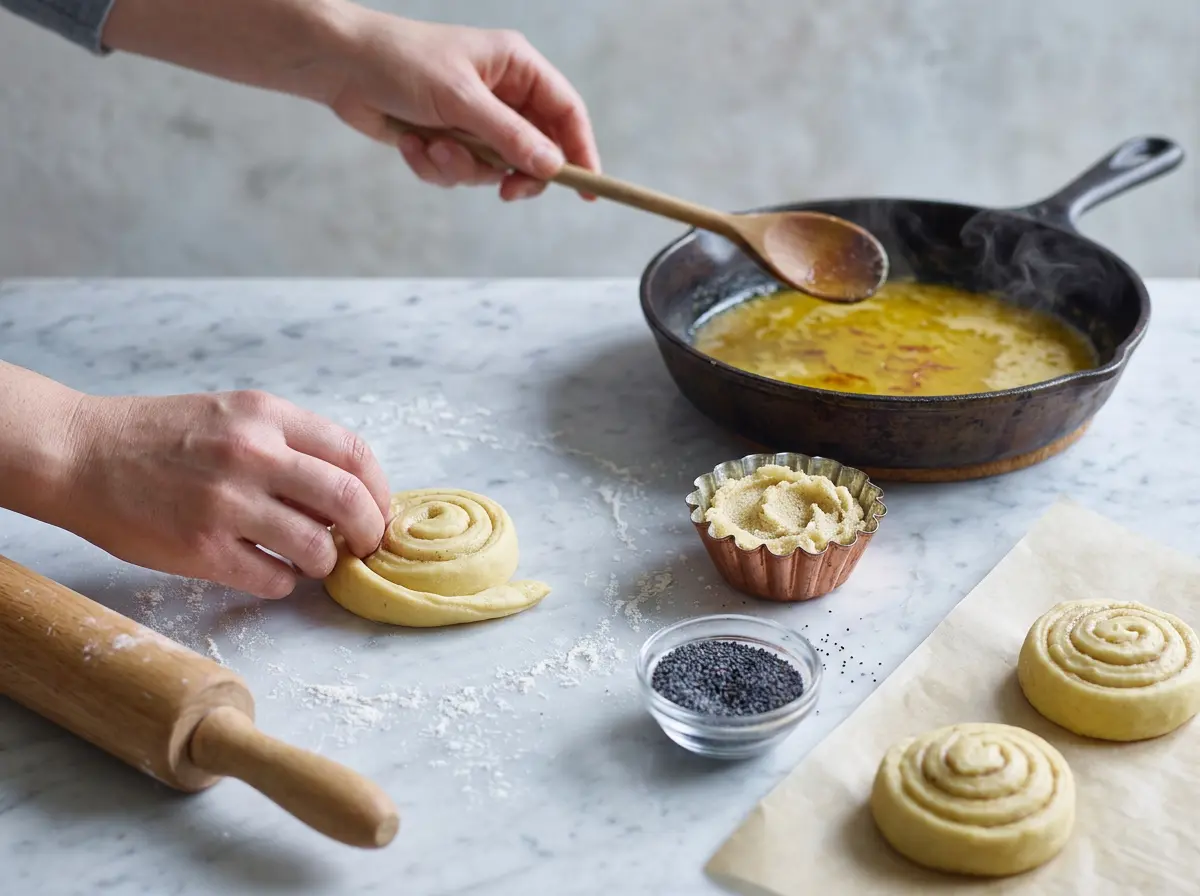
- Mash the softened butter with the sugar, flour, and cardamom in a small bowl until it forms a thick, spreadable paste. Use softened butter, never melted, or it will run out of the buns while they bake. Stir the saffron into the hot milk and set it aside to steep.
- Line two 33 x 46 cm / 13 x 18 inch baking sheets with parchment. Punch down the dough and divide it into 8 equal pieces, about 110 g each. Keep the pieces you aren't working on covered.
- Roll one piece on a lightly floured counter into a rectangle about 35 x 18 cm / 14 x 7 inches, thin enough to faintly see the counter through. Spread about 2 tablespoons of filling over it, leaving a 1 cm border, then roll it up tightly from the long edge into a rope.
- Coil the rope into a snug spiral, tuck the outer end underneath, and set it on a sheet. Repeat with the remaining pieces, placing 4 buns per sheet with 5 cm / 2 inches between them. Cover loosely and let rise for 30 minutes until puffy. While they rise, heat the oven to 180 C / 350 F with racks in the upper and lower thirds.
- Whisk the egg yolk into the saffron milk. Brush it over the buns and sprinkle with the poppy seeds.
- Bake for 22 minutes, swapping the sheets' positions after 11 minutes, until the tops are deep golden brown and the center reads 190 F / 88 C on an instant-read thermometer. Transfer to a rack and serve warm.
Notes
- Keep the filling butter soft but not shiny, or it will leak while baking.
- Cover shaped buns loosely so the surface doesn't dry out during the second rise.
- Dough should feel soft and slightly tacky after kneading. Add flour only a tablespoon at a time.
- Bake the two sheets on separate racks and swap their positions halfway through.
Tips for Success
- Roll each dough piece until you can faintly see the counter through it, about 2 mm thick. Thicker dough bakes into bread, not layers.
- Spread the filling with the back of a spoon and stop 1 cm from the edges so it stays inside the coil.
- Tuck the outer end of each spiral underneath and press it down so the coil can’t unwind during the second rise.
- Check the center with an instant-read thermometer. Pull the buns at 190 F / 88 C, when the crumb has set without drying out.
- Brush the yolk wash on right before baking, not before the second rise, or it dries into a crust and cracks.
Variations
- Swap the cardamom for 1 tsp ground cinnamon and stir 40 g finely chopped walnuts into the filling for a nuttier spiral.
- Replace the poppy seeds with sesame seeds, or skip the seeds and dust the cooled buns with powdered sugar.
- Make a savory version by replacing the filling sugar with 1/2 tsp salt and leaving out the cardamom.
Storage and Reheating
Shirin gogal keeps in an airtight container at room temperature for 1 to 2 days. The fridge dries out enriched bread faster, so skip it unless your kitchen is hot.
Reheat the buns in a 150 C / 300 F oven for 8 minutes, loosely covered with foil, until the butter layers are soft and warm.
To freeze, wrap cooled buns individually and store for up to 2 months. Thaw overnight on the counter, then reheat the same way. You can also shape the buns, cover them, and refrigerate for up to 12 hours before baking.
Serving Suggestions
Serve shirin gogal warm with strong black tea in a small pear-shaped armudu glass, the way it’s usually poured in Azerbaijan.
Put a dish of quince or sour cherry jam on the table. The tartness balances the buttery cardamom layers.
For a Novruz-style spread, set the buns on a platter with pakhlava, shekerbura and flaky almond badambura pastries. Pull each coil apart in layers rather than slicing it.

FAQ
Why is my shirin gogal filling leaking out onto the baking sheet?
The filling leaks when the butter is melted instead of softened, or when the coil is loose. Use butter at cool room temperature, spread it 1 cm from the edges, and roll the dough snugly before coiling. A little seepage is normal, but pooled butter means the filling was too runny.
Can I use turmeric instead of saffron in the shirin gogal egg wash?
Yes. Whisk 1/8 tsp ground turmeric into the egg yolk and milk for a similar golden color. You’ll lose saffron’s floral aroma, so keep it to a pinch because more turmeric tastes earthy rather than sweet. A plain yolk wash with no spice also works and still browns well.
Can I shape shirin gogal the night before and bake it in the morning?
Yes. After coiling, set the buns on parchment-lined sheets, cover tightly, and refrigerate for up to 12 hours. Let them sit at room temperature for 30 minutes, brush with the saffron yolk wash, and bake as written. That 30 minutes stands in for the second rise.
What tea goes with shirin gogal?
Strong black tea is the classic match, served in a small pear-shaped armudu glass. The tannins cut through the butter filling. Add a spoon of quince or sour cherry jam on the side if you want something tart against the sweet cardamom layers.
How do I make shirin gogal dairy free?
Swap the whole milk for unsweetened oat milk and use a plant-based butter block, not a soft tub spread, in both the dough and the filling. Block butter stays firm enough to spread without leaking. The crumb comes out slightly less rich, but the layers still separate.
What’s the difference between shirin gogal and duz gogal?
Shirin gogal is sweet, with sugar and cardamom in the butter filling. Duz gogal is the savory version, filled with a salted butter and flour mix and no sugar. Both use the same rolled, coiled shape, and both show up on the Novruz table.
Related recipes
