
Jump to Recipe
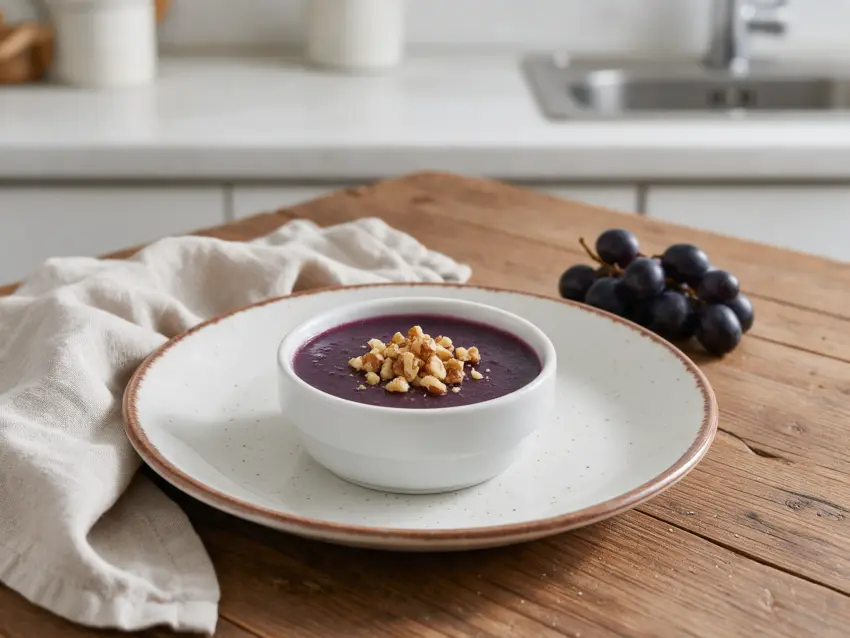
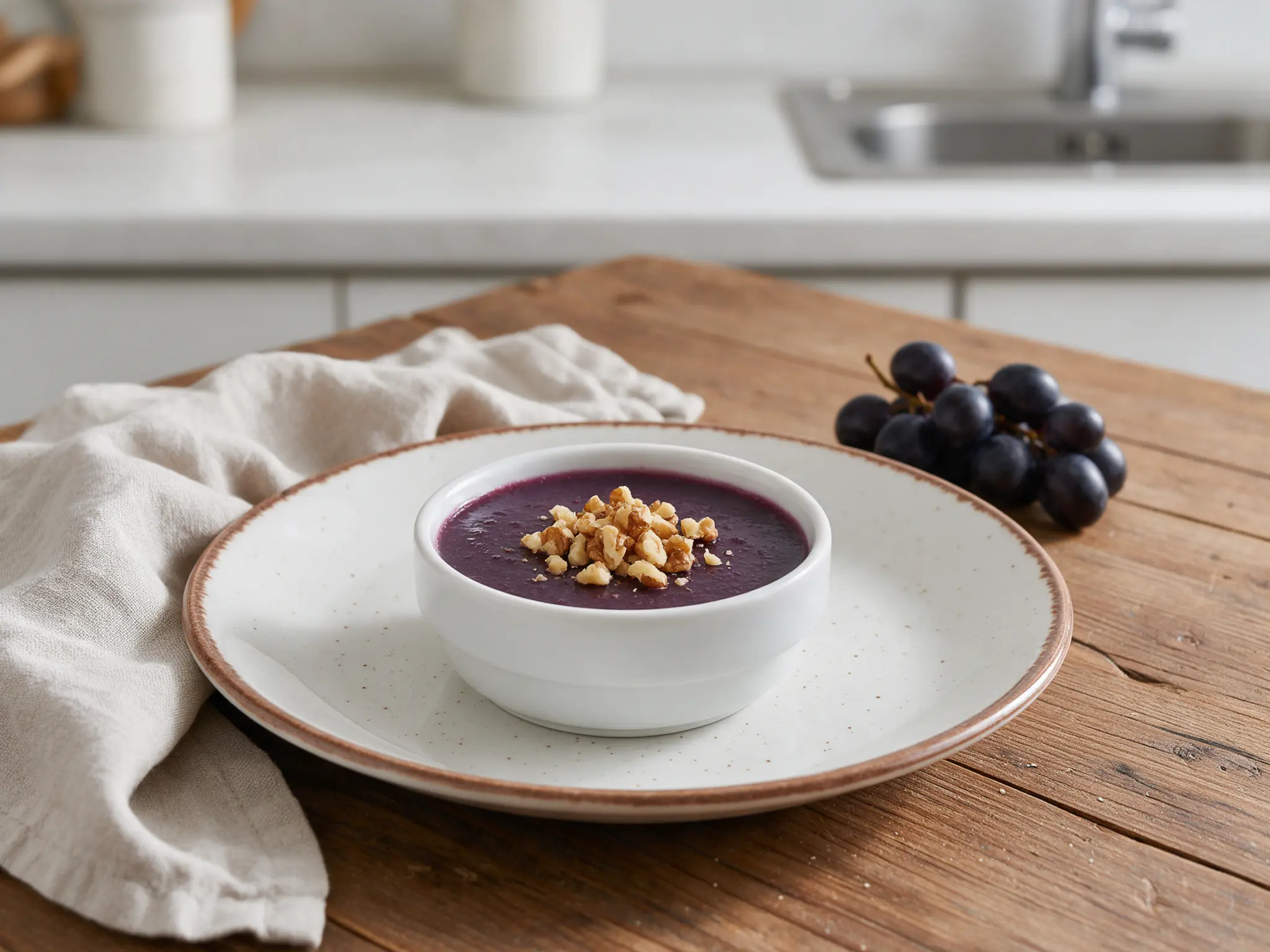
Georgian pelamushi is a grape pudding made by whisking toasted flour into hot grape juice until it thickens. You cook it for about 20 minutes, then let it cool and set for 2 hours before topping it with chopped walnuts.
There’s something about how little it asks of you. Three ingredients. No eggs, no dairy, no added sugar.
Pelamushi comes from Georgia’s grape harvest, where fresh grape must gets cooked down into sweets. I use store-bought juice and it holds up well. Pick 100% juice, preferably Concord, for a deep purple color.
Lumps are the one thing that can go wrong. Whisk the flour into cold juice first and the pudding stays smooth.
Why You’ll Love This Recipe
- Three ingredients and about 20 minutes of cooking
- Dairy-free and egg-free, so it suits vegan guests
- Set it a day ahead and add walnuts later
- Deep grape flavor with a soft, spoonable texture
Ingredient Notes
- grape juice: Pick 100% juice with no added sugar. Concord gives the deepest color, while red grape juice works but tastes lighter. Fresh grape must is the traditional choice if you have it.
- all-purpose flour: Toasting it first removes the raw, pasty taste. Fine cornmeal is the gluten-free swap, as long as the package says gluten-free.
- walnuts: Chop them coarse so they stay crunchy on the soft pudding. Hazelnuts or almonds work in their place.
Easy Georgian Pelamushi Grape Pudding with Walnuts
Ingredients
Method
- Heat a 26 cm / 10-inch dry skillet over medium-low. Add the flour and stir constantly for 4 to 5 minutes, until it smells like toasted bread and turns pale tan. Tip it into a bowl and cool for 2 minutes.
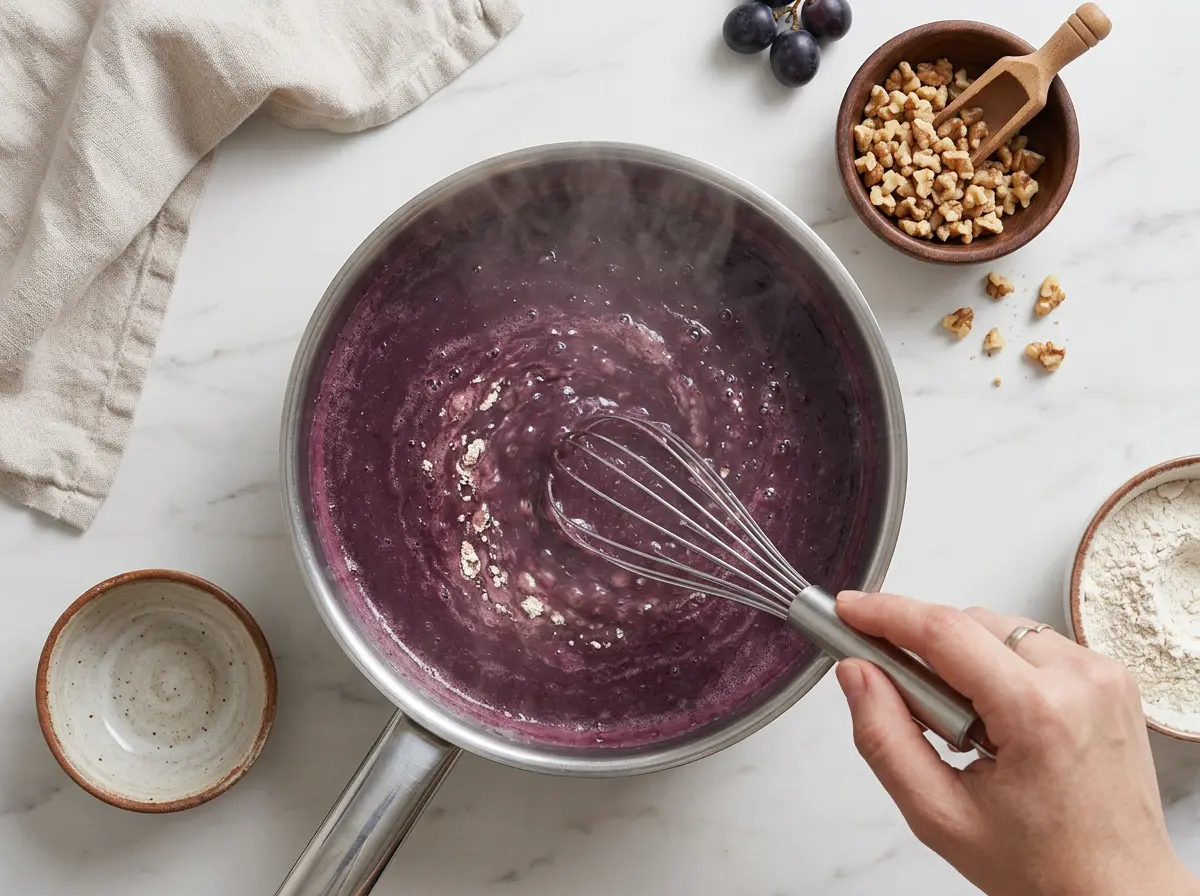
- Whisk the toasted flour with 250 ml / 1 cup cold grape juice until completely smooth. Don't add dry flour straight to hot juice, because it clumps. Pour the remaining 750 ml / 3 cups juice into a 3-quart / 2.8 L heavy-bottomed saucepan and heat over medium for 5 to 6 minutes, until steaming but not boiling.
- Reduce the heat to medium-low. Pour the flour slurry into the hot juice in a thin stream, whisking constantly. Cook for 8 to 10 minutes, scraping the bottom and corners with a spatula, until the pudding turns glossy and coats the back of a spoon.
- Divide the pudding among six 200 ml bowls, about 170 ml each. Cool at room temperature for 15 minutes, then cover and refrigerate until set, about 1 hour 45 minutes more.
- Top each bowl with about 1 tablespoon of chopped walnuts just before serving.
Notes
- Use cold juice for the slurry so the toasted flour dissolves without clumping.
- Expect the pudding to look looser than you'd like while hot, since it firms up as it cools.
- Use a heavy-bottomed pot to reduce scorching on the bottom.
- Add walnuts just before serving so they stay crunchy.
Tips for Success
- Toast the flour in a dry 26 cm skillet for 4 to 5 minutes, stirring, until it smells like toasted bread.
- Whisk the flour into cold juice before it meets heat, and pour the slurry in slowly while whisking to avoid lumps.
- Scrape the bottom and corners of the pot with a spatula as it thickens, since the starch catches and scorches there first.
- Stop cooking when the pudding coats a spoon and moves slowly, because it firms up a lot more once chilled.
- Choose 100% grape juice with no added sugar, and taste it first, since a tart juice makes a tart pudding.
Variations
- Stir 1/2 teaspoon ground cinnamon into the flour slurry for a warmer, spiced pudding that suits cold evenings.
- Swap the walnuts for chopped hazelnuts or almonds, or scatter pomegranate seeds on top for a tart, juicy contrast.
- Use fine cornmeal labeled gluten-free instead of flour, and stir a few extra minutes until the pudding coats the spoon.
Storage and Reheating
Pelamushi keeps 3 to 4 days in the fridge, covered. Store the walnuts separately in a jar at room temperature and add them to each bowl at serving time.
I serve it cold only. Warming a set pudding loosens it and takes away the soft, spoonable body, so skip the microwave. To get ahead, make it 1 to 3 days before and keep it chilled until the last minute.
Don’t freeze it. The starch releases water as it thaws and the pudding turns grainy.
Serving Suggestions
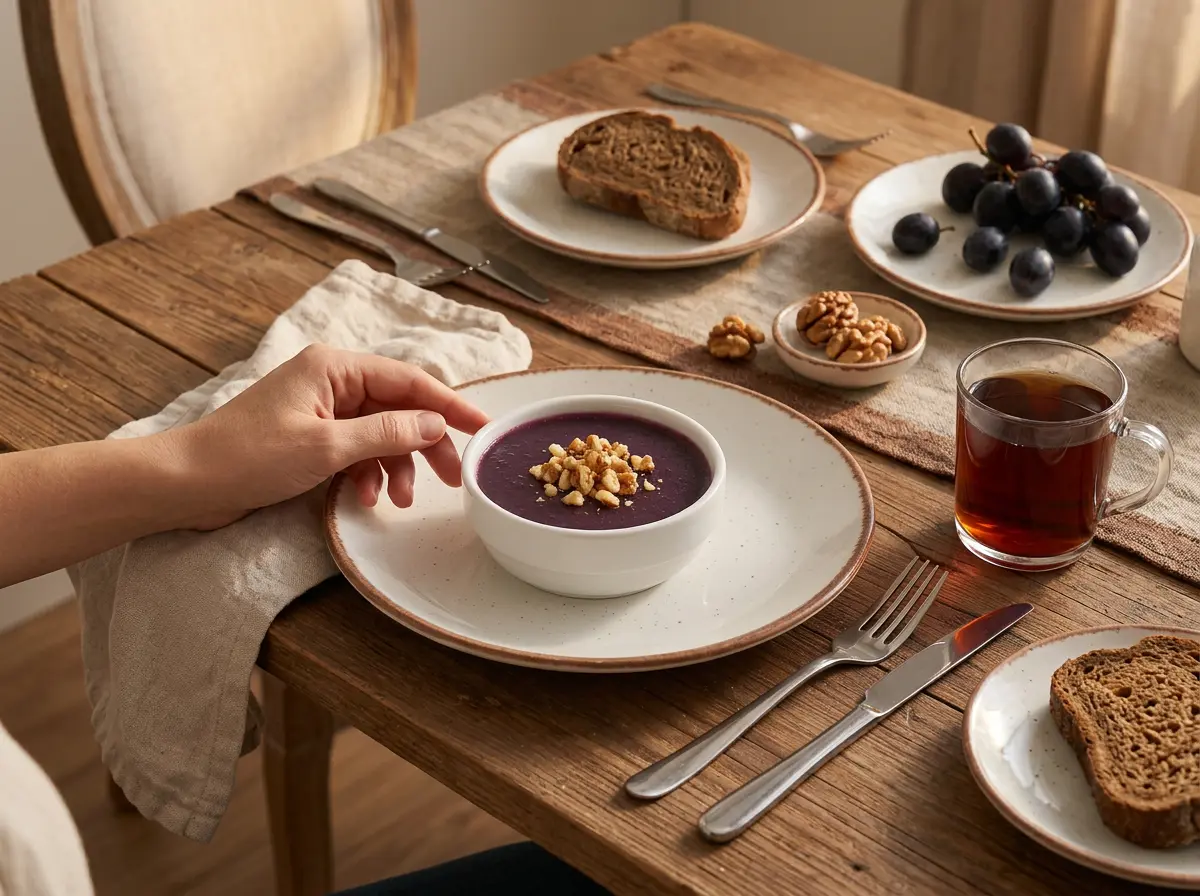
Georgian pelamushi is served cold in small bowls, each topped with about 1 tablespoon of chopped walnuts. Add the walnuts right before the bowls go to the table.
I like it in the afternoon with strong black tea. A spoonful of plain yogurt or a few fresh grapes on the side adds some tang.
It also works as a light finish after a heavy supper of khachapuri or grilled meat.
FAQ
How do I know when pelamushi is thick enough to take off the heat?
Pelamushi is ready when it coats the back of a spoon and a line drawn with your finger stays put. That takes 8 to 10 minutes of stirring after the slurry goes in. The pudding should look glossy and move slowly, like thick custard, and it firms up more as it chills.
Why is my pelamushi lumpy and can I fix it?
Lumps come from flour hitting hot juice, which sets the outside of each clump before it can dissolve. Whisk the toasted flour into cold juice first, then add that slurry to the hot juice in a thin stream. If it’s already lumpy, whisk hard off the heat or press it through a fine sieve.
What is the difference between pelamushi and churchkhela?
Pelamushi is a pudding, while churchkhela is a candle-shaped sweet. Both start from grape must thickened with flour, but churchkhela is walnuts strung on thread, dipped in the must, and hung to dry for days. Pelamushi is poured into a bowl and eaten with a spoon after 2 hours of chilling.
How far ahead can I make pelamushi, and can I freeze it?
Pelamushi keeps 3 to 4 days in the fridge, so you can make it the day before. Cover it once it’s cold and add the walnuts just before serving so they stay crunchy. Don’t freeze it, because the starch weeps water when it thaws and the texture turns grainy.
What goes well with pelamushi besides walnuts?
Strong black tea or a small cup of coffee cuts the sweetness best. A spoonful of plain yogurt or a handful of fresh grapes on the side also works. Keep the walnuts on top either way, since their slight bitterness stops the grape flavor from tasting flat.
Can I use cornmeal instead of flour for gluten-free pelamushi?
Yes. Use 90 g fine cornmeal instead of 100 g flour, toast it the same way, and stir a few minutes longer until it coats a spoon. Choose cornmeal labeled gluten-free if you need the pudding gluten-free. It comes out slightly grainier and tastes a little of toasted corn.
More from the kitchen
