
Jump to Recipe
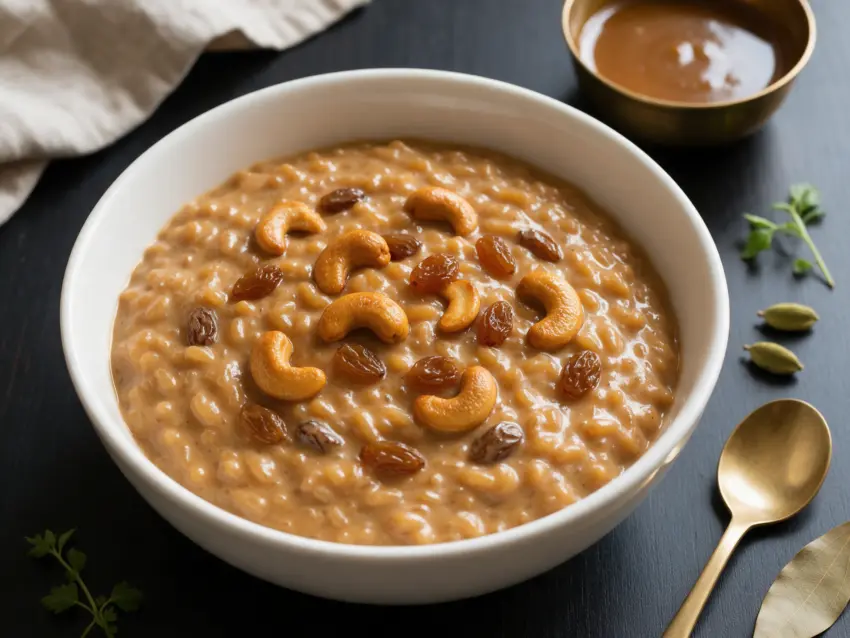
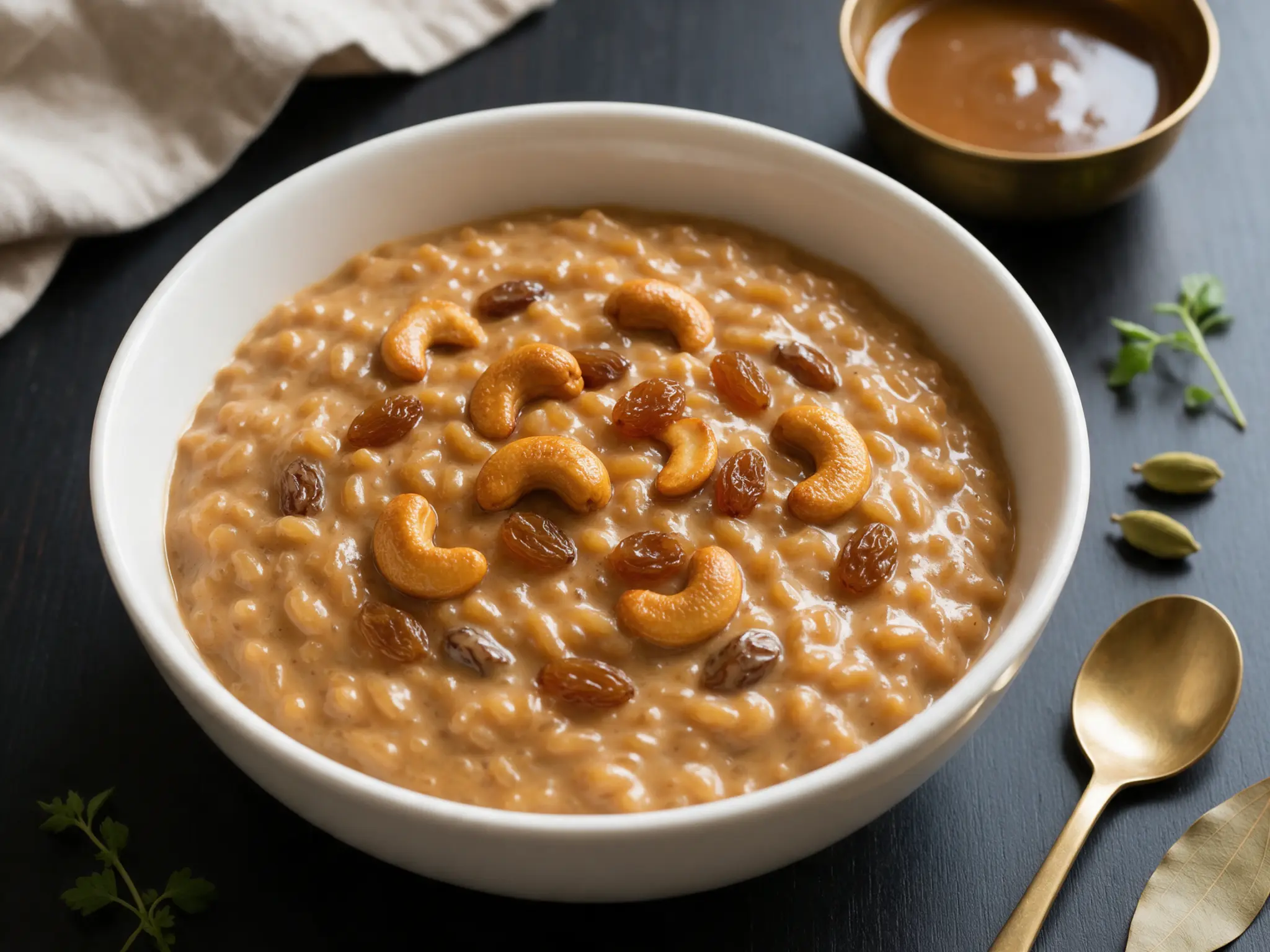
Bengali nolen gur payesh is a rice pudding made by simmering Gobindobhog rice in whole milk, then stirring in date palm jaggery off the heat. It takes about 80 minutes, and most of that is waiting.
There’s something about the smell when nolen gur meets warm milk. Smoky. A little like caramel, a little like toffee. It only shows up in Bengal’s winter, roughly December to February.
One thing goes wrong more than anything else. The payesh curdles. Gur is mildly acidic, and milk that’s still bubbling will split, so I take the pot off the heat and wait 5 minutes first.
Everything else is simple stirring. If you can watch a pot of milk, you can make this.
Why You’ll Love This Recipe
- Nine ingredients, one main pot, and mostly hands-off simmering
- Smoky date palm jaggery flavor you can’t get from sugar
- Tastes even better after a night in the fridge
- Soft grains in lightly thickened milk, never stodgy
Ingredient Notes
- Nolen gur: This is date palm jaggery, sold as liquid jhola gur or as firm patali blocks in Indian and Bengali grocery stores. If you can’t find it, use about 130 g regular dark jaggery, though the smoky note will be milder.
- Gobindobhog rice: A short, fragrant, slightly sticky Bengali rice that softens without turning to mush. Broken basmati or Arborio can stand in, but the aroma and texture will differ.
- Whole milk: Use full-fat milk. Low-fat milk gives a thin payesh that doesn’t coat the spoon and is more likely to split when the gur goes in.
- Bay leaves and green cardamom: These are the traditional aromatics. Crush the cardamom pods lightly so the seeds release their oils into the milk.
- Cashews and raisins: Fried in ghee, they add crunch against the soft rice. Skip the cashews for a nut-free version, or use blanched almonds if you like.
Slow-Simmered Bengali Nolen Gur Payesh Rice Pudding
Ingredients
Method
- Rinse the rice under cold water until the runoff is mostly clear. Soak it in a bowl of water for 20 minutes, then drain. While it soaks, crush the cardamom pods and measure out the gur.
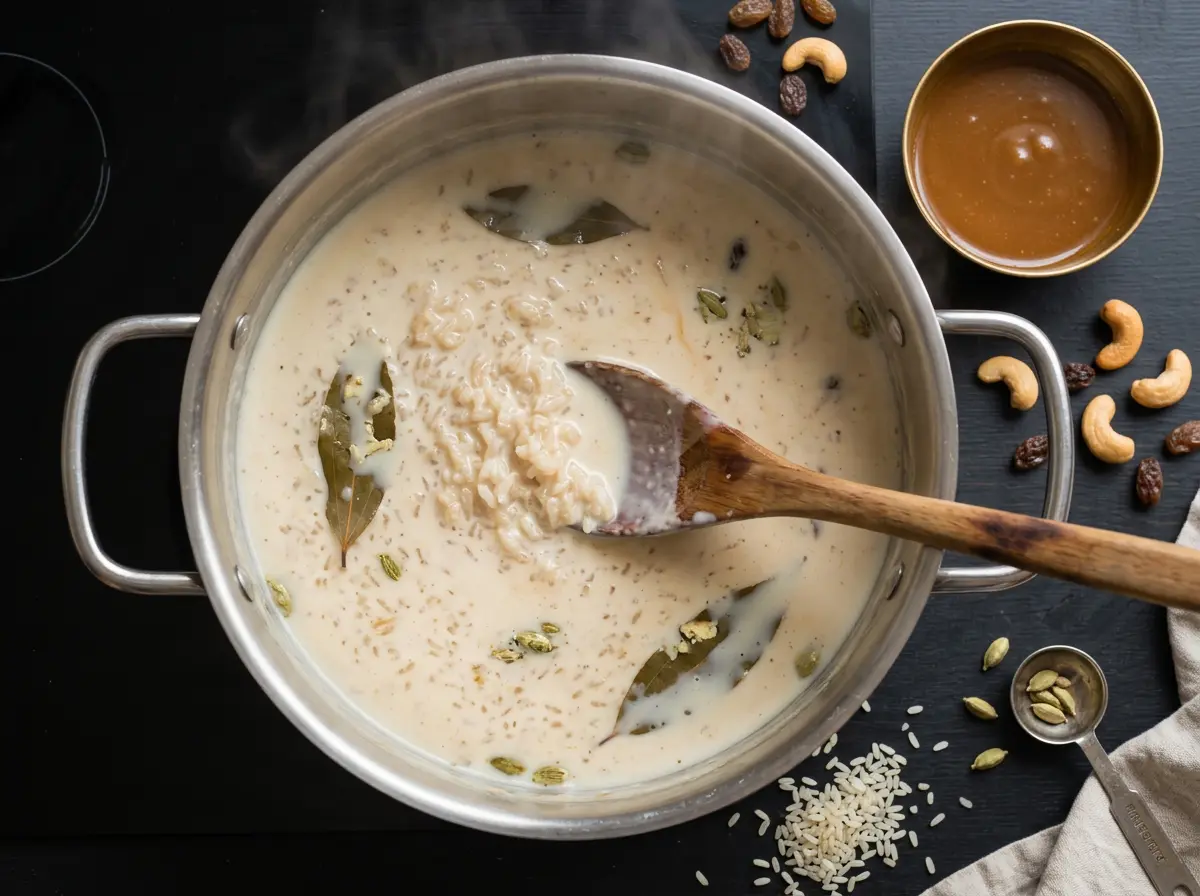
- Put the milk, bay leaves, cardamom and salt in a 24 cm / 9.5-inch heavy-bottomed pot over medium heat. Bring to a boil, about 10 minutes, stirring every minute or two. Drop to medium-low and simmer 10 minutes more, until the milk has reduced by about a fifth and looks slightly creamy.
- Add the drained rice. Simmer on low for 25 minutes, stirring every 3 to 4 minutes and scraping the base, until a grain crushes easily between your fingers and the milk coats the back of a spoon.
- In the last 5 minutes of simmering, melt the ghee in an 18 cm / 7-inch skillet over medium-low heat. Fry the cashews and raisins for 2 to 3 minutes until the cashews turn golden and the raisins puff. Set aside.
- Turn off the heat under the payesh and rest it for 5 minutes, until the bubbling stops completely. If the gur is a block, crumble it. Stir in half the gur until dissolved, taste, then add the rest. The color should turn a warm caramel-tan.
- Stir in the fried cashews, raisins and any ghee from the skillet. Fish out the bay leaves. Serve warm, or chill and loosen with a splash of milk before serving.
Notes
- Rinse and soak the Gobindobhog rice for 20 minutes before cooking.
- Add the nolen gur only after the milk has stopped bubbling completely.
- Stir and scrape the pot base every few minutes to prevent scorching.
- Taste after adding half the gur, then add more if you want it sweeter.
Tips for Success
- Wait 5 minutes after turning off the heat before adding the gur, until the bubbling stops completely, so the milk doesn’t split.
- Use a heavy-bottomed pot and scrape the base every few minutes, because milk scorches fast and a burnt note overpowers the gur.
- Rinse and soak the Gobindobhog rice for 20 minutes so the grains turn soft without breaking apart in the milk.
- Add half the gur, stir, and taste before adding the rest, since sweetness varies a lot between brands and batches.
- Loosen chilled payesh with 2 to 3 tablespoons of warm milk before serving, because it thickens a lot in the fridge.
Variations
- Fry 3 tablespoons of fresh grated coconut in the ghee until pale gold and stir it in with the cashews.
- Replace the cashews with sliced pistachios and almonds, and scatter a few over each bowl before serving.
- Use block patali gur instead of liquid. Crumble 130 g and stir it in slowly so it melts evenly into the warm milk.
Storage and Reheating
Nolen gur payesh keeps for 3 to 4 days in an airtight container in the fridge. The flavor settles overnight, so a day-ahead batch tastes better than a fresh one. I don’t freeze it, because milk-based puddings turn grainy once thawed.
To reheat, tip the payesh into a pot over low heat with 2 to 3 tablespoons of milk. Stir for about 5 minutes until loose and just warm. Don’t let it boil.
You can also skip reheating and serve it chilled straight from the fridge. Loosen it with a splash of cold milk first.
Serving Suggestions
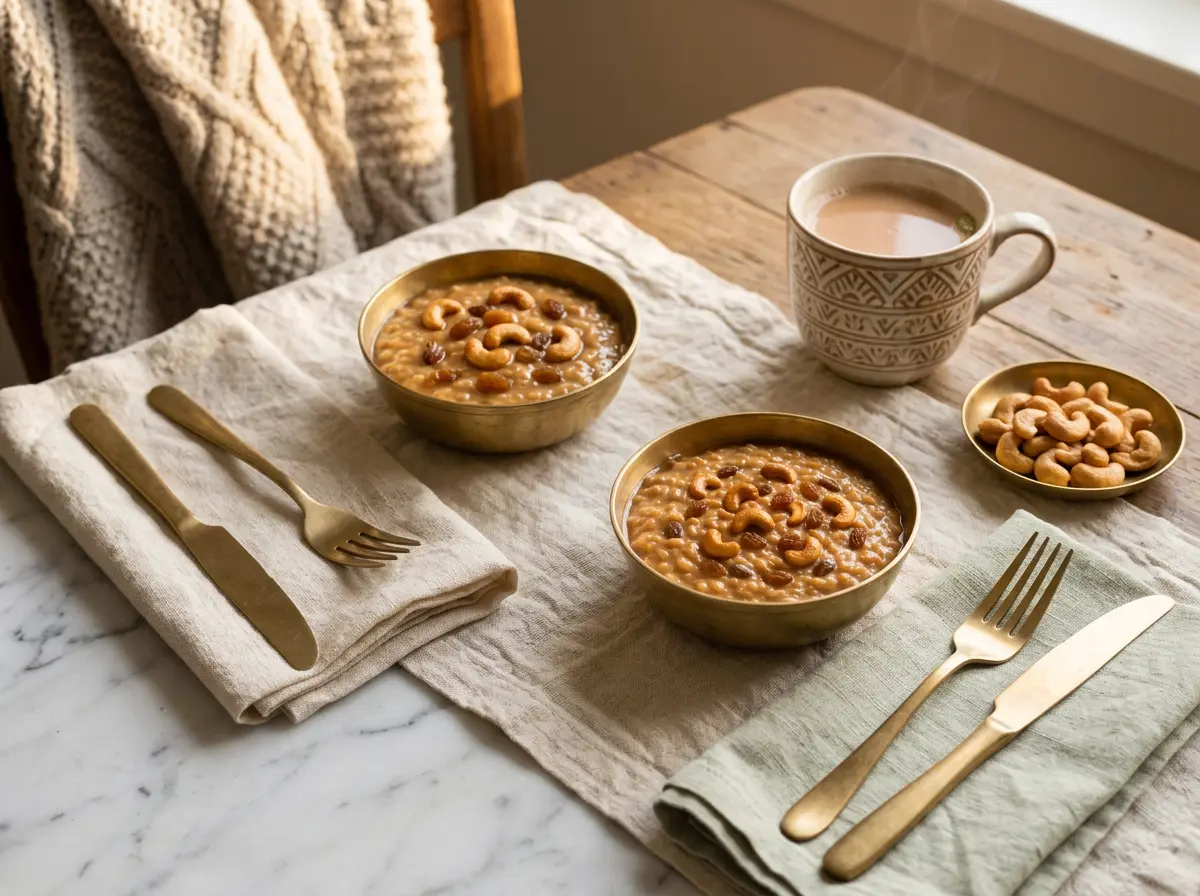
Serve nolen gur payesh warm in small bowls, with a few fried cashews and raisins on top. It’s traditional at the end of a Bengali meal and at winter festivals like Poush Sankranti in mid-January.
A small drizzle of extra liquid gur over each bowl looks good and doubles down on the smoky flavor. Keep the rest of the meal savory, since the payesh brings the sweetness.
It’s also good chilled on a warm winter afternoon, with a cup of milky tea alongside.
FAQ
Why did my nolen gur payesh curdle?
Nolen gur payesh curdles when the gur goes into milk that’s still simmering. Gur is mildly acidic, and heat plus acid splits milk proteins. Turn off the heat, wait about 5 minutes until the bubbling stops completely, then stir the gur in two additions. Cooler milk and slow stirring keep the payesh smooth.
Can I use regular jaggery or brown sugar instead of nolen gur?
Regular dark jaggery works if you can’t find nolen gur, but use about 130 g and expect less of the smoky, date-like flavor. Brown sugar also works at roughly 100 g, though it tastes flatter. Add either one the same way, off the heat, after the milk stops bubbling.
How long does nolen gur payesh keep, and how do I loosen it after chilling?
Payesh keeps 3 to 4 days in an airtight container in the fridge, and the flavor settles overnight, so a day-ahead batch is fine. It thickens a lot as it chills. Warm it in a pot over low heat with 2 to 3 tablespoons of milk, stirring, until loose and just warm, about 5 minutes.
What do you serve with nolen gur payesh?
Nolen gur payesh traditionally ends a Bengali meal, so it follows something like luchi with aloo dum or rice with a fish curry. In winter it also sits well beside coconut-filled patishapta crepes or a plate of pithe. Keep the rest of the table savory, since the payesh is already sweet.
What is the difference between payesh and kheer?
Payesh is the Bengali rice pudding, made with fragrant Gobindobhog rice, bay leaf and cardamom, and cooked to a looser consistency. North Indian kheer is similar but often thicker, with more rice and flavors like saffron or nuts. Nolen gur payesh is the winter version sweetened with date palm jaggery.
Is nolen gur payesh gluten free, and can I make it dairy free?
Yes, nolen gur payesh is gluten-free as written, since it’s only milk, rice, jaggery, ghee and cashews. It does contain dairy and tree nuts. For a dairy-free version, use full-fat coconut milk, but the flavor shifts toward coconut and it won’t taste like classic payesh.
Loved this? Try these next
