
Jump to Recipe
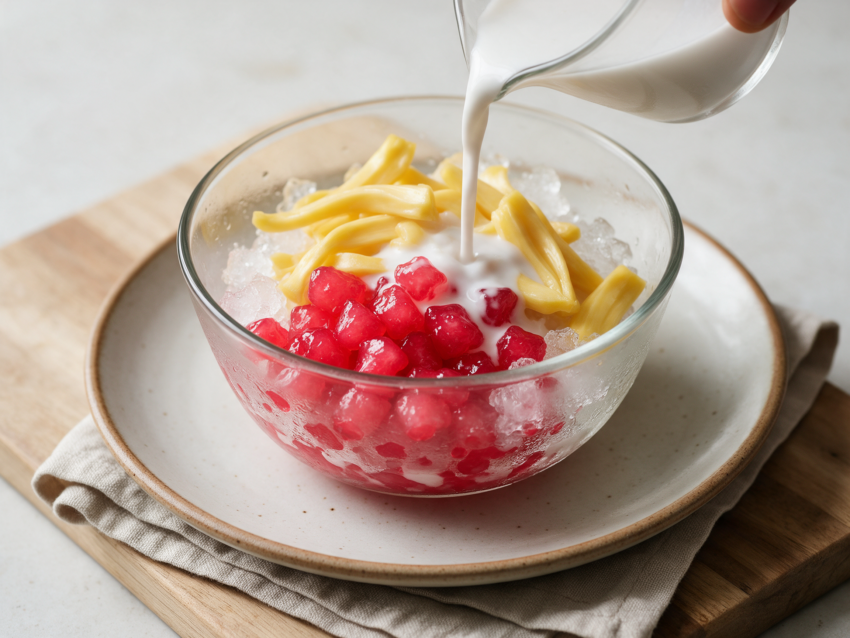
There’s something almost magical about cracking into a bowl of tub tim grob for the first time. Tub tim grob is a Thai dessert of crunchy water chestnuts coated in tapioca starch and dyed ruby red, served in sweet coconut milk over crushed ice.
I first had it from a street cart in Bangkok, the vendor scooping ice into a bag before ladling in the coconut milk. The rubies clicked against my teeth, chewy on the outside, crisp in the middle. Nothing else feels quite like it.
The name translates to crunchy rubies, and that’s the whole point. Water chestnuts give the crunch, the tapioca coating gives the chew, and coconut milk ties it together with sweetness and a little salt.
You don’t need a trip to Thailand to make this. Fresh or canned water chestnuts both work, and the whole thing comes together in under an hour.
Why You’ll Love This Recipe
- Crunchy water chestnut centers with a chewy tapioca shell
- Naturally vegan and gluten free with no baking required
- Ready in 45 minutes, most of it hands-off soaking time
- Cool, refreshing bowl for hot days or after a spicy meal
Ingredient Notes
- Water chestnuts: Fresh gives the crispest bite. Canned works too, just drain well and pat dry so the tapioca starch actually sticks.
- Tapioca starch: This is what gives the chewy translucent shell. Potato starch or cornstarch won’t set the same way, so stick with tapioca if you can find it.
- Red food coloring: Gel coloring gives a deeper red with less liquid added. A few drops of liquid coloring works fine too, just add more if the color looks pale.
- Coconut milk: Use full-fat canned coconut milk for a rounder flavor. Light coconut milk works but tastes thinner and less sweet.
- Palm sugar: Palm sugar gives a caramel note that plain sugar doesn’t. Granulated sugar is a fine swap if that’s what you have.
- Jackfruit: Canned jackfruit in syrup is the classic choice here. Fresh ripe jackfruit works too, just slice it into thin strips.
Tub Tim Grob: Crunchy Thai Red Rubies in Coconut Milk
Ingredients
Method
- Peel and dice the water chestnuts into 1 cm / 1/2-inch cubes. If using canned, drain well and pat dry first.
- In a small bowl, stir the red food coloring into 3 tbsp water until fully dissolved.
- Add the diced water chestnuts to the dye and stir to coat. Let sit for 15 minutes, stirring once or twice, until the pieces turn a deep ruby red.
- Drain the water chestnuts in a fine-mesh sieve, shaking off excess liquid.
- Toss the drained chestnuts with tapioca starch in a mixing bowl, working the starch into every side until each piece is fully coated with no wet spots.
- Shake the coated pieces in the sieve to knock off extra starch. A thin, even coating cooks through better than a thick one.
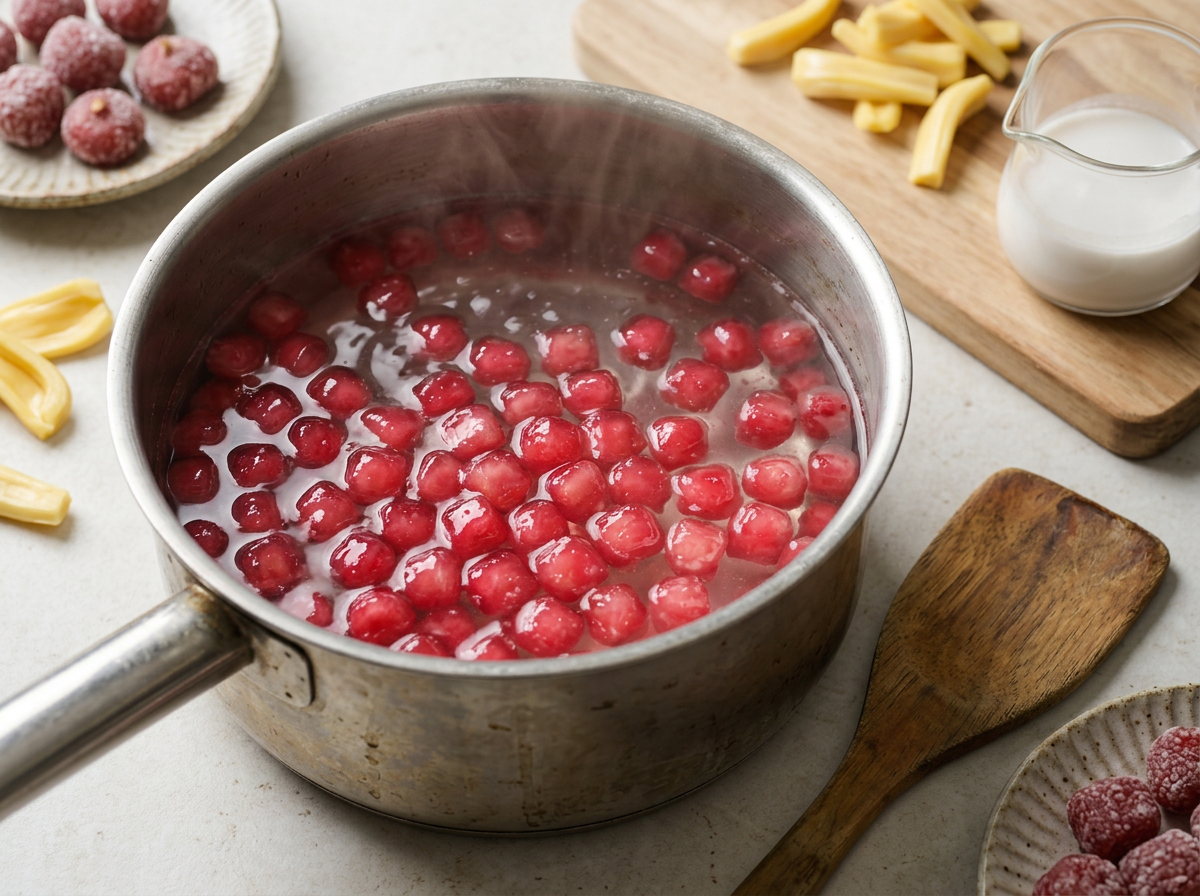
- Bring 2 liters of water to a boil in a 3-quart / 2.8L saucepan. Add the coated water chestnuts and boil for 5 to 7 minutes, until they float to the surface and turn glossy and translucent with an opaque red dot visible at the center.
- Scoop the rubies out with a slotted spoon straight into a bowl of ice water. This stops the cooking and firms up the chewy tapioca shell. Let sit 5 minutes, then drain.
- Combine coconut milk, 150 ml water, palm sugar, and salt in a 2-quart / 1.9L saucepan. Warm over low heat, stirring, for 3 to 4 minutes until the sugar fully dissolves. Do not let it boil, or the coconut milk can split. Cool to room temperature or chill.
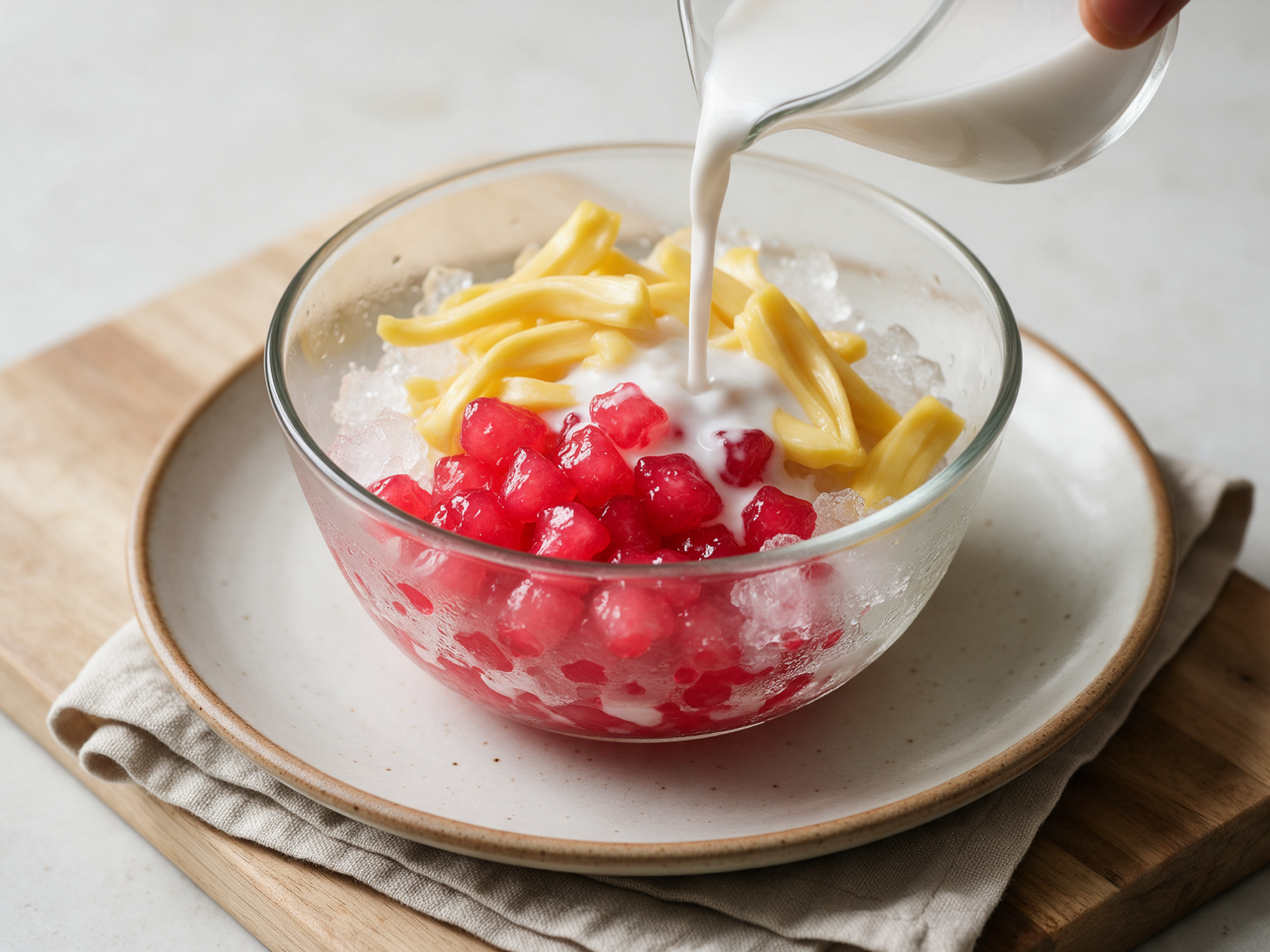
- Divide crushed ice among 4 serving bowls. Spoon the drained rubies and jackfruit strips over the ice.
- Pour the chilled coconut milk mixture over each bowl and serve right away, while the rubies are cold and the ice is still crunchy.
Notes
- Dye the water chestnuts a deep red, the color fades slightly once boiled
- Do not skip the ice bath, it sets the chewy tapioca shell
- Warm the coconut milk gently, boiling can cause it to split
- Assemble bowls just before eating for the best texture contrast
Tips for Success
- Dice water chestnuts uniformly so they cook and color at the same rate.
- Shake off excess tapioca starch before boiling so the shell stays thin, not gummy.
- Boil in the full 2 liters of water so the pieces have room to float freely.
- Chill the coconut milk mixture before pouring so it doesn’t melt the crushed ice fast.
- Assemble bowls right before eating, the crunch and cold only last while everything’s fresh.
Variations
- Swap the red dye for pandan extract and green coloring to make a two-tone ruby version.
- Add diced young coconut meat alongside the jackfruit for extra texture and a mild sweetness.
- Use lychee syrup instead of plain water in the dye bath for a faint floral note in the shell.
Storage and Reheating
Tub tim grob is best eaten the same day you make it. The tapioca shell turns dense and rubbery in the fridge after a few hours, so this isn’t a reheat-and-serve dessert.
If you want to prep ahead, dice and dye the water chestnuts up to a day in advance and keep them covered in the fridge. Coat, boil, and ice-bath them right before serving so the shell stays chewy.
The coconut milk mixture is the one part that holds up well. Make it up to 3 days ahead and keep it covered in the fridge, then just pour it over fresh-boiled rubies when you’re ready to eat.
Serving Suggestions
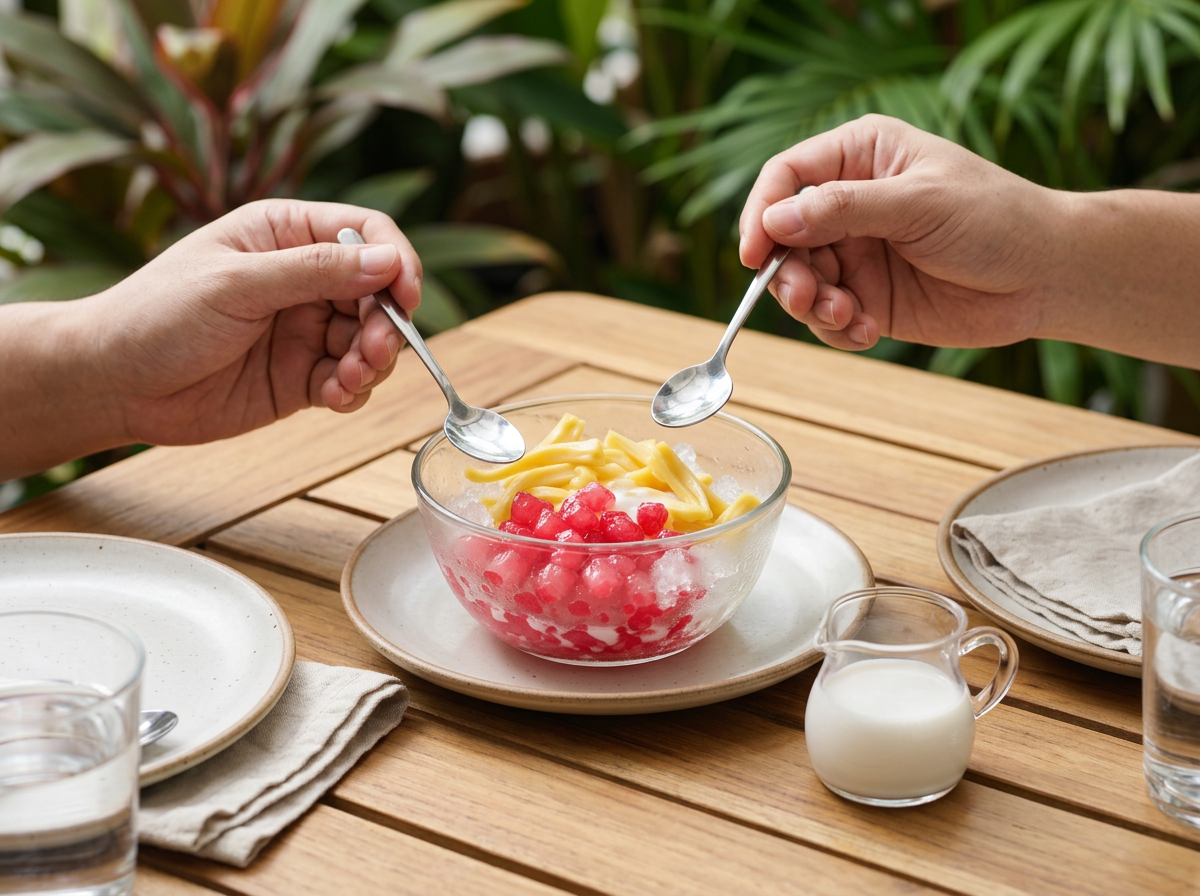
Serve tub tim grob in small glass bowls so the ruby color shows through the ice. It works well as a light finish after a spicy Thai meal, since the cold coconut milk cools your mouth down fast.
Add a scoop of coconut ice cream on the side if you want something richer. Sliced cantaloupe, lychee, or young coconut strips all sit well next to the jackfruit if you want a fuller fruit spread.
This is a hot-weather dessert through and through. Skip serving it if you can’t eat it within 15 to 20 minutes, since the ice melts and dilutes the coconut milk fast.
FAQ
Why did my tub tim grob rubies turn out chalky instead of chewy?
Chalky rubies usually mean they were undercooked or coated with too much tapioca starch. Boil the coated water chestnuts for the full 5 to 7 minutes until they float and turn glossy and translucent with a visible red dot at the center. Shake off excess starch before boiling so the coating stays thin and cooks through evenly.
Can I use canned water chestnuts instead of fresh ones for tub tim grob?
Yes, canned water chestnuts work fine and are easier to find than fresh ones. Drain them well and pat dry before dicing, since extra moisture makes the tapioca coating slide off instead of sticking. Fresh water chestnuts give a slightly crisper bite, but canned still deliver the crunch this dessert is named for.
Can I make the rubies ahead of time, or do they need to be fresh?
Tub tim grob rubies are best made the day you plan to serve them. The tapioca shell firms up in an ice bath but turns dense and rubbery after sitting in the fridge for a few hours. For a head start, dice and dye the water chestnuts a day ahead, then coat and boil them right before serving.
What pairs well with tub tim grob besides jackfruit?
Sliced young coconut, cantaloupe, or lychee all work well alongside the jackfruit in tub tim grob. Water chestnuts and coconut milk are rich, so fruit with a little tartness, like pineapple, balances the sweetness. Pandan jelly cubes are also a common addition at Thai dessert stalls.
Is tub tim grob gluten free?
Yes, tub tim grob is naturally gluten free since the crunchy coating comes from tapioca starch, not wheat flour. If you’re cooking for someone with celiac disease, double check your food coloring and canned coconut milk labels for shared-facility processing. Everything else, water chestnuts, sugar, and jackfruit, is gluten free on its own.
What’s the difference between tub tim grob and Vietnamese che ba mau?
Tub tim grob is a single-color Thai dessert built around crunchy tapioca-coated water chestnuts in coconut milk, while che ba mau layers mung bean, red bean, and pandan jelly in coconut milk without water chestnuts. Both get served over crushed ice, but the textures and flavors are distinct.
Loved this? Try these next
