
Jump to Recipe
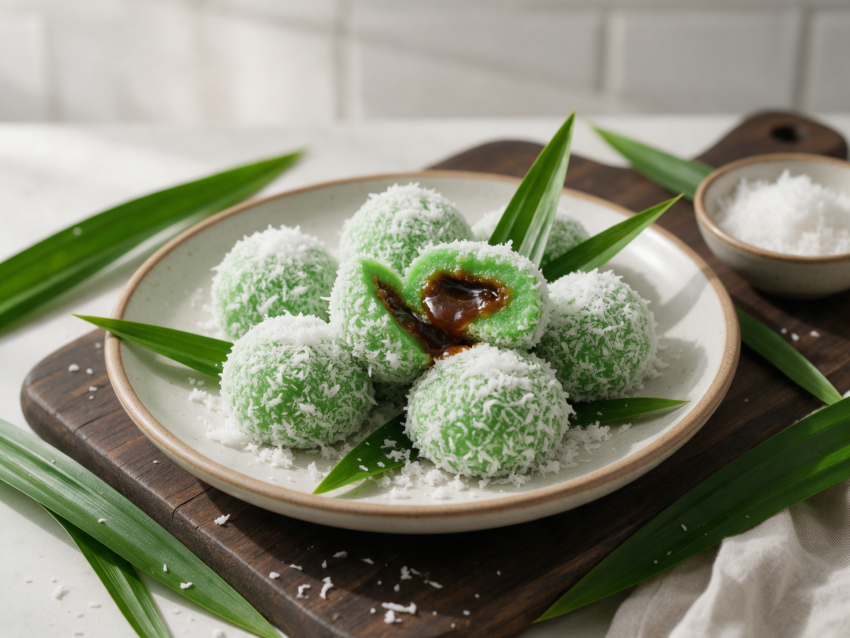
There’s something satisfying about biting into a ball of chewy rice dough and having warm palm sugar syrup spill out before you expect it.
I first had onde-onde at a hawker stall in Singapore, still warm from the pot, dusted white with coconut. The filling burst on the first bite and I stood there grinning like an idiot.
This onde onde recipe uses fresh pandan juice for the green color and grassy smell, not the bottled paste. The dough is glutinous rice flour, and the filling is chopped gula melaka, the palm sugar sold in blocks across Southeast Asia.
You boil the balls until they float, roll them straight into steamed coconut, and eat them the same day. The molten center doesn’t survive a night in the fridge.
Why You’ll Love This Recipe
- Bright green color comes from real pandan, not paste
- Molten palm sugar center in every bite
- Only 6 ingredients, no oven required
- Freezer-friendly dough for make-ahead snacking
Ingredient Notes
- glutinous rice flour: Also labeled tepung pulut or mochiko. Don’t swap in regular rice flour, it won’t hold the dough together the same way.
- pandan leaves: Fresh leaves give the best color and grassy aroma. Frozen leaves work too if thawed first, or use 1 tsp pandan paste in a pinch.
- gula melaka: Palm sugar sold in blocks or discs at Asian grocers. Chop it fine so it melts fully inside the dough.
- fresh grated coconut: Buy it fresh if you can find it. Steaming it with pandan and a pinch of salt keeps it from turning sour within a day.
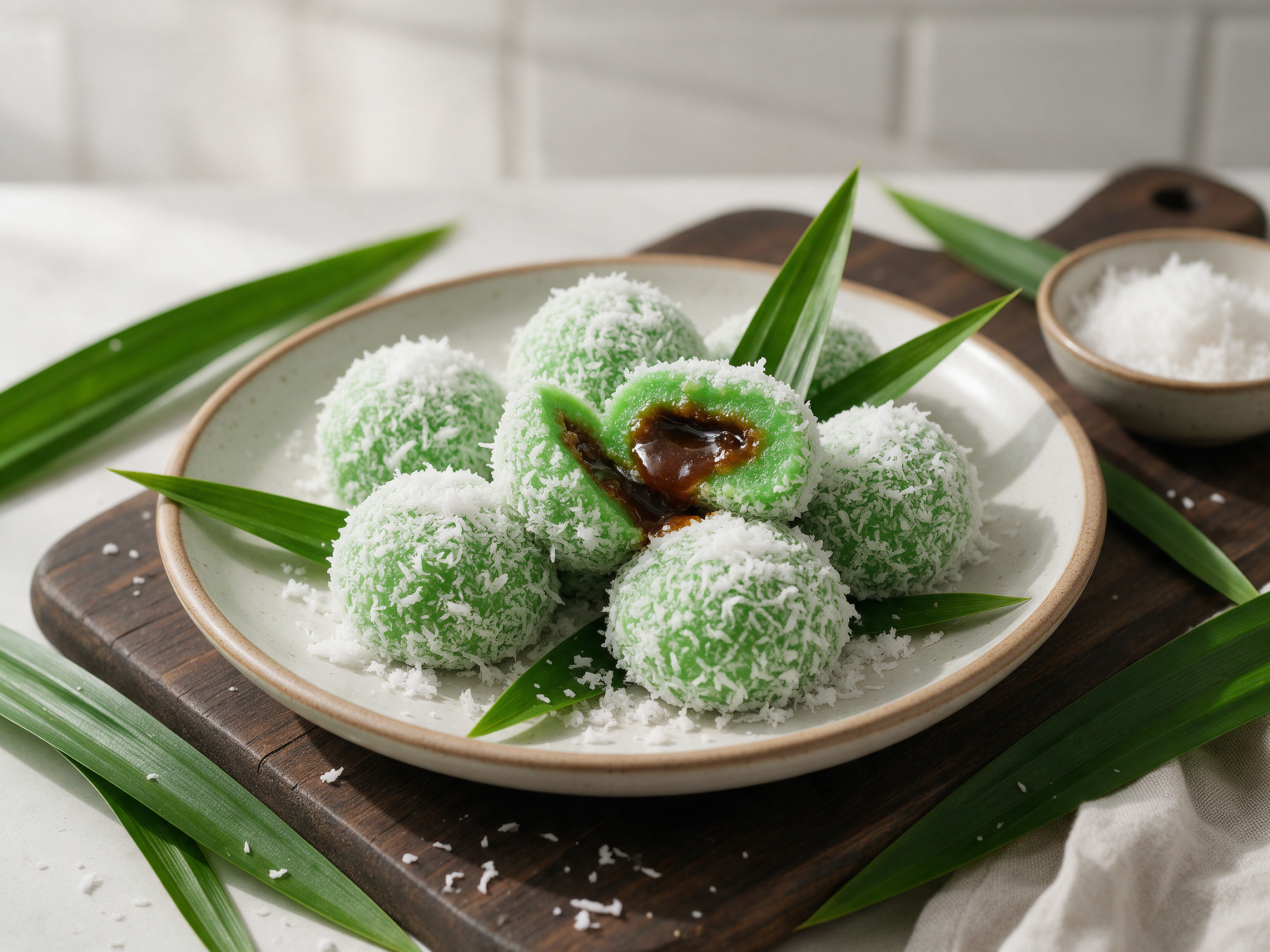
Chewy Pandan Onde-Onde Balls with Palm Sugar Center
Ingredients
Method
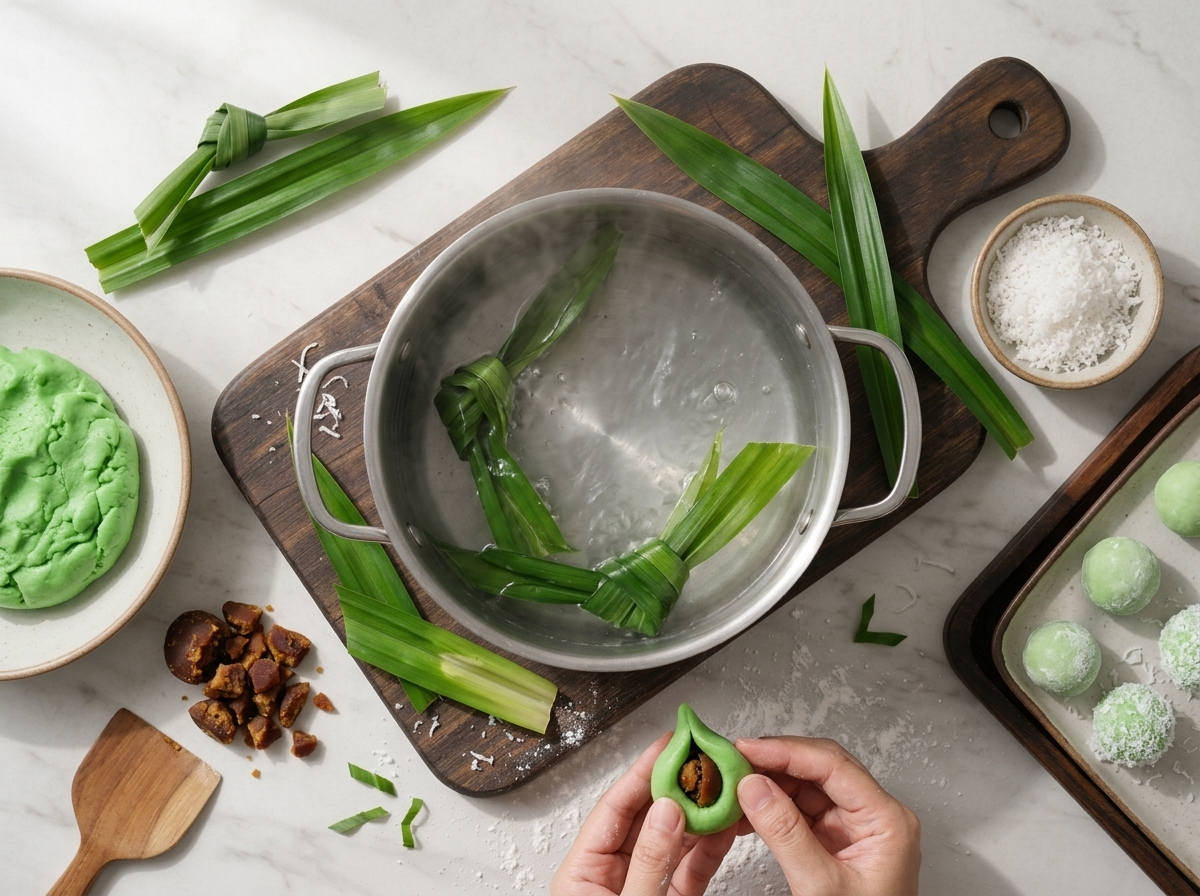
- Blend the pandan leaves with 150 ml water until fully broken down, about 1 minute. Strain through a fine-mesh sieve, pressing on the solids, to get bright green pandan juice.
- Toss the grated coconut with the torn pandan leaf and 1/8 tsp salt. Steam over simmering water for 8 minutes until softened and fragrant, then discard the pandan leaf and set the coconut aside to cool.
- In a mixing bowl, whisk the glutinous rice flour with 1/4 tsp salt. Pour in the pandan juice gradually, stirring, then knead by hand until you get a soft, smooth dough that doesn't stick to your fingers. Add a splash more water if it feels dry.
- Cover the dough with a damp towel and rest for 10 minutes.
- Divide the dough into 18 pieces, about 18 g each, and roll into balls. Flatten each ball in your palm, place a rounded teaspoon of chopped gula melaka in the center, then gather the edges up and pinch to seal completely. This step matters most: any gap in the seal and the palm sugar leaks out into the boiling water instead of staying inside. Roll again into a smooth ball.
- Bring a 4-quart / 3.8 L saucepan of water to a rolling boil.
- Drop the balls in, a few at a time so they have room to move. Boil for 3 to 4 minutes until they float to the surface, then let them bob for another minute to finish cooking through.
- Lift the balls out with a slotted spoon, drain for a few seconds, and roll them immediately in the steamed coconut while still warm and sticky, so the coconut sticks.
- Serve within 1 to 2 hours while the palm sugar center is still molten.
Notes
- Seal each ball completely; any gap lets the gula melaka leak out during boiling.
- Use fresh pandan leaves for genuine color and aroma; bottled paste tastes flatter.
- Steam the coconut coating instead of using it raw, so it doesn't turn sour within a day.
- Boil in small batches so the balls have room to float without sticking together.
Tips for Success
- Test your dough by rolling a small piece; if it cracks at the edges, knead in a teaspoon more water.
- Pinch the seam of each ball firmly and roll it smooth, or the filling will burst out in the pot.
- Use fresh gula melaka, not palm sugar syrup, so the center stays intact until you bite into it.
- Boil in batches of 6 to 8 so the pot doesn’t crowd and the balls can float freely.
- Roll boiled balls in coconut while they’re still warm and wet, since dry balls won’t hold the coating.
Variations
- Swap pandan juice for beet juice or matcha if pandan leaves aren’t available, for a different color and flavor.
- Add a tablespoon of mashed sweet potato to the dough for a softer, slightly sweeter bite.
- Mix white sesame seeds into the coconut coating for extra crunch and a nutty finish.
Storage and Reheating
Onde-onde taste best within an hour or two of boiling, while the gula melaka center is still soft and runny. Once they cool completely, the sugar sets hard and the coconut coating turns damp, so I don’t recommend reheating leftovers.
If you want to prep ahead, shape the uncooked, filled balls and freeze them on a tray until solid, then bag them up. Boil straight from frozen, adding 1 to 2 extra minutes, and coat in fresh coconut right after they’re lifted out.
Leftover boiled onde-onde will keep in an airtight container in the fridge for up to 2 days, but the texture firms up and the filling won’t be liquid anymore.
Serving Suggestions
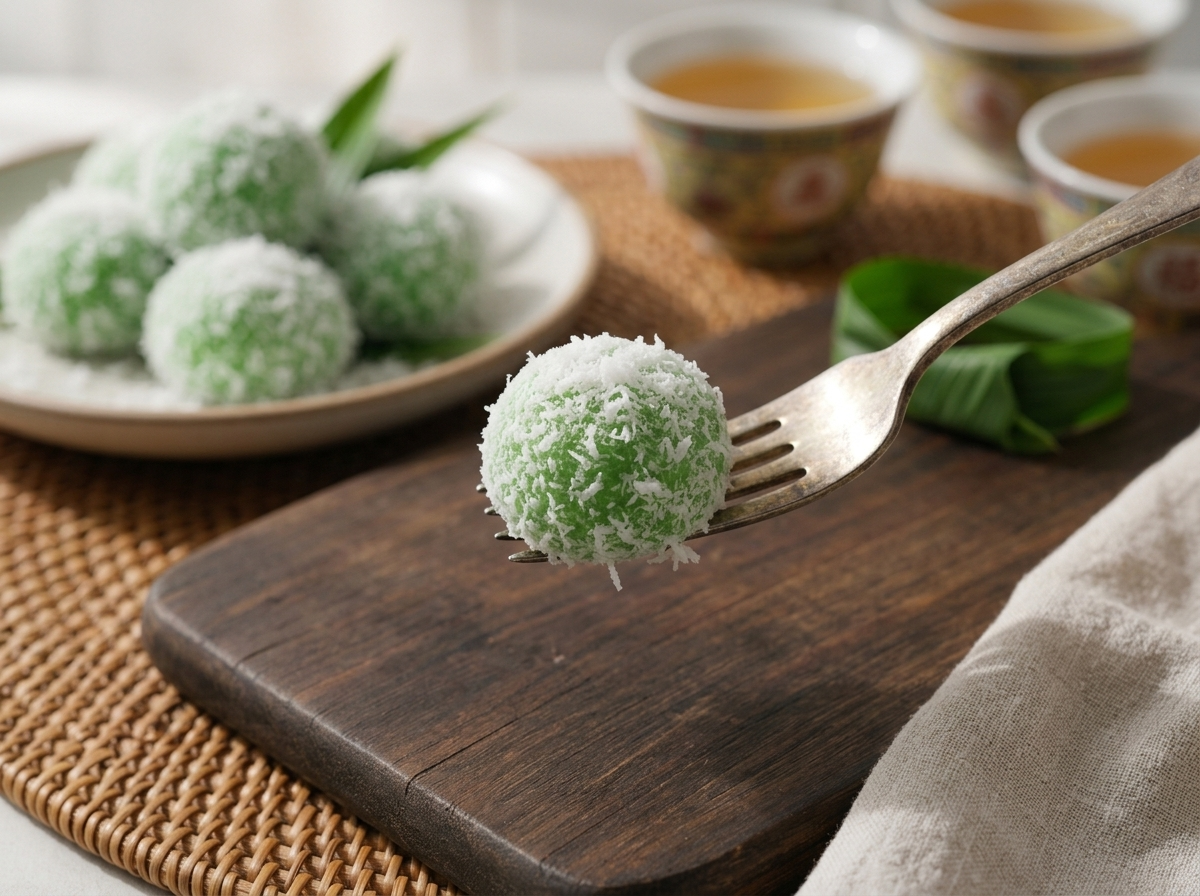
Onde-onde work well as a stand-alone sweet bite alongside a pot of Chinese tea or a glass of iced kopi. Their sweetness is concentrated, so one or two per person is usually plenty at the end of a meal.
For a snack platter, set them out next to other coconut-based Southeast Asian sweets like kuih lapis or seri muka. The green and white palette looks good together, and the flavors don’t compete.
I serve them slightly warm, within the first hour off the stove, so whoever’s eating gets the molten filling everyone talks about.
FAQ
Why did the palm sugar leak out of my onde-onde while they were boiling?
This happens when the seam isn’t pinched shut completely before boiling. Any small gap lets the melted gula melaka escape into the water as soon as it heats up. Roll each ball smooth after sealing, checking for cracks, and drop them into water that’s at a full rolling boil rather than a gentle simmer.
Can I use brown sugar instead of gula melaka in onde-onde?
You can, but the flavor changes. Gula melaka comes from palm sap and has a deep, smoky caramel taste that dark brown sugar doesn’t fully replicate. If you substitute, use dark brown sugar with a small pinch of salt to get closer to the same depth of flavor.
Can I freeze onde-onde dough before boiling it?
Yes, shaped and filled balls freeze well before cooking. Lay them on a tray until solid, then bag them and boil straight from frozen, adding 1 to 2 extra minutes so the center heats through. Don’t freeze already-boiled onde-onde, since the coconut turns wet and the filling loses its molten texture.
What drinks pair well with the sweetness of onde-onde?
Unsweetened Chinese tea or black coffee work best, since onde-onde carry a lot of sugar from the gula melaka filling. Iced kopi-o or plain green tea cuts through the sweetness without fighting the pandan flavor. Skip sugary drinks alongside, or the whole plate starts to taste one-note.
Is onde onde gluten free?
Yes, onde-onde is naturally gluten free. The dough is made from glutinous rice flour, which despite its name contains no gluten, just starch from sticky rice. If you’re cooking for someone with celiac disease, double check your coconut and palm sugar were processed in a gluten-free facility.
What’s the difference between onde-onde and klepon?
In most of Malaysia and Singapore, onde-onde and klepon are the same dessert, just different names for pandan rice balls filled with gula melaka. In parts of Indonesia, though, onde-onde refers to a fried sesame ball with a mung bean filling, closer to what’s called jian dui in Chinese cooking.
You might also like
