
Jump to Recipe
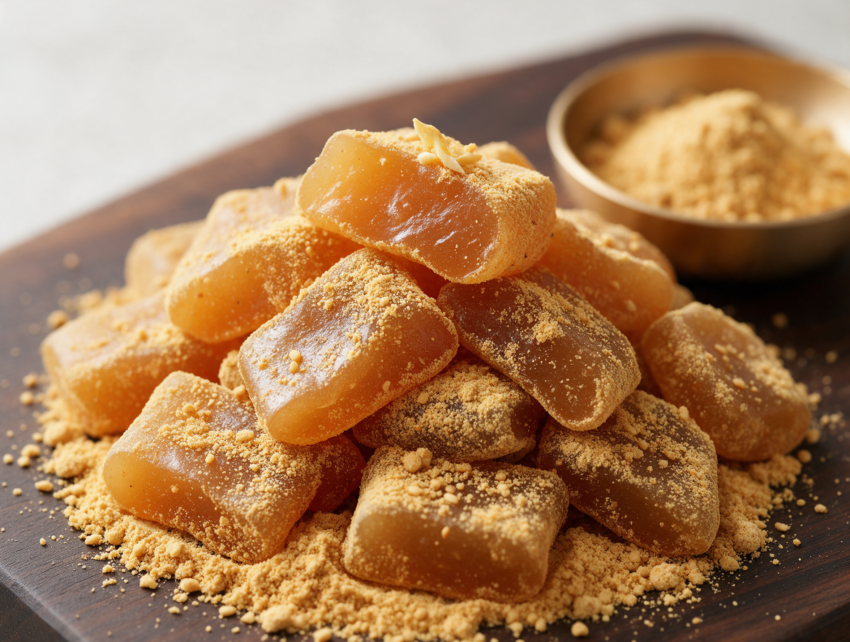
There’s something almost magical about turning a pot of rice into a chewy, glassy candy much like three-color hanami dango, with nothing but malted barley and time. That’s yeot, Korean taffy that’s been made this way for centuries, long before refined sugar showed up in Korean kitchens.
I first made a batch on a slow Sunday, mostly out of curiosity. Four hours of waiting for rice to turn sweet on its own, then another two and a half hours at the stove, watching syrup thicken from watery to deep amber. It’s a project, not a quick dessert.
But the process does the work for you. Barley malt powder holds enzymes that break rice starch down into sugar while it sits warm, no added sugar required. Boil that liquid down slow enough and it turns into taffy you can pull, cut, and dust in roasted soybean powder.
This version keeps things straightforward: cook the rice, make the malt water, let them sit together, then simmer and pull. No candy-making experience needed, just patience and a thermometer.
Why You’ll Love This Recipe
- No refined sugar, sweetness comes entirely from malted rice
- Chewy, glassy texture like the taffy from Korean markets
- Naturally vegan and dairy-free with pantry-friendly ingredients
- Keeps for weeks at room temperature, good for gifting
Ingredient Notes
- Sweet rice (chapssal): Glutinous short-grain rice gives the softest, chewiest cooked base for fermentation. Regular short-grain rice works in a pinch but yields a slightly less chewy taffy.
- Barley malt powder (yeotgireum): This is dried, ground barley malt with active enzymes, not the same as malt syrup or malted milk powder. Find it at Korean grocery stores or online, labeled yeotgireum.
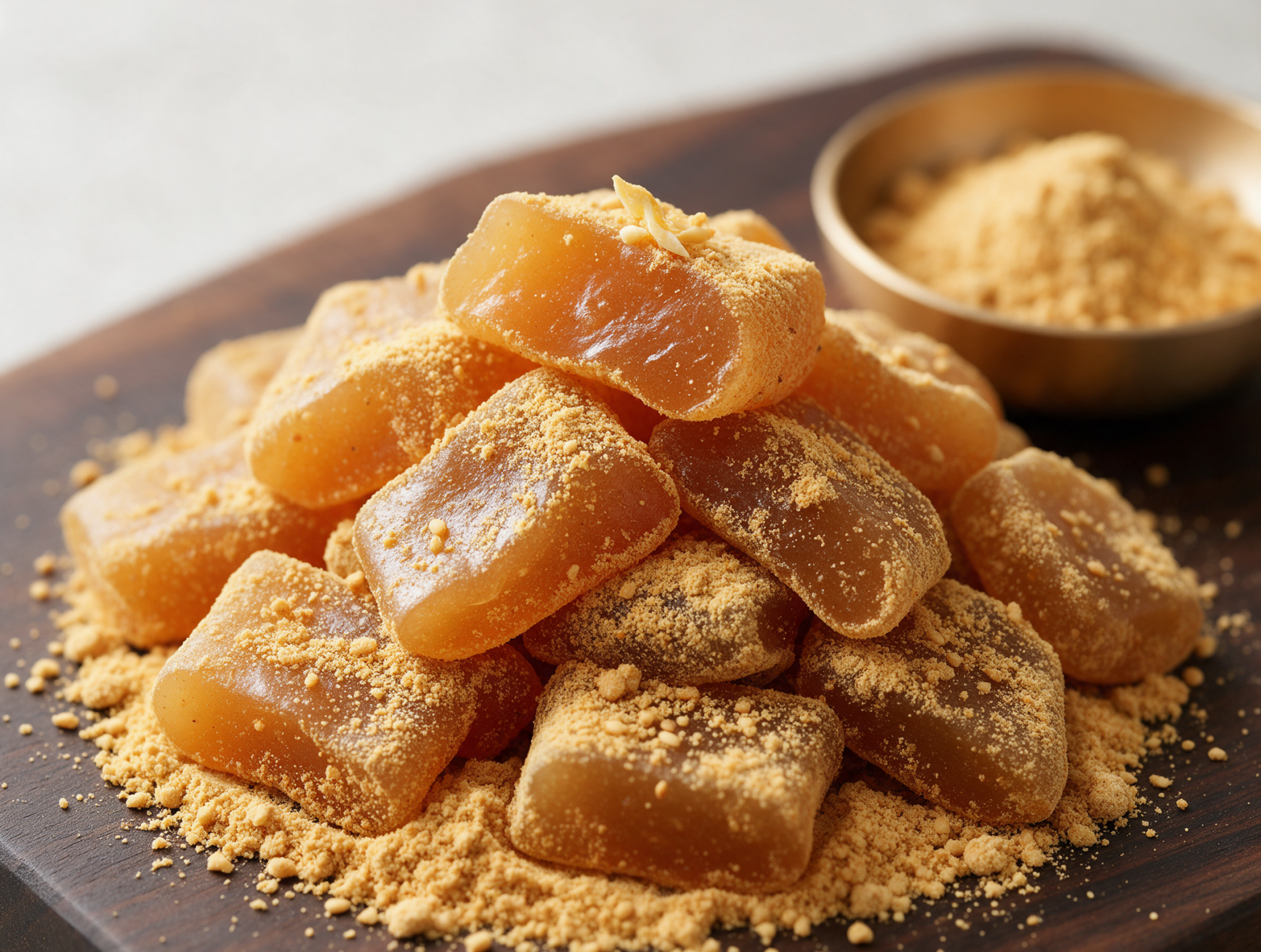
- Roasted soybean powder (konggaru): Coats the finished taffy so pieces don’t stick together and adds a toasted, nutty edge. Toasted sesame seeds or crushed peanuts work as a substitute.
- Salt: A small pinch sharpens the sweetness of the finished taffy. Skip it if you want a purely sweet, one-note candy.
Yeot: Homemade Chewy Korean Rice Taffy From Scratch
Ingredients
Method
- Whisk the barley malt powder into 2 liters of warm water (50C / 122F) in a large bowl. Let it sit for 15 minutes, stirring once, so the enzymes activate.
- Strain the cloudy liquid through a cheesecloth-lined fine-mesh strainer into another bowl, squeezing the solids firmly to get out as much milky malt water as you can. Discard the spent grain.
- Rinse the sweet rice until the water runs mostly clear. Cook it with 600 ml water in a rice cooker or covered pot over low heat for 20 minutes, until soft and stickier than usual steamed rice.
- Transfer the hot rice into a rice cooker bowl or heatproof pot and pour in the strained malt water. Stir well to combine.
- Hold the mixture at 60C / 140F for 4 hours, using the rice cooker's keep-warm setting or a very low oven with the door cracked open. At the 3-hour mark, taste it, the liquid should be distinctly sweet and watery, a sign the starch has converted to sugar.
- Strain the fermented mixture through a cheesecloth-lined strainer into a 6-quart / 5.7 L stockpot, pressing hard on the solids to squeeze out every bit of sweet liquid. Discard the rice pulp.
- Bring the liquid to a boil over medium-high heat, skimming off any foam. Add the salt if using, reduce to medium, and simmer uncovered for 2 to 2.5 hours, stirring every 10 minutes.
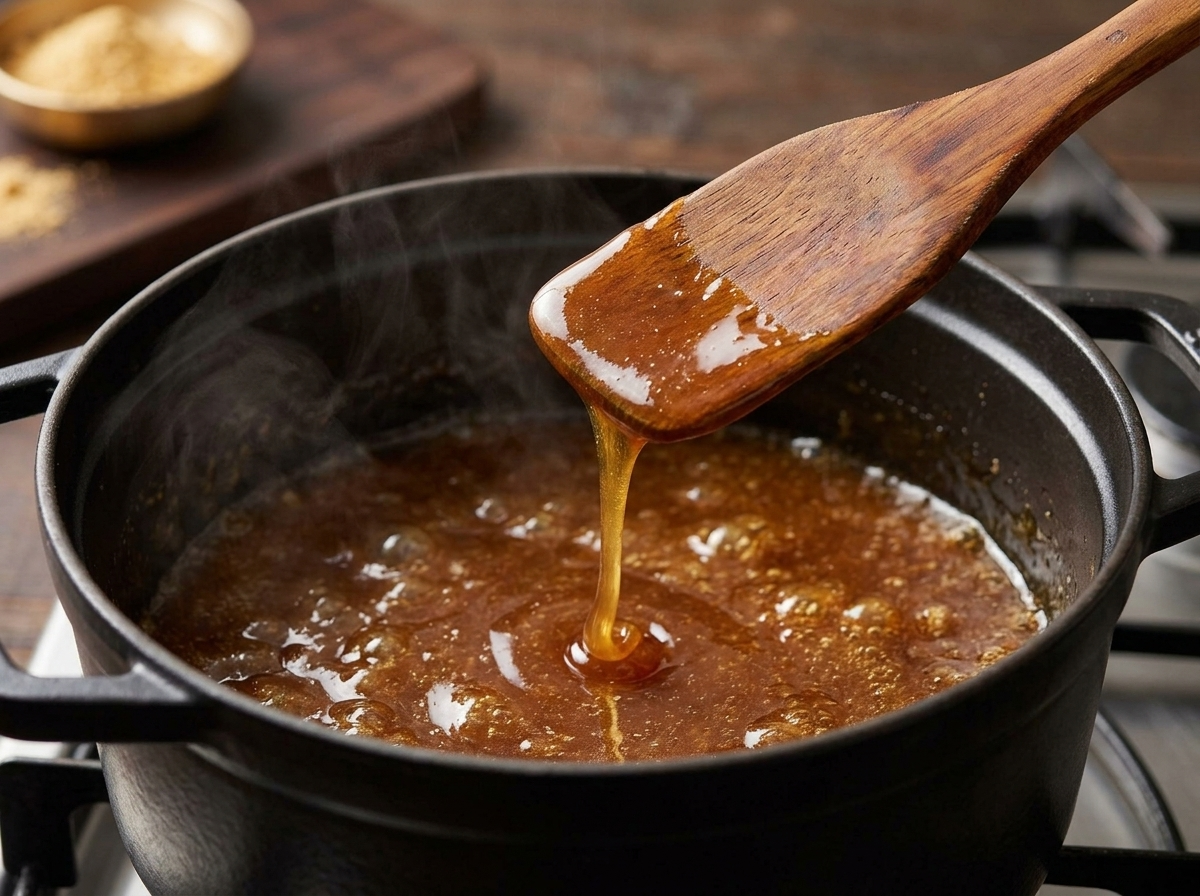
- In the last 30 minutes, the syrup thickens and darkens to deep amber. Stir constantly here, it scorches fast once most of the water is gone, and a burnt pot means starting over.
- Cook until a candy thermometer reads 113C / 235F and the syrup falls off the spoon in a slow, thick ribbon rather than a thin stream. This is the firm, chewy stage for pull taffy.
- Pour the hot syrup onto an oiled sheet pan (33 x 46 cm / 13 x 18 inch) or a silicone mat. Let it cool for 10 to 15 minutes, until warm but safe to handle.
- Oil your hands lightly, or dust them with roasted soybean powder. Gather the taffy and pull and fold it back on itself for 5 to 8 minutes, until the color lightens from dark amber to pale gold with a satiny sheen.
- Roll the pulled taffy into a rope about 2.5 cm / 1 inch thick. Snip into bite-size pieces with kitchen scissors dusted in soybean powder, then roll each piece in the remaining powder so they don't stick together.
- Let the pieces firm up at room temperature for 30 minutes before serving or storing.
Notes
- Keep fermentation steady at 60C / 140F for the full 4 hours, don't rush it
- Stir constantly in the last 30 minutes of boiling, the syrup scorches fast
- A candy thermometer removes the guesswork at the 113C / 235F stage
- Oil your hands before pulling the hot taffy so it doesn't stick
Tips for Success
- Use a candy thermometer instead of guessing by color, the same precision that makes kohakutou crystal candy turn out right, since amber alone can mean undercooked or scorched syrup.
- Keep fermentation steady at 60C / 140F, hotter kills the enzymes and colder leaves the taffy bland.
- Oil your hands before pulling the hot taffy so it doesn’t seize up before you can shape it.
- Work quickly once the syrup hits 113C / 235F, it firms up fast once it’s off the heat.
- Layer stored pieces with soybean powder or parchment so they don’t fuse into one sticky block.
Variations
- Swap the soybean powder coating for toasted black sesame seeds for a nuttier finish and darker specks.
- Fold in a handful of toasted peanuts or walnuts while pulling the taffy for a gangjeong-style crunch.
- Use brown rice instead of sweet rice for a slightly nuttier, less sticky version of the taffy.
Storage and Reheating
Store cooled, cut pieces in an airtight container at room temperature for 3 to 4 weeks. Layer them with parchment paper or extra roasted soybean powder so they don’t fuse together into one lump.
Skip the fridge. Cold air pulls moisture into the taffy and makes it sticky once it warms back up on the counter.
If a batch firms up more than you’d like after a few weeks, warm the sealed container in a 60C / 140F oven for 1 to 2 minutes to soften the pieces slightly before eating.
Serving Suggestions
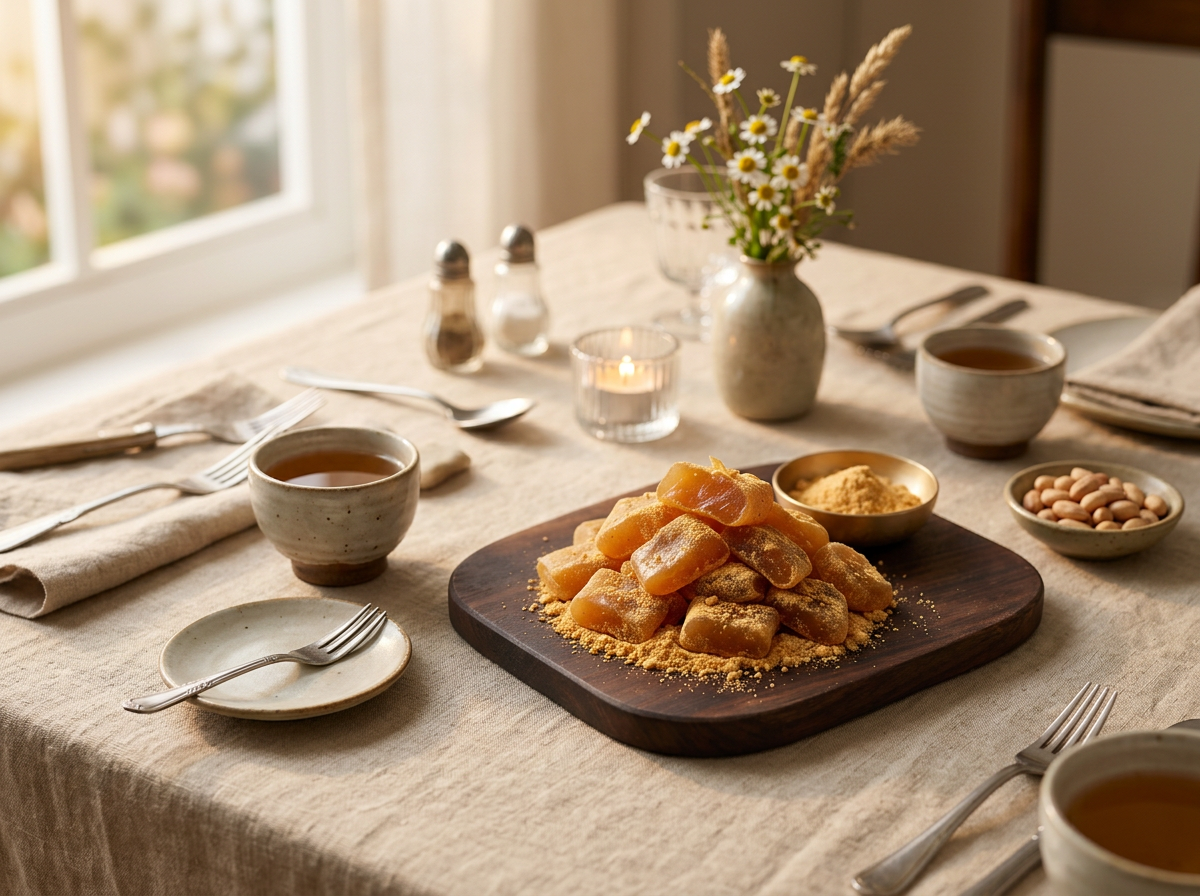
Eat yeot on its own with a cup of barley tea or roasted corn tea, the way you’d snack on caramel. The chew and malty sweetness hold up fine without anything else on the plate.
Crumble a piece over warm tteok (rice cakes) or serve alongside roasted peanuts, dried persimmons, and pieces of Korean hotteok for a simple Korean-style snack board.
Wrapped in small paper bags, it also makes a good homemade gift around Korean New Year or exam season, when yeot is traditionally given for good luck.
FAQ
How do I know when the yeot syrup has boiled down enough?
The syrup is ready when it reaches 113C / 235F on a candy thermometer and falls off the spoon in a slow, thick ribbon instead of a thin stream. It also deepens to a solid amber color. Drop a bit into cold water, it should form a soft, pliable ball rather than dissolving.
Can I use malt syrup instead of malt powder for this yeot recipe?
Not really, malt syrup won’t convert the rice starch into sugar the way active yeotgireum does. Yeotgireum is dried barley malt powder loaded with amylase enzymes that need to work on warm rice over several hours. Malt syrup is already converted and skips that fermentation step entirely.
How long does homemade yeot Korean taffy keep?
Stored airtight at room temperature, homemade yeot keeps for 3 to 4 weeks. Layer the pieces with parchment or extra soybean powder so they don’t stick together. Skip the fridge, cold air makes the taffy sticky and harder to separate once it warms back up.
What do you eat yeot Korean taffy with?
Yeot is usually eaten on its own with a cup of barley tea or green tea, the way you’d snack on caramel. It also shows up crumbled over tteok (rice cakes) or gifted in small boxes around Korean New Year and exam season for good luck.
Is yeot Korean taffy gluten free?
No, traditional yeot made with yeotgireum (barley malt powder) contains gluten from the barley. A true gluten-free version would need a rice-based malt powder instead, which changes both the fermentation time and the final sweetness. Always check the label on your specific malt powder.
Why didn’t my rice and malt water turn sweet during fermentation?
Your fermentation temperature was probably off. The rice needs to sit at a steady 60C / 140F for about 4 hours, hotter kills the enzymes and colder slows them down too much to work. Check with a thermometer rather than trusting your oven’s low setting, since ovens vary a lot.
Related recipes
