
Jump to Recipe
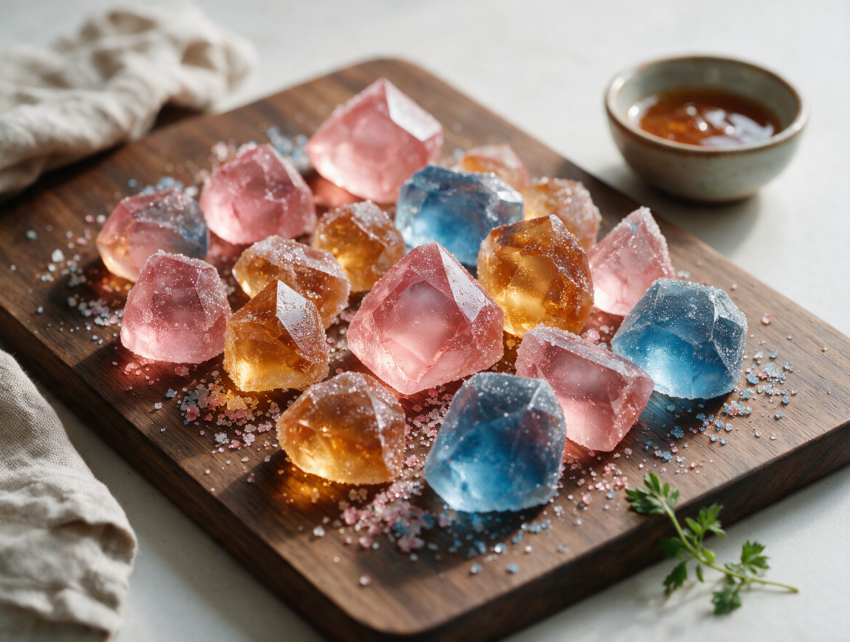
There’s something a little unreal about kohakutou, the Japanese crystal candy that looks like it belongs in a jewelry box instead of a candy dish.
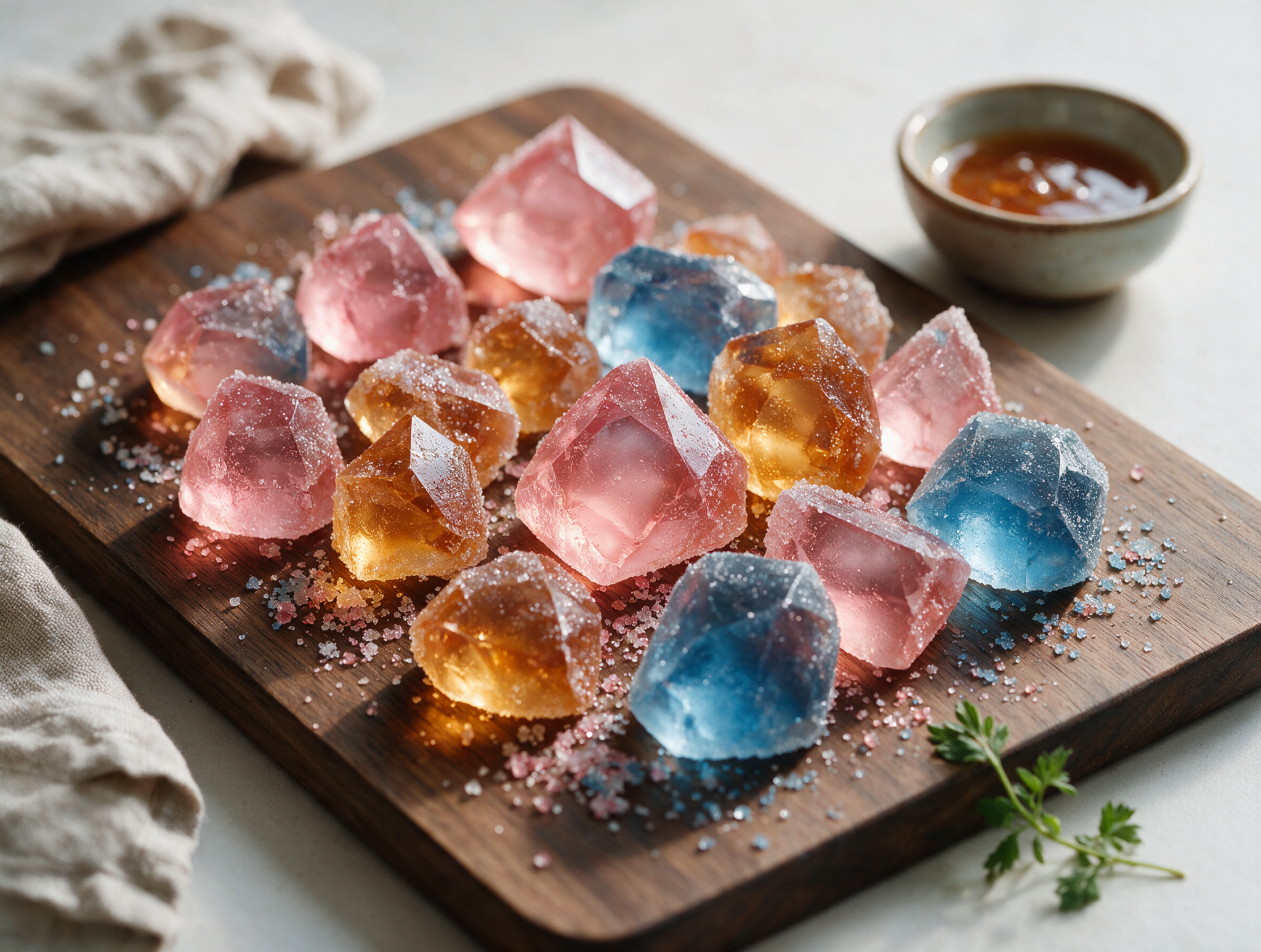
I first saw it stacked in a glass case in Kyoto, tiny amber and rose-colored pieces catching the light. The outside cracks like sugar glass. The inside stays soft, almost jelly-like.
The whole thing comes from three ingredients: agar agar, sugar, and water. No candy thermometer, no fancy equipment. Just patience, because the real transformation happens over several days of air-drying, not in the pan.
This kohakutou crystal candy recipe walks through the syrup, the setting, the cutting, and the slow crystallizing that turns soft jelly cubes into crunchy-shelled candy gems.
Kids love making these almost as much as eating them. Just don’t rush the drying step, that’s where most people go wrong.
Why You’ll Love This Recipe
- Only three ingredients: agar, sugar, and water
- No candy thermometer or special equipment needed
- Looks like stained glass jewelry, tastes like sugar candy
- Naturally vegan, gluten-free, and dairy-free treat
Ingredient Notes
- agar agar powder: Use powder, not flakes or sheets, for the smoothest jelly. If you only have flakes, use about three times more and simmer longer to fully dissolve them.
- granulated sugar: Plain white sugar gives the cleanest color and the classic crackly shell. Brown sugar or honey change the color and stop the sugar from crystallizing properly.
- water: Filtered water works best since the syrup is mostly sugar and water with nothing to mask off flavors.
- gel food coloring: Gel colors work better than liquid drops because they don’t add extra water that can throw off the syrup’s set.
- flavor extract: Yuzu, rose, or lychee are traditional choices in Japanese sweet shops. Keep it to 1/2 teaspoon so it doesn’t thin the syrup.
Kohakutou: Sparkling Japanese Sugar Crystal Candy
Ingredients
Method
- Combine the agar agar powder and water in a 1-quart / 1L saucepan. Let sit for 5 minutes to bloom, then whisk to break up any clumps.
- Set the saucepan over medium heat and bring to a rolling boil, whisking constantly. Boil for 2 minutes until the agar is fully dissolved and the liquid looks clear, not grainy.
- Add the sugar all at once and stir until dissolved. Reduce heat to low and simmer for 2 to 3 minutes, stirring only occasionally, until the syrup looks glossy and slightly thickened.
- Remove the pan from heat. If making multiple colors, divide the hot syrup evenly between small heatproof bowls.
- Stir a few drops of gel food coloring and, if using, 1/2 tsp of flavor extract into each bowl. Work fast, the syrup starts to set as it cools.
- Pour each colored syrup into a parchment-lined 15 cm / 6-inch square pan (or silicone molds) to about 1.5 cm / 0.6-inch thick.
- Refrigerate for 90 minutes, until the jelly is completely firm and springs back when pressed.
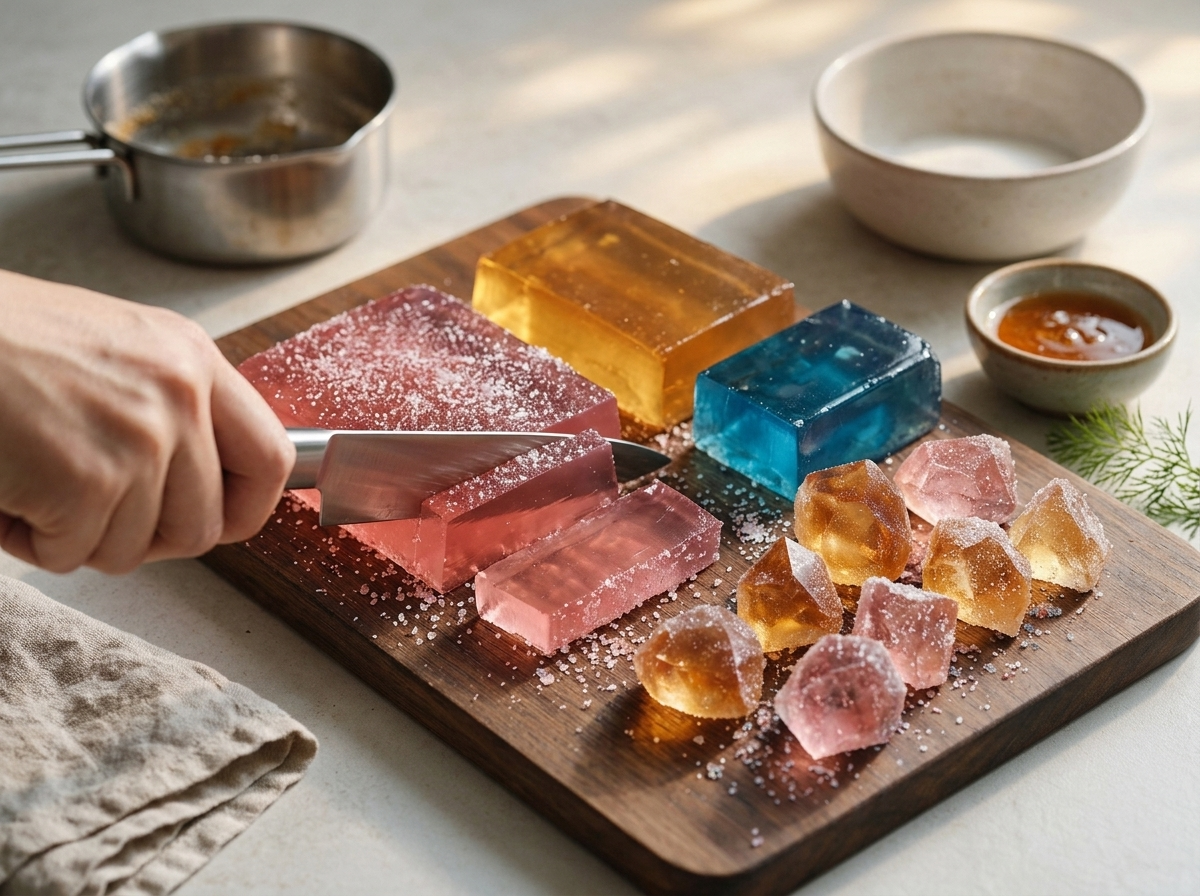
- Turn the set jelly out onto a cutting board. Cut into rough 2 cm / 0.75-inch chunks with a sharp paring knife, wiping the blade clean between cuts.
- Arrange the pieces with space between them on a wire rack set over a tray. Leave uncovered at room temperature.
- Let the candies air-dry for 3 to 5 days, turning them once a day, until the outside feels dry and crackly like sugar glass while the inside stays soft. Humid kitchens can stretch this to a week.
- Store the finished kohakutou in an airtight container once the shells have fully formed.
Notes
- Work quickly once the syrup is off the heat, it starts setting fast.
- Humidity slows crystallizing, pick a dry stretch of days if possible.
- Wipe the knife between cuts for clean, jewel-like edges.
- Pieces left too moist will feel sticky instead of crackly.
Tips for Success
- Bloom the agar powder in cold water for 5 minutes before heating so it dissolves evenly without lumps.
- Boil the agar and water mixture for a full 2 minutes or the syrup won’t set firm enough to cut cleanly.
- Dry the cut candies on a wire rack, not a flat plate, so air reaches all sides evenly.
- Skip humid days for drying kohakutou, damp air keeps the sugar shell from forming and leaves pieces sticky.
- Cut pieces while the jelly is still slightly warm and tacky, since fully chilled jelly cracks instead of slicing clean.
Variations
- Swap food coloring for natural options like butterfly pea powder or beet juice for a softer, less neon color.
- Add citrus zest or a few drops of yuzu extract for a fragrant twist that pairs well with the sugar shell.
- Layer two colors in the same mold before it sets fully for a marbled, stained-glass look inside each piece.
Storage and Reheating
Kohakutou keeps well because the sugar shell acts as a natural preservative once it fully crystallizes.
Store finished candies in an airtight container at room temperature for up to 3 to 4 weeks, layered between sheets of parchment so they don’t stick together.
There’s no reheating step here, this is a candy, not a dish that gets warmed up. If pieces feel soft or tacky after storage, spread them back on a wire rack and let them air-dry for another day.
Serving Suggestions
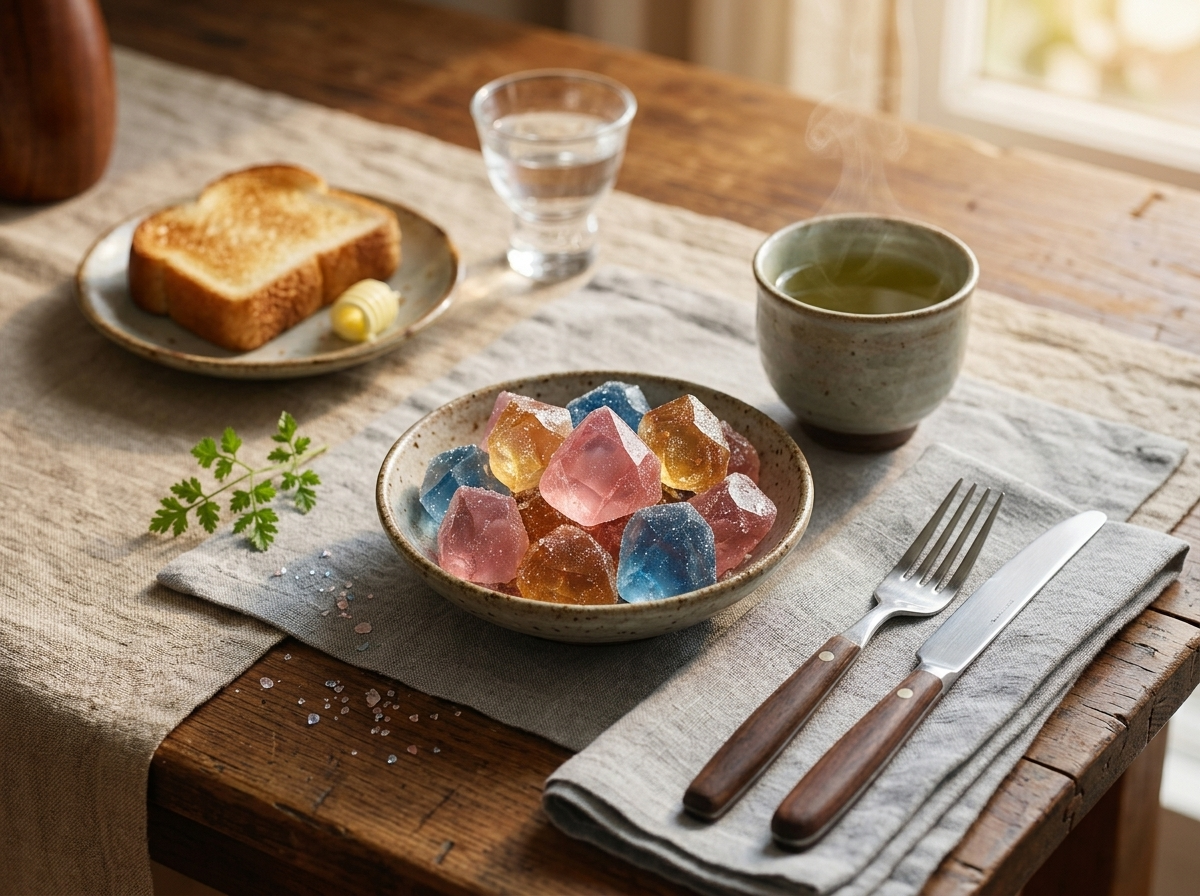
Kohakutou works best as an after-dinner nibble with green tea, since the tea’s bitterness balances the straight sugar sweetness.
Set a small dish out at a party alongside other bite-sized sweets, they hold up for hours without melting or getting sticky.
Pack a few pieces in a small tin as a homemade gift. The colors make them look like something from a candy shop, even though they came together in your own kitchen.
FAQ
Why is my kohakutou not forming a crunchy shell?
Kohakutou needs a dry, low-humidity spot to crystallize. If the shell stays soft after 3 days, the air around it is probably too humid or the pieces are too thick. Move the rack somewhere drier, add light air circulation with a fan, and give it another day or two.
Can I use agar flakes instead of agar powder for kohakutou?
You can, but you’ll need about three times more agar flakes than powder, and they take longer to dissolve. Simmer the flakes for an extra 3 to 4 minutes and strain the syrup before adding sugar, or you’ll end up with gritty bits in the finished candy.
How long does kohakutou stay good once it’s dried?
Kohakutou keeps for 3 to 4 weeks stored in an airtight container at room temperature, once the outer shell has fully crystallized. Layer pieces with parchment paper so they don’t stick together, and keep the container away from humidity or the shells can soften again.
What pairs well with kohakutou besides green tea?
Kohakutou pairs well with unsweetened black tea, coffee, or sparkling water, since the drink’s bitterness or fizz balances the candy’s straight sugar sweetness. It also works as a small palate cleanser between courses at a dinner party.
Is kohakutou vegan and gluten-free?
Yes, kohakutou is naturally vegan and gluten-free since it’s made from agar agar, sugar, and water with no animal products or wheat involved. Just double check your food coloring and flavor extract labels if you’re avoiding specific additives.
What’s the difference between kohakutou and regular gummy candy?
Kohakutou sets with agar agar instead of gelatin, so it’s plant-based, and it goes through a multi-day drying step that gummy candy skips entirely. That drying is what gives kohakutou its crackly outer shell while regular gummies stay soft and chewy all the way through.
More from the kitchen
